Kirjojen hintavertailu. Mukana 12 238 039 kirjaa ja 12 kauppaa.

Kirjailija

Daniel Dorling

Kirjat ja teokset yhdessä paikassa: 9 kirjaa, julkaisuja vuosilta 1999-2015, suosituimpien joukossa From Votes to Seats. Vertaile teosten hintoja ja tarkista saatavuus suomalaisista kirjakaupoista.

9 kirjaa

Kirjojen julkaisuhaarukka 1999-2015.

From Votes to Seats

From Votes to Seats

Ron Johnston; Charles Pattie; Daniel Dorling; Danny Dorling; David Rossiter

Manchester University Press
2001
nidottu
The British electoral system treats parties disproportionately and differentially. This original study of the fourteen general elections held between 1950 and 1997 shows that the amount of bias in those election results increased substantially over the period, benefiting Labour at the expense of the Conservatives. Labour's advantage peaked at the 1997 general election when, even assuming there had been an equal share of the votes for the two parties, it would have won 82 more seats than its opponents. This situation came about because of different aspects of two well-known electoral abuses - malapportionment and gerrymandering. With the use of imaginative diagrams the book examines these processes in detail, illustrating how they operate and stresses the important role of tactical voting in the production of recent election results.
Mapping

Mapping

Daniel Dorling; David Fairbairn

Routledge
2015
sidottu
Illustrates how maps tell us as much about the people and the powers which create them, as about the places they show. Presents historical and contemporary evidence of how the human urge to describe, understand and control the world is presented through the medium of mapping, together with the individual and environmental constraints of the creator of the map.
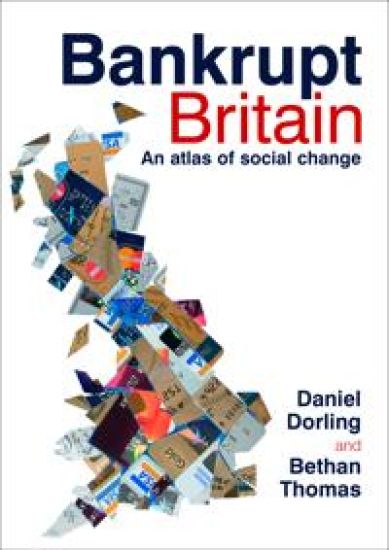
Bankrupt Britain

Bankrupt Britain

Daniel Dorling; Bethan Thomas

Policy Press
2011
nidottu
Bankrupt Britain is a unique atlas giving a comprehensive picture of the effect of the recession on Britain. In detailed colour maps, it shows how economic, social and environmental fortunes have been affected in different areas in the wake of the 2007 banking crisis, 2008 economic crash and 2009 credit crunch. It is essential reading for a broad audience with detailed local level data and a national snap-shot of Britain during this time.
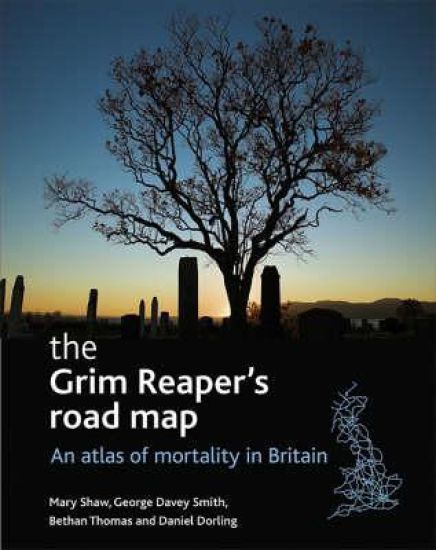
The Grim Reaper's road map

The Grim Reaper's road map

Mary Shaw; Bethan Thomas; George Davey Smith; Daniel Dorling

Policy Press
2008
nidottu
This impressive full-colour atlas, with over 100 colour-coded and accessible maps, uniquely presents the geography of death in Britain. The first atlas published on this subject for over two decades, this book presents data from more than 14 million deaths over a 24-year period in Britain. The maps detail over 100 separate categories of cause of death, including various cancers, suicides, assault by firearms, multiple sclerosis, pneumonia, hypothermia, falls, and Parkinson's disease, and show how often these occurred in different neighbourhoods. Accompanying each map is a detailed description and brief geographical analysis - the number of people who have died due to each cause, the average age of death and ratio of male to female deaths are listed. Taken as a whole, these provide a comprehensive overview of the geographical pattern of mortality in Britain. This atlas will be essential reading for academics and students of social medicine, sociology of health and illness and epidemiology. It will also be valuable for anyone who wants a better understanding of patterns of mortality within Britain, including medical and healthcare practitioners, policy makers and researchers.
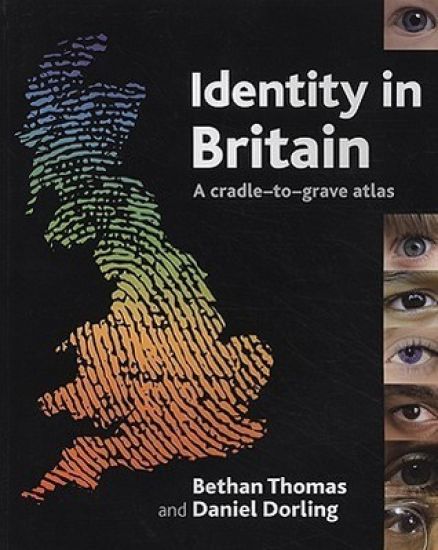
Identity in Britain

Identity in Britain

Bethan Thomas; Daniel Dorling

Policy Press
2007
nidottu
Sixty million people live in Britain. Imagine sixty million. Imagine a map of sixty million. What would that map look like and what story would it tell us about identity in Britain today? Bethan Thomas and Danny Dorling have brought together this outstanding atlas to provide us with a unique visual picture of identity and geography combined. "Identity in Britain" explores our changing identities as we progress from infancy to old age and tells the story of the myriad geographies of life in Britain. Features and benefits include: over 280 full colour, detailed maps analysis of the contemporary neighbourhood geographies of people in Britain at various life stages clear introduction and how-to-use guide making the atlas highly accessible for a wide range of users locational reference maps to aid interpretation of the maps on each page Accompanying web resources, including locational cartograms Unlike conventional atlases of human geography, it allows us to see a range of data on a single map; further it allows us to easily see what social mixing does not occur as well as what does. Never before have we had such a vivid geographical picture of identity in Britain today. The atlas is essential reading for those interested in contemporary human identity and the social geography of early twenty first century Britain. It is also an invaluable resource for researchers working in a wide range of statutory and voluntary organisations, policy makers, journalists, politicians, students and academics.
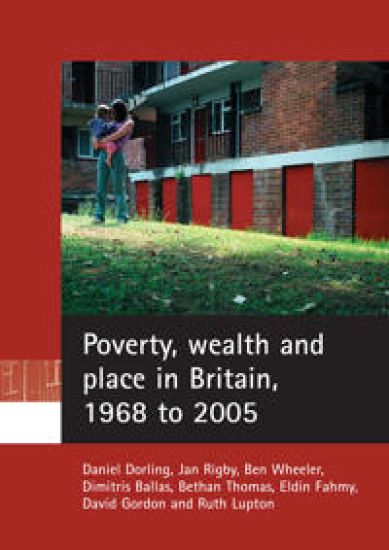
Poverty, wealth and place in Britain, 1968 to 2005

Poverty, wealth and place in Britain, 1968 to 2005

Daniel Dorling; Jan Rigby; Ben Wheeler; Dimitris Ballas; Bethan Thomas; Eldin Fahmy; David Gordon; Ruth Lupton

Policy Press
2007
nidottu
This is the first detailed study of the recent geographical distribution of poverty and wealth in Britain. It presents the most comprehensive estimates of the changing levels of poverty and wealth from the late 1960s. A wide range of secondary data is used, beginning with the first national Poverty in the UK survey of Peter Townsend and colleagues, and ending with data released during the middle of the current decade. The authors extend concepts of social exclusion to establish 5 household groupings: the 'exclusive wealthy' - able to exclude themselves from the norms of society; those who are rich but not exclusively so; those who are neither rich nor poor; the 'breadline poor'; and the 'core poor' - who experience a combination of severe income poverty, material deprivation and subjective poverty. Poverty and wealth statistics are mapped in detail to explore geographical patterns over the last four decades, and analysed to determine whether poverty and wealth have become more or less polarised.
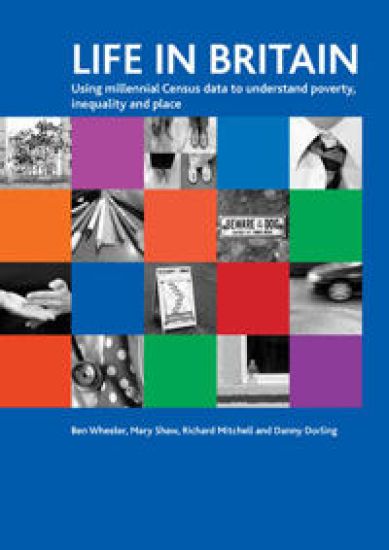
Life in Britain

Life in Britain

Ben Wheeler; Mary Shaw; Richard Mitchell; Daniel Dorling

Policy Press
2005
nidottu
This lively, colourful and innovative pack has been designed specifically for use as a teaching aid and learning resource for students of geography, sociology, social policy and related social science disciplines. With new evidence about the nature of social and geographical divisions in British society, it is also an invaluable resource for policy makers and local authority professionals in areas such as planning, education, housing, poverty and social exclusion. The topics selected are central to themes covered both at undergraduate and A-level and focus on the differences between areas within the UK, highlighting the spatial inequalities and gaps in service provision that the census data have revealed. The pack contains a range of valuable learning materials, including: A summary sheet (A4, 2 pages) 10 short reports (A4, 8 pages each): 5 full colour A2 posters (photos, text and maps depicting life in contemporary Britain and focusing on housing, poverty, employment, education and health) A technical report (giving the background to the project and details of the analyses)
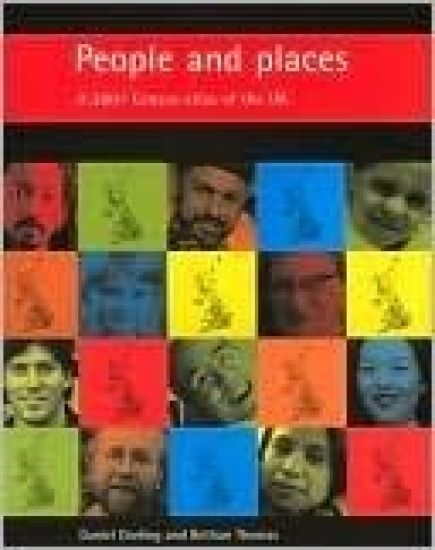
People and places

People and places

Daniel Dorling; Bethan Thomas

Policy Press
2004
sidottu
People and places: A 2001 Census atlas of the UK provides an at-a-glance guide to social change in the UK at the start of the new millennium. It is the first comprehensive analysis of the 2001 Census and offers unique comparisons with the findings of the previous Census a decade ago. Over 500 full-colour maps covering 125 topics clearly illustrate the state of UK society today and how it is changing. The trends are explained and elaborated upon in the accompanying text. Using population maps in addition to conventional maps, the atlas covers all the major census topics at local authority level. Key features include an illuminating graphic summary of over 100,000 key demographic statistics; new cartographic projections and techniques used throughout ; appendix incorporating rankings for 25 selected topics by local authority; comparison with the 1991 census to identify national and local trends and up-to-date analysis and discussion of the implications of current trends for future policy. This authoritative atlas is essential reading for those interested in the current social geography of the UK, how it has changed and how it appears to be changing, including for planners in local authorities, health authorities and a wide range of statutory and voluntary organisations. It is also an invaluable resource for policy makers, journalists, politicians, students and academics interested in human geography and social change.
The widening gap

The widening gap

Mary Shaw; Daniel Dorling; David Gordon; George Davey Smith

Policy Press
1999
nidottu
The health gap continues to get wider. This text presents up-to-date evidence on the size of the health gap between different groups of people living in Britain, and the extent to which the gap is widening. It challenges whether the government is concerned enough about reducing inequalities.