Kirjojen hintavertailu. Mukana 12 152 606 kirjaa ja 12 kauppaa.
Kirjailija
Daniel E. Flath
Kirjat ja teokset yhdessä paikassa: 5 kirjaa, julkaisuja vuosilta 1995-2022, suosituimpien joukossa Applied Calculus. Vertaile teosten hintoja ja tarkista saatavuus suomalaisista kirjakaupoista.
Deborah Hughes-Hallett; Patti Frazer Lock; Andrew M. Gleason; Daniel E. Flath; Sheldon P. Gordon; David O. Lomen; David Lovelock; William G. McCallum; Brad G. Osgood; Andrew Pasquale; Jeff Tecosky-Feldman; Joseph Thrash; Karen R. Rhea; Thomas W. Tucker
Deborah Hughes-Hallett; Patti Frazer Lock; Andrew M. Gleason; Daniel E. Flath; Sheldon P. Gordon; David O. Lomen; David Lovelock; William G. McCallum; Brad G. Osgood; Andrew Pasquale; Jeff Tecosky-Feldman; Joseph Thrash; Karen R. Rhea; Thomas W. Tucker
Interactive classrooms and well-crafted problems promote student learning. Since it's inception, the hallmark of Applied Calculus is its innovative and engaging problems. The Calculus Consortium pioneered and incorporates the approach called the "Rule of Four." The Rule of Four, presents ideas graphically, numerically, symbolically, and verbally, thereby encouraging students with a variety of learning styles to deepen their understanding as they work through a wide variety of problem types.
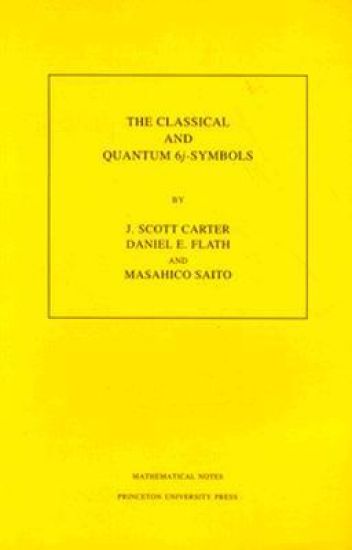
Addressing physicists and mathematicians alike, this book discusses the finite dimensional representation theory of sl(2), both classical and quantum. Covering representations of U(sl(2)), quantum sl(2), the quantum trace and color representations, and the Turaev-Viro invariant, this work is useful to graduate students and professionals. The classic subject of representations of U(sl(2)) is equivalent to the physicists' theory of quantum angular momentum. This material is developed in an elementary way using spin-networks and the Temperley-Lieb algebra to organize computations that have posed difficulties in earlier treatments of the subject. The emphasis is on the 6j-symbols and the identities among them, especially the Biedenharn-Elliott and orthogonality identities. The chapter on the quantum group Ub-3.0 qb0(sl(2)) develops the representation theory in strict analogy with the classical case, wherein the authors interpret the Kauffman bracket and the associated quantum spin-networks algebraically. The authors then explore instances where the quantum parameter q is a root of unity, which calls for a representation theory of a decidedly different flavor. The theory in this case is developed, modulo the trace zero representations, in order to arrive at a finite theory suitable for topological applications. The Turaev-Viro invariant for 3-manifolds is defined combinatorially using the theory developed in the preceding chapters. Since the background from the classical, quantum, and quantum root of unity cases has been explained thoroughly, the definition of this invariant is completely contained and justified within the text.