Kirjojen hintavertailu. Mukana 12 152 606 kirjaa ja 12 kauppaa.

Kirjailija

Daniel F. Vukovich

Kirjat ja teokset yhdessä paikassa: 4 kirjaa, julkaisuja vuosilta 2018-2023, suosituimpien joukossa After Autonomy: A Post-Mortem for Hong Kong’s first Handover, 1997–2019. Vertaile teosten hintoja ja tarkista saatavuus suomalaisista kirjakaupoista.

4 kirjaa

Kirjojen julkaisuhaarukka 2018-2023.

After Autonomy: A Post-Mortem for Hong Kong’s first Handover, 1997–2019
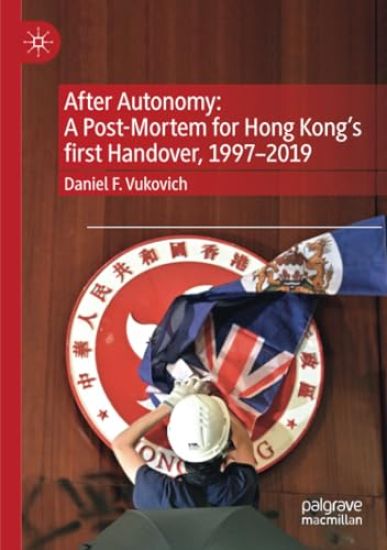
This book offers a sharp, critical analysis of the rise and fall of the 2019 anti-extradition bill movement in Hong Kong, including prior events like Occupy Central and the Mongkok Fishball Revolution, as well as their aftermaths in light of the re-assertion of mainland sovereignty over the SAR. Reading the conflict against the grain of those who would romanticize it or simply condemn it in nationalistic fashion, Vukovich goes beyond mediatized discourse to disentangle its roots in the Basic Law system as well as in the colonial and insufficiently post-colonial contexts and dynamics of Hong Kong. He examines the question of localist identity and its discontents, the problems of nativism, violence, and liberalism, the impossibility of autonomy, and what forms a genuine de-colonization can and might yet take in the city. A concluding chapter examines Hong Kong’s need for state capacity and proper, livelihood development, in the light of theOmicron wave of the Covid pandemic, as the SAR goes forward into a second handover era.
After Autonomy: A Post-Mortem for Hong Kong’s first Handover, 1997–2019
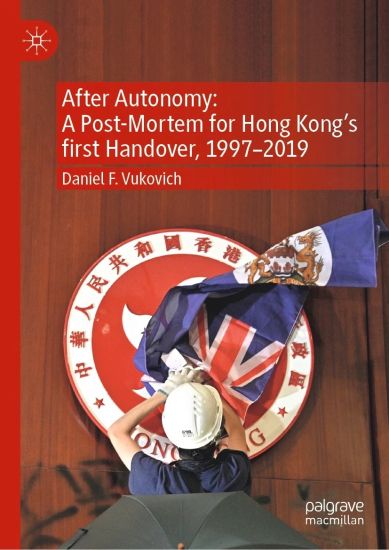
This book offers a sharp, critical analysis of the rise and fall of the 2019 anti-extradition bill movement in Hong Kong, including prior events like Occupy Central and the Mongkok Fishball Revolution, as well as their aftermaths in light of the re-assertion of mainland sovereignty over the SAR. Reading the conflict against the grain of those who would romanticize it or simply condemn it in nationalistic fashion, Vukovich goes beyond mediatized discourse to disentangle its roots in the Basic Law system as well as in the colonial and insufficiently post-colonial contexts and dynamics of Hong Kong. He examines the question of localist identity and its discontents, the problems of nativism, violence, and liberalism, the impossibility of autonomy, and what forms a genuine de-colonization can and might yet take in the city. A concluding chapter examines Hong Kong’s need for state capacity and proper, livelihood development, in the light of theOmicron wave of the Covid pandemic, as the SAR goes forward into a second handover era.
Illiberal China

Illiberal China

Daniel F. Vukovich

Springer Verlag, Singapore
2018
nidottu
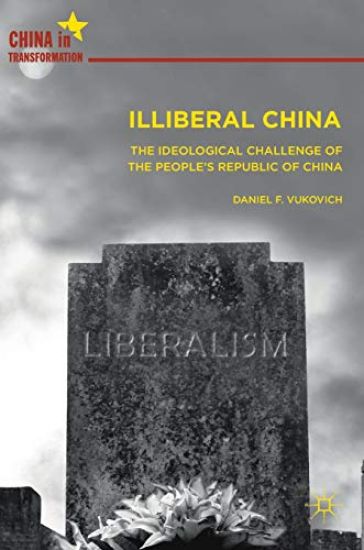
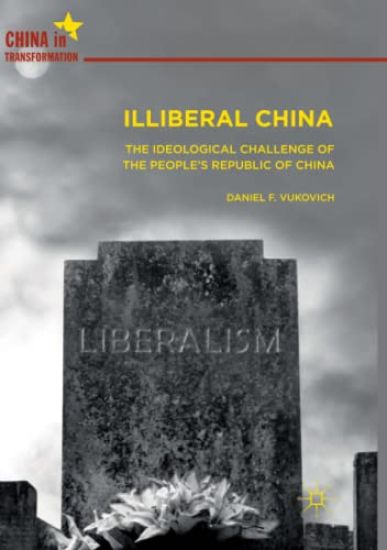
This book analyzes the 'intellectual political culture' of post-Tiananmen China in comparison to and in conflict with liberalism inside and outside the P.R.C. How do mainland politics and discourses challenge ‘our’ own, chiefly liberal and anti-‘statist’ political frameworks? To what extent is China paradoxically intertwined with a liberal economism? How can one understand its general refusal of liberalism, as well as its frequent, direct responses to electoral democracy, universalism, Western media, and other normative forces? Vukovich argues that the Party-state poses a challenge to our understandings of politics, globalization, and even progress. To be illiberal is not necessarily to be reactionary and vulgar but, more interestingly, to be anti-liberal and to seek alternatives to a degraded liberalism. In this way Chinese politics illuminate the global conjuncture, and may have lessons in otherwise bleak times.
Illiberal China

Illiberal China

Daniel F. Vukovich

Springer Verlag, Singapore
2018
sidottu
This book analyzes the 'intellectual political culture' of post-Tiananmen China in comparison to and in conflict with liberalism inside and outside the P.R.C. How do mainland politics and discourses challenge ‘our’ own, chiefly liberal and anti-‘statist’ political frameworks? To what extent is China paradoxically intertwined with a liberal economism? How can one understand its general refusal of liberalism, as well as its frequent, direct responses to electoral democracy, universalism, Western media, and other normative forces? Vukovich argues that the Party-state poses a challenge to our understandings of politics, globalization, and even progress. To be illiberal is not necessarily to be reactionary and vulgar but, more interestingly, to be anti-liberal and to seek alternatives to a degraded liberalism. In this way Chinese politics illuminate the global conjuncture, and may have lessons in otherwise bleak times.