Kirjailija
Daniel Friedman
Kirjat ja teokset yhdessä paikassa: 13 kirjaa, julkaisuja vuosilta 1985-2025, suosituimpien joukossa Evolutionary Games in Natural, Social, and Virtual Worlds. Vertaile teosten hintoja ja tarkista saatavuus suomalaisista kirjakaupoista.
13 kirjaa
Kirjojen julkaisuhaarukka 1985-2025.
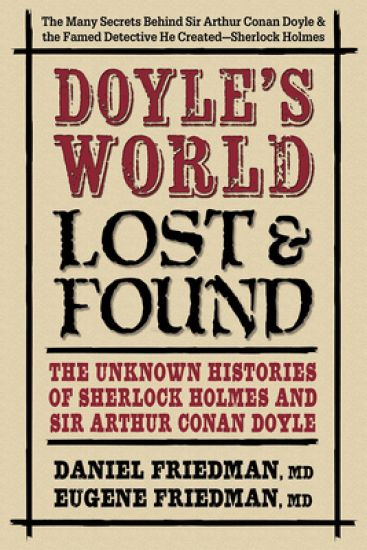
Doyle's World is no ordinary biography about one of the world's most influential writers. It is instead a work that deciphers in particular the cryptic origins and actual scientific methods used by fiction's most famous consulting detective Sherlock Holmes--and a work that provides a detailed look into the psyche and working life of Holmes' creator, Sir Arthur Conan Doyle. The book follows Doyle's entire illustrious literary career, with emphasis on the Sherlock Holmes mysteries as they evolved from the late 1880s to the early 1900s. Revealed here for the first time--by son-father writing team Daniel Friedman, MD, and Eugene Friedman, MD--are the many inspirations behind the physical, emotional, and intellectual characteristics that Doyle wove together so deftly to bring his legendary sleuth to life. Readers are in for many surprises as the Friedmans bring forth tantalizing parallels between the literary realm of both Sherlock Holmes--along with his various other fiction and nonfiction works--and the actual events from Doyle's childhood and early adulthood that served as frequent inspiration. The authors offer answers to long-debated and mysterious questions, such as: * From whom did Sherlock Holmes actually learn the art of detective work? * Why did Doyle kill off Sherlock Holmes--and how did the country of Japan inspire how he brought his famous detective back to life after nearly a decade? * What story elements did Doyle borrow from Robert Louis Stevenson's Treasure Island? * How did Doyle apply his fervent belief in Spiritualism to a variety of Holmes stories? * Who inspired Doyle to write about civil rights after a steamship journey in 1882? * How did the women in Doyle's life come to influence the relationships with women that both Sherlock Holmes and Dr. Watson have across sixty written adventures? Doyle's World is divided into three sections. The first is dedicated to the elements--both good and bad--that comprised Doyle's childhood and early adult years, and how an assemblage of persons and places and things from his life found their way into his literature. The second section emphasizes the highly complex themes and plots present in the Sherlock Holmes adventures, while it also thoroughly examines some of Doyle's strengths--and weaknesses--as a public figure of his time. The Friedmans also reveal how Doyle was able to subtly incorporate his own political, social, and religious views--in particular, his passionate and often bewildering embrace of Spiritualism--into the Holmes stories. And in the third section, the authors offer two "lost" stories they uncovered that were written by Doyle under a pseudonym--accompanied by textual analysis with which they make their case. This is a work of rich detail and in-depth scholarship that should win over both established fans of Doyle and devoted "Sherlockians" everywhere--and that will engage, and entertain, all others who enter this intriguing hall of literary mirrors.

This book focuses on markets organized as double auctions in which both buyers and sellers can submit bids and asks for standardized units of well-defined commodities and securities. It examines evidence from the laboratory and computer simulations.
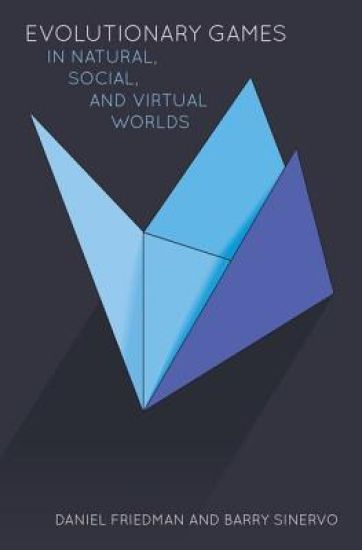
Evolutionary Games in Natural, Social, and Virtual Worlds
Daniel Friedman; Barry Sinervo
Oxford University Press Inc
2016
sidottu
Over the last 25 years, evolutionary game theory has grown with theoretical contributions from the disciplines of mathematics, economics, computer science and biology. It is now ripe for applications. In this book, Daniel Friedman---an economist trained in mathematics---and Barry Sinervo---a biologist trained in mathematics---offer the first unified account of evolutionary game theory aimed at applied researchers. They show how to use a single set of tools to build useful models for three different worlds: the natural world studied by biologists; the social world studied by anthropologists, economists, political scientists and others; and the virtual world built by computer scientists and engineers. The first six chapters offer an accessible introduction to core concepts of evolutionary game theory. These include fitness, replicator dynamics, sexual dynamics, memes and genes, single and multiple population games, Nash equilibrium and evolutionarily stable states, noisy best response and other adaptive processes, the Price equation, and cellular automata. The material connects evolutionary game theory with classic population genetic models, and also with classical game theory. Notably, these chapters also show how to estimate payoff and choice parameters from the data. The last eight chapters present exemplary game theory applications. These include a new coevolutionary predator-prey learning model extending rock-paper-scissors; models that use human subject laboratory data to estimate learning dynamics; new approaches to plastic strategies and life cycle strategies, including estimates for male elephant seals; a comparison of machine learning techniques for preserving diversity to those seen in the natural world; analyses of congestion in traffic networks (either internet or highways) and the "price of anarchy "; environmental and trade policy analysis based on evolutionary games; the evolution of cooperation; and speciation. As an aid for instruction, a web site provides downloadable computational tools written in the R programming language, Matlab, Mathematica and Excel.
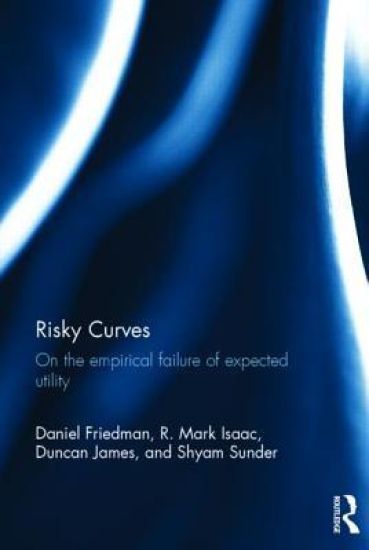
For several decades, the orthodox economics approach to understanding choice under risk has been to assume that each individual person maximizes some sort of personal utility function defined over purchasing power. This new volume contests that even the best wisdom from the orthodox theory has not yet been able to do better than supposedly naïve models that use rules of thumb, or that focus on the consumption possibilities and economic constraints facing the individual. The authors assert this by first revisiting the origins of orthodox theory. They then recount decades of failed attempts to obtain meaningful empirical validation or calibration of the theory. Estimated shapes and parameters of the "curves" have varied erratically from domain to domain (e.g., individual choice versus aggregate behavior), from context to context, from one elicitation mechanism to another, and even from the same individual at different time periods, sometimes just minutes apart.This book proposes the return to a simpler sort of scientific theory of risky choice, one that focuses not upon unobservable curves but rather upon the potentially observable opportunities and constraints facing decision makers. It argues that such an opportunities-based model offers superior possibilities for scientific advancement. At the very least, linear utility – in the presence of constraints - is a useful bar for the "curved" alternatives to clear.

Experimental economics is a rapidly growing field of inquiry, and there currently exist several textbooks and surveys describing the results of laboratory experiments in economics. This primer, however, is the first hands-on guide to the physical aspects of actually conducting experiments in economics. It tells researchers, teachers and students in economics how to deal with human subjects, how to design meaningful laboratory environments, how to design experiments, how to conduct experiments and how to analyse and report the data. It also deals with methodological issues. It can be used to structure an undergraduate or graduate course in experimental economics.

This book focuses on markets organized as double auctions in which both buyers and sellers can submit bids and asks for standardized units of well-defined commodities and securities. It examines evidence from the laboratory and computer simulations.
Theatre for Working-Class Audiences in the United States, 1830-1980
Daniel Friedman; Bruce Mcconachie
Praeger Publishers Inc
1985
sidottu
This collection of essays defines and explores American theatres that consciously appealed primarily to workers. The scope of the book extends from the 1830s to the 1980s. Different authors focus on how various plays related to the audience as a class, the historically dynamic interaction between spectators and actors, and why certain plays gained popularity. The collection encompasses essays concerning New York theatre in the 1830s and 1840s, Pittsburgh theatre in the 1870s, various immigrant productions of the late nineteenth and early twentieth century, the politically radical theatre of the 1930s, a concluding section on recent and contemporary theatre for workers, and an overview of the history, politics, and aesthetics of theatres doing shows for working-class audiences today. An original and comprehensive bibliographical essay regarding the history of theatres for workers in the United States completes the volume.
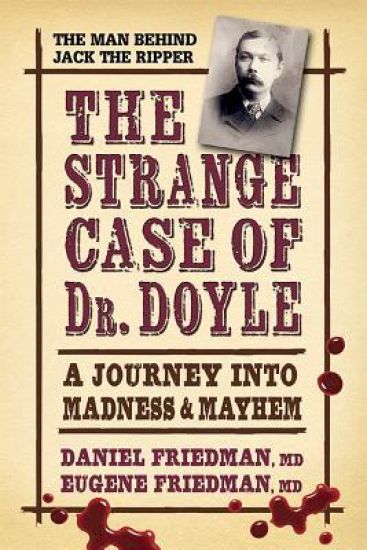
Strange Case of Dr. Doyle - Revised Edition
Eugene Friedman; Daniel Friedman
Square One Publishers
2020
nidottu
London. 1910. A procession of well-attired gentlemen and ladies are clearly out of place among the stalls and pushcarts of the Whitechapel District. As the group makes its way through the crowded streets, the tour guide stops now and then to point out various places where the mutilated bodies of the women had been found. Although the murders occurred twenty-two years prior, the man leading the group seems to know every detail and aspect of each slaying. Of those things he does not know, he offers freely his own insightful conjecture. This is, however, no average tour of brutal acts. It is a close look at infamous serial killer Jack the Ripper's trail of blood. And the man leading the group is none other than Sir Arthur Conan Doyle--famous creator of fictional character Sherlock Holmes, the world's greatest detective. In The Strange Case of Dr. Doyle, we learn what draws one famousn Englishman to another in ways that are as fascinating as they are shocking.Sir Arthur Conan Doyle actually led a tour group to the sites of the Whitechapel Murders in the year 1905. While we do not have an existing description of that tour, authors Daniel Friedman, MD, and Eugene Friedman, MD, have meticulously pieced together Doyle's own words to create a riveting account of his publicly stated beliefs on each of these horrific murders. As Doyle takes the group on his tour, the reader learns about the victims and the way each died. The authors have also included new pieces of evidence to understand better the murderer known to history only as Jack the Ripper.Interspersed throughout the tour is the Friedmans' unique and well-researched account of the life of the young Conan Doyle, which was shrouded in more mystery than any of his own works of fiction. The authors have uncovered facts about which few, if any, Doyle biographers have ever been aware. Doyle was able to reinvent himself so fully through his own writings that few recognized the more disturbing elements that were cut out of his own life story. What these two authors have uncovered in their investigation of Jack the Ripper and Sir Arthur will no doubt spark passion and debate among Sherlockian fans for years to come. The Strange Case of Dr. Doyle proves once again that truth--elementary as it may be--is always stranger than fiction.
For several decades, the orthodox economics approach to understanding choice under risk has been to assume that each individual person maximizes some sort of personal utility function defined over purchasing power. This new volume contests that even the best wisdom from the orthodox theory has not yet been able to do better than supposedly naïve models that use rules of thumb, or that focus on the consumption possibilities and economic constraints facing the individual. The authors assert this by first revisiting the origins of orthodox theory. They then recount decades of failed attempts to obtain meaningful empirical validation or calibration of the theory. Estimated shapes and parameters of the "curves" have varied erratically from domain to domain (e.g., individual choice versus aggregate behavior), from context to context, from one elicitation mechanism to another, and even from the same individual at different time periods, sometimes just minutes apart.This book proposes the return to a simpler sort of scientific theory of risky choice, one that focuses not upon unobservable curves but rather upon the potentially observable opportunities and constraints facing decision makers. It argues that such an opportunities-based model offers superior possibilities for scientific advancement. At the very least, linear utility – in the presence of constraints - is a useful bar for the "curved" alternatives to clear.
When Buck Schatz, senior citizen and retired Memphis cop, learns that an old adversary may have escaped Germany with a fortune in stolen gold, Buck decides to hunt down the fugitive and claim the loot. But a lot of people want a piece of the stolen treasure, and Buck's investigation quickly attracts unfriendly attention from a very motley (and murderous) crew in Daniel Friedman's Don't Ever Get Old, nominated for an Edgar Award for Best First Novel.
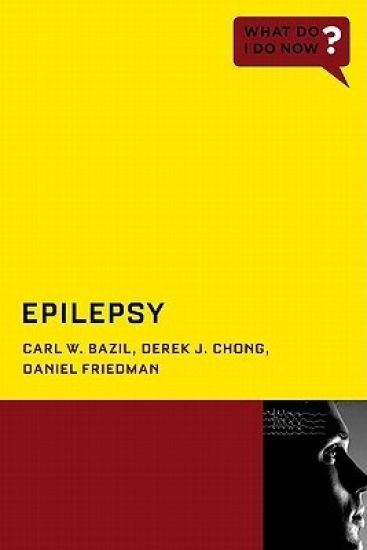
Patients with epilpesy pose many clinical challenges. Even experienced clinicians occasionally arrive at the point where diagnostic, work-up, treatment, or prognostic thinking becomes blocked. Epilepsy is the fifth volume in the "What Do I Do Now?" series and provides the clinician with the necessary tools to evaluate and treat an epilepsy patient. Applying a case-based approach of curbside consultation, the authors present 31 actual cases, providing key points to remember and recommendations for further reading at the end of each case and including EEGs and imaging where applicable. Concise and readable, Epilepsy is the perfect quick-reference guide for anyone working with epilepsy patients.