Kirjojen hintavertailu. Mukana 12 114 197 kirjaa ja 12 kauppaa.

Kirjailija

Daniel H. Shubin

Kirjat ja teokset yhdessä paikassa: 24 kirjaa, julkaisuja vuosilta 2008-2021, suosituimpien joukossa Abel The Russian Monk and Seer. Vertaile teosten hintoja ja tarkista saatavuus suomalaisista kirjakaupoista.

Mukana myös kirjoitusasut: Daniel H Shubin

24 kirjaa

Kirjojen julkaisuhaarukka 2008-2021.

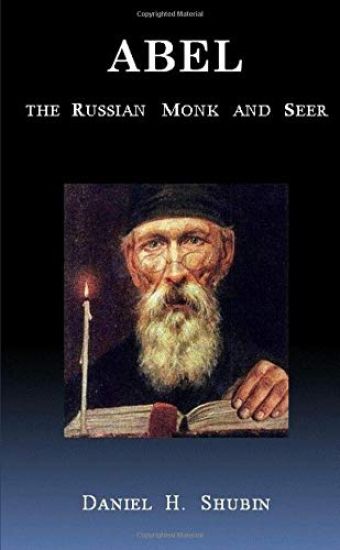
Abel The Russian Monk and Seer

Abel The Russian Monk and Seer

Daniel H Shubin

Lulu.com
2018
pokkari
Abel of Valaam, born in 1757, became a monk of the Russian Orthodox Church at the age of 28, and during a year-long isolation in the forest God bestowed on him a communication with the spirits knowing the future. They revealed to Abel events to occur in Russia beginning with Empress Catherine II the Great, and through the lives of all the subsequent Tsars to the Communist era, and to our contemporary Russia. Over his lifespan of 84 years, Abel spent about 30 years imprisoned as a result of announcing his prophecies to the rulers of Russia, but yet he also prophesied to every commoner who came to him sincerely for counsel. Daniel H. Shubin has written extensively on Russian history, biography and religion and translated much from Russian into English
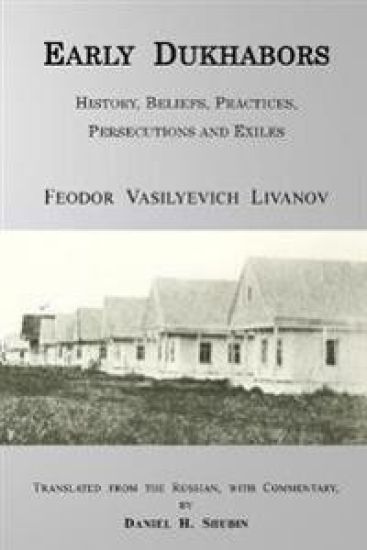
Early Dukhabors

Early Dukhabors

Feodor Livanov; Daniel H Shubin

Lulu.com
2021
pokkari
This volume consists of an English translation of selections from the series of books Dissenters and Prisoners (Раскольники и Острожники), by Feodor Vasilyevich Livanov, dealing with the origin and history, theology and beliefs, traditions and worship, community and domestic life, personal conduct, and persecutions and exiles, of the early Dukhabors of Russia. In addition are excepts from the History of Russian Christianity on the origin of the Dukhabors and their history of the 18th and 19th centuries. Daniel H. Shubin has translated many books from Russian into English on Russian history, religion and philosophy
Andrei Bely

Andrei Bely

Daniel H Shubin

Lulu.com
2017
pokkari
Andrei Bely was the pseudonym of Boris Nikolaievich Bugaev, the most prominent symbolist author in Russian history, and symbolism's greatest promoter as a new genre of Russian literature. Bely had deep religious and philosophic convictions, studying the great religious texts of history and the influential philosophers. He was the greatest promoter of anthroposophy in Russia, having studied under Rudolf Steiner in Europe. Beyond this, Bely graduated from Moscow University in honors, completing physics and mathematics curriculums and later studying history and language. He was a genius beyond our comprehension. His untimely death at age 53 was due to a brain aneurysm caused from stress for his refusal to capitulate to Soviet demands and become a socialist writer. This volume is his life, as well as a history of symbolism, and it includes a selection of his symbolist writings translated from Russian into English. Daniel H Shubin has written several books on Russian history, religion and philosophy.
Monastery Prisons

Monastery Prisons

Daniel H. Shubin

Lulu.com
2015
nidottu
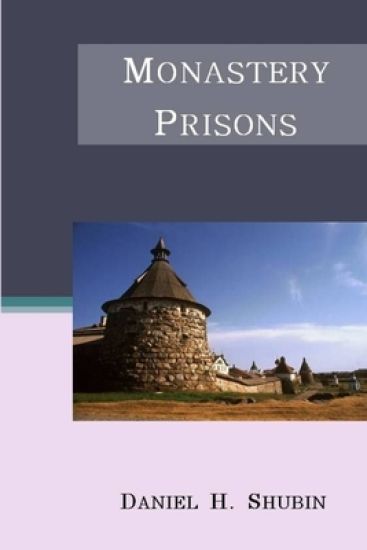
Little is known regarding prisons located inside Russian Orthodox monasteries for the incarceration and persecution of religious dissenters and sectarians, political activists, and criminals. This book focuses on the history of such prisons and the lives of the inmates subject to monastery incarceration by Imperial Russia and the Russian Orthodox Church. The period covered begins 1441, and ends 1905. Likewise included are the women incarcerated in convents over the same period. This is a part of history that is unknown to the non-Russian speaking world, and which the author hopes to unveil. This book deals with the fate of those known as monastery prisoners, those individuals having the misfortune due to violations against Orthodoxy, or against Imperial Russia, to be incarcerated in a monastery prison. Daniel H Shubin has written several books on history, philosophy and religion of Russia.
History of the Russian Tolstoyan Movement (the Tolstovtzi)
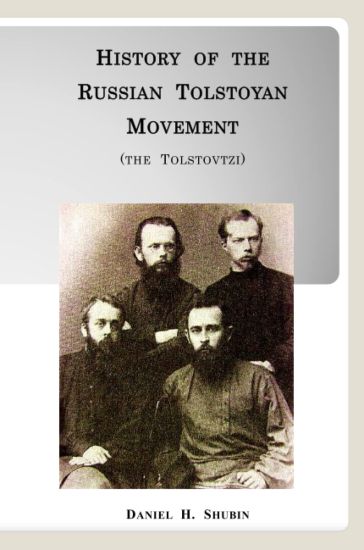
Leo Tolstoy died 1910, at the Astapova train station of pneumonia. Then what? Did Tolstoy's influence suddenly terminate with his death? Did those who dedicated themselves to his interpretation of Jesus Christ's teaching abandon it and return to their secular lives and beliefs? They called themselves Tolstovtzi: disciples of Tolstoyan philosophy. They continued the belief in Christian pacifism: the refusal of war and military service and violence in any form. The retained their high morality based on the Gospels, their vegetarian diet, and resided in communities they formed where all material items were held in common. This is their story. They held to their convictions even to their death by firing squad, or suffering in jails and prisons, or exile to concentration camps. To survive some were willing to relocate their commune to Siberia to distance themselves from Soviet government interference. Included in the volume is a brief biography of Leo Tolstoy, an exposition of his religious philosophy, and a description of Russia at the time of Tolstoy. Daniel H. Shubin has written several books on the life and philosophy of Leo Tolstoy, as well as translated War and Peace, The Kingdom of God is within You, Confession, What I Believe, A Path for Life, Summary of the Gospels, and On Life, from Russian into English. He has also visited the Tolstoy estate in Tule, and travelled Russia.
New Rosicrucians of Early Soviet Russia
With the Edict of Toleration of Religion in 1905, several Russians of a mystical mind took advantage of it to form or resurrect what they considered the ancient forms of esoteric Orders. These were the new Rosicrucians. Their inspired mentors compiled volumes of mystic philosophy, and which they combined with their personal notions of what the ancient Orders were, and so formed groups. This volume investigates 3 principal neo-Rosicrucians Orders of early Soviet Russia: Emesh Redivivus, the Orionist-Manicheans, and the Lux Astralis, their origins, leaders and members, beliefs and rites, and their persecution by Soviet authority, including their exiles, imprisonments and even executions, and their testimonies during interrogation. The volume includes a translation from Russian into English of a selection of the major compositions of their esoteric mentors, which further delve into their ideology of the evolution of the universe, the concepts of good and bad, the difference between the corporeal and the spiritual, our purpose and philosophy of life, and the aspiration for truth and moral perfection. Only original Russian sources are used to compile this record. Daniel H. Shubin has written many books on Russian philosophy, religion, biography and history.
Porfiri Ivanov, Russia's Naturalist Healer
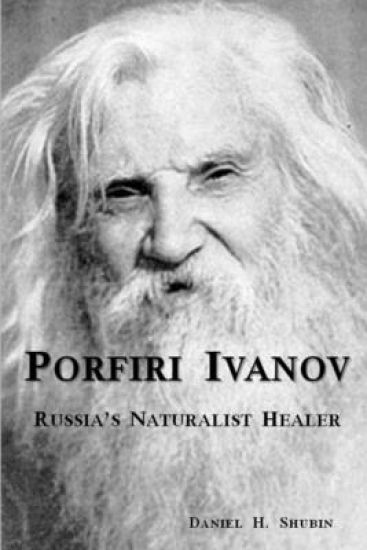
Porfiri Korneevich Ivanov was an original thinker and unique healer, researcher and practitioner who was able to unite body and cognizance with Nature. He felt that a person should not be dependent on medicines to heal his body of various illnesses and maladies. In place of medicines Porfiri proposed to people that they take responsibility for their own illnesses, utilizing air and body and ground to achieve this. Porfiri Ivanov had a unique and almost miraculous ability to heal people of various illnesses, and the stamina to endure the worst of exposure to the elements, including extreme cold. By becoming one with Nature a person could also become one with God. Daniel H. Shubin has written several books on Russian history, biography and philosophy.
Concordia Antarova

Concordia Antarova

Daniel H. Shubin

Lulu.com
2016
nidottu
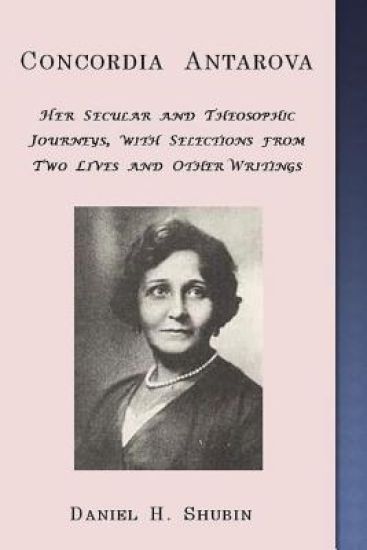
Concordia Evgenievna Antarova was a unique woman of especially firm character. After much study and dedication with a natural singing talent, Antarova rose to become Soviet Russia's greatest opera star. She possessed a singing and performance talent that could not be suppressed or equaled. During her later life, she acted as a mentor for those wanting a future in the arts. At the same time Antarova had a second life of a deeply spiritual person. Nonetheless, she and her husband were arrested and exiled to concentration camps, and where her husband died. After her release and during her isolation in her Moscow apartment, she received inspiration and revelation that culminated in her massive novel Two Lives, about the search for a spiritual life that transcended the corporeal life. At the same time, she promoted a life for the the benefit of family, society and nation. Daniel H. Shubin has translated several books from Russian into English and authored many on Russian philosophy, religion and history.
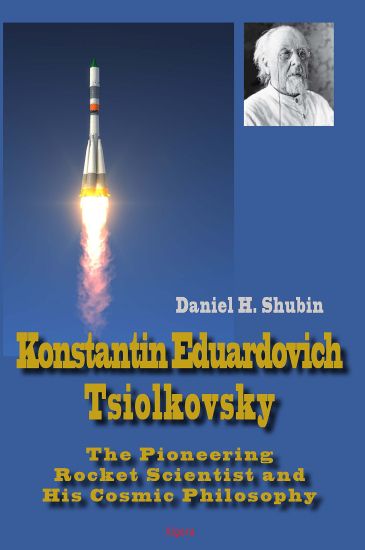
Tsiolkovski, the Cosmic Scientist and His Cosmic Philosophy
Konstantin Eduardovich Tsiolkovski was the founder of Soviet astrophysics and cosmonautics. He was a self-taught scientist and inventor, a schoolteacher, a cosmic and futurist philosopher, and a science fiction writer. His important designs include dirigibles formed with a metallic shell with a unique navigation system, the jet propulsion engine, the use of rockets for space travel, high altitude balloons, air-cushion vehicles, high-speed trains, and heavier-than-air aircraft. This book is a portrait of this extraordinary man and his extraordinary mind. It provides a sketch of his life and an introduction to his views and ideology, and a collection of original translations of his scientific concepts of the universe and space travel, his cosmic and socialist philosophy, as well as his most popular science fiction story. Daniel H. Shubin translated many books from Russian into English and authored many on Russian history, philosophy and religion.
History of Russian Christianity, Volume Four, the Russian Orthodox Church During the Twentieth Century
From Apostle Andrew to the conclusion of Soviet authority in 1990, Daniel H. Shubin presents the entire history of Christianity in Russia in a 4-volume series. The events, people and places that created the institution of Russian Orthodoxy are presented objectively and intensively. Included in these volumes is research on the many dissenters and sectarian groups that evolved over the centuries, the influence of Catholicism and Protestantism on Russia, and the presence of Judaism. The history covers the higher levels of ecclesiastical activity with the involvement of tsars and prelates, as well as saints and serfs, and monks and mystics. This fourth volume deals with the Russian Orthodox Church during the 20th Century, from the ascension of Tsar Nicholas II in 1894, to Premier Mikhail Gorbachov's Edict of Freedom of Conscience in 1990. Daniel H. Shubin has translated and written several books on Russian history, religion and philosophy.
History of Russian Christianity, Volume Three, the Synodal Era and the Sectarians
From Apostle Andrew to the conclusion of Soviet authority in 1990, Daniel H. Shubin presents the entire history of Christianity in Russia in a 4-volume series. The events, people and places that created the institution of Russian Orthodoxy are presented objectively and intensively. Included in these volumes is research on the many dissenters and sectarian groups that evolved over the centuries, the influence of Catholicism and Protestantism on Russia, and the presence of Judaism. The history covers the higher levels of ecclesiastical activity with the involvement of tsars and prelates, as well as saints and serfs, and monks and mystics. This third volume deals with the era of the Synodal government of the Russian Orthodox Church, and discusses the various dissenters and the sectarian groups of the 18th and 19th centuries. The period 1725 to 1894. Daniel H. Shubin has translated and written several books on Russian history, religion and philosophy.
History of Russian Christianity, Volume Two, the Patriarchal Period Through Tsar Peter the Great
From Apostle Andrew to the conclusion of Soviet authority in 1990, Daniel H. Shubin presents the entire history of Christianity in Russia in a 4-volume series. The events, people and places that created the institution of the Russian Orthodox is presented objectively and intensively. Included in these volumes is research on the many dissenters and sectarian groups that evolved over the centuries, the influence of Catholicism and Protestantism on Russia, and the presence of Judaism. The history covers the higher levels of ecclesiastical activity with the involvement of tsars and prelates, as well as saints and serfs, and monks and mystics. This second volume, deals with the Patriarchal Period, from 1586, the year of Tsar Ivan IV death, to 1725, the year of Tsar Peter the Great's death. Daniel H. Shubin has translated and written several books on Russian history, religion and philosophy.
History of Russian Christianity, Volume One, from the Earliest Years Through Tsar Ivan Iv
From Apostle Andrew to the conclusion of Soviet authority in 1990, Daniel H. Shubin presents the entire history of Christianity in Russia in a 4-volume series. The events, people and regions that created the traditions of Russian Christianity are presented objectively and intensively, describing the formation of the Russian Orthodox Church. Included in these volumes is research on the many dissenters and sectarian groups that evolved over the centuries, the influence of Catholicism and Protestantism on Russia, and the presence of Judaism. The history covers the higher levels of ecclesiastical activity with the involvement of tsars and prelates, as well as saints and serfs, and monks and mystics. This first volume, deals with the period from Apostle Andrew to the death of Tsar Ivan IV, a period of almost 1600 years. Daniel H. Shubin has translated and written several books on Russian history, religion and philosophy.
Tsars, Pseudo-Tsars and the Era of Russia's Upheavals
After the death of Tsar Ivan IV the Terrible in 1584, Boris Godunov governed from the backround during the 13-year reign of the borderline-retarded Tsar Feodor Ivanovich, and then for almost seven years in his own name. But the effects of his security forces on Russian society took their toll. After Godunov's death, Vasili Shuisky became tsar, then imposter princes were provide by rivals, and False Dmitris and other contenders fueled the flames. Enemies were brutally tortured and removed from the world altogether. At the same time the Russian Patriarchate was created with Job the first patriarch. The invasion of Poland added to the miseries of Russia, until the invaders were defeated. This Era of Upheavals, also known in Russian history as the Time of Troubles, came to a close only when Mikhail Romanov was crowned tsar in 1613. Daniel H. Shubin has translated and published several books on Russian history, philosophy and religion.
Helena Roerich

Helena Roerich

Daniel H Shubin

Daniel H Shbin
2013
pokkari
Living Ethics is a conduct based ideology and ethos, whose purpose is to perfect the moral integrity of a person over the course of lifetimes. The concepts extend to family, society, state, and world civilization to bring prosperity and happiness while at the same time providing purpose and the ability to manage difficulties. Living Ethics is also known as Agni Yoga. Living Ethics is based on a series of revelations that Helena Roerich received over the course of about 20 years, from 1920 to 1940, although she lived to 1955. It explains the experiences and rules that a person must apply to their life to transform it and to transform the lives of others for the better. It is a dynamic effort created through self-discipline, self-examination and self-sacrifice. This volume consists of a biography of Helena Roerich, an analysis of her teachings, and a translation into English of selections of her compositions.