Kirjojen hintavertailu. Mukana 12 595 353 kirjaa ja 12 kauppaa.

Kirjailija

Daniel Heller

Kirjat ja teokset yhdessä paikassa: 19 kirjaa, julkaisuja vuosilta 2007-2020, suosituimpien joukossa Political Will and Improving Public Schools. Vertaile teosten hintoja ja tarkista saatavuus suomalaisista kirjakaupoista.

19 kirjaa

Kirjojen julkaisuhaarukka 2007-2020.

Building a Career in Software

Building a Career in Software

Daniel Heller

APress
2020
nidottu
Software engineering education has a problem: universities and bootcamps teach aspiring engineers to write code, but they leave graduates to teach themselves the countless supporting tools required to thrive in real software companies. Building a Career in Software is the solution, a comprehensive guide to the essential skills that instructors don't need and professionals never think to teach: landing jobs, choosing teams and projects, asking good questions, running meetings, going on-call, debugging production problems, technical writing, making the most of a mentor, and much more. In over a decade building software at companies such as Apple and Uber, Daniel Heller has mentored and managed tens of engineers from a variety of training backgrounds, and those engineers inspired this book with their hundreds of questions about career issues and day-to-day problems. Designed for either random access or cover-to-cover reading, it offers concise treatments of virtuallyevery non-technical challenge you will face in the first five years of your career—as well as a selection of industry-focused technical topics rarely covered in training. Whatever your education or technical specialty, Building a Career in Software can save you years of trial and error and help you succeed as a real-world software professional.What You Will LearnDiscover every important nontechnical facet of professional programming as well as several key technical practices essential to the transition from student to professionalBuild relationships with your employerImprove your communication, including technical writing, asking good questions, and public speakingWho This Book is ForSoftware engineers either early in their careers or about to transition to the professional world; that is, all graduates of computer science or softwareengineering university programs and all software engineering boot camp participants.
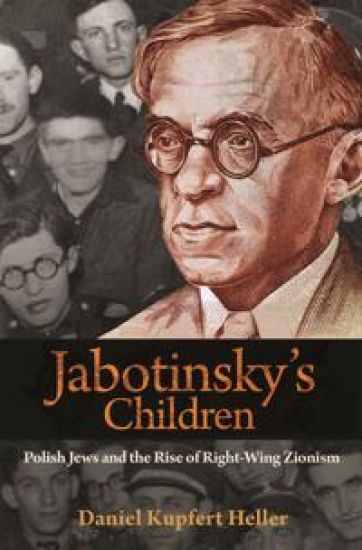
Jabotinsky's Children

Jabotinsky's Children

Daniel Heller

Princeton University Press
2019
pokkari
How interwar Poland and its Jewish youth were instrumental in shaping the ideology of right-wing ZionismBy the late 1930s, as many as fifty thousand Polish Jews belonged to Betar, a youth movement known for its support of Vladimir Jabotinsky, the founder of right-wing Zionism. Poland was not only home to Jabotinsky’s largest following. The country also served as an inspiration and incubator for the development of right-wing Zionist ideas. Jabotinsky’s Children draws on a wealth of rare archival material to uncover how the young people in Betar were instrumental in shaping right-wing Zionist attitudes about the roles that authoritarianism and military force could play in the quest to build and maintain a Jewish state.Recovering the voices of ordinary Betar members through their letters, diaries, and autobiographies, Jabotinsky’s Children paints a vivid portrait of young Polish Jews and their turbulent lives on the eve of the Holocaust. Rather than define Jabotinsky as a firebrand fascist or steadfast democrat, the book instead reveals how he deliberately delivered multiple and contradictory messages to his young followers, leaving it to them to interpret him as they saw fit. Tracing Betar’s surprising relationship with interwar Poland’s authoritarian government, Jabotinsky’s Children overturns popular misconceptions about Polish-Jewish relations between the two world wars and captures the fervent efforts of Poland’s Jewish youth to determine, on their own terms, who they were, where they belonged, and what their future held in store.Shedding critical light on a vital yet neglected chapter in the history of Zionism, Jabotinsky’s Children provides invaluable perspective on the origins of right-wing Zionist beliefs and their enduring allure in Israel today.
A Typical, Sweltering Phoenix Afternoon

A Typical, Sweltering Phoenix Afternoon

Daniel Heller

Createspace Independent Publishing Platform
2017
nidottu
Essays about sexual homeless girls and stealing from the homeless. Poems of children making sense of their psychedelic sense impressions with a theme park rodent. Stories about love, loss, skateboarding and Jesus-these are just a few flashes of the mythical mayhem you'll find in this compilation of creative writing called A Typical, Sweltering Phoenix Afternoon. Prose poetry, free verse, short fiction and nonfiction-there's something here for everyone, no matter if you were once a godless, degenerate teenage punk who raged through city streets on LSD and alcohol, or an obedient, cheerful Boy Scout who hiked with the Holy Spirit in the mountains of Arizona. This all-American collection of youthful treason and irreverence wants you to read it all, to join in the fun, and revel in its dark, spiritual, literary freedom.
Jabotinsky's Children

Jabotinsky's Children

Daniel Heller

PRINCETON UNIVERSITY PRESS
2017
sidottu
How interwar Poland and its Jewish youth were instrumental in shaping the ideology of right-wing Zionism By the late 1930s, as many as fifty thousand Polish Jews belonged to Betar, a youth movement known for its support of Vladimir Jabotinsky, the founder of right-wing Zionism. Poland was not only home to Jabotinsky's largest following. The country also served as an inspiration and incubator for the development of right-wing Zionist ideas. Jabotinsky's Children draws on a wealth of rare archival material to uncover how the young people in Betar were instrumental in shaping right-wing Zionist attitudes about the roles that authoritarianism and military force could play in the quest to build and maintain a Jewish state. Recovering the voices of ordinary Betar members through their letters, diaries, and autobiographies, Jabotinsky's Children paints a vivid portrait of young Polish Jews and their turbulent lives on the eve of the Holocaust. Rather than define Jabotinsky as a firebrand fascist or steadfast democrat, the book instead reveals how he deliberately delivered multiple and contradictory messages to his young followers, leaving it to them to interpret him as they saw fit. Tracing Betar's surprising relationship with interwar Poland's authoritarian government, Jabotinsky's Children overturns popular misconceptions about Polish-Jewish relations between the two world wars and captures the fervent efforts of Poland's Jewish youth to determine, on their own terms, who they were, where they belonged, and what their future held in store. Shedding critical light on a vital yet neglected chapter in the history of Zionism, Jabotinsky's Children provides invaluable perspective on the origins of right-wing Zionist beliefs and their enduring allure in Israel today.
Political Will and Improving Public Schools

Political Will and Improving Public Schools

Daniel Heller

Rowman Littlefield
2014
nidottu
The essays in this book deal with situations or issues in public education which we need to address. While some of these situations seem clear and almost obvious, making the necessary changes and admitting the truth to ourselves is not necessarily going to happen easily. The suggestions for education made here will require that Americans admit certain flaws in the system, some of which involve their own actions and attitudes. They will also have to be willing to make sacrifices for the larger good, such as allowing shifts in power and control. In other words, these changes will require political will, patience, and dedication if they are to be successful. There are many ideas for fixing our schools. They all demand a kind of faith, a promise to withhold judgment for a while until the new strategies are fully tested to decide whether or not they are effective. People can be impatient, wanting instant answers. They can also want assurance of success before every agreeing to allow a change to happen. These attitudes block experimentation and the attempt at change and improvement. Everyone will have to sacrifice, to take a risk, if we are to make real changes in the education system. All constituencies (students, teachers, administrators, parents, community members, institutions of higher education, teacher preparation programs, and unions) should be at the table. What they should be working toward is not their individual agendas or preservation, but the delivery of the best education possible to our youth.
Political Will and Improving Public Schools

Political Will and Improving Public Schools

Daniel Heller

Rowman Littlefield
2014
sidottu
The essays in this book deal with situations or issues in public education which we need to address. While some of these situations seem clear and almost obvious, making the necessary changes and admitting the truth to ourselves is not necessarily going to happen easily. The suggestions for education made here will require that Americans admit certain flaws in the system, some of which involve their own actions and attitudes. They will also have to be willing to make sacrifices for the larger good, such as allowing shifts in power and control. In other words, these changes will require political will, patience, and dedication if they are to be successful. There are many ideas for fixing our schools. They all demand a kind of faith, a promise to withhold judgment for a while until the new strategies are fully tested to decide whether or not they are effective. People can be impatient, wanting instant answers. They can also want assurance of success before every agreeing to allow a change to happen. These attitudes block experimentation and the attempt at change and improvement. Everyone will have to sacrifice, to take a risk, if we are to make real changes in the education system. All constituencies (students, teachers, administrators, parents, community members, institutions of higher education, teacher preparation programs, and unions) should be at the table. What they should be working toward is not their individual agendas or preservation, but the delivery of the best education possible to our youth.
Taoist Lessons for Educational Leaders

Taoist Lessons for Educational Leaders

Daniel Heller

Rowman Littlefield Education
2012
nidottu
This book explores ways in which educational leaders can apply the wisdom of the Tao in their day-to-day work in schools. It offers an alternative to the standard ways of western thinking to give the leader more possibilities when confronting a situation. We tend to value immediate and decisive action, winning, directing, and getting one’s way. Taoist Lessons for Educational Leaders offers another way of approaching the workplace. We can also value waiting and reflection before acting, seeing all participants as winners or at least no one as a loser, following as a form of leadership, and giving away some victories, as beneficial to the governance of a school. There is more than one way to “win” and more than one way assert one’s authority, as illustrated by this book.
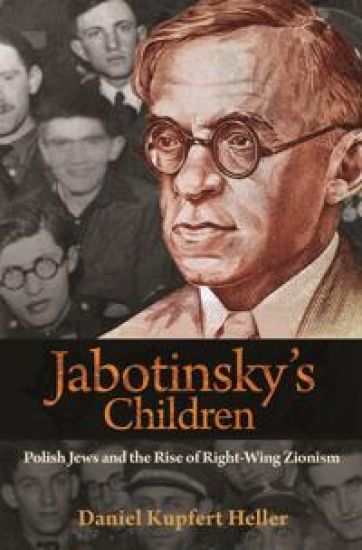
Curriculum on the Edge of Survival

Curriculum on the Edge of Survival

Daniel Heller

Rowman Littlefield Education
2012
sidottu
Typically, school curriculum has been viewed through the lens of preparation for the workplace or higher education, both worthy objectives. However, this is not the only lens, and perhaps not even the most powerful one to use, if the goal is to optimize the educational system. Curriculum on the Edge of Survival, 2nd Edition, attempts to define basic aspects of the curriculum when viewed through the larger lens of a school as the principal instrument through which we maintain an effective democracy. In that case, the purpose of education is to prepare our students to take their rightful place as active members of a democracy. This purpose is larger than workplace or college readiness, and in fact subsumes them. The second edition of Curriculum on the Edge of Survival posits four major starting points for education under the purpose of preparing students for functional membership in a democracy: kindness, thinking, problem solving, and communications. These four foundational elements should be taught in every class, at every level, every day. They form the backbone of a great educational system.
Curriculum on the Edge of Survival

Curriculum on the Edge of Survival

Daniel Heller

Rowman Littlefield Education
2012
nidottu
Typically, school curriculum has been viewed through the lens of preparation for the workplace or higher education, both worthy objectives. However, this is not the only lens, and perhaps not even the most powerful one to use, if the goal is to optimize the educational system. Curriculum on the Edge of Survival, 2nd Edition, attempts to define basic aspects of the curriculum when viewed through the larger lens of a school as the principal instrument through which we maintain an effective democracy. In that case, the purpose of education is to prepare our students to take their rightful place as active members of a democracy. This purpose is larger than workplace or college readiness, and in fact subsumes them. The second edition of Curriculum on the Edge of Survival posits four major starting points for education under the purpose of preparing students for functional membership in a democracy: kindness, thinking, problem solving, and communications. These four foundational elements should be taught in every class, at every level, every day. They form the backbone of a great educational system.
Curriculum on the Edge of Survival

Curriculum on the Edge of Survival

Daniel Heller

Rowman Littlefield Education
2007
sidottu
Typically, school curriculum has been viewed through the lens of preparation for the workplace or higher education—both worthy objectives. However, this is not the only lens, and perhaps not even the most powerful one to use, if the goal is to optimize the educational system. Curriculum on the Edge of Survival attempts to define basic aspects of the curriculum when viewed through the larger lens of a school as the principal instrument through which we maintain an effective democracy. In that case, the purpose of education is to prepare our students to take their rightful place as active members of a democracy. This purpose is larger than workplace or college readiness, and in fact subsumes them. Curriculum on the Edge of Survival posits four major starting points for education under the purpose of preparing students for functional membership in a democracy: kindness, thinking, problem solving, and communications. These four foundational elements should be taught in every class, at every level, every day. They form the backbone of a great educational system.
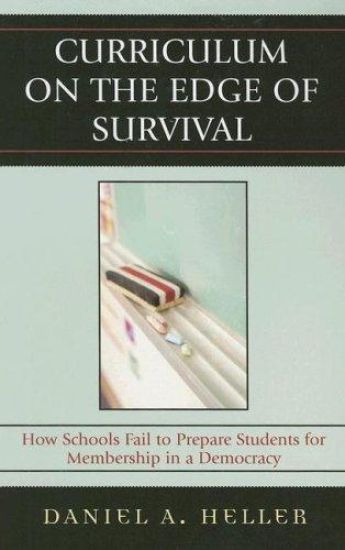
Curriculum on the Edge of Survival

Curriculum on the Edge of Survival

Daniel Heller

Rowman Littlefield Education
2007
nidottu
Typically, school curriculum has been viewed through the lens of preparation for the workplace or higher education_both worthy objectives. However, this is not the only lens, and perhaps not even the most powerful one to use, if the goal is to optimize the educational system. Curriculum on the Edge of Survival attempts to define basic aspects of the curriculum when viewed through the larger lens of a school as the principal instrument through which we maintain an effective democracy. In that case, the purpose of education is to prepare our students to take their rightful place as active members of a democracy. This purpose is larger than workplace or college readiness, and in fact subsumes them. Curriculum on the Edge of Survival posits four major starting points for education under the purpose of preparing students for functional membership in a democracy: kindness, thinking, problem solving, and communications. These four foundational elements should be taught in every class, at every level, every day. They form the backbone of a great educational system.