Kirjojen hintavertailu. Mukana 12 595 353 kirjaa ja 12 kauppaa.

Kirjailija

Daniel Herwitz

Kirjat ja teokset yhdessä paikassa: 15 kirjaa, julkaisuja vuosilta 1993-2021, suosituimpien joukossa Cosmopolitan Aesthetics. Vertaile teosten hintoja ja tarkista saatavuus suomalaisista kirjakaupoista.

15 kirjaa

Kirjojen julkaisuhaarukka 1993-2021.

Looking Through Images

Looking Through Images

Emmanuel Alloa; Daniel Herwitz; Andrew Benjamin

Columbia University Press
2021
pokkari
Images have always stirred ambivalent reactions. Yet whether eliciting fascinated gazes or iconoclastic repulsion from their beholders, they have hardly ever been seen as true sources of knowledge. They were long viewed as mere appearances, placeholders for the things themselves or deceptive illusions. Today, the traditional critique of the spectacle has given way to an unconditional embrace of the visual. However, we still lack a persuasive theoretical account of how images work.Emmanuel Alloa retraces the history of Western attitudes toward the visual to propose a major rethinking of images as irreplaceable agents of our everyday engagement with the world. He examines how ideas of images and their powers have been constructed in Western humanities, art theory, and philosophy, developing a novel genealogy of both visual studies and the concept of the medium. Alloa reconstructs the earliest Western media theory—Aristotle’s concept of the diaphanous milieu of vision—and the significance of its subsequent erasure in the history of science. Ultimately, he argues for a historically informed phenomenology of images and visual media that explains why images are not simply referential depictions, windows onto the world. Instead, images constantly reactivate the power of appearing. As media of visualization, they allow things to appear that could not be visible except in and through these very material devices.
Looking Through Images

Looking Through Images

Emmanuel Alloa; Daniel Herwitz; Andrew Benjamin

Columbia University Press
2021
sidottu
Images have always stirred ambivalent reactions. Yet whether eliciting fascinated gazes or iconoclastic repulsion from their beholders, they have hardly ever been seen as true sources of knowledge. They were long viewed as mere appearances, placeholders for the things themselves or deceptive illusions. Today, the traditional critique of the spectacle has given way to an unconditional embrace of the visual. However, we still lack a persuasive theoretical account of how images work.Emmanuel Alloa retraces the history of Western attitudes toward the visual to propose a major rethinking of images as irreplaceable agents of our everyday engagement with the world. He examines how ideas of images and their powers have been constructed in Western humanities, art theory, and philosophy, developing a novel genealogy of both visual studies and the concept of the medium. Alloa reconstructs the earliest Western media theory—Aristotle’s concept of the diaphanous milieu of vision—and the significance of its subsequent erasure in the history of science. Ultimately, he argues for a historically informed phenomenology of images and visual media that explains why images are not simply referential depictions, windows onto the world. Instead, images constantly reactivate the power of appearing. As media of visualization, they allow things to appear that could not be visible except in and through these very material devices.
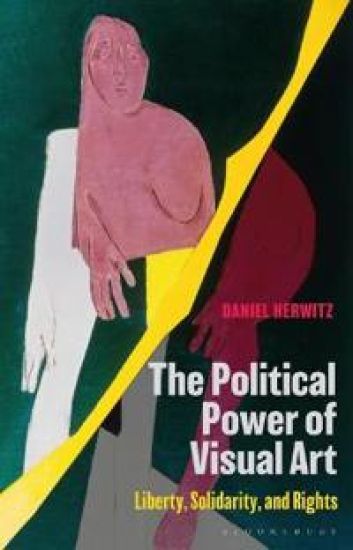
The Political Power of Visual Art

The Political Power of Visual Art

Daniel Herwitz

Bloomsbury Academic
2021
nidottu
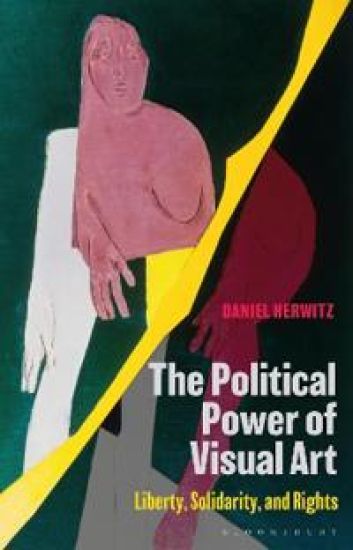
Visual art has a ubiquitous political cast today. But which politics? Daniel Herwitz seeks clarity on the various things meant by politics, and how we can evaluate their presumptions or aspirations in contemporary art. Drawing on the work of William Kentridge, drenched in violence, race, and power, and the artworld immolations of Banksy, Herwitz’s examples range from the NEA 4 and the question of offense-as-dissent, to the community driven work of George Gittoes, the identity politics of contemporary American art and (for contrast with the power of visual media) literature written in dialogue with truth commissions. He is interested in understanding art practices today in the light of two opposing inheritances: the avant-gardes and their politicization of the experimental art object, and 18th-century aesthetics, preaching the autonomy of the art object, which he interprets as the cultural compliment to modern liberalism. His historically-informed approach reveals how crucial this pair of legacies is to reading the tensions in voice and character of art today. Driven by questions about the capacity of the visual medium to speak politically or acquire political agency, this book is for anyone working in aesthetics or the art world concerned with the fate of cultural politics in a world spinning out of control, yet within reach of emancipation.
The Political Power of Visual Art

The Political Power of Visual Art

Daniel Herwitz

Bloomsbury Academic
2021
sidottu
Visual art has a ubiquitous political cast today. But which politics? Daniel Herwitz seeks clarity on the various things meant by politics, and how we can evaluate their presumptions or aspirations in contemporary art. Drawing on the work of William Kentridge, drenched in violence, race, and power, and the artworld immolations of Banksy, Herwitz’s examples range from the NEA 4 and the question of offense-as-dissent, to the community driven work of George Gittoes, the identity politics of contemporary American art and (for contrast with the power of visual media) literature written in dialogue with truth commissions. He is interested in understanding art practices today in the light of two opposing inheritances: the avant-gardes and their politicization of the experimental art object, and 18th-century aesthetics, preaching the autonomy of the art object, which he interprets as the cultural compliment to modern liberalism. His historically-informed approach reveals how crucial this pair of legacies is to reading the tensions in voice and character of art today. Driven by questions about the capacity of the visual medium to speak politically or acquire political agency, this book is for anyone working in aesthetics or the art world concerned with the fate of cultural politics in a world spinning out of control, yet within reach of emancipation.
Cosmopolitan Aesthetics

Cosmopolitan Aesthetics

Daniel Herwitz

Bloomsbury Academic
2019
nidottu
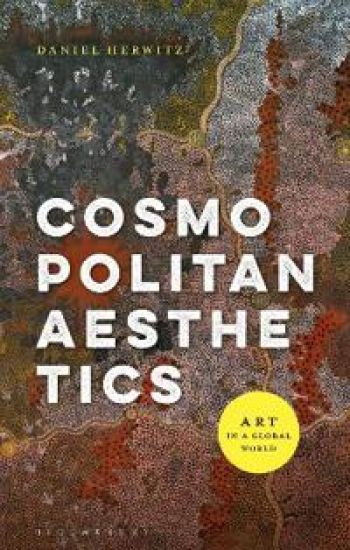
New arts created in the context of new social realities are impacting our traditional ideas about aesthetics. Art, art markets and aesthetics now interact in ways that demand new forms of thought and revision of old. Cosmopolitan Aesthetics presents the first thorough account of the challenges facing aesthetics today in the light of globalization, introducing the history that underpins them. This is an ideal starting point for anyone looking to better understand 21st century art and aesthetics. Beginning with globalization and the nature of global art markets today, Daniel Herwitz offers new insight into postcolonial aesthetics, colonial legacies, cultural property, the problems of global communication and aesthetic diversity, and the uneasy connection between aesthetics and politics, before providing a crucial grounding in 18th and 19th century aesthetics, with discussion of the three great modern aestheticians David Hume, Immanuel Kant and G.W.F. Hegel.
Cosmopolitan Aesthetics

Cosmopolitan Aesthetics

Daniel Herwitz

Bloomsbury Academic
2019
sidottu
New arts created in the context of new social realities are impacting our traditional ideas about aesthetics. Art, art markets and aesthetics now interact in ways that demand new forms of thought and revision of old. Cosmopolitan Aesthetics presents the first thorough account of the challenges facing aesthetics today in the light of globalization, introducing the history that underpins them. This is an ideal starting point for anyone looking to better understand 21st century art and aesthetics. Beginning with globalization and the nature of global art markets today, Daniel Herwitz offers new insight into postcolonial aesthetics, colonial legacies, cultural property, the problems of global communication and aesthetic diversity, and the uneasy connection between aesthetics and politics, before providing a crucial grounding in 18th and 19th century aesthetics, with discussion of the three great modern aestheticians David Hume, Immanuel Kant and G.W.F. Hegel.
Aesthetics, Arts, and Politics in a Global World

Aesthetics, Arts, and Politics in a Global World

Daniel Herwitz

Bloomsbury Academic
2019
nidottu
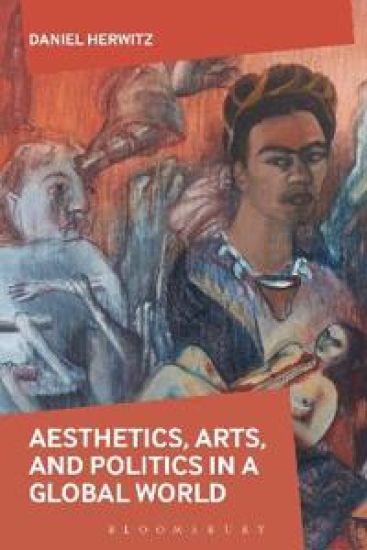
A different set of purposes define culture today than those that preoccupied the world in the immediate decades of decolonization. Focusing on art and music in diverse parts of the world, Daniel Herwitz explores a world that has largely shifted from the earlier days of nationalism, decolonization and cultural exclusion, to one of global markets and networks. Using examples from India and Mexico to South Africa, Australia and China, Herwitz argues that the cultural politics and art being produced in these places are now post- postcolonial. Where the postcolonial downplayed formerly Eurocentric forms and celebrated art with national consciousness, the rules for 21st century cultural authenticity are quickly disappearing. Young people think of themselves in relation to global culture rather than nation-¬-building; the project of producing a new and modern art for the incipient and rising postcolonial nation is out of date.By examining the shift in which art accesses the past and the rise of trends such as hitching consumer culture to celebrity forms and branding, Herwitz’s original and engaging exploration of contemporary art captures the ways in which art has given way to a new form of production, altering everything from the role of tradition and heritage in contemporary art to the terms of its vision and circulation.
The Star as Icon

The Star as Icon

Daniel Herwitz

Columbia University Press
2016
pokkari
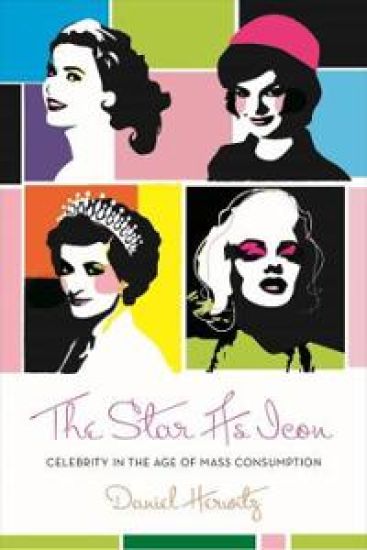
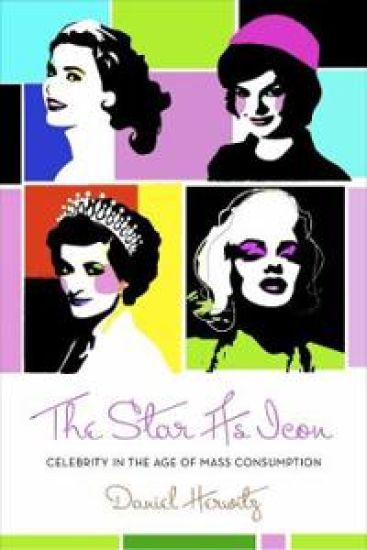
Princess Diana, Jackie O, Grace Kelly-the star icon is the most talked about yet least understood persona. The object of adoration, fantasy, and cult obsession, the star icon is a celebrity, yet she is also something more: a dazzling figure at the center of a media pantomime that is at once voyeuristic and zealously guarded. With skill and humor, Daniel Herwitz pokes at the gears of the celebrity-making machine, recruiting a philosopher's interest in the media, an eye for society, and a love of popular culture to divine our yearning for these iconic figures and the role they play in our lives. Herwitz portrays the star icon as caught between transcendence and trauma. An effervescent being living on a distant, exalted planet, the star icon is also a melodramatic heroine desperate to escape her life and the ever-watchful eye of the media. The public buoys her up and then eagerly watches her fall, her collapse providing a satisfying conclusion to a story sensationally told-while leaving the public yearning for a rebirth. Herwitz locates this double life in the opposing tensions of film, television, religion, and consumer culture, offering fresh perspectives on these subjects while ingeniously mapping society's creation (and destruction) of these special aesthetic stars. Herwitz has a soft spot for popular culture yet remains deeply skeptical of public illusion. He worries that the media distances us from even minimal insight into those who are transfigured into star icons. It also blinds us to the shaping of our political present.
Heritage, Culture, and Politics in the Postcolony

Heritage, Culture, and Politics in the Postcolony

Daniel Herwitz

Columbia University Press
2012
sidottu
The act of remaking one's history into a heritage, a conscientiously crafted narrative placed over the past, is a thriving industry in almost every postcolonial culture. This is surprising, given the tainted role of heritage in so much of colonialism's history. Yet the postcolonial state, like its European predecessor of the eighteenth and nineteenth centuries, deploys heritage institutions and instruments, museums, courts of law, and universities to empower itself with unity, longevity, exaltation of value, origin, and destiny. Bringing the eye of a philosopher, the pen of an essayist, and the experience of a public intellectual to the study of heritage, Daniel Herwitz reveals the febrile pitch at which heritage is staked. In this absorbing book, he travels to South Africa and unpacks its controversial and robust confrontations with the colonial and apartheid past. He visits India and reads in its modern art the gesture of a newly minted heritage idealizing the precolonial world as the source of Indian modernity. He traverses the United States and finds in its heritage of incessant invention, small town exceptionalism, and settler destiny a key to contemporary American media-driven politics. Showing how destabilizing, ambivalent, and potentially dangerous heritage is as a producer of contemporary social, aesthetic, and political realities, Herwitz captures its perfect embodiment of the struggle to seize culture and society at moments of profound social change.
The Star as Icon

The Star as Icon

Daniel Herwitz

Columbia University Press
2008
sidottu
Princess Diana, Jackie O, Grace Kelly-the star icon is the most talked about yet least understood persona. The object of adoration, fantasy, and cult obsession, the star icon is a celebrity, yet she is also something more: a dazzling figure at the center of a media pantomime that is at once voyeuristic and zealously guarded. With skill and humor, Daniel Herwitz pokes at the gears of the celebrity-making machine, recruiting a philosopher's interest in the media, an eye for society, and a love of popular culture to divine our yearning for these iconic figures and the role they play in our lives. Herwitz portrays the star icon as caught between transcendence and trauma. An effervescent being living on a distant, exalted planet, the star icon is also a melodramatic heroine desperate to escape her life and the ever-watchful eye of the media. The public buoys her up and then eagerly watches her fall, her collapse providing a satisfying conclusion to a story sensationally told-while leaving the public yearning for a rebirth. Herwitz locates this double life in the opposing tensions of film, television, religion, and consumer culture, offering fresh perspectives on these subjects while ingeniously mapping society's creation (and destruction) of these special aesthetic stars. Herwitz has a soft spot for popular culture yet remains deeply skeptical of public illusion. He worries that the media distances us from even minimal insight into those who are transfigured into star icons. It also blinds us to the shaping of our political present.
Aesthetics: Key Concepts in Philosophy

Aesthetics: Key Concepts in Philosophy

Daniel Herwitz

Continuum International Publishing Group Ltd.
2008
sidottu
This title offers an introduction to aesthetics for the student encountering this key philosophical subdiscipline for the first time.Aesthetics is the branch of philosophical thought that arises from engagement with the arts. It is about larger issues, such as meaning, identity, and medium that arise in the exploration of art, music, film and literature."Aesthetics: Key Concepts in Philosophy" offers a thorough, lucid and stimulating account of the central theories and ideas encountered in aesthetics. The text is thematically structured, covering the discipline's principal concepts: taste, aesthetic judgment, aesthetic experience and the definition of art.Ideal for students across the arts and humanities, the book stresses distinctively modern and contemporary problems, including the divergence between theories of aesthetics and theories of art and the problem of new media. Daniel Herwitz introduces students to aesthetic traditions, while also demonstrating their forward movement into the present.The book guides the reader through the work of philosophers who have engaged with aesthetics, including Hume, Kant, Hegel, Derrida, Nietzsche, and Wittgenstein. It also provides an invaluable aid for philosophy undergraduates, introducing them to the history of aesthetics and stressing the importance of understanding the subject within its historical context."Key Concepts in Philosophy" is a series of concise, accessible and engaging introductions to the core ideas and subjects encountered in the study of philosophy. Specially written to meet the needs of students and those with an interest in, but little prior knowledge of, philosophy, these books open up fascinating, yet sometimes difficult ideas. The series builds to give a solid grounding in philosophy and each book is also ideal as a companion to further study.
Aesthetics: Key Concepts in Philosophy

Aesthetics: Key Concepts in Philosophy

Daniel Herwitz

Continuum International Publishing Group Ltd.
2008
nidottu
Aesthetics is the branch of philosophical thought that arises from engagement with the arts. It is about larger issues, such as meaning, identity, and medium, that arise in the exploration of art, music, film and literature. Aesthetics: Key Concepts in Philosophy offers a thorough, lucid and stimulating account of the central theories and ideas encountered in aesthetics. The text is thematically structured, covering the discipline's principal concepts: taste, aesthetic judgment, aesthetic experience and the definition of art. Ideal for students across the arts and humanities, the book stresses distinctively modern and contemporary problems, including the divergence between theories of aesthetics and theories of art and the problem of new media. Daniel Herwitz introduces students to aesthetic traditions, while also demonstrating their forward movement into the present. The book guides the reader through the work of philosophers who have engaged with aesthetics, including Hume, Kant, Hegel, Derrida, Nietzsche, and Wittgenstein. It also provides an invaluable aid for philosophy undergraduates, introducing them to the history of aesthetics and stressing the importance of understanding the subject within its historical context.
Race and Reconciliation

Race and Reconciliation

Daniel Herwitz

University of Minnesota Press
2003
nidottu
A meditation on the lessons to be learned from South Africa’s transformation in the wake of apartheidJustice, truth, and identity; race, society, and law-all come into dramatic play as South Africa makes the tumultuous transition to a post-apartheid democracy. Seeking the timeless through the timely and trying to find the deeper meaning in the sweep of events, Daniel Herwitz brings the vast resources of the philosophical essay to bear on the new realities of post-apartheid South Africa-from racial identity to truth commissions, from architecture to film and television.A public intellectual’s reflections on public life, Herwitz’s essays question how the new South Africa has constructed its concepts of reconciliation and return and how its historical emergence has meant a rethinking, reimagining, reexperiencing, relabeling, and repoliticizing of race. Herwitz’s purpose is to give a philosophical reading of society-a society already relying on implicitly philosophical concepts in its social and political agendas. Working through these concepts, testing their relevance for reading society, his book itself becomes a part of the politics of definition and description in the new South Africa.
Making Theory/Constructing Art

Making Theory/Constructing Art

Daniel Herwitz

University of Chicago Press
1996
nidottu
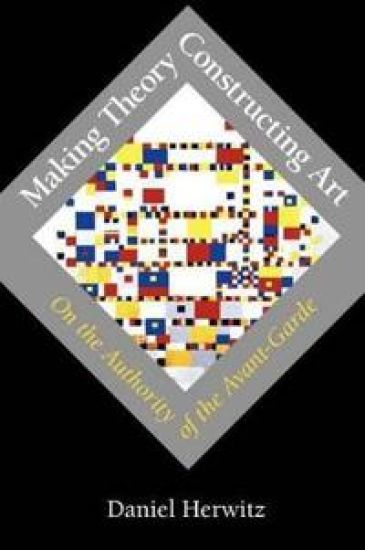
This text examines and critiques the norms, assumptions, historical conditions, and institutions that have framed the development and uses of art theory. Spurred by the theoretical claims of Arthur Danto, a leader in the philosophy of the avant-garde, Herwitz re-examines the art and theory of major figures in the avant-garde movement including John Cage, Jean-Francois Lyotard, Jean Baudrillard and Andy Warhol.
Making Theory/Constructing Art

Making Theory/Constructing Art

Daniel Herwitz

University of Chicago Press
1993
sidottu
Artists and critics regularly enlist theory in the creation and assessment of artworks, but few have scrutinized the art theories themselves. Here, Daniel examines and critiques the norms, assumptions, historical conditions, and institutions that have framed the development and uses of art theory. Spurred by the theoretical claims of Arthur Danto, a leader in the philosophy of the avant-garde, Herwitz reexamines the art and theory of major figures in the avant-garde movement including John Cage, Jean-François Lyotard, Jean Baudrillard, and Andy Warhol.