Kirjojen hintavertailu. Mukana 12 657 676 kirjaa ja 12 kauppaa.
Kirjailija
Daniel J. Harrington
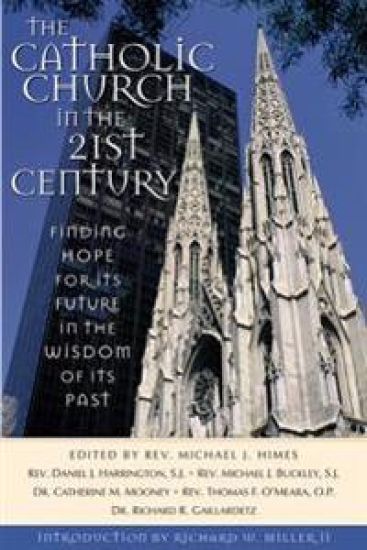
Kirjat ja teokset yhdessä paikassa: 19 kirjaa, julkaisuja vuosilta 1979-2025, suosituimpien joukossa The Catholic Church in the Twenty-First Century. Vertaile teosten hintoja ja tarkista saatavuus suomalaisista kirjakaupoista.
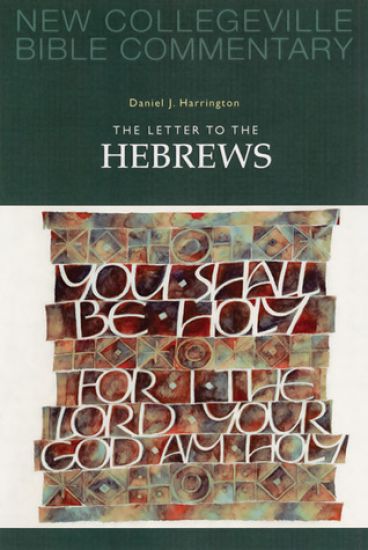
Hebrews is "the greatest Christian sermon ever preached or written," according to New Testament scholar Daniel Harrington, SJ. This unique New Testament text presents Jesus as the great High Priest who simultaneously offers sacrifice to God and is himself the sacrifice. His compassion is rooted in his humanity, for he is like us in all things but sin. Harrington’s accessible commentary helps us read and reflect on this beautiful Scripture text, giving us a renewed appreciation for the saving work of Jesus. Commentary, study and reflection questions, prayers, and access to online lectures are included. 6 lessons.
Can the Bible be approached both as sacred scripture and as a historical and literary text? For many people, it must be one or the other. How can we read the Bible both ways? The Bible and the Believer brings together three distinguished biblical scholars--one Jewish, one Catholic, and one Protestant--to illustrate how to read the Hebrew Bible/ Old Testament critically and religiously. Marc Zvi Brettler, Peter Enns, and Daniel J. Harrington tackle a dilemma that not only haunts biblical scholarship today, but also disturbs students and others exposed to biblical criticism for the first time, either in university courses or through their own reading. Failure to resolve these conflicting interpretive strategies often results in rejection of either the critical approach or the religious approach--or both. But the authors demonstrate how biblical criticism--the process of establishing the original contextual meaning of biblical texts with the tools of literary and historical analysis--need not undermine religious interpretations of the Bible, but can in fact enhance them. They show how awareness of new archeological evidence, cultural context, literary form, and other tools of historical criticism can provide the necessary preparation for a sound religious reading. And they argue that the challenges such study raises for religious belief should be brought into conversation with religious tradition rather than deemed grounds for dismissing either that tradition or biblical criticism. Guiding readers through the history of biblical exegesis within the Jewish, Catholic, and Protestant faith traditions, The Bible and the Believer bridges an age-old gap between critical and religious approaches to the Old Testament.
These accounts of the Maccabean revolt, by which the sons of Mattathias reclaimed the temple of Jerusalem, tell an important story of the founding of the Jewish people. "The Hammerers" is the meaning of the nickname "Maccabees," given to Mattathias's sons, who lived in a time of revolution. Empires struggled for control of Greece, Egypt, and Asia, and the small population of Jews tried to preserve their claim to Judea. The five brothers also made heroic contributions to the practice of Judaism. Their rededication of the temple establishes the annual celebration of Hanukkah, and the martyr stories in Second Maccabees emphasize faithfulness to the law of Moses.The books of First and Second Maccabees are also important for Christians, as in them is told how the Jewish people established the political and religious culture into which Jesus was born. The martyr stories inform the early Christian martyrdoms, and the books are written in Greek, the language in which the Jews of Jesus' time read the Scriptures. As Father Harrington notes, without the Maccabees "the fate of Judaism (and with it Christianity and Islam) was uncertain."
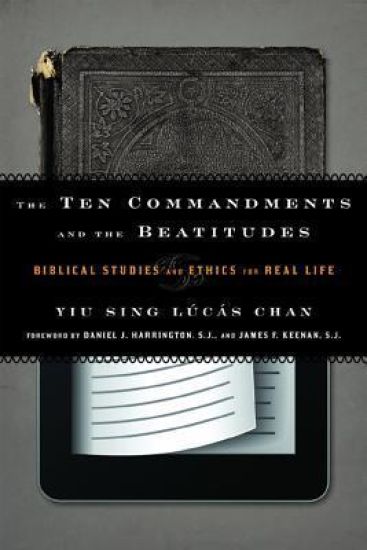
The Ten Commandments and the Beatitudes are often considered significant texts for the Christian moral life. However, most interpretations of these passages either focus on the original meaning of the text or how the texts should impact ordinary living today. In The Ten Commandments and the Beatitudes Yiu Sing Lúcás Chan brings together biblical studies and Christian ethics to look at these foundational texts in a new way. For each passage Chan asks both what the texts meant and what they mean today. He helps readers to carefully study the text’s original meaning, then interpret the text within a sound ethical framework. The Ten Commandments and the Beatitudes is an excellent introduction to key concepts in biblical studies and Christian ethics that combines sound study with warmth and wisdom.
The Ten Commandments and the Beatitudes are often considered significant texts for the Christian moral life. However, most interpretations of these passages either focus on the original meaning of the text or how the texts should impact ordinary living today. In The Ten Commandments and the Beatitudes Yiu Sing Lúcás Chan brings together biblical studies and Christian ethics to look at these foundational texts in a new way. For each passage Chan asks both what the texts meant and what they mean today. He helps readers to carefully study the text’s original meaning, then interpret the text within a sound ethical framework. The Ten Commandments and the Beatitudes is an excellent introduction to key concepts in biblical studies and Christian ethics that combines sound study with warmth and wisdom.
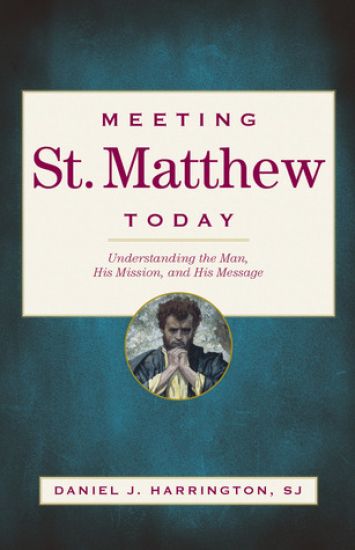
In "Meeting St. Matthew Today," preeminent biblical scholar Daniel J. Harrington, SJ, helps laypeople understand the riches of Matthew's Gospel. This quick-moving yet insightful book provides a thoughtful and non-threatening introduction to the Evangelist and his message. Special attention is given to a narrative analysis of Matthew's Gospel, including key concepts and themes that develop as the story unfolds. The closing chapter of the book includes three brief lessons based on lectionary readings of St. Matthew.
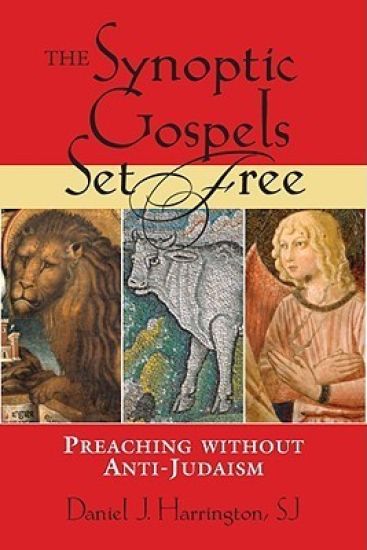
Jesuit father Daniel J. Harrington has taken fifteen Sunday readings from each of the three synoptic Gospels (Matthew, Mark, and Luke) and looked at them through the lens of how they could be misconstrued as anti-Semitic and/or anti-Judaic texts. Each section concludes with three study questions keyed to the Lectionary readings and Fr. Harrington’s interpretation of them. Here is a book for the pastor, the parishioner, seminarians and ALL Christians of good will who wish to better understand the Scriptures in their context so that anti-Semitism does not seep in. It is an excellent teaching and preaching/homiletic resource replete with a glossary and bibliography. †
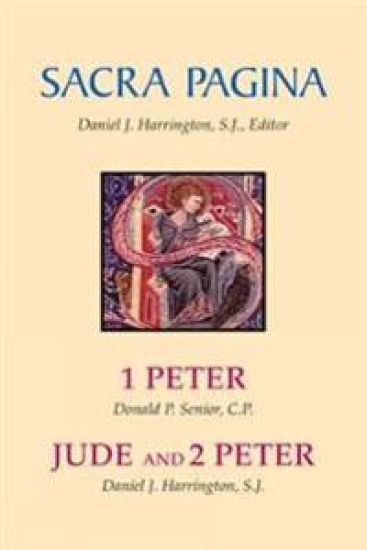
Crisis in the church is not a new phenomenon. In fact, the church has always been - and probably always will be - involved in some kind of crisis. Even in the apostolic period, which is regarded by many as the church's golden age, there were serious crises coming both from the outside, as in 1 Peter, and from the inside, as in Jude and 2 Peter. The three short New Testament letters treated in 1 Peter, Jude and 2 Peter illustrate the problems early Christians faced, as well as the rhetorical techniques and theological concepts with which they combated those problems.In the first part of this volume, Donald Senior views 1 Peter as written from Rome in Peter's name to several churches in northern Asia Minor - present-day Turkey - in the latter part of the first century C.E. The new Christians addressed in 1 Peter found themselves aliens and exiles in the wider Greco-Roman society and suffered a kind of social ostracism. But they are given a marvelous theological Vision of who they have become through their baptism and pastoral encouragement to stand firm. They are shown how to take a missionary stance toward the outside world by giving the witness of a holy and blameless life to offset the slander and ignorance of the non-Christian majority and possibly even to lead them to glorify God on the day of judgment.In the second part of this volume, Daniel Harrington interprets Jude and 2 Peter as confronting crises in the late first century that were perpetrated by Christian teachers who are described polemically as intruders in Jude and as false teachers in 2 Peter. In confronting the crises within their churches, the authors appeal frequently to the Old Testament and to early summaries of Christian faith. While Jude uses other Jewish traditions, 2 Peter includes most of the text of Jude as well as many distinctively Greek terms and concepts. It is clear that for the authors, despite their different social settings, what was at stake was the struggle for the faith.Daniel J. Harrington, SJ, is a professor of New Testament at Weston Jesuit School of Theology in Cambridge, Massachusetts, and general editor of New Testament Abstracts. He is a past-president of the Catholic Biblical Association of American and the editor of the Sacra Pagina series. He also wrote The Gospel of Matthew in the Sacra Pagina series.Donald Senior, CP, is a professor of New Testament studies and president of Catholic Theological Union in Chicago. He was recently appointed by Pope John Paul II to the Pontifical Biblical Commission. General editor of The Bible Today, he also co-edited The Collegeville Pastoral Dictionary of the Bible and the 22-volume international commentary series New Testament Message, and he wrote the four-volume The Passion series published by The Liturgical Press.
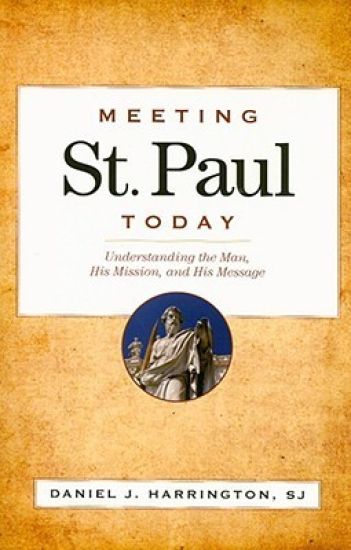
A Clear and Compelling Portrait of Paul from One of the Church's Leading Scholars The teachings of St. Paul infuse just about everything Christians believe and practice, yet most people know very little about this great apostle of the Church. In "Meeting St. Paul Today," one of the most respected scholars in the Catholic faith, Daniel Harrington, SJ, brings Paul and his teachings to life. Harrington, who writes with great admiration for the apostle and his ministry, covers three main topics in this helpful and highly readable book for any discerning Christian. First, he describes what Paul was really like, from his days as a Pharisee to his arduous years as a missionary. Second, he thoughtfully surveys the specific purpose, major points, and other compelling particulars of each epistle. Finally, he helps readers properly interpret Paul's letters through literary, historical, and theological lenses. With Father Harrington as your guide, you'll come to know Paul like never before and, as a result, to understand fully the mission to which he devoted his life and the message he proclaimed to the world.
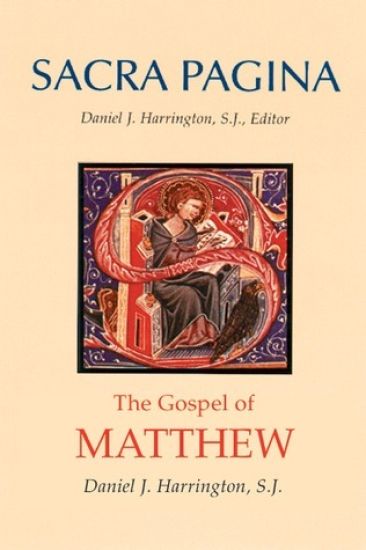
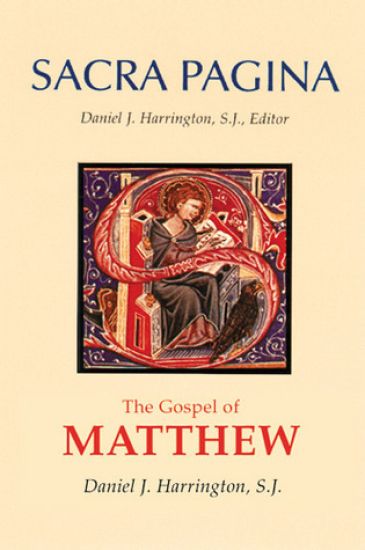
Matthew wrote his Gospel from his perspective as a Jew. It is with sensitivity to this perspective that Father Harrington undertakes this commentary on the Gospel of Matthew.After an introduction, he provides a literal translation of each section in Matthew's Gospel and explains the textual problems, philological difficulties, and other matters in the notes. He then presents a literary analysis of each text (content, form, use of sources, structure), examines the text against its Jewish background, situates it in the context of Matthew's debate with other first-century Jews, and reflects on its significance for Christian theology and Christian-Jewish relations. Bibliographies direct the reader to other important modern studies.
When is a letter not a letter? When it is the Letter to the Hebrews. Daniel J. Harrington describes this text as the greatest Christian sermon ever preached or written" and its author as "the patron saint of preachers." The basic theological point of the sermon is that Christ is both the perfect sacrifice for sins and the priest who offers himself as a sacrifice.The anonymous author of this work addresses Jewish Christians who had embraced Christianity with enthusiasm but were becoming discouraged and falling away in the face of suffering. The biblical text and Harrington's uncomplicated commentary are ideal components for individual and group study. Reading and reflection will produce a renewed appreciation of the saving work of Jesus.Daniel J. Harrington, SJ, PhD, is professor of New Testament at Boston College School of Theology and Ministry, Cambridge, Massachusetts, and editor of the Sacra Pagina series, published by Liturgical Press."
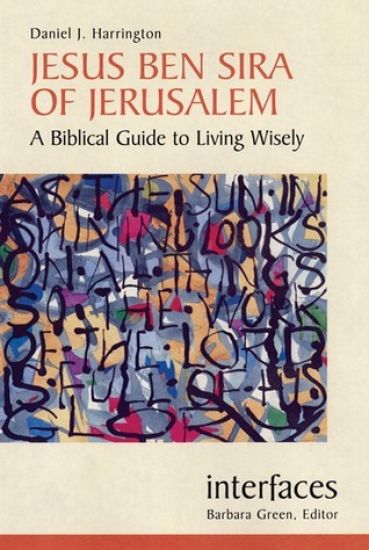
Questions of vocation and character formation become important to students as they continue to receive higher education. Jesus Ben Sira combines secular wisdom from Near Eastern wisdom sources and divine revelations from the Hebrew Bible to create the Book of Sirach. By applying form criticism to Ben Sira's book, Daniel J. Harrington provides students with historical information of the psychological and sociological context underlying Ben Sira's teachings, as well as an understanding of how Ben Sira's ancient wisdom can contribute to personal and social formation in the 21st century.Chapters include Ben Sira and His Book, Ben Sira and Other Wisdom Books, Reading Ben Sira's Book, Ben Sira's Ways of Teaching, Ben Sira's Social World, Ben Sira's Abiding Wisdom, as well as references, suggestions for further study, and an index.Daniel J. Harrington, S.J., Ph.D., is a professor of New Testament at the Weston Jesuit School of Theology in Cambridge, Massachusetts. He has written numerous scholarly works, including Paul on the Mystery of Israel, The Gospel of Matthew, and The Gospel According to Matthew published by the Liturgical Press.This book is part of the series Interfaces.
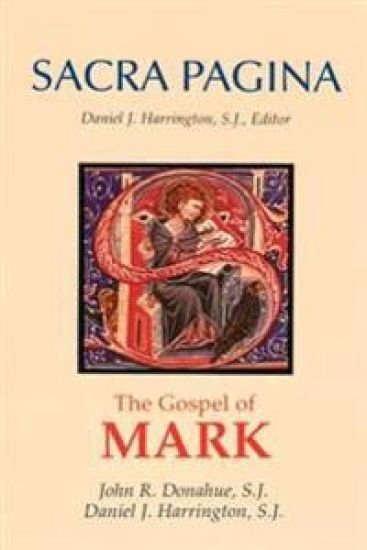
In The Gospel of Mark Fathers Donahue and Harrington use an approach that can be expressed by two terms currently used in literary criticism: intratextuality and intertextuality. This intratextual and intertextual reading of Mark's Gospel helps us to appreciate the literary character, its setting in life, and its distinctive approaches to the Old Testament, Jesus, and early Christian theology. "Intratextuality" means we read Mark as Mark and by Mark. Such a reading expresses interest in the final form of the Gospel (not its source or literary history) and in its words and images, literary devices, literary forms, structures, characterization, and plot. Reading Mark by Mark gives particular attention to the distinctive vocabulary and themes that run throughout the Gospel and serve to hold it together as a unified literary production. "Intertextuality" comprises the relation between texts and a textual tradition, and also referring to contextual materials not usually classified as texts (e.g., archaeological data). "Intertextuality" is used to note the links of the text of Mark's Gospel to other texts (especially the Old Testament) and to the life of the Markan community and of the Christian community today.
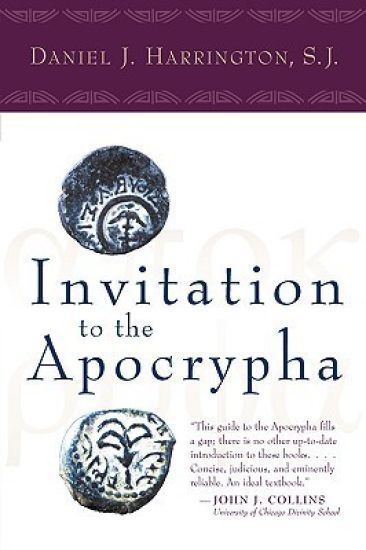
In this volume a leading biblical scholar helps readers rediscover the ancient books of the Old Testament Apocrypha. Invitation to the Apocrypha provides a clear, basic introduction to these important-but often neglected-ancient books. Using the latest and best scholarship yet writing for those new to the Apocrypha, Daniel Harrington guides readers through the background, content, and message of each book. A distinctive feature of this primer is that it focuses throughout on the problem of suffering, highlighting what each book of the Apocrypha says about this universal human experience.
Matthew wrote his Gospel from his perspective as a Jew. It is with sensitivity to this perspective that Father Harrington undertakes this commentary on the Gospel of Matthew.After an introduction, he provides a literal translation of each section in Matthew's Gospel and explains the textual problems, philological difficulties, and other matters in the notes. He then presents a literary analysis of each text (content, form, use of sources, structure), examines the text against its Jewish background, situates it in the context of Matthew's debate with other first-century Jews, and reflects on its significance for Christian theology and Christian-Jewish relations. Bibliographies direct the reader to other important modern studies.
This introduction to Old Testament exegesis responds to the directives of the Second Vatican Council that instructs biblical interpreters to investigate the meaning the sacred writers intended to express. Thus it acquaints readers with an introduction to the methods commonly used in biblical scholarship today.
This introduction to New Testament exegesis helps readers by explaining in a simple and brief way the basic literary methods used in studying the New Testament today: textual criticism, translations, words and motifs, source criticism, form criticism, historical criticism, redaction criticism, and parallels. It is a beginner's book, designed to make explicit some of the procedures now used by the commentators who have had formal exegetical training.