Kirjojen hintavertailu. Mukana 12 390 323 kirjaa ja 12 kauppaa.

Kirjailija

Daniel K. Richter

Kirjat ja teokset yhdessä paikassa: 8 kirjaa, julkaisuja vuosilta 2003-2026, suosituimpien joukossa Native Americans and Pennsylvania. Vertaile teosten hintoja ja tarkista saatavuus suomalaisista kirjakaupoista.

8 kirjaa

Kirjojen julkaisuhaarukka 2003-2026.

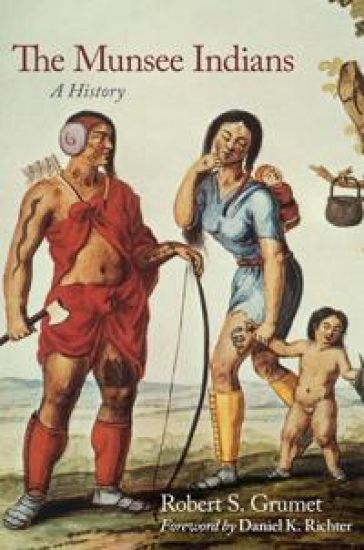
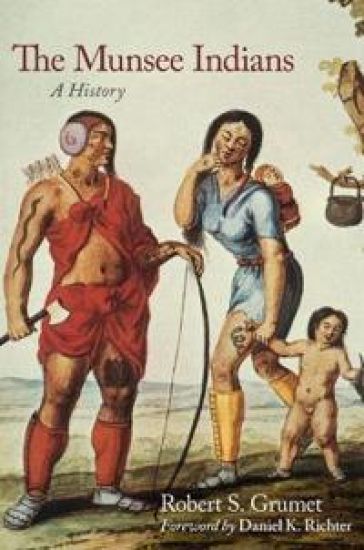
The Munsee Indians

The Munsee Indians

Robert S. Grumet; Daniel K. Richter

UNIVERSITY OF OKLAHOMA PRESS
2022
nidottu
The Indian sale of Manhattan is one of the world’s most cherished legends. Few people know that the Indians who made the fabled sale were Munsees whose ancestral homeland lay between the lower Hudson and upper Delaware river valleys. The story of the Munsee people has long lain unnoticed in broader histories of the Delaware Nation.Now, The Munsee Indians deftly interweaves a mass of archaeological, anthropologi-cal, and archival source material to resurrect the lost history of this forgotten people, from their earliest contacts with Europeans to their final expulsion just before the American Revolution. Anthropologist Robert S. Grumet rescues from obscurity Mattano, Tackapousha, Mamanuchqua, and other Munsee sachems whose influence on Dutch and British settlers helped shape the course of early American history in the mid-Atlantic heartland. He looks past the legendary sale of Manhattan to show for the first time how Munsee leaders forestalled land-hungry colonists by selling small tracts whose vaguely worded and bounded titles kept courts busy—and settlers out—for more than 150 years.Ravaged by disease, war, and alcohol, the Munsees finally emigrated to reservations in Wisconsin, Oklahoma, and Ontario, where most of their descendants still live today. Coinciding with the four hundredth anniversary of Hudson’s voyage to the river that bears his name, this book shows how Indians and settlers struggled, in land deals and other transactions, to reconcile cultural ideals with political realities. The result is the most authoritative treatment of the Munsee experience—one that restores this people to their place in history.This book is published with the generous assistance of Furthermore: a program of the J. M. Kaplan Fund.
Facing Empire

Facing Empire

Daniel K. Richter

Johns Hopkins University Press
2018
pokkari
A comprehensive volume that interrogates European imperialism from the perspective of indigenous experiences.The contributors to Facing Empire reimagine the Age of Revolution from the perspective of indigenous peoples. Rather than treating indigenous peoples as distant and passive players in the political struggles of the time, this book argues that they helped create and exploit the volatility that marked an era while playing a central role in the profound acceleration in encounters and contacts between peoples around the world. Focusing in particular on indigenous peoples’ experiences of the British Empire, this volume takes a unique comparative approach in thinking about how indigenous peoples shaped, influenced, redirected, ignored, and sometimes even forced the course of modern imperialism. The essays demonstrate how indigenous-shaped local exchanges, cultural relations, and warfare provoked discussion and policymaking in London as much as it did in Charleston, Cape Town, or Sydney. Facing Empire charts a fresh way forward for historians of empire, indigenous studies, and the Age of Revolution and shows why scholars can no longer continue to exclude indigenous peoples from histories of the modern world. These past conflicts over land and water, labor and resources, and hearts and minds have left a living legacy of contested relations that continue to resonate in contemporary politics and societies today. Covering the Indian and Pacific Oceans, Australia, and West and South Africa, as well as North America, this book looks at the often misrepresented and underrepresented complexity of the indigenous experience on a global scale.Contributors: Tony Ballantyne, Justin Brooks, Colin G. Calloway, Kate Fullagar, Bill Gammage, Robert Kenny, Shino Konishi, Elspeth Martini, Michael A. McDonnell, Jennifer Newell, Joshua L. Reid, Daniel K. Richter, Rebecca Shumway, Sujit Sivasundaram, Nicole Ulrich
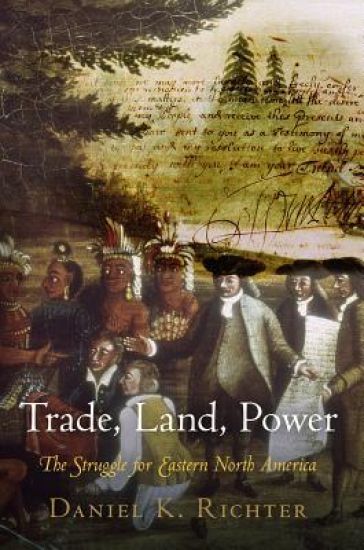
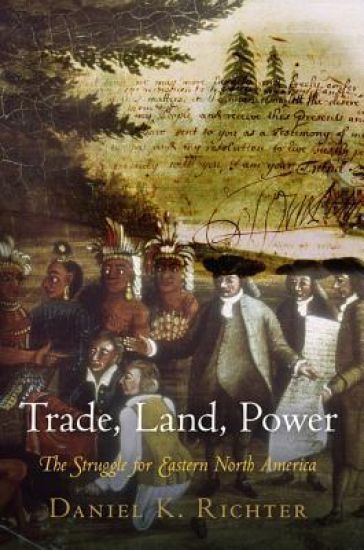
Trade, Land, Power

Trade, Land, Power

Daniel K. Richter

University of Pennsylvania Press
2016
pokkari
In this sweeping collection of essays, one of America's leading colonial historians reinterprets the struggle between Native peoples and Europeans in terms of how each understood the material basis of power. Throughout the seventeenth and eighteenth centuries in eastern North America, Natives and newcomers alike understood the close relationship between political power and control of trade and land, but they did so in very different ways. For Native Americans, trade was a collective act. The alliances that made a people powerful became visible through material exchanges that forged connections among kin groups, villages, and the spirit world. The land itself was often conceived as a participant in these transactions through the blessings it bestowed on those who gave in return. For colonizers, by contrast, power tended to grow from the individual accumulation of goods and landed property more than from collective exchange-from domination more than from alliance. For many decades, an uneasy balance between the two systems of power prevailed. Tracing the messy process by which global empires and their colonial populations could finally abandon compromise and impose their definitions on the continent, Daniel K. Richter casts penetrating light on the nature of European colonization, the character of Native resistance, and the formative roles that each played in the origins of the United States.
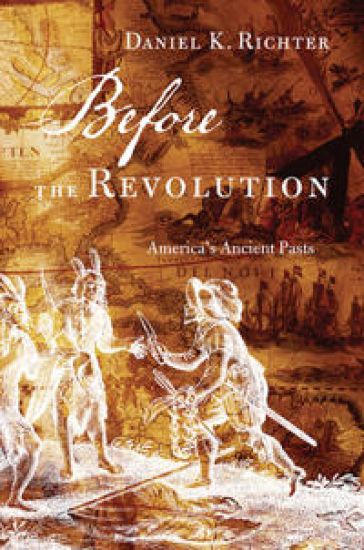
Before the Revolution

Before the Revolution

Daniel K. Richter

The Belknap Press
2013
nidottu
America began, we are often told, with the Founding Fathers, the men who waged a revolution and created a unique place called the United States. We may acknowledge the early Jamestown and Puritan colonists and mourn the dispossession of Native Americans, but we rarely grapple with the complexity of the nation’s pre-revolutionary past. In this pathbreaking revision, Daniel Richter shows that the United States has a much deeper history than is apparent—that far from beginning with a clean slate, it is a nation with multiple pasts that stretch back as far as the Middle Ages, pasts whose legacies continue to shape the present.Exploring a vast range of original sources, Before the Revolution spans more than seven centuries and ranges across North America, Europe, and Africa. Richter recovers the lives of a stunning array of peoples—Indians, Spaniards, French, Dutch, Africans, English—as they struggled with one another and with their own people for control of land and resources. Their struggles occurred in a global context and built upon the remains of what came before. Gradually and unpredictably, distinctive patterns of North American culture took shape on a continent where no one yet imagined there would be nations called the United States, Canada, or Mexico.By seeing these trajectories on their own dynamic terms, rather than merely as a prelude to independence, Richter’s epic vision reveals the deepest origins of American history.
Trade, Land, Power

Trade, Land, Power

Daniel K. Richter

University of Pennsylvania Press
2013
sidottu
In this sweeping collection of essays, one of America's leading colonial historians reinterprets the struggle between Native peoples and Europeans in terms of how each understood the material basis of power. Throughout the seventeenth and eighteenth centuries in eastern North America, Natives and newcomers alike understood the close relationship between political power and control of trade and land, but they did so in very different ways. For Native Americans, trade was a collective act. The alliances that made a people powerful became visible through material exchanges that forged connections among kin groups, villages, and the spirit world. The land itself was often conceived as a participant in these transactions through the blessings it bestowed on those who gave in return. For colonizers, by contrast, power tended to grow from the individual accumulation of goods and landed property more than from collective exchange-from domination more than from alliance. For many decades, an uneasy balance between the two systems of power prevailed. Tracing the messy process by which global empires and their colonial populations could finally abandon compromise and impose their definitions on the continent, Daniel K. Richter casts penetrating light on the nature of European colonization, the character of Native resistance, and the formative roles that each played in the origins of the United States.
The Munsee Indians

The Munsee Indians

Robert S. Grumet; Daniel K. Richter

University of Oklahoma Press
2009
sidottu
The Indian sale of Manhattan is one of the world's most cherished legends. Few people know that the Indians who made the fabled sale were Munsees whose ancestral homeland lay between the lower Hudson and upper Delaware river valleys. The story of the Munsee people has long lain unnoticed in broader histories of the Delaware Nation.Now, The Munsee Indians deftly interweaves a mass of archaeological, anthropologi-cal, and archival source material to resurrect the lost history of this forgotten people, from their earliest contacts with Europeans to their final expulsion just before the American Revolution. Anthropologist Robert S. Grumet rescues from obscurity Mattano, Tackapousha, Mamanuchqua, and other Munsee sachems whose influence on Dutch and British settlers helped shape the course of early American history in the mid-Atlantic heartland. He looks past the legendary sale of Manhattan to show for the first time how Munsee leaders forestalled land-hungry colonists by selling small tracts whose vaguely worded and bounded titles kept courts busy - and settlers out - for more than 150 years.Ravaged by disease, war, and alcohol, the Munsees finally emigrated to reservations in Wisconsin, Oklahoma, and Ontario, where most of their descendants still live today. Coinciding with the four hundredth anniversary of Hudson's voyage to the river that bears his name, this book shows how Indians and settlers struggled, in land deals and other transactions, to reconcile cultural ideals with political realities. The result is the most authoritative treatment of the Munsee experience - one that restores this people to their place in history.This book is published with the generous assistance of Furthermore: a program of the J. M. Kaplan Fund.
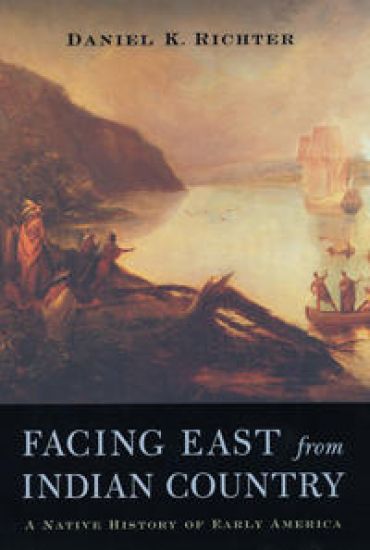
Facing East from Indian Country

Facing East from Indian Country

Daniel K. Richter

Harvard University Press
2003
nidottu
Discusses the myth of European control over the Native Americans in the sixteenth century, and claims that Native Americans controlled the majority of eastern North America well after Columbus' arrival, having only to adjust to their presence.