Kirjojen hintavertailu. Mukana 12 115 815 kirjaa ja 12 kauppaa.

Kirjailija

DANIEL KOLAK

Kirjat ja teokset yhdessä paikassa: 9 kirjaa, julkaisuja vuosilta 2005-2023, suosituimpien joukossa PRAXIS. Vertaile teosten hintoja ja tarkista saatavuus suomalaisista kirjakaupoista.

9 kirjaa

Kirjojen julkaisuhaarukka 2005-2023.

The Longman Standard History of Philosophy, VOL 1 & 2
Biographical headnotes, reading introductions, study questions, and special "Prologues" and "Philosophical Overviews" help students understand and appreciate the philosophical concepts under discussion. Throughout the text, "Philosophical Bridges" discuss how earlier thinkers would influence philosophers to com, and place major movements in a contemporary context, showing students how the schools of philosophy interrelate and how various philosophies apply to the world today. In addition to this comprehensive survey of the whole of philosophical history, individual volumes for each of the major historical eras are also available for specialized courses.
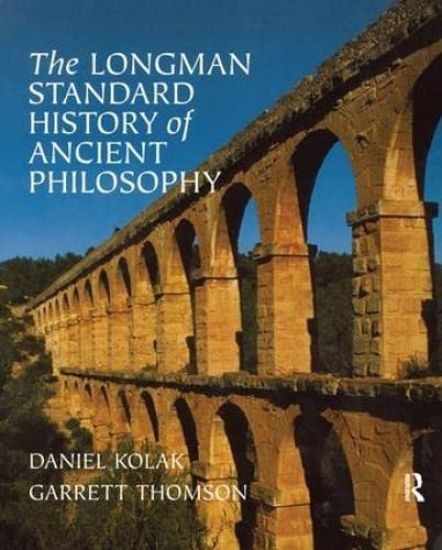
The Longman Standard History of Ancient Philosophy

The Longman Standard History of Ancient Philosophy

Daniel Kolak; Garrett Thomson

Routledge
2017
sidottu
With selections of philosophers from Thales to Sextus Empiricus, this new anthology provides significant learning support and historical context for the readings along with a wide variety of pedagogical assists. Biographical headnotes, reading introductions, study questions, and specialPrologues andPhilosophical Overviews help students understand and appreciate the philosophical concepts under discussion.Philosophical Bridges" discuss how the work of earlier thinkers would influence philosophers to come, and place major movements in a contemporary context showing students how the schools of philosophy interrelate and how various philosophies apply to the world today. In addition to this volume of Ancient Philosophy, a comprehensive survey of the whole of Western philosophical history and other individual volumes for each of the major historical eras are also available for specialized courses.
The Longman Standard History of Medieval Philosophy

The Longman Standard History of Medieval Philosophy

Garrett Thomson; Daniel Kolak

Routledge
2017
sidottu
With selections of philosophers from Plotinus to Bruno, this new anthology provides significant learning support and historical context for the readings along with a wide variety of pedagogical assists. Featuring biographical headnotes, reading introductions, study questions, as well as specialPrologues andPhilosophical Overviews, this anthology offers a unique set of critical thinking promtps to help students understand and appreciate the philosophical concepts under discussion.Philosophical Bridges" discuss how the work of earlier thinkers would influence philosophers to come and place major movements in a contemporary context, showing students how the schools of philosophy interrelate and how the various philosophies apply to the world today. In addition to this volume of Medieval Philosophy, a comprehensive survey of the whole of Western philosophical history and other individual volumes for each of the major historical eras are also available for specialized courses.
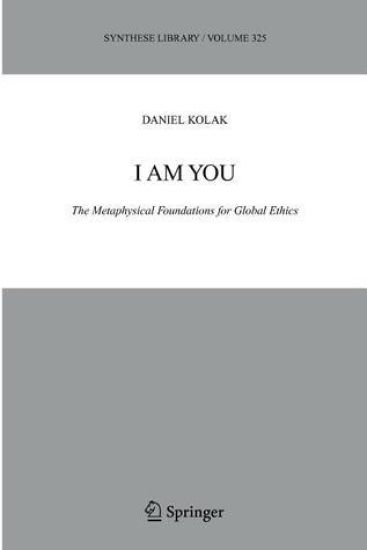
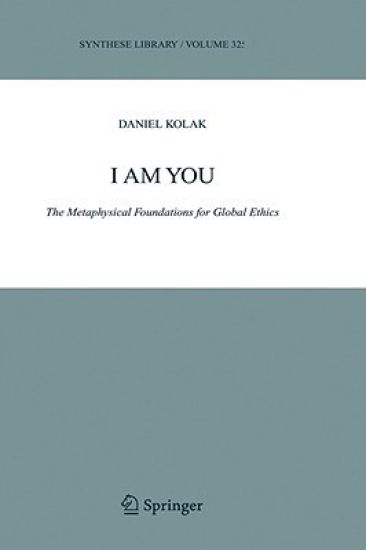
I Am You

I Am You

Daniel Kolak

Springer
2010
nidottu
Borders enclose and separate us. We assign to them tremendous significance. Along them we draw supposedly uncrossable boundaries within which we believe our individual identities begin and end, erecting the metaphysical dividing walls that enclose each one of us into numerically identical, numerically distinct, entities: persons. Do the borders between us - physical, psychological, neurological, causal, spatial, temporal, etc. - merit the metaphysical significance ordinarily accorded them? The central thesis of I Am You is that our borders do not signify boundaries between persons. We are all the same person. Variations on this heretical theme have been voiced periodically throughout the ages (the Upanishads, Averroës, Giordano Bruno, Josiah Royce, Schrödinger, Fred Hoyle, Freeman Dyson). In presenting his arguments, the author relies on detailed analyses of recent formal work on personal identity, especially that of Derek Parfit, Sydney Shoemaker, Robert Nozick, David Wiggins, Daniel C. Dennett and Thomas Nagel, while incorporating the views of Descartes, Leibniz, Wittgenstein, Schopenhauer, Kant, Husserl and Brouwer. His development of the implied moral theory is inspired by, and draws on, Rawls, Sidgwick, Kant and again Parfit. The traditional, commonsense view that we are each a separate person numerically identical to ourselves over time, i.e., that personal identity is closed under known individuating and identifying borders - what the author calls Closed Individualism - is shown to be incoherent. The demonstration that personal identity is not closed but open points collectively in one of two new directions: either there are no continuously existing, self-identical persons over time in the sense ordinarily understood - the sort of view developed by philosophers as diverse as Buddha, Hume and most recently Derek Parfit, what the author calls Empty Individualism - or else you are everyone, i.e., personal identity is notclosed under known individuating and identifying borders, what the author calls Open Individualism. In making his case, the author: - offers a new explanation both of consciousness and of self-consciousness - constructs a new theory of Self - explains psychopathologies (e.g. multiple personality disorder, schizophrenia) - shows Open Individualism to be the best competing explanation of who we are - provides the metaphysical foundations for global ethics. The book is intended for philosophers and the philosophically inclined - physicists, mathematicians, psychiatrists, psychologists, linguists, computer scientists, economists, and communication theorists. It is accessible to graduate students and advanced undergraduates.
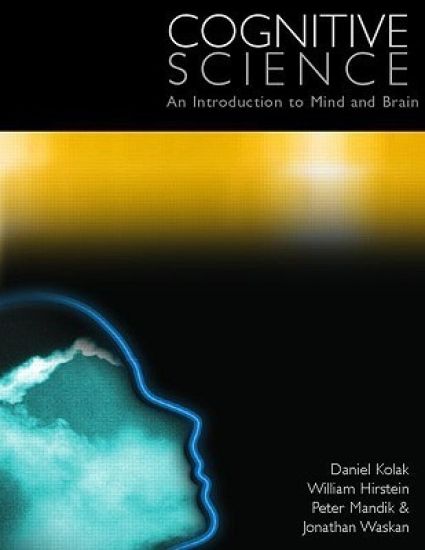
Cognitive Science

Cognitive Science

Daniel Kolak; William Hirstein; Peter Mandik; Jonathan Waskan

Routledge
2006
nidottu
Cognitive Science is a major new guide to the central theories and problems in the study of the mind and brain. The authors clearly explain how and why cognitive science aims to understand the brain as a computational system that manipulates representations. They identify the roots of cognitive science in Descartes - who argued that all knowledge of the external world is filtered through some sort of representation - and examine the present-day role of Artificial Intelligence, computing, psychology, linguistics and neuroscience. Throughout, the key building blocks of cognitive science are clearly illustrated: perception, memory, attention, emotion, language, control of movement, learning, understanding and other important mental phenomena. Cognitive Science:presents a clear, collaborative introduction to the subjectis the first textbook to bring together all the different strands of this new science in a unified approachincludes illustrations and exercises to aid the student
Cognitive Science

Cognitive Science

Daniel Kolak; William Hirstein; Peter Mandik; Jonathan Waskan

Routledge
2006
sidottu
Cognitive Science is a major new guide to the central theories and problems in the study of the mind and brain. The authors clearly explain how and why cognitive science aims to understand the brain as a computational system that manipulates representations. They identify the roots of cognitive science in Descartes - who argued that all knowledge of the external world is filtered through some sort of representation - and examine the present-day role of Artificial Intelligence, computing, psychology, linguistics and neuroscience. Throughout, the key building blocks of cognitive science are clearly illustrated: perception, memory, attention, emotion, language, control of movement, learning, understanding and other important mental phenomena. Cognitive Science:presents a clear, collaborative introduction to the subjectis the first textbook to bring together all the different strands of this new science in a unified approachincludes illustrations and exercises to aid the student
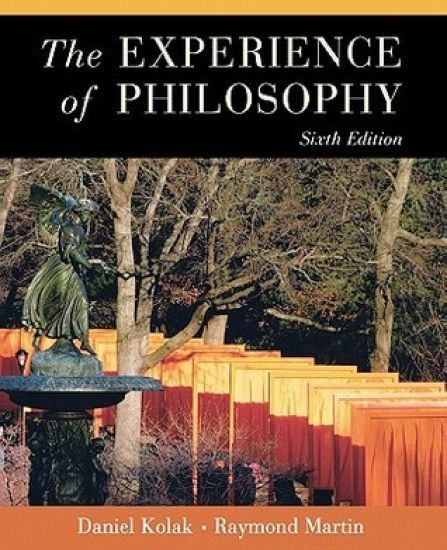
The Experience of Philosophy

The Experience of Philosophy

Daniel Kolak; Raymond Martin

Oxford University Press Inc
2005
nidottu
This exceptional anthology immerses students in such powerful ideas that they will find themselves not just reading about, but actually participating in, the kind of philosophical thinking that can change the way they look at their lives and the world around them. Now in a new edition, The Experience of Philosophy features eighty-five readings that challenge students' thinking about God, freedom, reality, nothingness, death, and their own identities. Provocative and accessible, these selections have been carefully chosen for their ability to draw students out of an ordinary frame of reference into exciting new territory. Although the editors include many classic sources from philosophers such as Plato, Descartes, Locke, and Kant, the emphasis is on contemporary writings. Articles by Derek Parfit, Bertrand Russell, and others help students see philosophy's links to literature, the natural sciences, and the physical and social sciences. The sixth edition features twelve new essays--by Augustine, Alvin Plantinga and Daniel Kolak, Georges Rey, Fred Dretske, David Reisman, Paul Teller, Clea F. Rees, Padmasiri de Silva, Daniel Kolak, Karl Marx, Anand Chandavarkar, and Vincent Hendricks--as well as more text boxes offering excerpts from other relevant works. The Experience of Philosophy, Sixth Edition, integrates helpful pedagogical aids including section introductions, a brief introduction to each selection, biographical information on each author, and questions before and after each reading to reinforce main ideas and promote thinking. Further readings after each selection direct students to additional material on related issues. Ideal for introductory philosophy courses, The Experience of Philosophy, Sixth Edition, encourages students to "do" philosophy, rather than just read about its history.
I Am You

I Am You

Daniel Kolak

Springer-Verlag New York Inc.
2005
sidottu
Borders enclose and separate us. We assign to them tremendous significance. Along them we draw supposedly uncrossable boundaries within which we believe our individual identities begin and end, erecting the metaphysical dividing walls that enclose each one of us into numerically identical, numerically distinct, entities: persons. Do the borders between us - physical, psychological, neurological, causal, spatial, temporal, etc. - merit the metaphysical significance ordinarily accorded them? The central thesis of I Am You is that our borders do not signify boundaries between persons. We are all the same person. Variations on this heretical theme have been voiced periodically throughout the ages (the Upanishads, Averroës, Giordano Bruno, Josiah Royce, Schrödinger, Fred Hoyle, Freeman Dyson). In presenting his arguments, the author relies on detailed analyses of recent formal work on personal identity, especially that of Derek Parfit, Sydney Shoemaker, Robert Nozick, David Wiggins, Daniel C. Dennett and Thomas Nagel, while incorporating the views of Descartes, Leibniz, Wittgenstein, Schopenhauer, Kant, Husserl and Brouwer. His development of the implied moral theory is inspired by, and draws on, Rawls, Sidgwick, Kant and again Parfit. The traditional, commonsense view that we are each a separate person numerically identical to ourselves over time, i.e., that personal identity is closed under known individuating and identifying borders - what the author calls Closed Individualism - is shown to be incoherent. The demonstration that personal identity is not closed but open points collectively in one of two new directions: either there are no continuously existing, self-identical persons over time in the sense ordinarily understood - the sort of view developed by philosophers as diverse as Buddha, Hume and most recently Derek Parfit, what the author calls Empty Individualism - or else you are everyone, i.e., personal identity is notclosed under known individuating and identifying borders, what the author calls Open Individualism. In making his case, the author: - offers a new explanation both of consciousness and of self-consciousness - constructs a new theory of Self - explains psychopathologies (e.g. multiple personality disorder, schizophrenia) - shows Open Individualism to be the best competing explanation of who we are - provides the metaphysical foundations for global ethics. The book is intended for philosophers and the philosophically inclined - physicists, mathematicians, psychiatrists, psychologists, linguists, computer scientists, economists, and communication theorists. It is accessible to graduate students and advanced undergraduates.