Kirjojen hintavertailu. Mukana 12 595 353 kirjaa ja 12 kauppaa.
Kirjailija
Daniel L. Byman
Kirjat ja teokset yhdessä paikassa: 14 kirjaa, julkaisuja vuosilta 1999-2011, suosituimpien joukossa Confronting Iraq. Vertaile teosten hintoja ja tarkista saatavuus suomalaisista kirjakaupoista.
This text explores the history of relations between Iraq and the US during the 1990s to derive lessons for future confrontations and for coercive diplomacy in general. It examines the nature of Iraq as an adversary, US objectives in the Gulf region, and the record of attempts to coerce Iraq.
A comprehensive look at the War on Terror and the best way to a safer future Scholar Daniel Byman offers a new approach to fighting the war on terrorism. He convincingly argues that two of the main solutions to terrorism offered by politicians-military intervention and the democratization of the Arab world-shouldn't even be our top priorities. Instead, he presents a fresh way to face intelligence and law enforcement challenges ahead: conduct counterinsurgency operations, undermine al-Qaeda's ideology, selectively push for reforms, and build key lasting alliances. Daniel Byman (Washington, DC) directs the Security Studies Program and the Center for Peace and Security Studies at Georgetown University. He is a Senior Fellow at the Saban Center for Middle East Policy at the Brookings Institution and also served on the 9/11 Commission. He regularly writes about terrorism and the Middle East for the Washington Post, Slate, and other publications.
"""Iraq is rapidly descending into all-out civil war. Unfortunately, the United States probably will not be able to just walk away from the chaos. Even setting aside the humanitarian nightmare that will ensue, a full-scale civil war would likely consume more than Iraq: historically, such massive conflicts have often had highly deleterious effects on neighboring countries and other outside states. Spillover from an Iraq civil war could be disastrous."" Thus begins this sobering analysis of what the near future of Iraq could look like, and what America can do to reduce the threat of wider conflict. Preventing spillover of the Iraqi conflict into neighboring states must be a top priority. In explaining how that can be accomplished, Daniel Byman and Kenneth Pollack draw on their own considerable expertise as well as relevant precedents. The authors scrutinize several recent civil wars, including Lebanon, Chechnya, Afghanistan, Kosovo, and Bosnia. After synthesizing those experiences into lessons on how civil wars affect other nations, Byman and Pollack draw from them to produce recommendations for U.S. policy. Even while the Bush Administration attempts to prevent further deterioration of the situation in Iraq, it needs to be planning how to deal with a full-scale civil war if one develops."
What strategies can a government use to end violent ethnic conflicts in the long term? Under what conditions do these strategies work best, and what are their limitations? Are there some ethnic conflicts that governments simply cannot solve? Drawing on an intimate knowledge of the Middle East as well as the experiences of trouble spots in Asia, Africa, and Europe, political scientist and RAND analyst Daniel Byman examines how government policies can affect-and, in some cases, prevent-the recurrence of violent ethnic conflict. Byman identifies and describes five key strategies: coercing groups and leaders, coopting key elites, changing group identities, implementing power sharing systems, and partitioning states. After weighing the strengths and weaknesses of each of these internal solutions, he also considers the benefits and risks of outside intervention. But Byman's prescription is tempered with realism. "Even under the best circumstances," he concludes, "no single strategy is sufficient to keep the peace after a bloody ethnic war. Only the optimal combination of multiple strategies, implemented in the proper sequence, will ensure success."
One-liner: A framework for intelligence analysts to use to think systematically about the potential for the rise of a peer competitor to the United States. The potential emergence of a peer competitor is probably the most important long-term planning challenge for the Department of Defense. This report addresses the issue by developing a conceptual framework of how a proto-peer (meaning a state that is not yet a peer but has the potential to become one) might interact with the hegemon (the dominant global power). The central aspect of the framework is an interaction between the main strategies for power aggregation available to the proto-peer and the main strategies for countering the rise of a peer available to the hegemon. Then, using exploratory modeling techniques, the pathways of the various proto-peer and hegemon interactions are modeled to identify the specific patterns and combinations of actions that might lead to rivalries. The dominant power has an array of options available to limit the growth of its rivals or to change their ultimate intentions.Too confrontational a strategy, however, risks making a potential neutral power into a foe, while too conciliatory a stance may speed the growth of a competitor. Exploratory modeling suggests which attributes of the countries are most important and the sensitivity of the dominant power to perception errors.
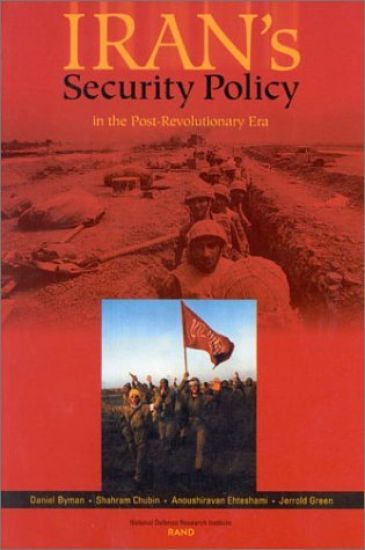
Religion, nationalism, ethnicity, economics, and geopolitics all are important in explaining Iran's goals and tactics in its relation-ship with the outside world, as are the agendas of key security institutions and the ambitions of their leaders.
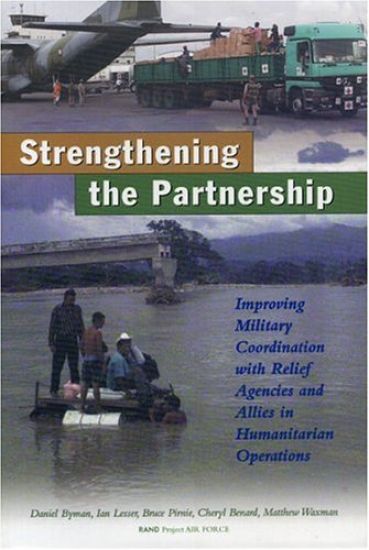
This report explores how the US military might improve co-ordination with relief agencies and with European allies in such operations. It examines the dynamics of complex contingency operations, provides an overview of the relief community, and delineates barriers to better co-operation.
Coercion--the use of threatened force to induce an adversary to change its behavior--is a critical function of the U.S. military. U.S. forces have recently fought in the Balkans, the Persian Gulf, and the Horn of Africa to compel recalcitrant regimes and warlords to stop repression, abandon weapons programs, permit humanitarian relief, and otherwise modify their actions. Yet despite its overwhelming military might, the United States often fails to coerce successfully. This report examines the phenomenon of coercion and how air power can contribute to its success. Three factors increase the likelihood of successful coercion: (1) the coercer's ability to raise the costs it imposes while denying the adversary the chance to respond (escalation dominance); (2) an ability to block an adversary's military strategy for victory; and (3) an ability to magnify third-party threats, such as internal instability or the danger posed by another enemy. Domestic political concerns (such as casualty sensitivity) and coalition dynamics often constrain coercive operations and impair the achievement of these conditions. Air power can deliver potent and credible threats that foster the above factors while neutralizing adversary countercoercive moves. When the favorable factors are absent, however, air power--or any other military instrument--will probably fail to coerce. Policymakers' use of coercive air power under inauspicious conditions diminishes the chances of using it elsewhere when the prospects of success would be greater.
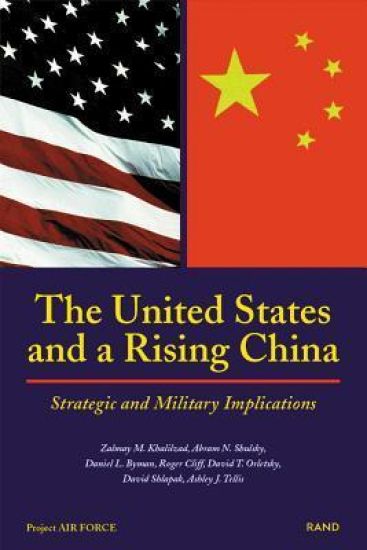
An analysis of the rising of China and its implications for the USA. The book suggests that, at present, the best US response appears to be a combination of engagement and containment, a congagement policy that would continue to try to bring China into the international system.
"Even the most seasoned Middle East observers were taken aback by the events of early 2011. Protests born of oppression and socioeconomic frustration erupted throughout the streets; public unrest provoked violent police backlash; long-established dictatorships fell. How did this all happen? What might the future look like, and what are the likely ramifications for the United States and the rest of the world? In The Arab Awakening, experts from the Brookings Institution tackle such questions to make sense of this tumultuous region that remains at the heart of U.S. national interests.The first portion of The Arab Awakening offers broad lessons by analyzing key aspects of the Mideast turmoil, such as public opinion trends within the ""Arab Street""; the role of social media and technology; socioeconomic and demographic conditions; the influence of Islamists; and the impact of the new political order on the Arab-Israeli peace process.The next section looks at the countries themselves, finding commonalties and grouping them according to the political evolutions that have (or have not) occurred in each country. The section offers insight into the current situation, and possible trajectory of each group of countries, followed by individual nation studies. The Arab Awakening brings the full resources of Brookings to bear on making sense of what may turn out to be the most significant geopolitical movement of this generation. It is essential reading for anyone looking to understand these developments and their consequences."
"Crafting a new policy toward Iran is a complicated, uncertain, and perilous challenge. Since it is an extremely complex society, with an opaque political system, it is no wonder that the United States has not yet figured out the puzzle that is Iran. With the clock ticking on Iran's pursuit of nuclear capabilities, solving this puzzle is more urgent than ever. In Which Path to Persia? a group of experts with the Saban Center for Middle East Policy at Brookings lays out the courses of action available to the United States. What are the benefits and drawbacks of airstrikes? Can engagement be successful? Is regime change possible? In answering such questions, the authors do not argue for one approach over another. Instead, they present the details of the policies so that readers can understand the complexity of the challenge and decide for themselves which course the United States should take."
This book summarizes likely challenges to U.S. interests in the Persian Gulf in the coming decade and highlights the implications of trends in the region for the United States.
Outside supporters, including state and non-state sponsors, of insurgent movements offer various forms of assistance to insurgents based on a wide range of motivations. The most useful forms of outside support for an insurgent movement include safe havens, financial support, political backing, and direct military assistance. Because states are able to provide all of these types of assistance, their support has had a profound impact on the effectiveness of many rebel movements since the end of the Cold War. However, state support is no longer the only, or indeed necessarily the most important, game in town. Diasporas have played a particularly important role in sustaining several strong insurgencies. More rarely, refugees, guerrilla groups, or other types of non-state supporters play a significant role in creating or sustaining an insurgency, offering fighters, training, or other forms of assistance. This report assesses post-Cold War trends in external support for insurgent movements. It describes the frequency that states, diasporas, refugees, and other non-state actors back guerrilla movements.It also assesses the motivations of these actors and which types of support matter most. This book concludes by assessing the implications for analysts of insurgent movements.