Kirjojen hintavertailu. Mukana 12 390 323 kirjaa ja 12 kauppaa.

Kirjailija

Daniel L. Duke

Kirjat ja teokset yhdessä paikassa: 14 kirjaa, julkaisuja vuosilta 1984-2016, suosituimpien joukossa Teachers' Guide to School Turnarounds. Vertaile teosten hintoja ja tarkista saatavuus suomalaisista kirjakaupoista.

14 kirjaa

Kirjojen julkaisuhaarukka 1984-2016.

Teachers' Guide to School Turnarounds

Teachers' Guide to School Turnarounds

Daniel L. Duke; Pamela D. Tucker; Michael J. Salmonowicz

Rowman Littlefield
2014
sidottu
Most guides to the process of turning around low-performing schools are written for principals and policy makers. Teachers, however, are the individuals expected to conduct the “heavy lifting” of school improvement. Teachers’ Guide to School Improvement is the first book on the subject written expressly for teachers. In this expanded second edition, teachers are shown a step-by-step process for raising student achievement, beginning with the diagnosis of the causes of low achievement and extending through the crucial first year of turnaround and beyond. Examples of effective turnaround practices are drawn from a variety of elementary, middle, and high schools.

Teachers' Guide to School Turnarounds

Teachers' Guide to School Turnarounds

Daniel L. Duke; Pamela D. Tucker; Michael J. Salmonowicz

Rowman Littlefield
2014
nidottu
Most guides to the process of turning around low-performing schools are written for principals and policy makers. Teachers, however, are the individuals expected to conduct the “heavy lifting” of school improvement. Teachers’ Guide to School Improvement is the first book on the subject written expressly for teachers. In this expanded second edition, teachers are shown a step-by-step process for raising student achievement, beginning with the diagnosis of the causes of low achievement and extending through the crucial first year of turnaround and beyond. Examples of effective turnaround practices are drawn from a variety of elementary, middle, and high schools.

The Children Left Behind

The Children Left Behind

Daniel L. Duke

Rowman Littlefield
2016
sidottu
Between 2002 and 2016, the federal government, state governments, and school districts undertook unprecedented measures to improve the lowest-performing schools. This book draws on dozens of actual examples to illustrate the wide range of interventions adopted over this time period. Among the initiatives examined in depth are efforts by states to provide technical assistance to schools and districts, offer students educational choices, engage communities in school improvement, take over low-performing schools and districts, create special state-run school districts, and close failing schools. Also discussed are district-initiated measures, including programs to standardize instruction, innovative approaches to raising student achievement, and restructuring of district operations. The book concludes with an assessment of 15 years of turnaround initiatives and recommendations based on lessons learned over this time period.
The Children Left Behind

The Children Left Behind

Daniel L. Duke

Rowman Littlefield
2016
nidottu
Between 2002 and 2016, the federal government, state governments, and school districts undertook unprecedented measures to improve the lowest-performing schools. This book draws on dozens of actual examples to illustrate the wide range of interventions adopted over this time period. Among the initiatives examined in depth are efforts by states to provide technical assistance to schools and districts, offer students educational choices, engage communities in school improvement, take over low-performing schools and districts, create special state-run school districts, and close failing schools. Also discussed are district-initiated measures, including programs to standardize instruction, innovative approaches to raising student achievement, and restructuring of district operations. The book concludes with an assessment of 15 years of turnaround initiatives and recommendations based on lessons learned over this time period.
Leadership for Low-Performing Schools

Leadership for Low-Performing Schools

Daniel L. Duke

Rowman Littlefield
2015
sidottu
No greater challenge faces our society than improving the educational opportunities for millions of young people trapped in chronically low-performing schools. Overcoming this challenge requires talented and dedicated school leaders whose knowledge and skills extend far beyond what is covered in conventional principal preparation programs. This book draws on extensive research by the author and others on the actions needed to turn around low-performing schools. First, however, the book examines the personal qualities needed to undertake the turnaround process. Following chapters provide guidelines on diagnosing the school-based causes of low achievement and developing a school turnaround plan. The author focuses on the importance of continuous planning – a departure from standard practice. A major portion of the book is devoted to examples of first-order and second-order strategies for raising achievement. Specific recommendations for launching the turnaround process and sustaining gains beyond the first years of turnaround are provided. The concluding chapter addresses the role of school districts in supporting school-based turnaround efforts.
Leadership for Low-Performing Schools

Leadership for Low-Performing Schools

Daniel L. Duke

Rowman Littlefield
2015
nidottu
No greater challenge faces our society than improving the educational opportunities for millions of young people trapped in chronically low-performing schools. Overcoming this challenge requires talented and dedicated school leaders whose knowledge and skills extend far beyond what is covered in conventional principal preparation programs. This book draws on extensive research by the author and others on the actions needed to turn around low-performing schools. First, however, the book examines the personal qualities needed to undertake the turnaround process. Following chapters provide guidelines on diagnosing the school-based causes of low achievement and developing a school turnaround plan. The author focuses on the importance of continuous planning – a departure from standard practice. A major portion of the book is devoted to examples of first-order and second-order strategies for raising achievement. Specific recommendations for launching the turnaround process and sustaining gains beyond the first years of turnaround are provided. The concluding chapter addresses the role of school districts in supporting school-based turnaround efforts.
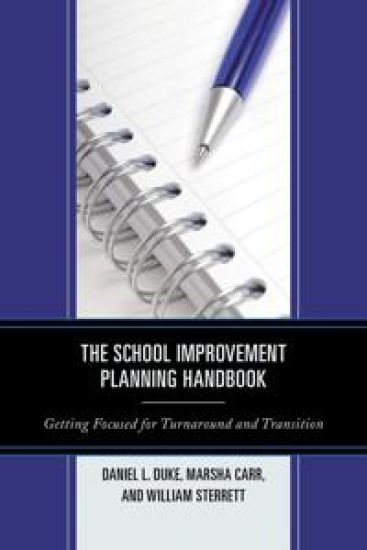
The School Improvement Planning Handbook

The School Improvement Planning Handbook

Daniel L. Duke; Marsha Carr; William Sterrett

Rowman Littlefield Education
2012
nidottu
Developing and updating school improvement plans is an annual ritual for virtually all school principals and their school improvement committees. Still, large numbers of schools continue to produce disappointing outcomes. The authors believe that part of the problem is the result of plans that focus on the wrong targets and that rely on ineffective strategies for improvement. To help principals and their school improvement committees develop and implement plans with a greater likelihood of success, the authors offer a step-by-step process for school improvement planning. They go on to pinpoint specific school improvement goals, including raising reading and mathematics achievement, building robust school cultures, addressing the needs of English language learners, improving instruction, and reducing absenteeism and dropouts. For each goal, a variety of objectives and proven strategies is presented along with sample school improvement plans. The book addresses the differences in planning to turn around a low-performing school, planning to sustain improvements over time, and planning to move a good school to a great school.
The School Improvement Planning Handbook

The School Improvement Planning Handbook

Daniel L. Duke; Marsha Carr; William Sterrett

Rowman Littlefield Education
2012
sidottu
Developing and updating school improvement plans is an annual ritual for virtually all school principals and their school improvement committees. Still, large numbers of schools continue to produce disappointing outcomes. The authors believe that part of the problem is the result of plans that focus on the wrong targets and that rely on ineffective strategies for improvement. To help principals and their school improvement committees develop and implement plans with a greater likelihood of success, the authors offer a step-by-step process for school improvement planning. They go on to pinpoint specific school improvement goals, including raising reading and mathematics achievement, building robust school cultures, addressing the needs of English language learners, improving instruction, and reducing absenteeism and dropouts. For each goal, a variety of objectives and proven strategies is presented along with sample school improvement plans. The book addresses the differences in planning to turn around a low-performing school, planning to sustain improvements over time, and planning to move a good school to a great school.
The Challenges of School District Leadership
Despite the rising interest in school districts, there are relatively few comprehensive resources available for graduate students in educational leadership programs. The Challenges of School District Leadership takes the position that the best way to prepare the next generation of school district leaders is to make certain that they are prepared to address the unending challenges that characterize public education today. Drawing on the latest research as well as actual examples, the book spotlights ten of the perennial challenges facing superintendents and school boards. Among the challenges discussed in detail are balancing equity and excellence, accommodating demographic change, coping with the increasing politicization of district leadership, deciding how to organize (or reorganize) a school system, and meeting the demands of educational accountability. This text is appropriate for graduate students in educational leadership, education policy, and the politics of education as well as school district leaders.
The Challenges of School District Leadership
Despite the rising interest in school districts, there are relatively few comprehensive resources available for graduate students in educational leadership programs. The Challenges of School District Leadership takes the position that the best way to prepare the next generation of school district leaders is to make certain that they are prepared to address the unending challenges that characterize public education today. Drawing on the latest research as well as actual examples, the book spotlights ten of the perennial challenges facing superintendents and school boards. Among the challenges discussed in detail are balancing equity and excellence, accommodating demographic change, coping with the increasing politicization of district leadership, deciding how to organize (or reorganize) a school system, and meeting the demands of educational accountability. This text is appropriate for graduate students in educational leadership, education policy, and the politics of education as well as school district leaders.
Teachers' Guide to School Turnarounds

Teachers' Guide to School Turnarounds

Daniel L. Duke; Pamela D. Tucker; Michael J. Salmonowicz; Melissa Levy; Stephen Saunders

Rowman Littlefield Education
2007
nidottu
Most guides on the process of turning around low-performing schools typically are addressed to principals and superintendents. Teachers, however, are the individuals expected to conduct the 'heavy lifting' of school improvement. Teachers' Guide to School Turnarounds is the first book on the subject written expressly for teachers. It provides a step-by-step introduction to the process of raising student achievement, beginning with diagnosing the causes of low performance and extending beyond the first year of improvement to the factors involved in sustaining high performance. Based on the authors' experiences with the School Turnaround Specialist Program as well as a review of research on successful school improvement projects, the book contains a wealth of tips and warnings for those engaged in, or anticipating being engaged in, the process of turning around a low-performing school.
Teachers' Guide to School Turnarounds

Teachers' Guide to School Turnarounds

Daniel L. Duke; Pamela D. Tucker; Michael J. Salmonowicz; Melissa Levy; Stephen Saunders

Rowman Littlefield Education
2007
sidottu
Most guides on the process of turning around low-performing schools typically are addressed to principals and superintendents. Teachers, however, are the individuals expected to conduct the "heavy lifting" of school improvement. Teachers' Guide to School Turnarounds is the first book on the subject written expressly for teachers. It provides a step-by-step introduction to the process of raising student achievement, beginning with diagnosing the causes of low performance and extending beyond the first year of improvement to the factors involved in sustaining high performance. Based on the authors' experiences with the School Turnaround Specialist Program as well as a review of research on successful school improvement projects, the book contains a wealth of tips and warnings for those engaged in, or anticipating being engaged in, the process of turning around a low-performing school.
The School That Refused to Die

The School That Refused to Die

Daniel L. Duke

State University of New York Press
1994
pokkari
A fascinating, and disturbing, story of an urban high school's struggle to survive in the post-integration era of educational reformThomas Jefferson High School faced court-ordered busing, student unrest, white flight, district-sponsored alternative schools, high school consolidation, budget crises, closure threats, magnet programs, and co-existence with a Governor's School. Each event impacted the culture of academic excellence that had been painstakingly crafted during the school's first thirty years. This book offers a history of Tee-Jay from its inception in 1930 through its "glory days," covers the school's efforts to deal with the challenges of the post-integration era, and concludes with a discussion of what the Tee-Jay story can tell us about the future of academic high schools and integration in the urban areas of the United States.
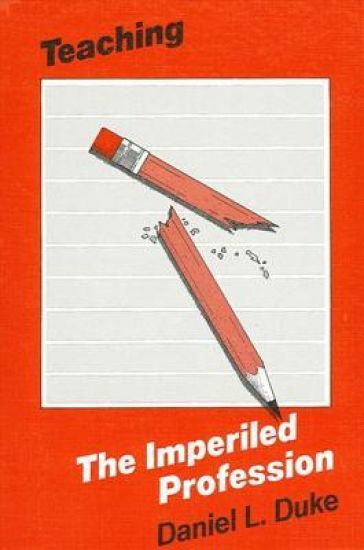
Teaching-The Imperiled Profession

Teaching-The Imperiled Profession

Daniel L. Duke

State University of New York Press
1984
pokkari
What is it really like to be a teacher today? Teaching-The Imperiled Profession goes beyond conventional analyses, to probe the profession and various threats to its viability. Daniel L. Duke has drawn on his own and current educational research-including surveys of teacher opinion, interviews with teachers, and press coverage of educational issues-to uncover and examine a complex array of factors that contribute to the troubled state of the profession and the unprecedented discouragement of its practitioners. The book also analyzes traditional sources of support. Teaching-The Imperiled Profession provides prospective teachers with a realistic picture of the profession today. It identifies a set of concerns on which citizens might reasonably focus attention, in order to forestall any future deterioration. It provides the educator, administrator, and policy-maker with a comprehensive set of recommendations for revitalizing the profession. The book also serves as a concise history of the teaching profession as it has developed in the United States during the twentieth century.