Kirjojen hintavertailu. Mukana 12 595 353 kirjaa ja 12 kauppaa.
Kirjailija
Daniel L. Schwartz
Kirjat ja teokset yhdessä paikassa: 5 kirjaa, julkaisuja vuosilta 2013-2021, suosituimpien joukossa Conversion in Late Antiquity: Christianity, Islam, and Beyond. Vertaile teosten hintoja ja tarkista saatavuus suomalaisista kirjakaupoista.
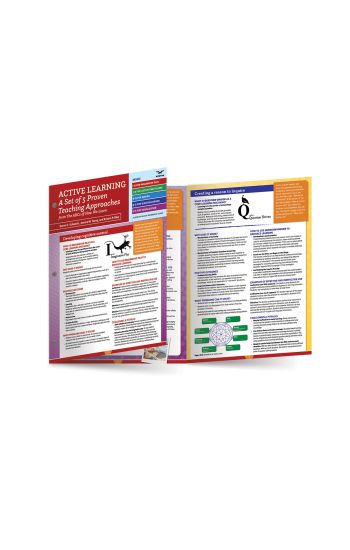
Drawn from The ABCs of How We Learn, this playful yet practical Guide focuses on the five teaching approaches crucial to cultivating active learning in the classroom: I is for Imaginative PlayJ is for Just-In-Time TellingM is for MakingQ is for Question DrivenV is for Visualisation Learn why each of these “core learning mechanics” really do work—as well as the positive changes you can expect to see in your students as a result. This Guide explains how to use these teaching approaches to enhance your students’ learning and make the most of every lesson. Each 8.5" x 11" multi-panel guide is laminated for extra durability and 3-hole-punched for binder storage.
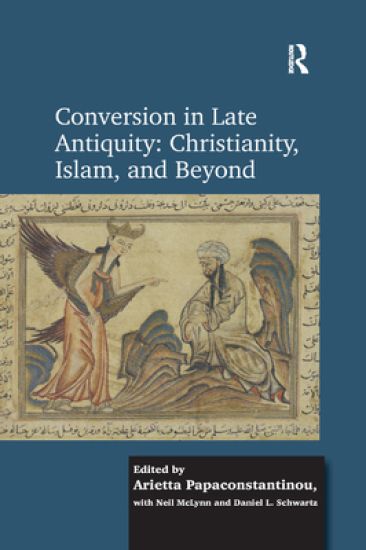
The papers in this volume were presented at a Mellon-Sawyer Seminar held at the University of Oxford in 2009-2010, which sought to investigate side by side the two important movements of conversion that frame late antiquity: to Christianity at its start, and to Islam at the other end. Challenging the opposition between the two stereotypes of Islamic conversion as an intrinsically violent process, and Christian conversion as a fundamentally spiritual one, the papers seek to isolate the behaviours and circumstances that made conversion both such a common and such a contested phenomenon. The spread of Buddhism in Asia in broadly the same period serves as an external comparator that was not caught in the net of the Abrahamic religions. The volume is organised around several themes, reflecting the concerns of the initial project with the articulation between norm and practice, the role of authorities and institutions, and the social and individual fluidity on the ground. Debates, discussions, and the expression of norms and principles about conversion conversion are not rare in societies experiencing religious change, and the first section of the book examines some of the main issues brought up by surviving sources. This is followed by three sections examining different aspects of how those principles were - or were not - put into practice: how conversion was handled by the state, how it was continuously redefined by individual ambivalence and cultural fluidity, and how it was enshrined through different forms of institutionalization. Finally, a topographical coda examines the effects of religious change on the iconic holy city of Jerusalem.
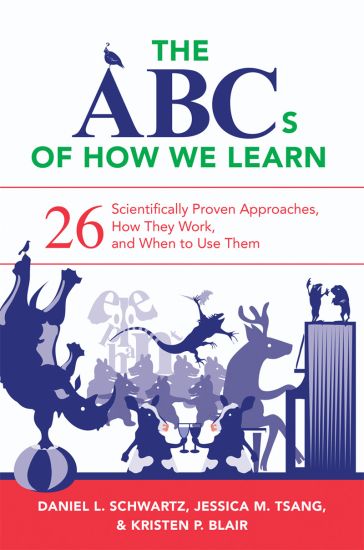
An explosive growth in research on how people learn has revealed many ways to improve teaching and catalyse learning at all ages. The purpose of this book is to present this new science of learning so that educators can creatively translate the science into exceptional practice. The book is highly appropriate for the preparation and professional development of teachers and college faculty, but also parents, trainers, instructional designers and psychology students. Based on a popular Stanford University course, The ABCs of How We Learn uses a novel format that is suitable as both a textbook and a popular read. With everyday language, engaging examples, a sense of humour and solid evidence, it describes 26 unique ways that students learn. Each chapter offers a concise and approachable breakdown of one way people learn, how it works, how we know it works, how and when to use it and what mistakes to avoid. The book presents learning research in a way that educators can creatively translate into exceptional lessons and classroom practice. The book covers field-defining learning theories ranging from behaviourism (R is for Reward) to cognitive psychology (S is for Self-Explanation) to social psychology (O is for Observation). The chapters also introduce lesser-known theories exceptionally relevant to practice, such as arousal theory (X is for eXcitement). Together the theories, evidence and strategies from each chapter can be combined endlessly to create original and effective learning plans and the means to know if they succeed.
The papers in this volume were presented at a Mellon-Sawyer Seminar held at the University of Oxford in 2009-2010, which sought to investigate side by side the two important movements of conversion that frame late antiquity: to Christianity at its start, and to Islam at the other end. Challenging the opposition between the two stereotypes of Islamic conversion as an intrinsically violent process, and Christian conversion as a fundamentally spiritual one, the papers seek to isolate the behaviours and circumstances that made conversion both such a common and such a contested phenomenon. The spread of Buddhism in Asia in broadly the same period serves as an external comparator that was not caught in the net of the Abrahamic religions. The volume is organised around several themes, reflecting the concerns of the initial project with the articulation between norm and practice, the role of authorities and institutions, and the social and individual fluidity on the ground. Debates, discussions, and the expression of norms and principles about conversion conversion are not rare in societies experiencing religious change, and the first section of the book examines some of the main issues brought up by surviving sources. This is followed by three sections examining different aspects of how those principles were - or were not - put into practice: how conversion was handled by the state, how it was continuously redefined by individual ambivalence and cultural fluidity, and how it was enshrined through different forms of institutionalization. Finally, a topographical coda examines the effects of religious change on the iconic holy city of Jerusalem.
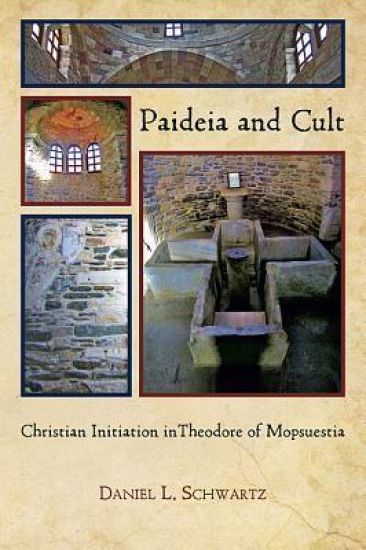
Paideia and Cult explores the role of Christian education and worship in the complex process of conversion and Christianization. It analyzes the Catechetical Homilies of Theodore of Mopsuestia as a curriculum designed to train those seeking initiation into the Christian mysteries. Although Theodore gave considerable attention to teaching creedal theology, he sought to go beyond simply communicating information. His catechetical preaching set the teaching of Christian ideas within the context of religious community and ritual participation. In doing so he sought to produce a Christianized view of the world and of the convert’s place in a community of worship. Theodore’s attention to the communal, cognitive, and ritual components of initiation suggest a substantive understanding of religious conversion, yet one that avoids an overemphasis on intellectual and psychological transformation. Throughout this study catechesis emerges as invaluable for comprehending the ability of clergy to initiate new members as Christianity gained increasing prominence within the late Roman world.