Kirjojen hintavertailu. Mukana 12 595 353 kirjaa ja 12 kauppaa.

Kirjailija

Daniel Lederman

Kirjat ja teokset yhdessä paikassa: 10 kirjaa, julkaisuja vuosilta 2004-2017, suosituimpien joukossa Latin American entrepreneurs. Vertaile teosten hintoja ja tarkista saatavuus suomalaisista kirjakaupoista.

10 kirjaa

Kirjojen julkaisuhaarukka 2004-2017.

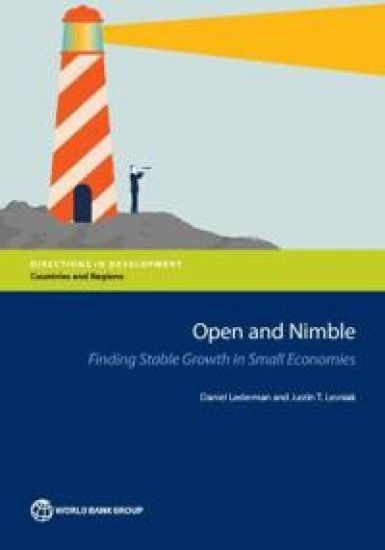
Open and Nimble

Open and Nimble

Daniel Lederman; Justin Lesniak

World Bank Publications
2017
nidottu
In the 1960s, economic development was thought to be shaped by unlimited supplies of labour. Unlimited labour supply implies that wages would remain stagnant even when economies grow. In the 21st Century, the evidence is clear: the correlation between changes in wages and changes in Gross Domestic Product (GDP) per capita is high and close to one across economies of various sizes. Economic Development with Limited Supplies of Labor argues that the size of an economy’s labour force does condition development. It studies the challenges of small economies by systematically analysing correlates of labour-force size.The export structures of small economies are concentrated in a few products or services and in a small number of export destinations. In turn, export concentration is associated with terms of trade volatility, which combined with high exposure to international trade, implies that domestic economies also tend to be volatile as external volatility permeates national economic life.Moreover, limited territory plays a role in shaping how economies are affected by natural disasters, even when the probability of facing such disasters is not necessarily higher among small than among large economies. The combination of large governments with macroeconomic volatility seems to be associated with low national savings rates in small economies. This combination could be a challenge for long-term growth if productivity growth and foreign investment do not compensate for low domestic savings.

América Latina y el ascenso del Sur

América Latina y el ascenso del Sur

Augusto de la Torre; Tatiana Didier; Alain Ize; Daniel Lederman; Sergio L. Schmukler

World Bank Publications
2015
nidottu
The world economy is not what it used to be twenty years ago. For most of the 20th century, the world economy was characterized by developed (North) countries acting as 'center' to a 'periphery' of developing (South) countries. However, the recent rise of developing economies suggests the need to go beyond this North-South dichotomy.This tectonic re-configuration of the global landscape has brought about significant changes to countries in the Latin America and Caribean (LAC) region. The time is ripe for an in-depth analysis of the dynamics and nature of LAC's external connections.This latest volume in the World Bank Latin American and Caribbean Studies series will focus on the implications of these trends for the economic development of LAC countries. In particular, trade, financial, macroeconomic, and sectoral shifts, as well as labor-market aspects will be systematically analyzed. This is the Spanish edition.
Sticky Feet

Sticky Feet

Claire H. Hollweg; Daniel Lederman; Diego Rojas; Elizabeth Ruppert Bulmer

World Bank Publications
2014
nidottu
This report quantifies labor mobility costs in developing countries and simulates the implied adjustment paths of employment and wages following a change in trade policy. High mobility costs are shown to reduce the potential gains to trade reform.
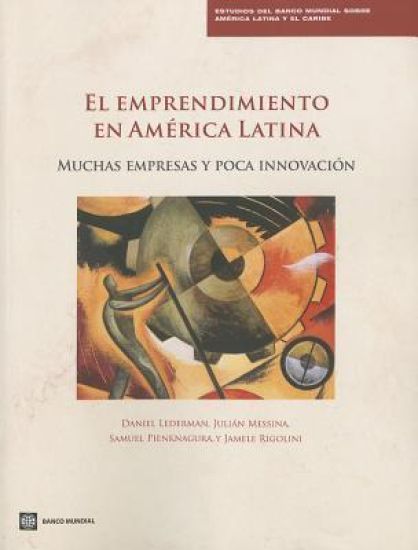
El Emprendimiento en América Latina

El Emprendimiento en América Latina

Daniel Lederman; Julian Messina; Samuel Pienknagura; Jamele Rigolini

World Bank Publications
2014
nidottu
Entrepreneurship is a fundamental driver of growth, development, and job creation. While Latin America and the Caribbean has a wealth of entrepreneurs, firms in the region, compared to those in other regions, are small in size and less likely to grow or innovate. Productivity growth has remained lackluster for decades, including during the recent commodity boom. Enhancing the creation of good jobs and accelerating productivity growth in the region will require dynamic entrepreneurs. Latin American Entrepreneurs: Many Firms but Little Innovation studies the landscape of entrepreneurship in Latin America and the Caribbean. Utilizing new datasets that cover issues such as firm creation, firm dynamics, export decisions, and the behavior of multinational corporations, the book synthesizes the results of a comprehensive analysis of the status, prospects, and challenges of entrepreneurship in the region. Useful tools and information are provided to help policy makers and practitioners identify policy areas governments can explore to enhance innovation and encourage high-growth, transformational entrepreneurship. This is the Spanish edition.
Latin American entrepreneurs

Latin American entrepreneurs

Daniel Lederman

World Bank Publications
2013
nidottu
Entrepreneurship-manifested in the entry of new firms or products into new markets, or substantial improvements in technological capacity or process innovation by incumbent firms-is widely considered to be an important ingredient for long term economic development. Entrepreneurship in Latin America and the Caribbean argues that entrepreneurship is also a source of employment generation, export growth, and resilience during economic downturns.Although the conventional wisdom suggests that Latin American and Caribbean countries underperform relative to China and other emerging markets in terms of its entrepreneurial dynamism, this report provides evidence suggesting that the region is characterised by substantial entrepreneurship. The main challenge in the region is not a lack of entrepreneurs, but rather their relatively low level of innovation and the slow growth of incumbent firms. The report discusses the nature of new entrants into markets and the factors that might help stimulate private-sector innovation after firms have survived the initial test of market competition.
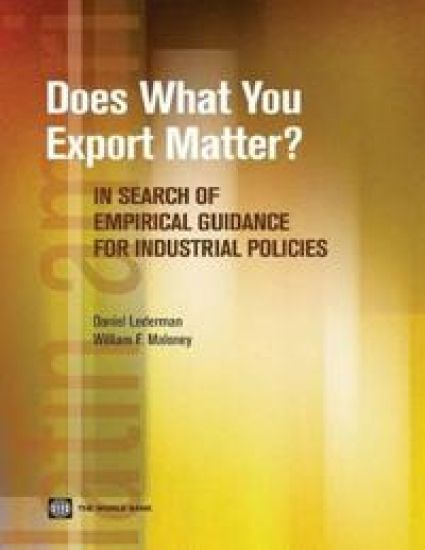
Does What You Export Matter?

Does What You Export Matter?

Daniel Lederman; William Maloney

World Bank Publications
2012
nidottu
Does what economies export matter for development? If so, can industrial policies improve on the export basket generated by the market? This book approaches these questions from a variety of conceptual and policy viewpoints. Reviewing the theoretical arguments in favor of industrial policies, the authors first ask whether existing indicators allow policy makers to identify growth-promoting sectors with confidence. To this end, they assess, and ultimately cast doubt upon, the reliability of many popular indicators advocated by proponents of industrial policy.
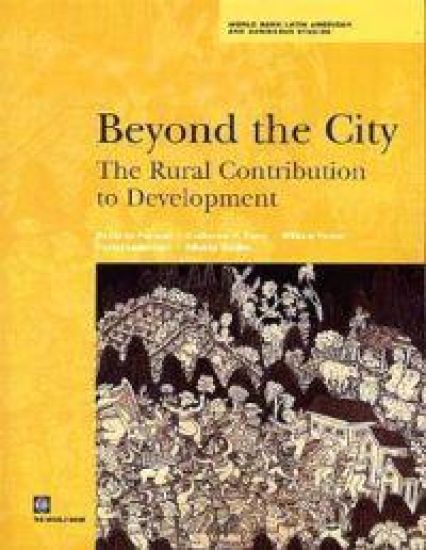
Beyond the City

Beyond the City

David De Ferranti; Guillermo Perry; Daniel Lederman; Alberto Valdes; William Foster

World Bank Publications
2005
nidottu
This book evaluates the contribution of rural development and policies to growth, poverty alleviation, and environmental degradation in Latin America and the Caribbean.
The Political Economy of Protection

The Political Economy of Protection

Daniel Lederman

Stanford University Press
2005
sidottu
The Political Economy of Protection explains why countries, especially developing countries, change their trade policies over the course of history. It does so through an interdisciplinary approach, which borrows analyses from both political science and economics. While the central focus of this book is to explain historical changes in trade policy in one country, Chile, it is broadly relevant for students, scholars, and trade specialists interested in gaining a deeper understanding of the politics and economics of international trade. Given the intensifying public debates about the benefits of globalization, the author provides a uniquely rigorous yet interdisciplinary analysis of the forces that shape trade policy decisions, not just in Chile, but throughout the world.
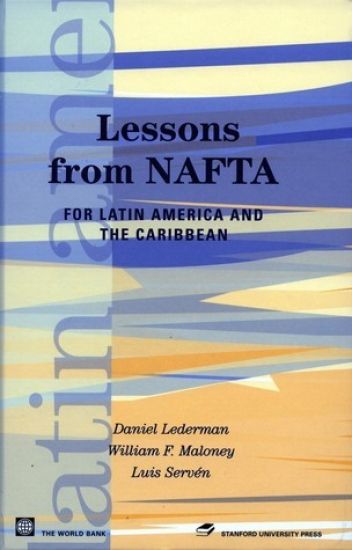
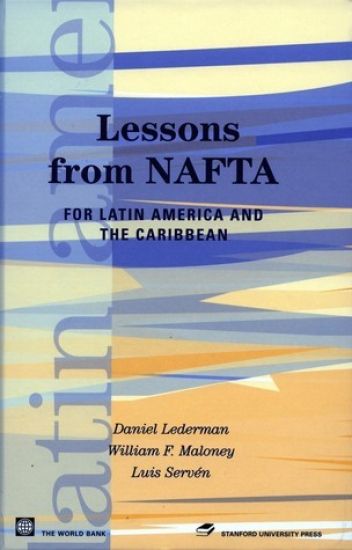
Lessons from NAFTA

Lessons from NAFTA

Daniel Lederman; William F. Maloney; Luis Servén

Stanford University Press
2004
sidottu
Analyzing the experience of Mexico under the North American Free Trade Agreement (NAFTA), the authors draw lessons for other countries considering free trade agreements with the United States. The authors conclude that NAFTA raised external trade and foreign investment inflows and had a modest effect on Mexico's average income per person. It is likely that NAFTA also helped achieve a modest reduction in poverty and an improvement in job quality. However, major obstacles remain to Mexico's long term development-NAFTA is not enough. The main lesson for other countries is that free trade agreements offer opportunities to accelerate economic growth, but do not guarantee it.
Lessons from NAFTA

Lessons from NAFTA

Daniel Lederman; William F. Maloney; Luis Servén

Stanford University Press
2004
pokkari
Analyzing the experience of Mexico under the North American Free Trade Agreement (NAFTA), the authors draw lessons for other countries considering free trade agreements with the United States. The authors conclude that NAFTA raised external trade and foreign investment inflows and had a modest effect on Mexico's average income per person. It is likely that NAFTA also helped achieve a modest reduction in poverty and an improvement in job quality. However, major obstacles remain to Mexico's long term development-NAFTA is not enough. The main lesson for other countries is that free trade agreements offer opportunities to accelerate economic growth, but do not guarantee it.