Kirjojen hintavertailu. Mukana 12 390 323 kirjaa ja 12 kauppaa.

Kirjailija

Daniel M. Brinks

Kirjat ja teokset yhdessä paikassa: 5 kirjaa, julkaisuja vuosilta 2007-2019, suosituimpien joukossa Understanding Institutional Weakness. Vertaile teosten hintoja ja tarkista saatavuus suomalaisista kirjakaupoista.

5 kirjaa

Kirjojen julkaisuhaarukka 2007-2019.

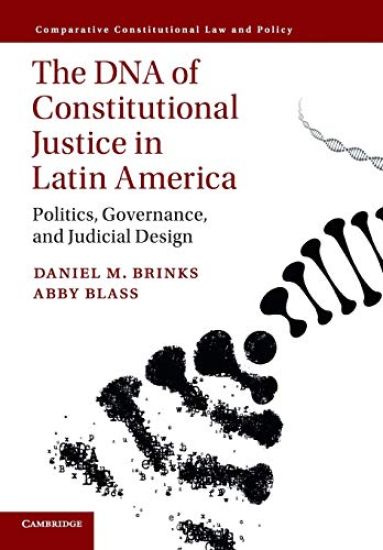
The DNA of Constitutional Justice in Latin America

The DNA of Constitutional Justice in Latin America

Daniel M. Brinks; Abby Blass

Cambridge University Press
2019
pokkari
In recent times there has been a dramatic change in the nature and scope of constitutional justice systems in the global south. New or reformed constitutions have proliferated, protecting social, economic, and political rights. While constitutional courts in Latin America have traditionally been used as ways to limit power and preserve the status quo, the evidence shows that they are evolving into a functioning part of contemporary politics and a central component of a system of constitutional justice. This book lays bare the political roots of this transformation, outlining a new way to understand judicial design and the very purpose of constitutional justice. Authors Daniel M. Brinks and Abby Blass use case studies drawn from nineteen Latin American countries over forty years to reveal the ideas behind the new systems of constitutional justice. They show how constitutional designers entrust their hopes and fears to dynamic governance systems, in hopes of directing the development of constitutional meaning over time.

Understanding Institutional Weakness

Understanding Institutional Weakness

Daniel M. Brinks; Steven Levitsky; Maria Victoria Murillo

Cambridge University Press
2019
pokkari
This Element introduces the concept of institutional weakness, arguing that weakness or strength is a function of the extent to which an institution actually matters to social, economic or political outcomes. It then presents a typology of three forms of institutional weakness: insignificance, in which rules are complied with but do not affect the way actors behave; non-compliance, in which state elites either choose not to enforce the rules or fail to gain societal cooperation with them; and instability, in which the rules are changed at an unusually high rate. The Element then examines the sources of institutional weakness.
The DNA of Constitutional Justice in Latin America

The DNA of Constitutional Justice in Latin America

Daniel M. Brinks; Abby Blass

Cambridge University Press
2018
sidottu
In recent times there has been a dramatic change in the nature and scope of constitutional justice systems in the global south. New or reformed constitutions have proliferated, protecting social, economic, and political rights. While constitutional courts in Latin America have traditionally been used as ways to limit power and preserve the status quo, the evidence shows that they are evolving into a functioning part of contemporary politics and a central component of a system of constitutional justice. This book lays bare the political roots of this transformation, outlining a new way to understand judicial design and the very purpose of constitutional justice. Authors Daniel M. Brinks and Abby Blass use case studies drawn from nineteen Latin American countries over forty years to reveal the ideas behind the new systems of constitutional justice. They show how constitutional designers entrust their hopes and fears to dynamic governance systems, in hopes of directing the development of constitutional meaning over time.
The Judicial Response to Police Killings in Latin America

The Judicial Response to Police Killings in Latin America

Daniel M. Brinks

Cambridge University Press
2012
pokkari
This book documents the corrosive effect of social exclusion on democracy and the rule of law. It shows how marginalization prevents citizens from effectively engaging even the best legal systems, how politics creeps into prosecutorial and judicial decision making, and how institutional change is often nullified by enduring contextual factors. It also shows how some institutional arrangements can overcome these impediments. The argument is based on extensive field work and original data on the investigation and prosecution of more than 500 police homicides in five legal systems in Argentina, Brazil, and Uruguay. It includes both qualitative analyses of individual violations and prosecutions and quantitative analyses of broad patterns within and across jurisdictions. The book offers a structured comparison of police, prosecutorial, and judicial institutions in each location, and shows that analyses of any one of these organizations in isolation misses many of the essential dynamics that underlie an effective system of justice.
The Judicial Response to Police Killings in Latin America

The Judicial Response to Police Killings in Latin America

Daniel M. Brinks

Cambridge University Press
2007
sidottu
This book documents the corrosive effect of social exclusion on democracy and the rule of law. It shows how marginalization prevents citizens from effectively engaging even the best legal systems, how politics creeps into prosecutorial and judicial decision making, and how institutional change is often nullified by enduring contextual factors. It also shows how some institutional arrangements can overcome these impediments. The argument is based on extensive field work and original data on the investigation and prosecution of more than 500 police homicides in five legal systems in Argentina, Brazil, and Uruguay. It includes both qualitative analyses of individual violations and prosecutions and quantitative analyses of broad patterns within and across jurisdictions. The book offers a structured comparison of police, prosecutorial, and judicial institutions in each location, and shows that analyses of any one of these organizations in isolation misses many of the essential dynamics that underlie an effective system of justice.