Kirjojen hintavertailu. Mukana 12 595 353 kirjaa ja 12 kauppaa.

Kirjailija

Daniel M. Goldstein

Kirjat ja teokset yhdessä paikassa: 8 kirjaa, julkaisuja vuosilta 2004-2019, suosituimpien joukossa The Spectacular City. Vertaile teosten hintoja ja tarkista saatavuus suomalaisista kirjakaupoista.

8 kirjaa

Kirjojen julkaisuhaarukka 2004-2019.

Decolonizing Ethnography

Decolonizing Ethnography

Carolina Alonso Bejarano; Lucia López Juárez; Mirian A. Mijangos García; Daniel M. Goldstein

Duke University Press
2019
pokkari
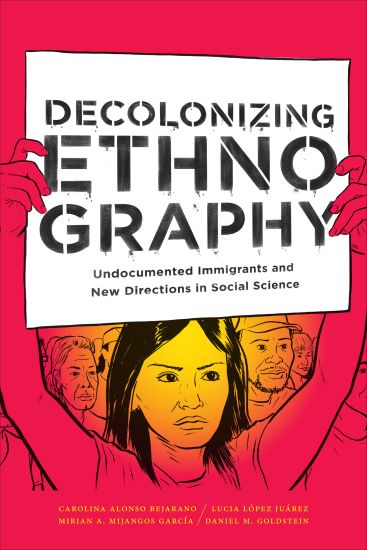
In August 2011, ethnographers Carolina Alonso Bejarano and Daniel M. Goldstein began a research project on undocumented immigration in the United States by volunteering at a center for migrant workers in New Jersey. Two years later, Lucia LÓpez JuÁrez and Mirian A. Mijangos GarcÍa-two local immigrant workers from Latin America-joined Alonso Bejarano and Goldstein as research assistants and quickly became equal partners for whom ethnographic practice was inseparable from activism. In Decolonizing Ethnography the four coauthors offer a methodological and theoretical reassessment of social science research, showing how it can function as a vehicle for activism and as a tool for marginalized people to theorize their lives. Tacking between personal narratives, ethnographic field notes, an original bilingual play about workers' rights, and examinations of anthropology as a discipline, the coauthors show how the participation of Mijangos GarcÍa and LÓpez JuÁrez transformed the project's activist and academic dimensions. In so doing, they offer a guide for those wishing to expand the potential of ethnography to serve as a means for social transformation and decolonization.
Decolonizing Ethnography

Decolonizing Ethnography

Carolina Alonso Bejarano; Lucia López Juárez; Mirian A. Mijangos García; Daniel M. Goldstein

Duke University Press
2019
sidottu
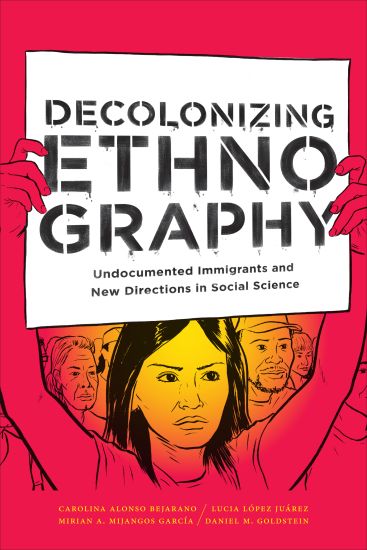
In August 2011, ethnographers Carolina Alonso Bejarano and Daniel M. Goldstein began a research project on undocumented immigration in the United States by volunteering at a center for migrant workers in New Jersey. Two years later, Lucia LÓpez JuÁrez and Mirian A. Mijangos GarcÍa-two local immigrant workers from Latin America-joined Alonso Bejarano and Goldstein as research assistants and quickly became equal partners for whom ethnographic practice was inseparable from activism. In Decolonizing Ethnography the four coauthors offer a methodological and theoretical reassessment of social science research, showing how it can function as a vehicle for activism and as a tool for marginalized people to theorize their lives. Tacking between personal narratives, ethnographic field notes, an original bilingual play about workers' rights, and examinations of anthropology as a discipline, the coauthors show how the participation of Mijangos GarcÍa and LÓpez JuÁrez transformed the project's activist and academic dimensions. In so doing, they offer a guide for those wishing to expand the potential of ethnography to serve as a means for social transformation and decolonization.
Owners of the Sidewalk

Owners of the Sidewalk

Daniel M. Goldstein

Duke University Press
2016
pokkari
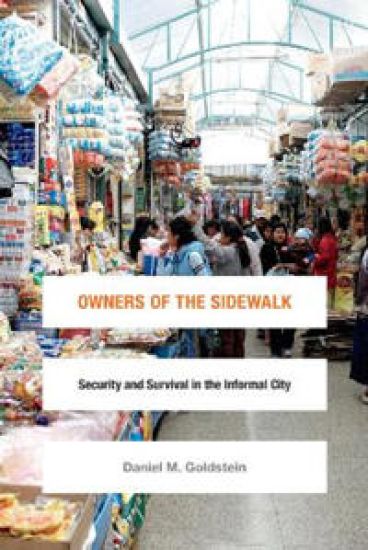
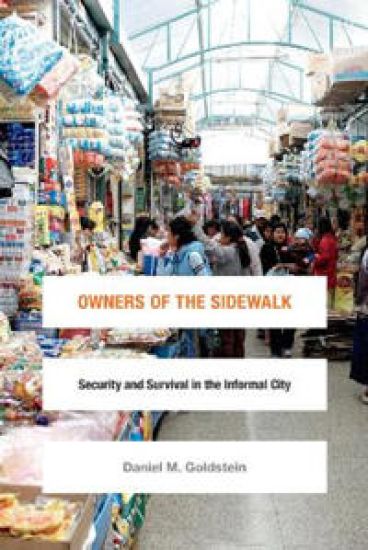
Many of Bolivia's poorest and most vulnerable citizens work as vendors in the Cancha mega-market in the city of Cochabamba, where they must navigate systems of informality and illegality in order to survive. In Owners of the Sidewalk Daniel M. Goldstein examines the ways these systems correlate in the marginal spaces of the Latin American city. Collaborating with the Cancha's legal and permanent stall vendors (fijos) and its illegal and itinerant street and sidewalk vendors (ambulantes), Goldstein shows how the state's deliberate neglect and criminalization of the Cancha's poor-a practice common to neoliberal modern cities-makes the poor exploitable, governable, and consigns them to an insecure existence. Goldstein's collaborative and engaged approach to ethnographic field research also opens up critical questions about what ethical scholarship entails.
Owners of the Sidewalk

Owners of the Sidewalk

Daniel M. Goldstein

Duke University Press
2016
sidottu
Many of Bolivia's poorest and most vulnerable citizens work as vendors in the Cancha mega-market in the city of Cochabamba, where they must navigate systems of informality and illegality in order to survive. In Owners of the Sidewalk Daniel M. Goldstein examines the ways these systems correlate in the marginal spaces of the Latin American city. Collaborating with the Cancha's legal and permanent stall vendors (fijos) and its illegal and itinerant street and sidewalk vendors (ambulantes), Goldstein shows how the state's deliberate neglect and criminalization of the Cancha's poor-a practice common to neoliberal modern cities-makes the poor exploitable, governable, and consigns them to an insecure existence. Goldstein's collaborative and engaged approach to ethnographic field research also opens up critical questions about what ethical scholarship entails.
Outlawed

Outlawed

Daniel M. Goldstein

Duke University Press
2012
sidottu
In Outlawed, Daniel M. Goldstein reveals how indigenous residents of marginal neighborhoods in Cochabamba, Bolivia, struggle to balance security with rights. Feeling abandoned to the crime and violence that grip their communities, they sometimes turn to vigilante practices, including lynching, to apprehend and punish suspected criminals. Goldstein describes those in this precarious position as "outlawed": not protected from crime by the law but forced to comply with legal measures in other areas of their lives, their solutions to protection criminalized while their needs for security are ignored. He chronicles the complications of the government's attempts to provide greater rights to indigenous peoples, including a new constitution that recognizes "community justice." He also examines how state definitions of indigeneity ignore the existence of marginal neighborhoods, continuing long-standing exclusionary practices. The insecurity felt by the impoverished residents of Cochabamba-and, more broadly, by the urban poor throughout Bolivia and Latin America-remains. Outlawed illuminates the complex interconnections between differing definitions of security and human rights at the local, national, and global levels.
Outlawed

Outlawed

Daniel M. Goldstein

Duke University Press
2012
pokkari
In Outlawed, Daniel M. Goldstein reveals how indigenous residents of marginal neighborhoods in Cochabamba, Bolivia, struggle to balance security with rights. Feeling abandoned to the crime and violence that grip their communities, they sometimes turn to vigilante practices, including lynching, to apprehend and punish suspected criminals. Goldstein describes those in this precarious position as "outlawed": not protected from crime by the law but forced to comply with legal measures in other areas of their lives, their solutions to protection criminalized while their needs for security are ignored. He chronicles the complications of the government's attempts to provide greater rights to indigenous peoples, including a new constitution that recognizes "community justice." He also examines how state definitions of indigeneity ignore the existence of marginal neighborhoods, continuing long-standing exclusionary practices. The insecurity felt by the impoverished residents of Cochabamba-and, more broadly, by the urban poor throughout Bolivia and Latin America-remains. Outlawed illuminates the complex interconnections between differing definitions of security and human rights at the local, national, and global levels.
The Spectacular City

The Spectacular City

Daniel M. Goldstein

Duke University Press
2004
sidottu
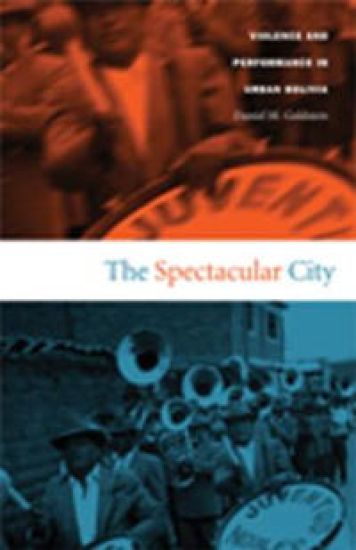
Since the Bolivian revolution in 1952, migrants have come to the city of Cochabamba, seeking opportunity and relief from rural poverty. They have settled in barrios on the city’s outskirts only to find that the rights of citizens-basic rights of property and security, especially protection from crime-are not available to them. In this ethnography, Daniel M. Goldstein considers the significance of and similarities between two kinds of spectacles-street festivals and the vigilante lynching of criminals-as they are performed in the Cochabamba barrio of Villa Pagador. By examining folkloric festivals and vigilante violence within the same analytical framework, Goldstein shows how marginalized urban migrants, shut out of the city and neglected by the state, use performance to assert their national belonging and to express their grievances against the inadequacies of the state’s official legal order.During the period of Goldstein’s fieldwork in Villa Pagador in the mid-1990s, residents attempted to lynch several thieves and attacked the police who tried to intervene. Since that time, there have been hundreds of lynchings in the poor barrios surrounding Cochabamba. Goldstein presents the lynchings of thieves as a form of horrific performance, with elements of critique and political action that echo those of local festivals. He explores the consequences and implications of extralegal violence for human rights and the rule of law in the contemporary Andes. In rich detail, he provides an in-depth look at the development of Villa Pagador and of the larger metropolitan area of Cochabamba, illuminating a contemporary Andean city from both microethnographic and macrohistorical perspectives. Focusing on indigenous peoples’ experiences of urban life and their attempts to manage their sociopolitical status within the broader context of neoliberal capitalism and political decentralization, The Spectacular City highlights the deep connections between performance, law, violence, and the state.
The Spectacular City

The Spectacular City

Daniel M. Goldstein

Duke University Press
2004
pokkari
Since the Bolivian revolution in 1952, migrants have come to the city of Cochabamba, seeking opportunity and relief from rural poverty. They have settled in barrios on the city’s outskirts only to find that the rights of citizens-basic rights of property and security, especially protection from crime-are not available to them. In this ethnography, Daniel M. Goldstein considers the significance of and similarities between two kinds of spectacles-street festivals and the vigilante lynching of criminals-as they are performed in the Cochabamba barrio of Villa Pagador. By examining folkloric festivals and vigilante violence within the same analytical framework, Goldstein shows how marginalized urban migrants, shut out of the city and neglected by the state, use performance to assert their national belonging and to express their grievances against the inadequacies of the state’s official legal order.During the period of Goldstein’s fieldwork in Villa Pagador in the mid-1990s, residents attempted to lynch several thieves and attacked the police who tried to intervene. Since that time, there have been hundreds of lynchings in the poor barrios surrounding Cochabamba. Goldstein presents the lynchings of thieves as a form of horrific performance, with elements of critique and political action that echo those of local festivals. He explores the consequences and implications of extralegal violence for human rights and the rule of law in the contemporary Andes. In rich detail, he provides an in-depth look at the development of Villa Pagador and of the larger metropolitan area of Cochabamba, illuminating a contemporary Andean city from both microethnographic and macrohistorical perspectives. Focusing on indigenous peoples’ experiences of urban life and their attempts to manage their sociopolitical status within the broader context of neoliberal capitalism and political decentralization, The Spectacular City highlights the deep connections between performance, law, violence, and the state.