Kirjojen hintavertailu. Mukana 12 152 606 kirjaa ja 12 kauppaa.

Kirjailija

Daniel Magaziner

Kirjat ja teokset yhdessä paikassa: 7 kirjaa, julkaisuja vuosilta 2010-2024, suosituimpien joukossa Ties that Bind. Vertaile teosten hintoja ja tarkista saatavuus suomalaisista kirjakaupoista.

7 kirjaa

Kirjojen julkaisuhaarukka 2010-2024.

Ties that Bind

Ties that Bind

Jon Soske; Shannon Walsh; Sisonke Msimang; Stacy Hardy; Lesego Rampolokeng; T. J. Tallie; Franco Barchiesi; Bridget Kenny; Daniel Magaziner; Neelika Jayawardane; Tsitsi Jaji; Mosa Phadi; Nomancotsho Pakade; Molemo Moiloa; Nare Mokgotho; Frank B. Wilderson

Wits University Press
2016
nidottu
What does friendship have to do with racial difference, settler colonialism and post-apartheid South Africa? While histories of apartheid and colonialism in South Africa have often focused on the ideologies of segregation and white supremacy, Ties that Bind explores how the intimacies of friendship create vital spaces for practices of power and resistance. Combining interviews, history poetry, visual arts, memoir and academic essay, the collection keeps alive the promise of friendship and its possibilities while investigating how affective relations are essential to the social reproduction of power. From the intimacy of personal relationships to the organising ideology of liberal colonial governance, the contributors explore the intersection of race and friendship from a kaleidoscope of viewpoints and scales. Insisting on a timeline that originates in settler colonialism, Ties that Bind uncovers the implication of anti-Blackness within nonracialism, and powerfully challenges a simple reading of the Mandela moment and the rainbow nation. In the wake of countrywide student protests calling for decolonization of the university, and reignited debates around racial inequality, this timely volume insists that the history of South African politics has always already been about friendship.Written in an accessible and engaging style, Ties that Bind will interest a wide audience of scholars, students, and activists, as well as general readers curious about contemporary South African debates around race and intimacy.
Available Light

Available Light

Daniel Magaziner

OHIO UNIVERSITY PRESS
2024
sidottu
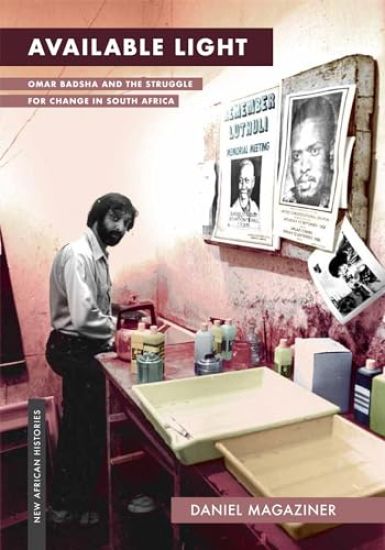
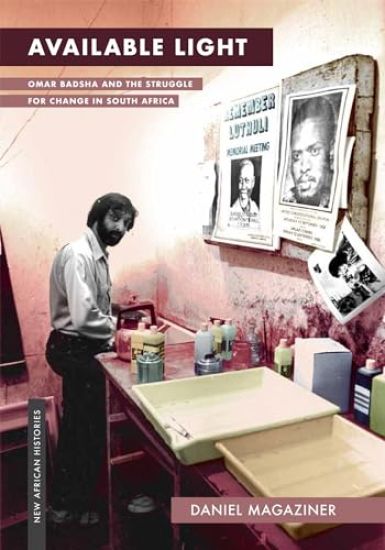
Available Light tells the story of an activist, an artist, a uniquely South African individual, and his community and family across the second half of the twentieth century. Omar Badsha was born in Durban, on the country’s southeastern coast in 1945. His was the third generation of his Gujarati family to call South Africa home. Before he turned five, the country’s white electorate had voted to institute apartheid to strip the rights and privileges of citizenship from most of the population, including Badsha’s Indian community and especially the country’s Black majority. By the time he turned fifteen, nonviolent protest against apartheid had been quashed; by the time he turned twenty, so too had the armed struggle to dislodge white supremacy within the country. The ongoing, resilient, and oft-rebuffed struggle against apartheid was a definitive factor in Badsha’s life. Furthermore, Badsha was raised in a community where art-painting, carving, music, poetry, theater-was inseparable from other values, whether Islamic and conservative or radical and urgently committed. When Badsha struggled in school, he, like his father, turned to art to express what he otherwise had difficulty conveying. Art brought him into contact with people of disparate backgrounds from far beyond Durban. In time, his friendships with other artists helped him refine his voice, first in drawing and eventually in photography, and capture the political ethic by which he strove to live his life and which he shared with similarly committed artist-activists. Daniel Magaziner chronicles how art and politics became intertwined in South Africa and explains what it takes to maintain a critical aesthetic approach to political crises in the past and present. The book tracks the personal and social costs that commitment can incur, while also appreciating how Badsha and others like him have maintained their vision of an equitable, transformed society even today, when the ideals that once animated the South African struggle are on the back foot worldwide.
Available Light

Available Light

Daniel Magaziner

OHIO UNIVERSITY PRESS
2024
pokkari
Available Light tells the story of an activist, an artist, a uniquely South African individual, and his community and family across the second half of the twentieth century. Omar Badsha was born in Durban, on the country’s southeastern coast in 1945. His was the third generation of his Gujarati family to call South Africa home. Before he turned five, the country’s white electorate had voted to institute apartheid to strip the rights and privileges of citizenship from most of the population, including Badsha’s Indian community and especially the country’s Black majority. By the time he turned fifteen, nonviolent protest against apartheid had been quashed; by the time he turned twenty, so too had the armed struggle to dislodge white supremacy within the country. The ongoing, resilient, and oft-rebuffed struggle against apartheid was a definitive factor in Badsha’s life. Furthermore, Badsha was raised in a community where art-painting, carving, music, poetry, theater-was inseparable from other values, whether Islamic and conservative or radical and urgently committed. When Badsha struggled in school, he, like his father, turned to art to express what he otherwise had difficulty conveying. Art brought him into contact with people of disparate backgrounds from far beyond Durban. In time, his friendships with other artists helped him refine his voice, first in drawing and eventually in photography, and capture the political ethic by which he strove to live his life and which he shared with similarly committed artist-activists. Daniel Magaziner chronicles how art and politics became intertwined in South Africa and explains what it takes to maintain a critical aesthetic approach to political crises in the past and present. The book tracks the personal and social costs that commitment can incur, while also appreciating how Badsha and others like him have maintained their vision of an equitable, transformed society even today, when the ideals that once animated the South African struggle are on the back foot worldwide.
The Art of Life in South Africa

The Art of Life in South Africa

Daniel Magaziner

Ohio University Press
2016
pokkari
From 1952 to 1981, South Africa's apartheid government ran an art school for the training of African art teachers at Indaleni, in what is today KwaZulu-Natal. The Art of Life in South Africa is the story of the students, teachers, art, and politics that circulated through a small school, housed in a remote former mission station. It is the story of a community that made its way through the travails of white supremacist South Africa and demonstrates how the art students and teachers made together became the art of their lives. Daniel Magaziner radically reframes apartheid-era South African history. Against the dominant narrative of apartheid oppression and black resistance, as well as recent scholarship that explores violence, criminality, and the hopeless entanglements of the apartheid state, this book focuses instead on a small group's efforts to fashion more fulfilling lives for its members and their community through the ironic medium of the apartheid-era school. There is no book like this in South African historiography. Lushly illustrated and poetically written, it gives us fully formed lives that offer remarkable insights into the now clichéd experience of black life under segregation and apartheid.
The Art of Life in South Africa

The Art of Life in South Africa

Daniel Magaziner

Ohio University Press
2016
sidottu
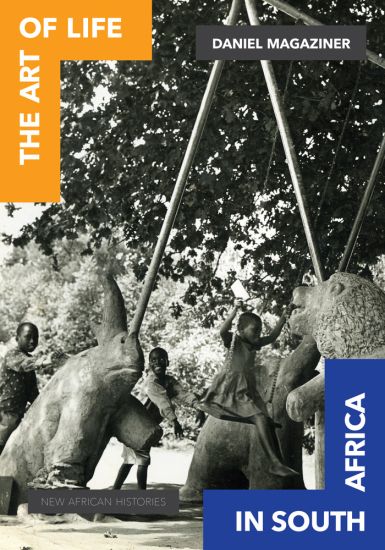
From 1952 to 1981, South Africa's apartheid government ran an art school for the training of African art teachers at Indaleni, in what is today KwaZulu-Natal. The Art of Life in South Africa is the story of the students, teachers, art, and politics that circulated through a small school, housed in a remote former mission station. It is the story of a community that made its way through the travails of white supremacist South Africa and demonstrates how the art students and teachers made together became the art of their lives. Daniel Magaziner radically reframes apartheid-era South African history. Against the dominant narrative of apartheid oppression and black resistance, as well as recent scholarship that explores violence, criminality, and the hopeless entanglements of the apartheid state, this book focuses instead on a small group's efforts to fashion more fulfilling lives for its members and their community through the ironic medium of the apartheid-era school. There is no book like this in South African historiography. Lushly illustrated and poetically written, it gives us fully formed lives that offer remarkable insights into the now clichéd experience of black life under segregation and apartheid.
The Law and the Prophets

The Law and the Prophets

Daniel Magaziner

Ohio University Press
2010
pokkari
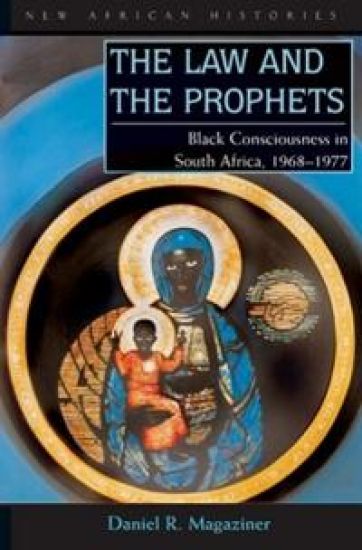
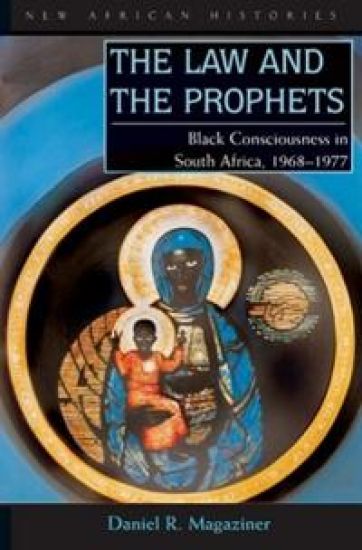
"No nation can win a battle without faith," Steve Biko wrote, and as Daniel R. Magaziner demonstrates in The Law and the Prophets, the combination of ideological and theological exploration proved a potent force. The 1970s are a decade virtually lost to South African historiography. This span of years bridged the banning and exile of the country's best-known antiapartheid leaders in the early 1960s and the furious protests that erupted after the Soweto uprisings of June 16, 1976. Scholars thus know that something happened—yet they have only recently begun to explore how and why. The Law and the Prophets is an intellectual history of the resistance movement between 1968 and 1977; it follows the formation, early trials, and ultimate dissolution of the Black Consciousness movement. It differs from previous antiapartheid historiography, however, in that it focuses more on ideas than on people and organizations. Its singular contribution is an exploration of the theological turn that South African politics took during this time. Magaziner argues that only by understanding how ideas about race, faith, and selfhood developed and were transformed in this period might we begin to understand the dramatic changes that took place.
The Law and the Prophets

The Law and the Prophets

Daniel Magaziner

Ohio University Press
2010
sidottu
"No nation can win a battle without faith," Steve Biko wrote, and as Daniel R. Magaziner demonstrates in The Law and the Prophets, the combination of ideological and theological exploration proved a potent force. The 1970s are a decade virtually lost to South African historiography. This span of years bridged the banning and exile of the country's best-known antiapartheid leaders in the early 1960s and the furious protests that erupted after the Soweto uprisings of June 16, 1976. Scholars thus know that something happened—yet they have only recently begun to explore how and why. The Law and the Prophets is an intellectual history of the resistance movement between 1968 and 1977; it follows the formation, early trials, and ultimate dissolution of the Black Consciousness movement. It differs from previous antiapartheid historiography, however, in that it focuses more on ideas than on people and organizations. Its singular contribution is an exploration of the theological turn that South African politics took during this time. Magaziner argues that only by understanding how ideas about race, faith, and selfhood developed and were transformed in this period might we begin to understand the dramatic changes that took place.