Kirjojen hintavertailu. Mukana 12 181 920 kirjaa ja 12 kauppaa.
Kirjailija
Daniel Pinchbeck
Kirjat ja teokset yhdessä paikassa: 7 kirjaa, julkaisuja vuosilta 2003-2021, suosituimpien joukossa How Soon is Now. Vertaile teosten hintoja ja tarkista saatavuus suomalaisista kirjakaupoista.
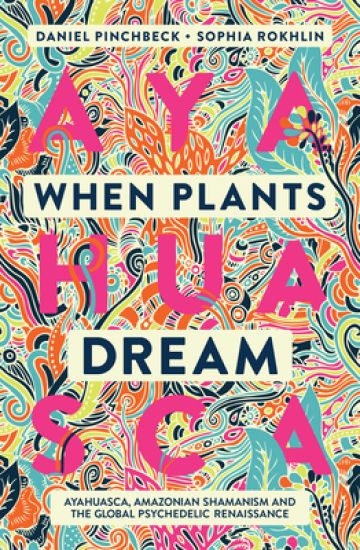
Ayahuasca has gained significant popularity these days in cities around the world. Why? What effect might ayahuasca be having on our culture? Does this psychoactive brew, which seems to inspire environmental action, simplified lifestyles and more communitarian behaviour, act as an antidote to frenzied consumerist culture? In When Plants Dream, Pinchbeck and Rokhlin explore the economic, social, political, cultural and environmental impact that ayahuasca is having on society. Part 1 covers the background; what ayahuasca is, where it is found, and its cultural origins. Part 2 explores the role and practices of the ayahuasquero in both Amazonian and Western cultures. Part 3 examines the medicinal plants of the Amazon, looking particularly at the ingredients in ayahuasca and their therapeutic qualities, covering the most up-to-date biomedical research, psychedelic science and psychopharmacology. It also covers all the legal aspects of ayahuasca use. Lastly in Part 4 Pinchbeck and Rokhlin question the future of ayahuasca. When Plants Dream is the first book of its kind to look at the science and expanding culture of ayahuasca, from its historical use to its appropriation by the West and the impact it is having on cultures beyond the Amazon.
Ayahuasca is a psychoactive brew that has a long history of ritual use among indigenous groups of the Upper Amazon. Made from the ayahuasca vine and the leaves of a shrub, it is associated with healing in collective ceremonies and in more intimate contexts, generally under the direction of specialist – an ayahuasquero. These are experienced practitioners who guide the ceremony and the drinkers’ experience. Ayahuasca has gained significant popularity these days in cities around the world. Why? What effect might ayahuasca be having on our culture? Does the brew, which seems to inspire environmental action, simplified lifestyles and more communitarian behaviour, act as an antidote to frenzied consumerist culture? In When Plants Dream, Pinchbeck and Rokhlin explore the economic, social, political, cultural and environmental impact that ayahuasca is having on society. Part 1 covers the background; what ayahuasca is, where it is found, and its cultural origins. Part 2 explores the role and practices of the ayahuasquero in both Amazonian and Western cultures. Part 3 examines the medicinal plants of the Amazon, looking particularly at the ingredients in ayahuasca and their therapeutic qualities, covering the most up-to-date biomedical research, psychedelic science and psychopharmacology. It also covers all the legal aspects of ayahuasca use. Lastly in Part 4 Pinchbeck and Rokhlin question the future of ayahuasca. When Plants Dream is the first book of its kind to look at the science and expanding culture of ayahuasca, from its historical use to its appropriation by the West and the impact it is having on cultures beyond the Amazon.
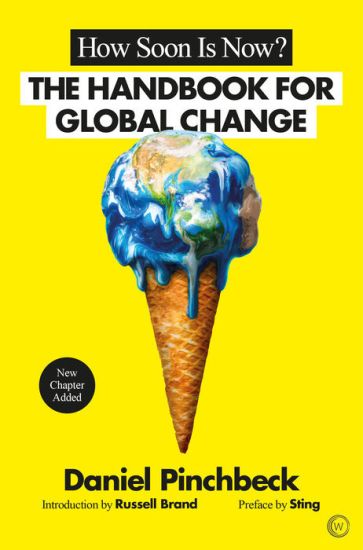
"How Soon is Now? will challenge most conventionally held assumptions about the global environment" MobyThe World Needs to ChangeWe have unleashed a mega-crisis threatening the future of life on Earth. The actions we take over the next decade are critical. They will determine the destiny of our descendants and the fate of our world.Is It Too Late?How Soon is Now? presents a compelling manifesto for personal and planetary change. It proposes a new narrative for a unified social movement. Through global cooperation, we can face this collective threat- ecologically, socially, politically, and spiritually. We can launch a new operating system for human society based on regenerative principles.The Choice Is OursAccepting this crisis as our initiation, we can choose to evolve to the next level of consciousness as a species. We can do more than survive: we can thrive."A blueprint for the future" Russell Brand
'A blueprint for the future' Russell Brand THE WORLD NEEDS TO CHANGE We have unleashed an ecological mega-crisis which is threatening the future of life on Earth. The actions we take over the next decade are critical. They will determine the destiny of our descendants and the fate of our world. IS IT TOO LATE? How Soon is Now? presents a compelling manifesto for personal and planetary change. It proposes a revolutionary new narrative for a unified social movement.Through global cooperation, we can face this collective threat - ecologically, socially, politically and spiritually. We can launch a new operating system for human society based on regenerative principles.THE CHOICE IS OURSAccepting this crisis as our initiation, we can choose to evolve to the next level of consciousness as a species. We can do more than survive: we can thrive.
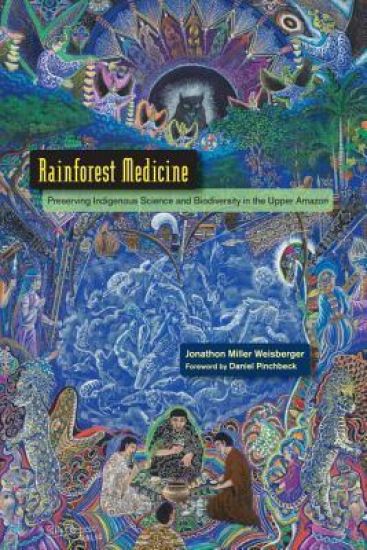
Chronicling the practices, legends, and wisdom of the vanishing traditions of the upper Amazon, this book reveals the area’s indigenous peoples’ approach to living in harmony with the natural world. Rainforest Medicine features in-depth essays on plant-based medicine and indigenous science from four distinct Amazonian societies: deep forest and urban, lowland rainforest and mountain.The book is illustrated with unique botanical and cultural drawings by Secoya elder and traditional healer Agustin Payaguaje and horticulturalist Thomas Y. Wang as well as by the author himself. Payaguaje shares his sincere imaginal view into the spiritual life of the Secoya; plates of petroglyphs from the sacred valley of Cotundo relate to an ancient language, and other illustrations show traditional Secoya ayahuasca symbols and indigenous origin myths. Two color sections showcase photos of the plants and people of the region, and include plates of previously unpublished full-color paintings by Pablo Cesar Amaringo (1938-2009), an acclaimed Peruvian artist renowned for his intricate, colorful depictions of his visions from drinking the entheogenic plant brew, ayahuasca (“vine of the soul” in Quechua languages).Today the once-dense mysterious rainforest realms are under assault as the indiscriminate colonial frontier of resource extraction moves across the region; as the forest disappears, the traditional human legacy of sustainable utilization of this rich ecosystem is also being buried under modern realities. With over 20 years experience of ground-level environmental and cultural conservation, author Jonathon Miller Weisberger’s commitment to preserving the fascinating, unfathomably precious relics of the indigenous legacy shines through. Chief among these treasures is the “shimmering” “golden” plant-medicine science of ayahuasca or yajé, a rainforest vine that was popularized in the 1950s by Western travelers such as William Burroughs and Alan Ginsberg. It has been sampled, reviled, and celebrated by outsiders ever since.Currently sought after by many in the industrialized West for its powerful psychotropic and life-transforming effects, this sacred brew is often imbibed by visitors to the upper Amazon and curious seekers in faraway venues, sometimes with little to no working knowledge of its principles and precepts. Perceiving that there is an evident need for in-depth information on ayahuasca if it is to be used beyond its traditional context for healing and spiritual illumination in the future, Miller Weisberger focuses on the fundamental knowledge and practices that guide the use of ayahuasca in indigenous cultures. Weaving first-person narrative with anthropological and ethnobotanical information, Rainforest Medicine aims to preserve both the record and ongoing reality of ayahuasca’s unique tradition and, of course, the priceless forest that gave birth to these sacred vines. Featuring words from Amazonian shamans–the living torchbearers of these sophisticated spiritual practices–the book stands as testimony to this sacred plant medicine’s power in shaping and healing individuals, communities, and nature alike.
This title guides the reader around an always-plausible, always-sane, always-sceptical tour of the psychedelic horizon, from tribal rites in West Africa and Mexico, to other tribal rites in Brooklyn apartments and at the Burning Man festival in the Nevada desert.
A dazzling work of personal travelogue and cultural criticism that ranges from the primitive to the postmodern in a quest for the promise and meaning of the psychedelic experience. While psychedelics of all sorts are demonized in America today, the visionary compounds found in plants are the spiritual sacraments of tribal cultures around the world. From the iboga of the Bwiti in Gabon, to the Mazatecs of Mexico, these plants are sacred because they awaken the mind to other levels of awareness--to a holographic vision of the universe. Breaking Open the Head is a passionate, multilayered, and sometimes rashly personal inquiry into this deep division. On one level, Daniel Pinchbeck tells the story of the encounters between the modern consciousness of the West and these sacramental substances, including such thinkers as Allen Ginsberg, Antonin Artaud, Walter Benjamin, and Terence McKenna, and a new underground of present-day ethnobotanists, chemists, psychonauts, and philosophers. It is also a scrupulous recording of the author's wide-ranging investigation with these outlaw compounds, including a thirty-hour tribal initiation in West Africa; an all-night encounter with the master shamans of the South American rain forest; and a report from a psychedelic utopia in the Black Rock Desert that is the Burning Man Festival. Breaking Open the Head is brave participatory journalism at its best, a vivid account of psychic and intellectual experiences that opened doors in the wall of Western rationalism and completed Daniel Pinchbeck's personal transformation from a jaded Manhattan journalist to shamanic initiate and grateful citizen of the cosmos.