Kirjojen hintavertailu. Mukana 12 390 323 kirjaa ja 12 kauppaa.

Kirjailija

Daniel R. DeNicola

Kirjat ja teokset yhdessä paikassa: 4 kirjaa, julkaisuja vuosilta 2012-2018, suosituimpien joukossa Moral Philosophy: A Contemporary Introduction. Vertaile teosten hintoja ja tarkista saatavuus suomalaisista kirjakaupoista.

4 kirjaa

Kirjojen julkaisuhaarukka 2012-2018.

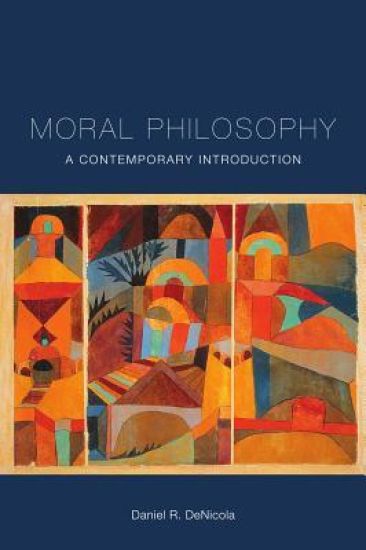
Moral Philosophy: A Contemporary Introduction

Moral Philosophy: A Contemporary Introduction

Daniel R. DeNicola

Broadview Press Ltd
2018
pokkari
Moral Philosophy: A Contemporary Introduction is a compact yet comprehensive book offering an explication and critique of the major theories that have shaped philosophical ethics. Engaging with both historical and contemporary figures, this book explores the scope, limits, and requirements of morality. DeNicola traces our various attempts to ground morality: in nature, in religion, in culture, in social contracts, and in aspects of the human person such as reason, emotions, caring, and intuition. Each chapter opens with a provocative real case or fictional scenario that helps to illuminate the issues at hand. The book is rich in argumentation, and each chapter is followed by discussion questions and questions for personal reflection. A glossary of key terms is appended.
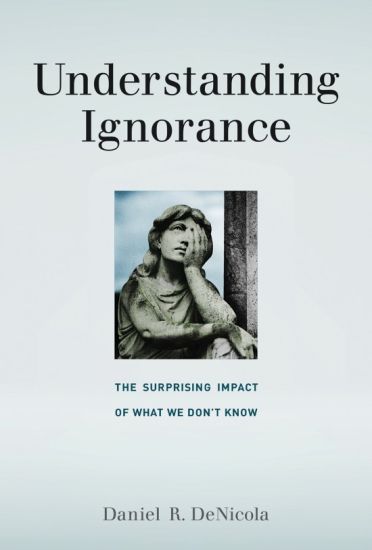
Understanding Ignorance

Understanding Ignorance

Daniel R. DeNicola

MIT Press
2018
pokkari
An exploration of what we can know about what we don't know: why ignorance is more than simply a lack of knowledge.Ignorance is trending. Politicians boast, "I'm not a scientist." Angry citizens object to a proposed state motto because it is in Latin, and "This is America, not Mexico or Latin America." Lack of experience, not expertise, becomes a credential. Fake news and repeated falsehoods are accepted and shape firm belief. Ignorance about American government and history is so alarming that the ideal of an informed citizenry now seems quaint. Conspiracy theories and false knowledge thrive. This may be the Information Age, but we do not seem to be well informed. In this book, philosopher Daniel DeNicola explores ignorance-its abundance, its endurance, and its consequences.DeNicola aims to understand ignorance, which seems at first paradoxical. How can the unknown become known-and still be unknown? But he argues that ignorance is more than a lack or a void, and that it has dynamic and complex interactions with knowledge. Taking a broadly philosophical approach, DeNicola examines many forms of ignorance, using the metaphors of ignorance as place, boundary, limit, and horizon. He treats willful ignorance and describes the culture in which ignorance becomes an ideological stance. He discusses the ethics of ignorance, including the right not to know, considers the supposed virtues of ignorance, and concludes that there are situations in which ignorance is morally good.Ignorance is neither pure nor simple. It is both an accusation and a defense ("You are ignorant!" "Yes, but I didn't know!"). Its practical effects range from the inconsequential to the momentous. It is a scourge, but, DeNicola argues daringly, it may also be a refuge, a value, even an accompaniment to virtue.
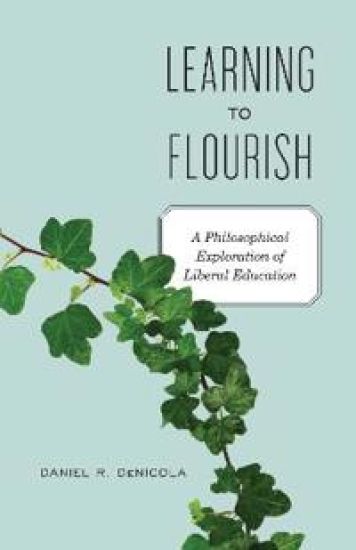
Learning to Flourish

Learning to Flourish

Daniel R. DeNicola

Bloomsbury Continuum
2012
nidottu
What is a liberal arts education? How does it differ from other forms of learning? What are we to make of the debates that surround it? What are its place, its value, and its prospects in the contemporary world? These are questions that trouble students and their parents, educators, critics, and policy-makers, and philosophers of education--among others.Learning to Flourish offers a lucid, penetrating, philosophical exploration of liberal learning: a still-evolving tradition of theory and practice that has dominated and sustained intellectual life and learning in much of the globe for two millennia. This study will be of interest to anyone seeking to understand liberal arts education, as well as to educators and philosophers of education. Daniel R. DeNicola weighs the views of both advocates and critics of the liberal arts, and interprets liberal education as a vital tradition aimed supremely at understanding and living a flourishing life. He elaborates the tradition as expressed in five competing but complementary paradigms that transcend theories of curriculum and pedagogy and are manifested in particular social contexts. He examines the transformative power of liberal education and its relation to such values as freedom, autonomy, and democracy, reflecting on the importance of intrinsic value and moral understanding. Finally, DeNicola considers age-old obstacles and current threats to liberal education, ultimately asserting its value for and urgent need in a global, pluralistic, technologically advanced society. The result is a bold, yet nuanced theory, alert to both historical and contemporary discussions, and a significant contribution to the discourse on liberal education.
Learning to Flourish

Learning to Flourish

Daniel R. DeNicola

Bloomsbury Continuum
2012
sidottu
What is a liberal arts education? How does it differ from other forms of learning? What are we to make of the debates that surround it? What are its place, its value, and its prospects in the contemporary world? These are questions that trouble students and their parents, educators, critics, and policy-makers, and philosophers of education--among others. Learning to Flourish offers a lucid, penetrating, philosophical exploration of liberal learning: a still-evolving tradition of theory and practice that has dominated and sustained intellectual life and learning in much of the globe for two millennia. Daniel R. DeNicola weighs the views of both advocates and critics of the liberal arts, and interprets liberal education as aimed supremely at understanding and living a good life, as a vital tradition generating five competing but complementary paradigms that transcend theories of curriculum and pedagogy and are manifested in particular social contexts.He examines the transformative power of liberal education and its relation to such values as freedom, autonomy, and democracy, reflecting on the importance of intrinsic value and moral understanding. Finally, he considers age-old obstacles and current threats to liberal education, ultimately asserting its value for and urgent need in a global, pluralistic, technologically advanced society.Offering a bold yet nuanced theory of liberal education, this study will be of great interest to educators as well as those specializing in Philosophy of Education.