Kirjojen hintavertailu. Mukana 12 595 353 kirjaa ja 12 kauppaa.

Kirjailija

Daniel Romer

Kirjat ja teokset yhdessä paikassa: 4 kirjaa, julkaisuja vuosilta 2006-2023, suosituimpien joukossa Capturing Campaign Dynamics, 2000 and 2004. Vertaile teosten hintoja ja tarkista saatavuus suomalaisista kirjakaupoista.

4 kirjaa

Kirjojen julkaisuhaarukka 2006-2023.

Democracy amid Crises

Democracy amid Crises

Matthew Levendusky; Josh Pasek; Bruce Hardy; R. Lance Holbert; Kate Kenski; Yotam Ophir; Andrew Renninger; Daniel Romer; Dror Walter; Ken Winneg; Kathleen Hall Jamieson

OXFORD UNIVERSITY PRESS INC
2023
sidottu
A data-rich analysis of how the four inter-related crises of 2020 -- the COVID-19 pandemic, the economic collapse and K-shaped recovery, the clashes over the legacy of racism and policing, and assaults on the legitimacy of democratic institutions (abetted by conspiracy theories) -- shaped not only the 2020 election, but also the future of our democracy. The 2020 election cycle was one of the most tumultuous in the nation's history. Early in the cycle, a global pandemic hit the US, paralyzing much of the economy and raising a multitude of questions about how people would go about voting. Then, beginning in late spring, a series of police brutality cases set off a nationwide wave of protests and civil disturbances related to racial justice concerns. In the final phase, the president of the United States refused to accept the results and incited his followers to storm the US Capitol. How did all of these momentous events shape voters' opinions? And what impact did they have on the outcome? To answer these questions, Kathleen Hall Jamieson and her collaborators surveyed 9,000 Americans over the course of the year to determine how voters reacted to the events on the ground, the campaigns' attempts at persuasion, and the post-election chaos that followed Biden's victory. Generally, American voters saw the multitude of crises through the lens of their polarized partisan predispositions. But why? Jamieson and her co-authors first stress that America has multiple electorates, and they are exposed to different informational environments. The divergent messages they received shaped not only their vote choice, but also how they made sense of these crises. Interestingly, though, while many voters were locked in place by their partisan priors, a majority of those who ended up voting for either Biden or Trump were unsure of their choice and whether they would actually vote at some point during the year. What led to both the wavering in people's choices and the attitudes they eventually adopted were in large part due to the differing media environments enveloping them: the messages from the campaigns, from their family and friends, as well from those in mass and social media. But this is not a simple story of "echo chambers," where individuals are immersed in only one type of media -- far from it. The distinct media environments in which these electorates experienced the election were in fact complex and varied, and the interaction between these different types of media was key. Indeed, most voters were subject to cross-cutting information pressures and not only one type of partisan source. This book's focus on the ebb and flow of the campaign over time and the centrality of wavering voters makes this an authoritative and essential account of one of the most momentous American elections ever.
Democracy amid Crises

Democracy amid Crises

Matthew Levendusky; Josh Pasek; Bruce Hardy; R. Lance Holbert; Kate Kenski; Yotam Ophir; Andrew Renninger; Daniel Romer; Dror Walter; Ken Winneg; Kathleen Hall Jamieson

OXFORD UNIVERSITY PRESS INC
2023
nidottu
A data-rich analysis of how the four inter-related crises of 2020 -- the COVID-19 pandemic, the economic collapse and K-shaped recovery, the clashes over the legacy of racism and policing, and assaults on the legitimacy of democratic institutions (abetted by conspiracy theories) -- shaped not only the 2020 election, but also the future of our democracy. The 2020 election cycle was one of the most tumultuous in the nation's history. Early in the cycle, a global pandemic hit the US, paralyzing much of the economy and raising a multitude of questions about how people would go about voting. Then, beginning in late spring, a series of police brutality cases set off a nationwide wave of protests and civil disturbances related to racial justice concerns. In the final phase, the president of the United States refused to accept the results and incited his followers to storm the US Capitol. How did all of these momentous events shape voters' opinions? And what impact did they have on the outcome? To answer these questions, Kathleen Hall Jamieson and her collaborators surveyed 9,000 Americans over the course of the year to determine how voters reacted to the events on the ground, the campaigns' attempts at persuasion, and the post-election chaos that followed Biden's victory. Generally, American voters saw the multitude of crises through the lens of their polarized partisan predispositions. But why? Jamieson and her co-authors first stress that America has multiple electorates, and they are exposed to different informational environments. The divergent messages they received shaped not only their vote choice, but also how they made sense of these crises. Interestingly, though, while many voters were locked in place by their partisan priors, a majority of those who ended up voting for either Biden or Trump were unsure of their choice and whether they would actually vote at some point during the year. What led to both the wavering in people's choices and the attitudes they eventually adopted were in large part due to the differing media environments enveloping them: the messages from the campaigns, from their family and friends, as well from those in mass and social media. But this is not a simple story of "echo chambers," where individuals are immersed in only one type of media -- far from it. The distinct media environments in which these electorates experienced the election were in fact complex and varied, and the interaction between these different types of media was key. Indeed, most voters were subject to cross-cutting information pressures and not only one type of partisan source. This book's focus on the ebb and flow of the campaign over time and the centrality of wavering voters makes this an authoritative and essential account of one of the most momentous American elections ever.
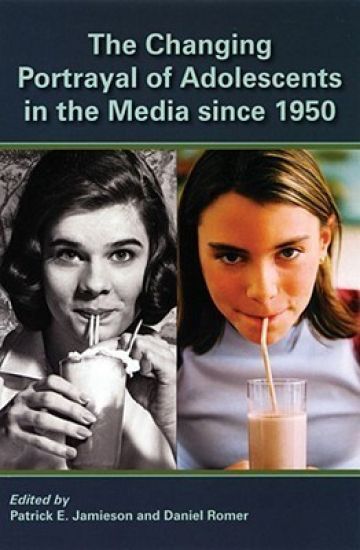
The Changing Portrayal of Adolescents in the Media Since 1950

The Changing Portrayal of Adolescents in the Media Since 1950

Patrick Jamieson; Daniel Romer

Oxford University Press Inc
2008
nidottu
In The Changing Portrayal of Adolescents in the Media since 1950, leading scholars analyze the emergence of youth culture in music and powerful trends in gender and ethnic-racial representation, sexuality, substance use, violence, and suicide portrayla in the media. This book illuminates the evolution of teen portrayal, the potential consequences of these changes, and the ways policy-makers and parents can respond.
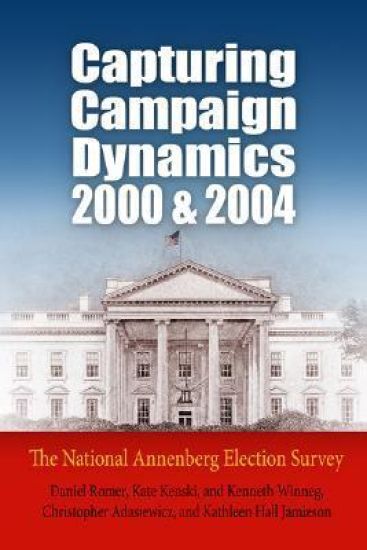
Capturing Campaign Dynamics, 2000 and 2004

Capturing Campaign Dynamics, 2000 and 2004

Daniel Romer; Kate Kenski; Kenneth Winneg; Christopher Adasiewicz; Kathleen Hall Jamieson

University of Pennsylvania Press
2006
pokkari
The presidential elections of 2000 and 2004 were two of the most contested and dramatic in our nation's history. During the election seasons of 2000 and 2004, the Annenberg Public Policy Center conducted the largest studies ever undertaken of the American electorate-the National Annenberg Election Survey (NAES). Capturing Campaign Dynamics, 2000 and 2004 provides the data from these two surveys to the general public as well as useful tools for analyzing and interpreting the findings. Featuring rolling cross-sectional analysis, this book walks researchers through different strategies for using this type of survey research to understand campaign dynamics. An important feature of the volume is its explanation of the use of time series analysis to study the dynamic effects of political events as they unfold during presidential elections. The application of this methodology will uncover new insights into the time-dependent processes that unfold during election campaigns in ways that have not been possible before NAES. The book includes a CD-ROM of the NAES codebooks and data, featuring more than 200,000 interviews with adults living in the United States. The data contained on the NAES CD-ROM are in both SPSS format and tab-delimited format for use with other statistical software. Capturing Campaign Dynamics, 2000 and 2004 is ideal for courses in survey research methods in political science, communications studies, and analysis of public opinion. It will also be of great interest to scholars and professionals, such as pollsters and political consultants.