Kirjojen hintavertailu. Mukana 12 595 353 kirjaa ja 12 kauppaa.
Kirjailija
Daniel Simpson
Kirjat ja teokset yhdessä paikassa: 11 kirjaa, julkaisuja vuosilta 2012-2026, suosituimpien joukossa The Evolution of Modern Yoga. Vertaile teosten hintoja ja tarkista saatavuus suomalaisista kirjakaupoista.
Before the modern era, most yogis were men who renounced worldly life. Non-seated postures—first mentioned in texts about a thousand years ago—served as warm-ups for subtler techniques, and the ultimate goal was to sit like a stone. The average modern yoga class, by contrast, is predominantly female and centred on postural sequences for health and well-being. How did an ancient approach to renouncing the world become a branch of the globalised wellness industry? In The Evolution of Modern Yoga, scholar-practitioner Daniel Simpson offers a lucid and accessible guide to how the aims and methods of yoga have transformed over the centuries. Drawing on the latest research in the rapidly-growing field of yoga studies, Simpson examines key trends, influential teachers who shaped the development of contemporary forms, issues of authenticity, concerns about cultural appropriation, and questions of ownership. Bringing clarity to a complex history, The Evolution of Modern Yoga presents a compelling account of how the most prevalent forms of yoga taught around the world today relate to earlier traditions, in an engaging style that will be equally appealing to dedicated students of yoga and curious readers.
Andrew Gelman; Aki Vehtari; Richard McElreath; Daniel Simpson; Charles C. Margossian; Yuling Yao; Lauren Kennedy; Jonah Gabry; Paul-Christian Bürkner; Martin Modrák; Vianey Leos Barajas
Bayesian statistics and statistical practice have evolved over the years, driven by advancements in theory, methods, and computational tools. This book explores the intricate workflows of applied Bayesian statistics, aiming to uncover the tacit knowledge often overlooked in published papers and textbooks. By systematizing the process of Bayesian model development, the book seeks to improve applied analyses and inspire future innovations in theory, methods, and software. It emphasizes the importance of iterative model building, model checking, computational troubleshooting, and simulated-data experimentation, offering a comprehensive perspective on statistical analysis. Through detailed examples and practical guidance, the book bridges the gap between theory and application, empowering practitioners and researchers to navigate the complexities of Bayesian inference. It is not a checklist or cookbook but a flexible framework for understanding and resolving challenges in statistical modeling and decision-making under uncertainty. Features: Covers all aspects of Bayesian statistical workflow, including model building, inference, validation, troubleshooting, and understanding Demonstrates iterative model development and computational problem-solving through real-world case studies Explores computational challenges, calibration checking, and connections between modeling and computation Highlights the importance of checking models under diverse conditions to understand their limitations and improve their robustness Discusses how Bayesian principles apply to non-Bayesian methods in statistics and machine learning Includes code snippets, exercises, and links to full datasets and code in R and Stan, with applicability to other programming environments like Python and Julia This book is designed for practitioners of applied Bayesian statistics, particularly users of probabilistic programming languages such as Stan, as well as developers of methods and software tailored to these users. It also targets researchers in Bayesian theory and methods, offering insights into understudied aspects of statistical workflows. Instructors and students will find adaptable exercises and case studies to enhance their learning experience. Beyond Bayesian inference, the book’s principles are relevant to users of non-Bayesian methods, making it a valuable resource for statisticians, data scientists, and machine learning professionals seeking to improve their modeling and decision-making processes.
Gran parte de lo que se dice sobre el yoga es enga oso. Tomemos dos ejemplos: no tiene cinco mil a os de antig edad, como com nmente se afirma, ni significa exclusivamente «uni n . En el que es quiz el texto m s famoso, los Yoga Sutras de Pata jali, el objetivo es la separaci n, aislar la conciencia de todo lo dem s. Y la evidencia m s temprana de la pr ctica se remonta a unos dos mil quinientos a os. Los estudiosos hoy conocen mucho m s sobre la historia del yoga, pero su investigaci n puede ser dif cil de consultar y suele estar dirigida m s a especialistas que a lectores generales. Historia del yoga ofrece una visi n panor mica de la evoluci n del yoga desde sus or genes m s antiguos hasta el presente, de forma asequible a todo tipo de lectores. Se puede leer de manera cronol gica o utilizarse como gu a de referencia para la historia y la filosof a. Cada secci n breve aborda un elemento, citando textos tradicionales y poniendo sus ense anzas en contexto. La intenci n es mantener las cosas claras sin simplificar en exceso. Much of what is said about yoga is misleading. Let us take two examples: it is not five thousand years old, as is commonly claimed, nor does it mean exclusively "union." In what is perhaps the most famous text, the Yoga Sutras of Pata jali, the goal is separation, to isolate consciousness from everything else. And the earliest evidence of the practice dates back about 2,500 years. Scholars today know much more about the history of yoga, but their research can be difficult to consult and is often aimed more at specialists than general readers. History of Yoga offers a panoramic view of the evolution of yoga from its earliest origins to the present, in a way that is accessible to all types of readers. It can be read chronologically or used as a reference guide for history and philosophy. Each short section addresses an element, quoting traditional texts and putting their teachings in context. The intention is to keep things clear without oversimplifying.
This book offers the first in-depth enquiry into the origins of 135 Indigenous Australian objects acquired by the Royal Navy between 1795 and 1855 and held now by the British Museum. In response to increasing calls for the ‘decolonisation’ of museums and the restitution of ethnographic collections, the book seeks to return knowledge of the moments, methods, and motivations whereby Indigenous Australian objects were first collected and sent to Britain. By structuring its discussion in terms of three key ‘stages’ of a typical naval voyage to Australia—departure from British shores, arrival on the continent’s coasts, and eventual return to port—the book offers a nuanced and multifaceted understanding of the pathways followed by these 135 objects into the British Museum. The book offers important new understandings of Indigenous Australian peoples’ reactions to naval visitors, and contains a wealth of original research on the provenance and meaning of some of the world’s oldest extant Indigenous Australian object collections.
Much of what is said about yoga is misleading. To take two examples, it is neither five thousand years old, as is commonly claimed, nor does it mean union, at least not exclusively. In perhaps the most famous text-The Yoga Sutras of Patanjali-the aim is separation, isolating consciousness from everything else. And the earliest evidence of practice dates back about twenty-five hundred years. Yoga may well be older, but no one can prove it. Scholars have learned a lot more about the history of yoga in recent years, but their research can be hard to track down. Although their work is insightful, it is aimed more at specialists than at general readers. Daniel Simpson's The Truth of Yoga draws on many of their findings, presented in a format designed for practitioners. The aim is to highlight ideas on which readers can draw to keep traditions alive in the twenty-first century. It offers an overview of yoga's evolution from its earliest origins to the present. It can either be read chronologically or be used as a reference guide to history and philosophy. Each short section addresses one element, quoting from traditional texts and putting their teachings into context. The intention is to keep things clear without oversimplifying.
This book offers the first in-depth enquiry into the origins of 135 Indigenous Australian objects acquired by the Royal Navy between 1795 and 1855 and held now by the British Museum. In response to increasing calls for the ‘decolonisation’ of museums and the restitution of ethnographic collections, the book seeks to return knowledge of the moments, methods, and motivations whereby Indigenous Australian objects were first collected and sent to Britain. By structuring its discussion in terms of three key ‘stages’ of a typical naval voyage to Australia—departure from British shores, arrival on the continent’s coasts, and eventual return to port—the book offers a nuanced and multifaceted understanding of the pathways followed by these 135 objects into the British Museum. The book offers important new understandings of Indigenous Australian peoples’ reactions to naval visitors, and contains a wealth of original research on the provenance and meaning of some of the world’s oldest extant Indigenous Australian object collections.
Modeling spatial and spatio-temporal continuous processes is an important and challenging problem in spatial statistics. Advanced Spatial Modeling with Stochastic Partial Differential Equations Using R and INLA describes in detail the stochastic partial differential equations (SPDE) approach for modeling continuous spatial processes with a Matérn covariance, which has been implemented using the integrated nested Laplace approximation (INLA) in the R-INLA package. Key concepts about modeling spatial processes and the SPDE approach are explained with examples using simulated data and real applications.This book has been authored by leading experts in spatial statistics, including the main developers of the INLA and SPDE methodologies and the R-INLA package. It also includes a wide range of applications:* Spatial and spatio-temporal models for continuous outcomes* Analysis of spatial and spatio-temporal point patterns* Coregionalization spatial and spatio-temporal models* Measurement error spatial models* Modeling preferential sampling* Spatial and spatio-temporal models with physical barriers* Survival analysis with spatial effects* Dynamic space-time regression* Spatial and spatio-temporal models for extremes* Hurdle models with spatial effects* Penalized Complexity priors for spatial modelsAll the examples in the book are fully reproducible. Further information about this book, as well as the R code and datasets used, is available from the book website at http://www.r-inla.org/spde-book.The tools described in this book will be useful to researchers in many fields such as biostatistics, spatial statistics, environmental sciences, epidemiology, ecology and others. Graduate and Ph.D. students will also find this book and associated files a valuable resource to learn INLA and the SPDE approach for spatial modeling.
Modeling spatial and spatio-temporal continuous processes is an important and challenging problem in spatial statistics. Advanced Spatial Modeling with Stochastic Partial Differential Equations Using R and INLA describes in detail the stochastic partial differential equations (SPDE) approach for modeling continuous spatial processes with a Matérn covariance, which has been implemented using the integrated nested Laplace approximation (INLA) in the R-INLA package. Key concepts about modeling spatial processes and the SPDE approach are explained with examples using simulated data and real applications.This book has been authored by leading experts in spatial statistics, including the main developers of the INLA and SPDE methodologies and the R-INLA package. It also includes a wide range of applications:* Spatial and spatio-temporal models for continuous outcomes* Analysis of spatial and spatio-temporal point patterns* Coregionalization spatial and spatio-temporal models* Measurement error spatial models* Modeling preferential sampling* Spatial and spatio-temporal models with physical barriers* Survival analysis with spatial effects* Dynamic space-time regression* Spatial and spatio-temporal models for extremes* Hurdle models with spatial effects* Penalized Complexity priors for spatial modelsAll the examples in the book are fully reproducible. Further information about this book, as well as the R code and datasets used, is available from the book website at http://www.r-inla.org/spde-book.The tools described in this book will be useful to researchers in many fields such as biostatistics, spatial statistics, environmental sciences, epidemiology, ecology and others. Graduate and Ph.D. students will also find this book and associated files a valuable resource to learn INLA and the SPDE approach for spatial modeling.
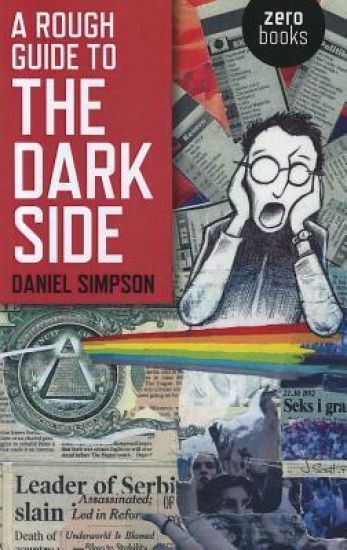
Ever dreamed of changing the world? Daniel Simpson shows how not to do it. His memoir charts a gonzo career at The New York Times. Ambitious and idealistic, he was hired to report on the Balkans but quit within months, freaked out by his editor s zeal for starting wars. Disillusioned, he went native in Belgrade. Together with the charismatic G, who had appeared one night in lavish puffs of dope smoke, he decided to organize a Serbian version of Woodstock: a festival on an island in the Danube.Music could revolutionize the country. It was run by a wartime mafia, and most young people dreamed of leaving. But what if they made it Ibiza crossed with Glastonbury?To fund this transition, they hustled his contacts. But shady local businessmen had other ideas. Mr Big muscled in, and embroiled them with his henchmen.Why do good intentions go awry? With brutally honest humor, Daniel recounts his journey to the edge, and a desperate drug-fuelled quest for the truth. A Rough Guide To The Dark Side is a real-life trip through Balkan organized crime. More irreverent than McMafia, it has the vicarious kicks of Mr Nice and Shantaram, plus the travelogue style of a Bill Bryson or Tony Hawks, but with added bile and an overdose of drugs. http://www.roughguidedarkside.com