Kirjojen hintavertailu. Mukana 12 390 323 kirjaa ja 12 kauppaa.

Kirjailija

Daniel Stoljar

Kirjat ja teokset yhdessä paikassa: 8 kirjaa, julkaisuja vuosilta 2006-2023, suosituimpien joukossa What is Consciousness?. Vertaile teosten hintoja ja tarkista saatavuus suomalaisista kirjakaupoista.

8 kirjaa

Kirjojen julkaisuhaarukka 2006-2023.

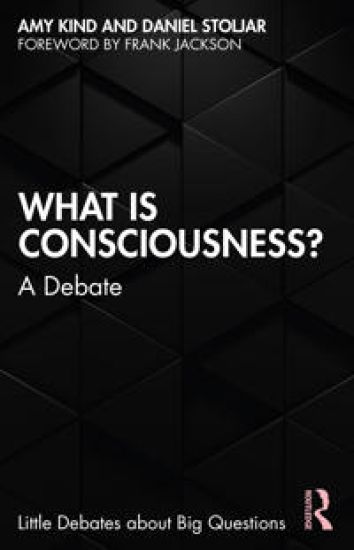
What is Consciousness?

What is Consciousness?

Amy Kind; Daniel Stoljar

TAYLOR FRANCIS LTD
2023
nidottu
What is consciousness and why is it so philosophically and scientifically puzzling? For many years philosophers approached this question assuming a standard physicalist framework on which consciousness can be explained by contemporary physics, biology, neuroscience, and cognitive science. This book is a debate between two philosophers who are united in their rejection of this kind of "standard" physicalism - but who differ sharply in what lesson to draw from this. Amy Kind defends dualism 2.0, a thoroughly modern version of dualism (the theory that there are two fundamentally different kinds of things in the world: those that are physical and those that are mental) decoupled from any religious or non-scientific connotations. Daniel Stoljar defends non-standard physicalism, a kind of physicalism different from both the standard version and dualism 2.0. The book presents a cutting-edge assessment of the philosophy of consciousness and provides a glimpse at what the future study of this area might bring.Key FeaturesOutlines the different things people mean by "consciousness" and provides an account of what consciousness isReviews the key arguments for thinking that consciousness is incompatible with physicalismExplores and provides a defense of contrasting responses to those arguments, with a special focus on responses that reject the standard physicalist frameworkProvides an account of the basic aims of the science of consciousnessWritten in a lively and accessibly styleIncludes a comprehensive glossary

What is Consciousness?

What is Consciousness?

Amy Kind; Daniel Stoljar

TAYLOR FRANCIS LTD
2023
sidottu
What is consciousness and why is it so philosophically and scientifically puzzling? For many years philosophers approached this question assuming a standard physicalist framework on which consciousness can be explained by contemporary physics, biology, neuroscience, and cognitive science. This book is a debate between two philosophers who are united in their rejection of this kind of "standard" physicalism - but who differ sharply in what lesson to draw from this. Amy Kind defends dualism 2.0, a thoroughly modern version of dualism (the theory that there are two fundamentally different kinds of things in the world: those that are physical and those that are mental) decoupled from any religious or non-scientific connotations. Daniel Stoljar defends non-standard physicalism, a kind of physicalism different from both the standard version and dualism 2.0. The book presents a cutting-edge assessment of the philosophy of consciousness and provides a glimpse at what the future study of this area might bring.Key FeaturesOutlines the different things people mean by "consciousness" and provides an account of what consciousness isReviews the key arguments for thinking that consciousness is incompatible with physicalismExplores and provides a defense of contrasting responses to those arguments, with a special focus on responses that reject the standard physicalist frameworkProvides an account of the basic aims of the science of consciousnessWritten in a lively and accessibly styleIncludes a comprehensive glossary

Philosophical Progress

Philosophical Progress

Daniel Stoljar

Oxford University Press
2019
nidottu
Many people believe that philosophy makes no progress. Members of the general public often find it amazing that philosophers exist in universities at all, at least in research positions. Academics who are not philosophers often think of philosophy either as a scholarly or interpretative enterprise, or else as a sort of pre-scientific speculation. And - amazingly - many well-known philosophers argue that there is little genuine progress in philosophy. Daniel Stoljar arguesargues that this is all a big mistake. When you think through exactly what philosophical problems are, and what it takes to solve them, the pattern of success and failure in philosophy is similar to that in other fields. In philosophy, as elsewhere, there is a series of overlapping topics that determine what the subject is about. In philosophy, as elsewhere, different people in different historical epochs and different cultures ask different big questions about these topics. And in philosophy, as elsewhere, big questions asked in the past have often been solved: Stoljar provides examples. Philosophical Progress presents a strikingly optimistic picture of philosophy - not a radical optimism that says that there is some key that unlocks all philosophical problems, and not the kind of pessimism that dominates both professional and non-professional thinking about philosophy, but a reasonable optimism that views philosophy as akin to other fields.
Philosophical Progress

Philosophical Progress

Daniel Stoljar

Oxford University Press
2017
sidottu
Many people believe that philosophy makes no progress. Members of the general public often find it amazing that philosophers exist in universities at all, at least in research positions. Academics who are not philosophers often think of philosophy either as a scholarly or interpretative enterprise, or else as a sort of pre-scientific speculation. And - amazingly - many well-known philosophers argue that there is little genuine progress in philosophy. Daniel Stoljar argues that this is all a big mistake. When you think through exactly what philosophical problems are, and what it takes to solve them, the pattern of success and failure in philosophy is similar to that in other fields. In philosophy, as elsewhere, there is a series of overlapping topics that determine what the subject is about. In philosophy, as elsewhere, different people in different historical epochs and different cultures ask different big questions about these topics. And in philosophy, as elsewhere, big questions asked in the past have often been solved: Stoljar provides examples. Philosophical Progress presents a strikingly optimistic picture of philosophy - not a radical optimism that says that there is some key that unlocks all philosophical problems, and not the kind of pessimism that dominates both professional and non-professional thinking about philosophy, but a reasonable optimism that views philosophy as akin to other fields.
Physicalism

Physicalism

Daniel Stoljar

Routledge
2010
sidottu
Physicalism, the thesis that everything is physical, is one of the most controversial problems in philosophy. Its adherents argue that there is no more important doctrine in philosophy, whilst its opponents claim that its role is greatly exaggerated. In this superb introduction to the problem Daniel Stoljar focuses on three fundamental questions: the interpretation, truth and philosophical significance of physicalism. In answering these questions he covers the following key topics: a brief history of physicalism and its definitions what a physical property is and how physicalism meets challenges from empirical sciences ‘Hempel’s dilemma’ and the relationship between physicalism and physics physicalism and key debates in metaphysics and philosophy of mind, such as supervenience, identity and conceivability physicalism and causality.Additional features include chapter summaries, annotated further reading and a glossary of technical terms, making Physicalism ideal for those coming to the problem for the first time.
Physicalism

Physicalism

Daniel Stoljar

Routledge
2010
nidottu
Physicalism, the thesis that everything is physical, is one of the most controversial problems in philosophy. Its adherents argue that there is no more important doctrine in philosophy, whilst its opponents claim that its role is greatly exaggerated. In this superb introduction to the problem Daniel Stoljar focuses on three fundamental questions: the interpretation, truth and philosophical significance of physicalism. In answering these questions he covers the following key topics: a brief history of physicalism and its definitions what a physical property is and how physicalism meets challenges from empirical sciences ‘Hempel’s dilemma’ and the relationship between physicalism and physics physicalism and key debates in metaphysics and philosophy of mind, such as supervenience, identity and conceivability physicalism and causality.Additional features include chapter summaries, annotated further reading and a glossary of technical terms, making Physicalism ideal for those coming to the problem for the first time.
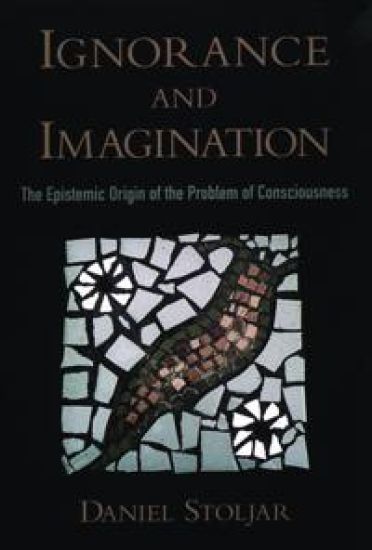
Ignorance and Imagination

Ignorance and Imagination

Daniel Stoljar

Oxford University Press Inc
2009
nidottu
Ignorance and Imagination advances a novel way to resolve the central philosophical problem about the mind: how it is that consciousness or experience fits into a larger naturalistic picture of the world. The correct response to the problem, Stoljar argues, is not to posit a realm of experience distinct from the physical, nor to deny the reality of phenomenal experience, nor even to rethink our understanding of consciousness and the language we use to talk about it. Instead, we should view the problem itself as a consequence of our ignorance of the relevant physical facts, Stoljar shows that this change of orientation is well motivated historically, empirically, and philosophically, and that it has none of the side effects it is sometimes thought to have. The result is a philosophical perspective on the mind that has a number of far-reaching consequences: for consciousness studies, for our place in nature, and for the way we think about the relationship between philosophy and science.
Ignorance and Imagination

Ignorance and Imagination

Daniel Stoljar

Oxford University Press Inc
2006
sidottu
Ignorance and Imagination advances a novel way to resolve the central philosophical problem about the mind: how it is that consciousness or experience fits into a larger naturalistic picture of the world. The correct response to the problem, Stoljar argues, is not to posit a realm of experience distinct from the physical, nor to deny the reality of phenomenal experience, nor even to rethink our understanding of consciousness and the language we use to talk about it. Instead, we should view the problem itself as a consequence of our ignorance of the relevant physical facts. Stoljar shows that this change of orientation is well motivated historically, empirically, and philosophically, and that it has none of the side effects it is sometimes thought to have. The result is a philosophical perspective on the mind that has a number of far-reaching consequences: for consciousness studies, for our place in nature, and for the way we think about the relationship between philosophy and science.