Kirjojen hintavertailu. Mukana 12 301 812 kirjaa ja 12 kauppaa.

Kirjailija

Daniel W. Shuman

Kirjat ja teokset yhdessä paikassa: 6 kirjaa, julkaisuja vuosilta 1997-2014, suosituimpien joukossa Evaluating Mental Health Disability in the Workplace. Vertaile teosten hintoja ja tarkista saatavuus suomalaisista kirjakaupoista.

6 kirjaa

Kirjojen julkaisuhaarukka 1997-2014.

Evaluating Mental Health Disability in the Workplace

Evaluating Mental Health Disability in the Workplace

Liza Gold; Daniel W. Shuman

Springer-Verlag New York Inc.
2014
nidottu
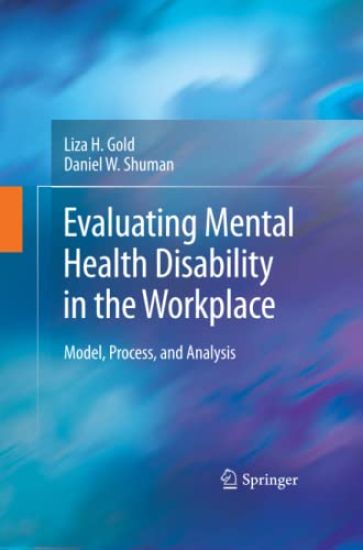
As many as one in four adults in the workforce will suffer from psychiatric illness in a given year. Such illness can have serious consequences -- job loss, lawsuits, workplace violence—yet the effects of mental health issues on job functioning are rarely covered in clinical training. In addition, clinicians are often asked to provide opinions on an employee’s fitness for work or an evaluation for disability benefits, only to find themselves embroiled in complex legal and administrative conflicts. A unique collaboration between a renowned clinical professor of psychiatry and a noted legal expert, Evaluating Mental Health Disability in the Workplace approaches the topic from two distinct areas: the legal context and issues relevant to disability and disability-related evaluations, and the interplay of factors in the relationship between work and psychiatric illness. From this dual perspective, the authors advocate for higher professional standards ensuring that employers, evaluees, or third parties are provided with the most reliable information. Key features of the book: A robust assessment model of psychological disability in the workplace Practice guidelines for conducting workplace mental health disability evaluations Legal and ethical aspects of employment evaluations, especially as they differ from clinical procedure Examination of the process of psychiatric disability development Issues specific to evaluations for Social Security, Workers’ Compensation, and other disability benefit programs Review of relevant administrative and case law. As an introduction to these complex issues or for the further improvement of evaluation skills, Evaluating Mental Health Disability in the Workplace is a timely reference for psychiatrists, psychologists, forensic mental health specialists, andattorneys in this field.
Evaluating Mental Health Disability in the Workplace

Evaluating Mental Health Disability in the Workplace

Liza Gold; Daniel W. Shuman

Springer-Verlag New York Inc.
2009
sidottu
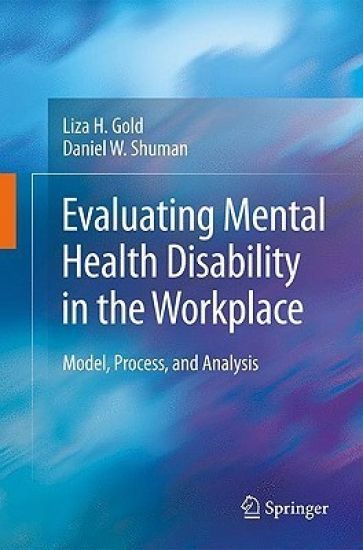
As many as one in four adults in the workforce will suffer from psychiatric illness in a given year. Such illness can have serious consequences -- job loss, lawsuits, workplace violence—yet the effects of mental health issues on job functioning are rarely covered in clinical training. In addition, clinicians are often asked to provide opinions on an employee’s fitness for work or an evaluation for disability benefits, only to find themselves embroiled in complex legal and administrative conflicts. A unique collaboration between a renowned clinical professor of psychiatry and a noted legal expert, Evaluating Mental Health Disability in the Workplace approaches the topic from two distinct areas: the legal context and issues relevant to disability and disability-related evaluations, and the interplay of factors in the relationship between work and psychiatric illness. From this dual perspective, the authors advocate for higher professional standards ensuring that employers, evaluees, or third parties are provided with the most reliable information. Key features of the book: A robust assessment model of psychological disability in the workplace Practice guidelines for conducting workplace mental health disability evaluations Legal and ethical aspects of employment evaluations, especially as they differ from clinical procedure Examination of the process of psychiatric disability development Issues specific to evaluations for Social Security, Workers’ Compensation, and other disability benefit programs Review of relevant administrative and case law. As an introduction to these complex issues or for the further improvement of evaluation skills, Evaluating Mental Health Disability in the Workplace is a timely reference for psychiatrists, psychologists, forensic mental health specialists, andattorneys in this field.
Clinical Manual of Psychiatry and Law

Clinical Manual of Psychiatry and Law

Robert I. Simon; Daniel W. Shuman

American Psychiatric Association Publishing
2007
pokkari
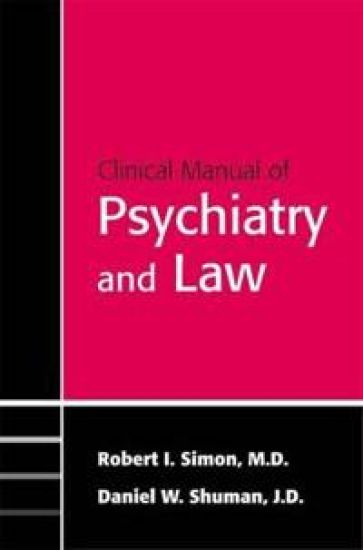
In their latest collaboration, Clinical Manual of Psychiatry and Law, noted forensic psychiatrist Dr. Robert Simon and legal scholar Daniel Shuman, both recipients of the Guttmacher Award, have created a unique, practical reference to enable psychiatrists to transform the impact of the law on their clinical practices from an adversary to a working partner. In lieu of scare tactics or horror stories, Dr. Simon and Professor Shuman clearly explain not only what the law requires and why but how best to integrate its requirements to enhance clinical practice and reduce the risk of successful tort claims. They have written a clear, comprehensible, and accessible volume that will guide practitioners through the thickets of the law and benefit their clinical practices. This volume covers a wide range of topics, from confidentiality, privilege, informed consent and the right to refuse treatment to treatment boundaries, involuntary hospitalization, seclusion and restraint, management of violent as well as suicidal patients, and the additional requirements which apply to the treatment and evaluation of minors or persons with mental disabilities. It also includes the tort (i.e., negligence, intentional harm) claims that arise from a breach of the law's expectations. The content reflects the latest legal precedents concerning such topics as: • Establishment of the doctor-patient relationship and liability for damages caused by its breach, including new rulings governing confidentiality and testimonial privileges• Case law regarding informed consent—especially the issue of competency when dealing with minors or persons with mental disabilities• New rules and regulations restricting the use of seclusion and restraint• Guides to the most recent laws regarding involuntary hospitalization and emergency commitment• Insights into recent state court decisions concerning disclosures by therapists of threats of harm by patients against others, including such issues as conflicts between the duty to maintain confidentiality and the duty to protect• Reviews of recent legislation proscribing sexual misconduct or prosecuting sexual exploitation of patients under existing rape or sexual assault laws Clinicians will find this wealth of knowledge immediately practical and lawyers will appreciate its in-depth treatment of complex psychiatric issues. With extensive references and a glossary of legal terms, Clinical Manual of Psychiatry and Law deserves a place among the top legal references for mental health professionals.
Conducting Insanity Evaluations, Second Edition

Conducting Insanity Evaluations, Second Edition

Richard Rogers; Daniel W. Shuman

Guilford Publications
2000
sidottu
Insanity evaluations represent the most challenging and complex evaluations in forensic psychology and psychiatry. Mental health and legal professionals involved in insanity cases need a solid foundation in current concepts, legal standards, and clinical methods. This need is heightened by the substantial legal and clinical changes that have occurred in the field during the past decade. This text from two leading authorities brings forensic professionals up to date on key issues surrounding insanity evaluations. It provides explicit, research-based guidelines for interview-based assessments, psychological testing and other specialized procedures, and forensic reports and testimony. The volume explores how insanity is conceptualized under the law and differentiated from other standards of criminal responsibility. A range of clinical measures and techniques are examined, with special attention to such relevant phenomena as malingering and amnesia. Included in the appendices are invaluable databases on 413 defendants evaluated for criminal responsibility and 6,479 defendants found not guilty by reason of insanity. For clinicians, the volume provides the knowledge and skills needed to conduct ethical, legally defensible insanity evaluations and to present their findings effectively. Legal professionals will gain a basis for understanding the logic and clinical methods used by mental health experts and for evaluating the quality of their assessments.
Doing Legal Research

Doing Legal Research

Roberta A. Morris; Bruce D. Sales; Daniel W. Shuman

SAGE Publications Inc
1997
sidottu
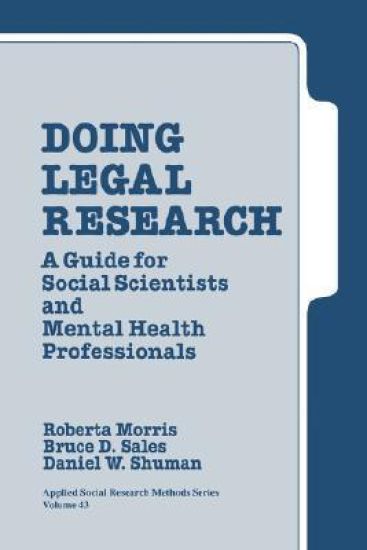
Finding and using the appropriate legal materials can help social researchers design and execute their research more appropriately as well as assist mental health practitioners seeking answers to legal questions that their practice increasingly presents. Where can social researchers and mental health practitioners go to learn these techniques? Doing Legal Research will enable researchers and practitioners to develop a proficiency in using legal materials by describing how to use the law library to find, cite, and track cases; statutes passed by the state legislatures or Congress; legislative history of these statutes; and administrative rules, regulations, and decisions promulgated by state and federal administrative agencies (such as the Environmental Protection Agency). In addition, the book includes exercises that give readers an opportunity to go into the law library and test developing skills on genuine legal questions. After reading this book, researchers will not only have the skills that will ensure the legal relevance of their initial research question but also the ability to conduct their own evaluation of the legal materials.
Doing Legal Research

Doing Legal Research

Roberta A. Morris; Bruce D. Sales; Daniel W. Shuman

SAGE Publications Inc
1997
nidottu
Finding and using the appropriate legal materials can help social researchers design and execute their research more appropriately as well as assist mental health practitioners seeking answers to legal questions that their practice increasingly presents. Where can social researchers and mental health practitioners go to learn these techniques? Doing Legal Research will enable researchers and practitioners to develop a proficiency in using legal materials by describing how to use the law library to find, cite, and track cases; statutes passed by the state legislatures or Congress; legislative history of these statutes; and administrative rules, regulations, and decisions promulgated by state and federal administrative agencies (such as the Environmental Protection Agency). In addition, the book includes exercises that give readers an opportunity to go into the law library and test developing skills on genuine legal questions. After reading this book, researchers will not only have the skills that will ensure the legal relevance of their initial research question but also the ability to conduct their own evaluation of the legal materials.