Kirjailija
Daniel Ziblatt
Kirjat ja teokset yhdessä paikassa: 17 kirjaa, julkaisuja vuosilta 2008-2024, suosituimpien joukossa How Democracies Die. Vertaile teosten hintoja ja tarkista saatavuus suomalaisista kirjakaupoista.
17 kirjaa
Kirjojen julkaisuhaarukka 2008-2024.
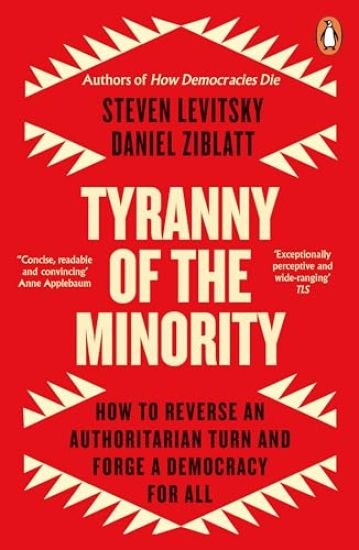
THE MUCH-ANTICIPATED FOLLOW-UP TO INTERNATIONAL BESTSELLER HOW DEMOCRACIES DIE – essential reading ahead of the 2024 US election‘Tyranny of the Minority is an exceptional book, one of the best guides out there to the crisis of American democracy’ Zack Beauchamp, Vox–-------------------------------------How has democracy become so threatened – and what can we do to save it?With the clarity and brilliance that made their first book, How Democracies Die, a global bestseller, leading Harvard professors Steven Levitsky and Daniel Ziblatt offer a coherent new framework for understanding the dangerous times we live in. They draw on a wealth of examples – from the Capitol riots to Edwardian Britain, from 1930s France to present-day Thailand – to explore right-wing efforts to undermine the very foundations of the American political system, and to explain why and how political parties turn against democracy.With its attention on factors from election losses to demographic change and voting rights, its urgent call for a reform of our politics to balance the need for majority rule with the need for minority protections, and a citizens’ movement to put enough pressure on lawmakers to act before it’s too late, Tyranny of the Minority is a must-read for everyone keen to see more vibrant democracy – and to understand where future threats may come from.–-------------------------------------‘Just like their previous work, this book is concise, readable, and convincing’ Anne Applebaum, author of Twilight of Democracy‘An exceptionally perceptive and wide-ranging book . . . [that lays] out an ambitious fifteen-plank project of democratic renewal’ Lawrence Douglas, TLS
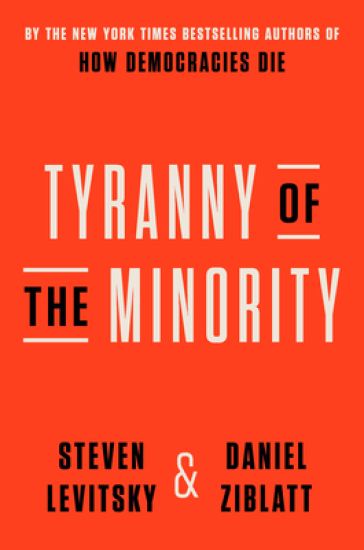
Tyranny of the Minority: Why American Democracy Reached the Breaking Point
Steven Levitsky; Daniel Ziblatt
Crown Publishing Group (NY)
2024
nidottu
NEW YORK TIMES BESTSELLER - A call to reform our antiquated political institutions before it's too late--from the authors of How Democracies Die " Levitsky and Ziblatt] write with terrifying clarity about how the forces of the right have co-opted the enshrined rules to exert their tyranny."--The Washington PostONE OF THE CALIFORNIA REVIEW OF BOOKS' TEN BEST BOOKS OF THE YEAR - A NEWSWEEK BEST BOOK OF THE YEAR America is undergoing a massive experiment: It is moving, in fits and starts, toward a multiracial democracy, something few societies have ever done. But the prospect of change has sparked an authoritarian backlash that threatens the very foundations of our political system. Why is democracy under assault here, and not in other wealthy, diversifying nations? And what can we do to save it? With the clarity and brilliance that made their first book, How Democracies Die, a global bestseller, Harvard professors Steven Levitsky and Daniel Ziblatt offer a coherent framework for understanding these volatile times. They draw on a wealth of examples--from 1930s France to present-day Thailand--to explain why and how political parties turn against democracy. They then show how our Constitution makes us uniquely vulnerable to attacks from within: It is a pernicious enabler of minority rule, allowing partisan minorities to consistently thwart and even rule over popular majorities. Most modern democracies--from Germany and Sweden to Argentina and New Zealand--have eliminated outdated institutions like elite upper chambers, indirect elections, and lifetime tenure for judges. The United States lags dangerously behind. In this revelatory book, Levitsky and Ziblatt issue an urgent call to reform our politics. It's a daunting task, but we have remade our country before--most notably, after the Civil War and during the Progressive Era. And now we are at a crossroads: America will either become a multiracial democracy or cease to be a democracy at all.
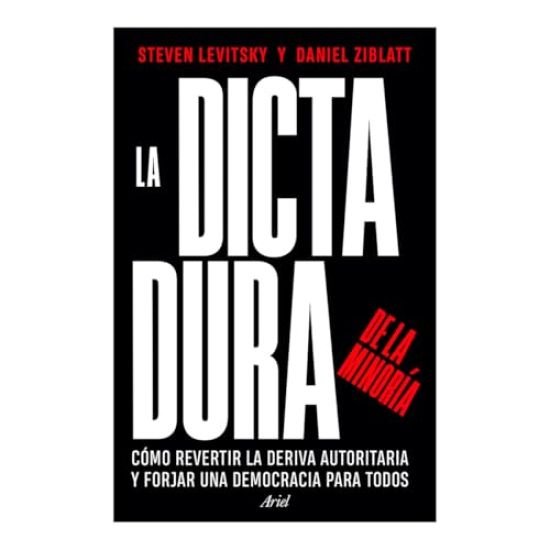
La Dictadura de la Minoría: Cómo Revertir La Deriva Autoritaria Y Forjar Una Democracia Para Todos / Tyranny of the Minority
Steven Levitsky; Daniel Ziblatt
Planeta Publishing
2024
nidottu
Un llamado a reformar las instituciones democr ticas tradicionales para frenar los reg menes autoritarios contempor neos. Estamos atravesando una poca convulsa en la que la gobernanza neoliberal, el ascenso generalizado de la extrema derecha, la pol tica de bloques, y otras formas de autocracia se est n imponiendo en diferentes latitudes del planeta. Steven Levitsky y Daniel Ziblatt ofrecen aqu un marco te rico coherente y aportan ejemplos de todo el mundo para comprender el giro autoritario generalizado y explicar c mo los partidos pol ticos se vuelven contra la democracia. A partir del caso estadounidense y mostrando la evoluci n de otros pa ses en la consecuci n de mejoras y reformas para la sociedad y las libertades civiles, los aclamados profesores de Harvard proponen una serie de reformas con las que salir de una espiral de crisis y constituir lo que ellos llaman la nica democracia factible. Un libro necesario, legible y convincente. ENGLISH DESCRIPTION Un llamado a reformar las instituciones democr ticas tradicionales para frenar los reg menes autoritarios contempor neos. We are going through a turbulent time in which neoliberal governance, the widespread rise of the extreme right, bloc politics, and other forms of autocracy are being imposed in different latitudes of the planet. Steven Levitsky and Daniel Ziblatt offer a coherent theoretical framework here and provide examples from around the world to understand the widespread authoritarian turn and explain how political parties turn against democracy. Based on the case of the United States and showing the evolution of other countries in achieving improvements and reforms for society and civil liberties, the acclaimed Harvard professors propose a series of reforms with which to get of a spiral of crisis and constitute what they call the only feasible democracy. A necessary, readable and convincing book.
Donald Trumpi presidentuur tõstatas küsimuse, mida paljud kunagi tõenäoliseks ei pidanud: kas Ameerika demokraatia on ohus? Harvardi professorid Steven Levitsky ja Daniel Ziblatt on üle kahekümne aasta uurinud demokraatiate lagunemist Euroopas ja Ladina-Ameerikas ning nende arvates on vastus jaatav. Demokraatia ei lõpe enam pauguga - revolutsiooni või sõjaväelise riigipöördega -, vaid vaikse kiunatusega, põhjuseks ülitähtsate institutsioonide, näiteks kohtusüsteemi ja ajakirjanduse aeglane ja pidev nõrgenemine ning poliitilise hea tava järkjärguline murenemine. Hea uudis on see, et autoritaarsuse kiirteel on mitu väljasõidurampi. Halb uudis on see, et esimene on juba seljataga."Vastupidiselt paljudele analüütikutele ja mõtlejatele ei jää Levitsky ja Ziblatt kinni president Donald Trumpi isikusse, vaid analüüsivad USAs aset leidnud muutusi laiemalt. Järeldused on lohutud: Trumpi esimene valimisvõit oli USA ühiskonna arengu loogiline lõpptulemus. Eestile on raamatu põhijäreldus, et ei piisa üksnes USA välispoliitika ja maailma jälgimisest. Vaja on peensusteni tunda ka USA ajalugu ja sisepoliitikat, sest valimisringkondade järjekordne muutmine (nn gerrymandering) võib tuua endaga kaasa tagajärgi, mis annavad tunda ka siin Maarjamaal," ütleb Erkki Bahovski, Postimehe arvamustoimetaja.Ajalehed Washington Post ja Time nimetasid seda New York Timesi menuki tiitliga pärjatud raamatut üheks 2018. aasta tähtteoseks.
An urgent follow-up to bestseller How Democracies Die, by two world-leading experts on democracy In this incisive and razor-sharp analysis of one of the most important issues facing us today, leading Harvard professors Steven Levitsky and Daniel Ziblatt draw on their combined expertise of over 40 years to examine how dictators come to power, and how they help to foster a poisonous culture of polarisation, fear and suspicion that persists even after their time in power is over. Using contemporary examples including the Capitol riots and voter suppression in the US, as well as global examples from history including post-1945 Germany and Brazil and Chile during the '60s and '70s, the authors dissect conservative resistance to pluralism and modern threats to multiracial democracy (including the unwillingness of political parties to adapt to modern times, and a growing disregard for constitutional norms and free and fair elections) while imploring readers to stand up in its defence. Focusing on the forthcoming American election as an essential case study, Saving Democracy offers us imperative tools for implementing urgent democratic reform, brilliantly illuminating how we can respond to the political battles ahead.
THE MUCH-ANTICIPATED FOLLOW-UP TO INTERNATIONAL BESTSELLER HOW DEMOCRACIES DIE – essential reading ahead of the 2024 US election‘Just like their previous work, this book is concise, readable, and convincing’ Anne Applebaum, author of Twilight of Democracy-------------------------------------How has democracy become so threatened – and what can we do to save it?With the clarity and brilliance that made their first book, How Democracies Die, a global bestseller, leading Harvard professors Steven Levitsky and Daniel Ziblatt offer a coherent new framework for understanding the dangerous times we live in. They draw on a wealth of examples – from the Capitol riots, to Edwardian Britain, from 1930s France to present-day Thailand – to explain why political parties turn against democracy, and how to see when this will happen.In this razor-sharp analysis, Levitsky and Ziblatt offer in particular an urgent warning about right-wing efforts to undermine the very foundations of the American political system. Multiracial democracy is something few societies have ever achieved – but even the prospect of this change can spark an authoritarian backlash whose dangerous effects will resonate long into the future. Donald Trump’s astonishing lead in the run-up to the Republican nomination, even after his indictment and imprisonment on charges of election interference, is evidence of that.With its attention on factors from election losses to demographic change and voting rights, its urgent call for a reform of our politics to balance the need for majority rule with the need for minority protections, and a citizens’ movement to put enough pressure on lawmakers to act before it’s too late, Tyranny of the Minority is a must-read for everyone keen to see more vibrant democracy – and to understand where future threats may come from.-------------------------------------‘Provocative and readable’ David Runciman on How Democracies Die'A useful primer on the importance of norms, institutional restraints and civic participation in maintaining a democracy' Barack Obama on How Democracies Die
Tyranny of the Minority: Why American Democracy Reached the Breaking Point
Steven Levitsky; Daniel Ziblatt
Crown Publishing Group (NY)
2023
sidottu
NEW YORK TIMES BESTSELLER - A call to reform our antiquated political institutions before it's too late--from the authors of How Democracies Die " Levitsky and Ziblatt] write with terrifying clarity about how the forces of the right have co-opted the enshrined rules to exert their tyranny."--The Washington PostONE OF THE CALIFORNIA REVIEW OF BOOKS' TEN BEST BOOKS OF THE YEAR - A NEWSWEEK BEST BOOK OF THE YEAR America is undergoing a massive experiment: It is moving, in fits and starts, toward a multiracial democracy, something few societies have ever done. But the prospect of change has sparked an authoritarian backlash that threatens the very foundations of our political system. Why is democracy under assault here, and not in other wealthy, diversifying nations? And what can we do to save it? With the clarity and brilliance that made their first book, How Democracies Die, a global bestseller, Harvard professors Steven Levitsky and Daniel Ziblatt offer a coherent framework for understanding these volatile times. They draw on a wealth of examples--from 1930s France to present-day Thailand--to explain why and how political parties turn against democracy. They then show how our Constitution makes us uniquely vulnerable to attacks from within: It is a pernicious enabler of minority rule, allowing partisan minorities to consistently thwart and even rule over popular majorities. Most modern democracies--from Germany and Sweden to Argentina and New Zealand--have eliminated outdated institutions like elite upper chambers, indirect elections, and lifetime tenure for judges. The United States lags dangerously behind. In this revelatory book, Levitsky and Ziblatt issue an urgent call to reform our politics. It's a daunting task, but we have remade our country before--most notably, after the Civil War and during the Progressive Era. And now we are at a crossroads: America will either become a multiracial democracy or cease to be a democracy at all.
Donald Trumps presidentmandat har väckt en fråga som många av oss aldrig trodde att vi skulle ställa: Är den amerikanska demokratin i fara? Steven Levitsky och Daniel Ziblatt, som har ägnat mer än tjugo år åt att studera demokratiers sammanbrott i Europa och Latinamerika, menar att svaret är ja. Demokratier går inte längre under i en revolution eller en militärkupp utan genom en långsam, ihållande försvagning av livsviktiga institutioner som domstolsväsen och medier, och en gradvis urholkning av etablerade politiska normer. Med utgångspunkt i flera decenniers forskning och med en lång rad historiska och globala exempel, från 1930-talets Europa till nutidens Ungern, Turkiet och Venezuela, klarlägger Levitsky och Ziblatt hur demokratier dör - och hur de kan räddas.Så dör demokratier har fått stor internationell uppmärksamhet och ges här ut i svensk översättning, med ett förord av Johannes Lindvall, professor i statsvetenskap vid Lunds universitet.
'The most important book of the Trump era' The EconomistHow does a democracy die? What can we do to save our own? What lessons does history teach us? In the 21st century democracy is threatened like never before. Drawing insightful lessons from across history - from Pinochet's murderous Chilean regime to Erdogan's quiet dismantling in Turkey - Levitsky and Ziblatt explain why democracies fail, how leaders like Trump subvert them today and what each of us can do to protect our democratic rights. 'This book looks to history to provide a guide for defending democratic norms when they are under threat, and finds that it is possible to fight back.' David Runciman 'A useful primer on the importance of norms, institutional restraints and civic participation in maintaining a democracy - and how quickly those things can erode when we're not paying attention' President Barack Obama 'A must-read' Andrew Marr, Sunday Times 'The greatest of the many merits of Levitsky and Ziblatt's How Democracies Die is their rejection of western exceptionalism. They tell inspiring stories I had not heard before' Nick Cohen, Observer 'Provocative, timely. One of my favourite reads this year' Elif Shafak 'Anyone who is concerned about the future of democracy should read this brisk, accessible book. Anyone who is not concerned should definitely read it' Daron Acemoglu, co-author of Why Nations Fail
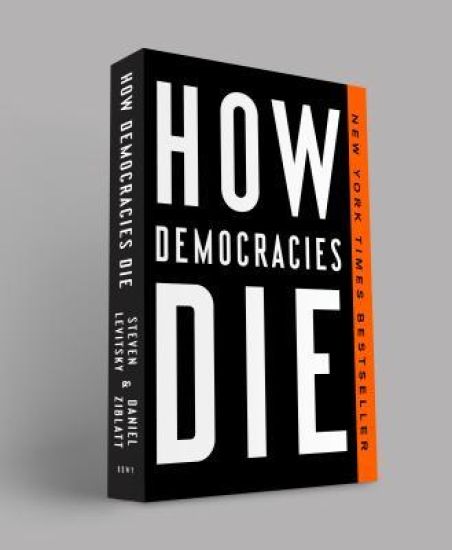
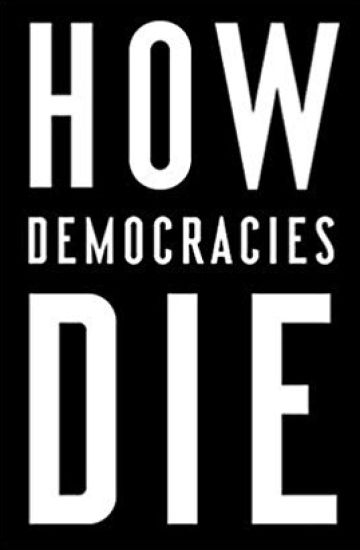
NEW YORK TIMES BESTSELLER - The urgent and influential guide to the forces that have undermined democracies across the globe--forces running rampant in the United States today--hailed as "a touchstone" (The New Yorker) that "comes at exactly the right moment" (The Washington Post) "Comprehensive, enlightening, and terrifyingly timely."--The New York Times Book Review (Editors' Choice) " Levitsky and Ziblatt] expand the conversation beyond Trump and before him, to other countries and to the deep structure of American democracy and politics."--Ezra Klein WINNER OF THE GOLDSMITH BOOK PRIZE - SHORTLISTED FOR THE LIONEL GELBER PRIZE - A BEST BOOK OF THE YEAR: The Washingotn Post, Time, Foreign Affairs, WBUR, PasteDonald Trump's presidency has raised a question that many of us never thought we'd be asking: Is our democracy in danger? Harvard professors Steven Levitsky and Daniel Ziblatt have spent more than twenty years studying the breakdown of democracies in Europe and Latin America, and they believe the answer is yes. Democracy no longer ends with a bang--in a revolution or military coup--but with a whimper: the slow, steady weakening of critical institutions, such as the judiciary and the press, and the gradual erosion of long-standing political norms. The good news is that there are several exit ramps on the road to authoritarianism. The bad news is that, by electing Trump, we have already passed the first one. Drawing on decades of research and a wide range of historical and global examples, from 1930s Europe to contemporary Hungary, Turkey, and Venezuela, to the American South during Jim Crow, Levitsky and Ziblatt show how democracies die. Now the question is, can our democracy be saved? Praise for How Democracies Die "If you only read one book for the rest of the year, read How Democracies Die. . . .This is not a book for just Democrats or Republicans. It is a book for all Americans. It is nonpartisan. It is fact based. It is deeply rooted in history. . . . The best commentary on our politics, no contest."--Michael Morrell, former Acting Director of the Central Intelligence Agency (via Twitter) "A smart and deeply informed book about the ways in which democracy is being undermined in dozens of countries around the world, and in ways that are perfectly legal."--Fareed Zakaria, CNN
Conservative Parties and the Birth of Democracy
Daniel Ziblatt
Cambridge University Press
2017
sidottu
How do democracies form and what makes them die? Daniel Ziblatt revisits this timely and classic question in a wide-ranging historical narrative that traces the evolution of modern political democracy in Europe from its modest beginnings in 1830s Britain to Adolf Hitler's 1933 seizure of power in Weimar Germany. Based on rich historical and quantitative evidence, the book offers a major reinterpretation of European history and the question of how stable political democracy is achieved. The barriers to inclusive political rule, Ziblatt finds, were not inevitably overcome by unstoppable tides of socioeconomic change, a simple triumph of a growing middle class, or even by working class collective action. Instead, political democracy's fate surprisingly hinged on how conservative political parties – the historical defenders of power, wealth, and privilege – recast themselves and coped with the rise of their own radical right. With striking modern parallels, the book has vital implications for today's new and old democracies under siege.
Conservative Parties and the Birth of Democracy
Daniel Ziblatt
Cambridge University Press
2017
nidottu
How do democracies form and what makes them die? Daniel Ziblatt revisits this timely and classic question in a wide-ranging historical narrative that traces the evolution of modern political democracy in Europe from its modest beginnings in 1830s Britain to Adolf Hitler's 1933 seizure of power in Weimar Germany. Based on rich historical and quantitative evidence, the book offers a major reinterpretation of European history and the question of how stable political democracy is achieved. The barriers to inclusive political rule, Ziblatt finds, were not inevitably overcome by unstoppable tides of socioeconomic change, a simple triumph of a growing middle class, or even by working class collective action. Instead, political democracy's fate surprisingly hinged on how conservative political parties - the historical defenders of power, wealth, and privilege - recast themselves and coped with the rise of their own radical right. With striking modern parallels, the book has vital implications for today's new and old democracies under siege.
Germany's and Italy's belated national unifications continue to loom large in contemporary debates. Often regarded as Europe's paradigmatic instances of failed modernization, the two countries form the basis of many of our most prized theories of social science. Structuring the State undertakes one of the first systematic comparisons of the two cases, putting the origins of these nation-states and the nature of European political development in new light. Daniel Ziblatt begins his analysis with a striking puzzle: Upon national unification, why was Germany formed as a federal nation-state and Italy as a unitary nation-state? He traces the diplomatic maneuverings and high political drama of national unification in nineteenth-century Germany and Italy to refute the widely accepted notion that the two states' structure stemmed exclusively from Machiavellian farsightedness on the part of militarily powerful political leaders. Instead, he demonstrates that Germany's and Italy's "founding fathers" were constrained by two very different pre-unification patterns of institutional development. In Germany, a legacy of well-developed sub-national institutions provided the key building blocks of federalism. In Italy, these institutions' absence doomed federalism. This crucial difference in the organization of local power still shapes debates about federalism in Italy and Germany today. By exposing the source of this enduring contrast, Structuring the State offers a broader theory of federalism's origins that will interest scholars and students of comparative politics, state-building, international relations, and European political history.
Donald Trumps presidency has raised a question that many of us never thought wed be asking: Is our democracy in danger? Harvard professors Steven Levitsky and Daniel Ziblatt have spent more than twenty years studying the breakdown of democracies in Europe and Latin America, and they believe the answer is yes. Democracy no longer ends with a bangin a revolution or military coupbut with a whimper: the slow, steady weakening of critical institutions, such as the judiciary and the press, and the gradual erosion of long-standing political norms. The good news is that there are several exit ramps on the road to authoritarianism. The bad news is that, by electing Trump, we have already passed the first one.Drawing on decades of research and a wide range of historical and global examples, from 1930s Europe to contemporary Hungary, Turkey, and Venezuela, to the American South during Jim Crow, Levitsky and Ziblatt show how democracies dieand how ours can be saved.