Kirjojen hintavertailu. Mukana 12 168 051 kirjaa ja 12 kauppaa.

Kirjailija

Daniela Campello

Kirjat ja teokset yhdessä paikassa: 4 kirjaa, julkaisuja vuosilta 2015-2020, suosituimpien joukossa The Volatility Curse. Vertaile teosten hintoja ja tarkista saatavuus suomalaisista kirjakaupoista.

4 kirjaa

Kirjojen julkaisuhaarukka 2015-2020.

The Volatility Curse

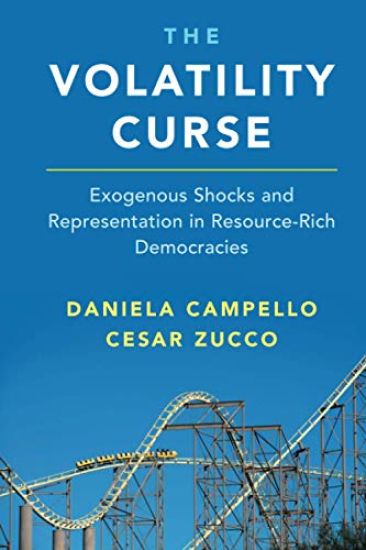
The Volatility Curse

Daniela Campello; Cesar Zucco

Cambridge University Press
2020
pokkari
The Volatility Curse examines the conditions under which economic voting can (and cannot) function as a mechanism of democratic accountability, challenging existing theories that are largely based on experiences in developed democracies. Drawing on cross-national data from around the world and micro-level evidence from Latin America, Daniela Campello and Cesar Zucco make two broad, related arguments. First, they show that economic voting is pervasive around the world, but in economically volatile developing democracies that are dependent on commodity exports and inflows of foreign capital, economic outcomes are highly contingent on conditions beyond government control, which nonetheless determine relevant political outcomes like elections, popular support, and government transitions. Second, politicians are aware of these misattribution patterns and are often able to anticipate their electoral prospects well before elections. This reduces incumbents' incentives to maximize voter welfare, as anticipated by economic voting theories, and increases the likelihood of shirking, waste, and corruption.
The Volatility Curse

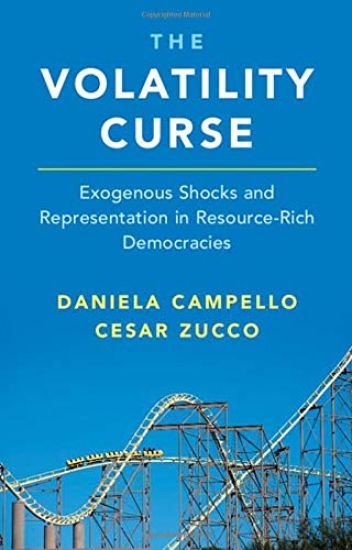
The Volatility Curse

Daniela Campello; Cesar Zucco

Cambridge University Press
2020
sidottu
The Volatility Curse examines the conditions under which economic voting can (and cannot) function as a mechanism of democratic accountability, challenging existing theories that are largely based on experiences in developed democracies. Drawing on cross-national data from around the world and micro-level evidence from Latin America, Daniela Campello and Cesar Zucco make two broad, related arguments. First, they show that economic voting is pervasive around the world, but in economically volatile developing democracies that are dependent on commodity exports and inflows of foreign capital, economic outcomes are highly contingent on conditions beyond government control, which nonetheless determine relevant political outcomes like elections, popular support, and government transitions. Second, politicians are aware of these misattribution patterns and are often able to anticipate their electoral prospects well before elections. This reduces incumbents' incentives to maximize voter welfare, as anticipated by economic voting theories, and increases the likelihood of shirking, waste, and corruption.
The Politics of Market Discipline in Latin America

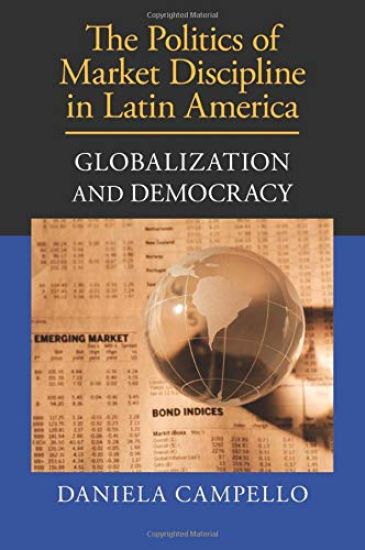
The Politics of Market Discipline in Latin America

Daniela Campello

Cambridge University Press
2016
pokkari
The Politics of Market Discipline in Latin America uses a multi-method approach to challenge the conventional wisdom that financial markets impose broad and severe constraints over leftist economic policies in emerging market countries. It shows, rather, that in Latin America, this influence varies markedly among countries and over time, depending on cycles of currency booms and crises exogenous to policy making. Market discipline is strongest during periods of dollar scarcity, which, in low-savings commodity-exporting countries, occurs when commodity prices are high and international interest rates low. In periods of dollar abundance, when the opposite happens, the market's capacity to constrain leftist governments is very limited. Ultimately, Daniela Campello argues that financial integration should force the Left toward the center in economies less subject to these cycles, but not in those most vulnerable to them.
The Politics of Market Discipline in Latin America

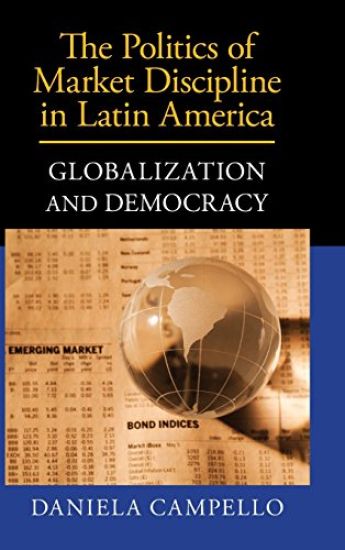
The Politics of Market Discipline in Latin America

Daniela Campello

Cambridge University Press
2015
sidottu
The Politics of Market Discipline in Latin America uses a multi-method approach to challenge the conventional wisdom that financial markets impose broad and severe constraints over leftist economic policies in emerging market countries. It shows, rather, that in Latin America, this influence varies markedly among countries and over time, depending on cycles of currency booms and crises exogenous to policy making. Market discipline is strongest during periods of dollar scarcity, which, in low-savings commodity-exporting countries, occurs when commodity prices are high and international interest rates low. In periods of dollar abundance, when the opposite happens, the market's capacity to constrain leftist governments is very limited. Ultimately, Daniela Campello argues that financial integration should force the Left toward the center in economies less subject to these cycles, but not in those most vulnerable to them.