Kirjojen hintavertailu. Mukana 12 131 553 kirjaa ja 12 kauppaa.

Kirjailija

Danielle Knafo

Kirjat ja teokset yhdessä paikassa: 11 kirjaa, julkaisuja vuosilta 2005-2023, suosituimpien joukossa The New Sexual Landscape and Contemporary Psychoanalysis. Vertaile teosten hintoja ja tarkista saatavuus suomalaisista kirjakaupoista.

11 kirjaa

Kirjojen julkaisuhaarukka 2005-2023.

From Breakdown to Breakthrough

From Breakdown to Breakthrough

Danielle Knafo; Michael Selzer

TAYLOR FRANCIS LTD
2023
nidottu
As a clear and user-friendly guide for clinicians who work with patients affected by psychosis, this book challenges the false notion that psychosis is untreatable through talk therapy.The authors contend that since psychotic symptoms are features of survival adaptation, they naturally serve as a valuable source of information, providing clues about the origins of people's psychic derailment along with a path to its cure. The authors advise therapists not only to read and respond to the messages embedded in the symptoms, but also to recognize and utilise the non-psychotic aspects of the patient in facilitating recovery. The overall aim is to recruit the patient as a collaborator in their treatment, thus wresting a meaningful and redemptive narrative from the psychotic experience. All aspects and phases of treatment - from initial encounters through the middle phase to termination, and even supervision - are covered in this volume.Abundant with clinical examples, theoretical and technical points, and treatment methods, this book is essential reading for all psychotherapists, psychoanalysts, and other mental health clinicians working with psychosis.

From Breakdown to Breakthrough

From Breakdown to Breakthrough

Danielle Knafo; Michael Selzer

TAYLOR FRANCIS LTD
2023
sidottu
As a clear and user-friendly guide for clinicians who work with patients affected by psychosis, this book challenges the false notion that psychosis is untreatable through talk therapy.The authors contend that since psychotic symptoms are features of survival adaptation, they naturally serve as a valuable source of information, providing clues about the origins of people's psychic derailment along with a path to its cure. The authors advise therapists not only to read and respond to the messages embedded in the symptoms, but also to recognize and utilise the non-psychotic aspects of the patient in facilitating recovery. The overall aim is to recruit the patient as a collaborator in their treatment, thus wresting a meaningful and redemptive narrative from the psychotic experience. All aspects and phases of treatment - from initial encounters through the middle phase to termination, and even supervision - are covered in this volume.Abundant with clinical examples, theoretical and technical points, and treatment methods, this book is essential reading for all psychotherapists, psychoanalysts, and other mental health clinicians working with psychosis.
The New Sexual Landscape and Contemporary Psychoanalysis

The New Sexual Landscape and Contemporary Psychoanalysis

Danielle Knafo; Rocco Bosco

Confer Books
2020
pokkari
The sexual landscape has changed dramatically in the past few decades, with the meaning of gender and sexuality now being parsed within the realms of gender fluidity and nonheteronormative sexuality. The sea change in sexual attitudes has also made room for the mainstreaming of internet pornography and the use of virtual reality, cybersex, and teledildonics for sexual pleasure. The New Sexual Landscape and Contemporary Psychoanalysis surveys modern sex culture and suggests ways psychoanalysis can update its theories and practice to meet the novel needs of today’s generations.
Sex, Drugs and Creativity

Sex, Drugs and Creativity

Dustin Kahoud; Danielle Knafo

Routledge
2018
sidottu
In Sex, Drugs, and Creativity: The Search for Magic in a Disenchanted World, Kahoud and Knafo take a close look at omnipotent fantasies in three domains: sex, drugs, and creativity. They demonstrate how these fantasies emerge and how artists draw on them both to create and destroy—sometimes simultaneously – and how understanding this can help psychoanalysts work more effectively with these individuals. Using the personal statements of influential artists and entertainers, in addition to clinical material, the authors examine the omnipotence of self-destruction as it contends with that of creative artists. The authors argue that creative artists use omnipotent fantasies to imagine the world differently - this enables them to produce their art, but also leaves these artists vulnerable to addiction. Chapters devoted to Stephen King and Anne Sexton demonstrate the ways these authors used drugs and alcohol to fuel imagination and inspire creative output while simultaneously doing harm to themselves. A detailed case study also demonstrates successful clinical work with a creative substance user.Sex, Drugs, and Creativity will appeal to anyone interested in the links between creativity and substance use, and will be of great use to psychoanalysts and mental health practitioners working with these challenging clients.
Sex, Drugs and Creativity

Sex, Drugs and Creativity

Dustin Kahoud; Danielle Knafo

Routledge
2018
nidottu
In Sex, Drugs, and Creativity: The Search for Magic in a Disenchanted World, Kahoud and Knafo take a close look at omnipotent fantasies in three domains: sex, drugs, and creativity. They demonstrate how these fantasies emerge and how artists draw on them both to create and destroy—sometimes simultaneously – and how understanding this can help psychoanalysts work more effectively with these individuals. Using the personal statements of influential artists and entertainers, in addition to clinical material, the authors examine the omnipotence of self-destruction as it contends with that of creative artists. The authors argue that creative artists use omnipotent fantasies to imagine the world differently - this enables them to produce their art, but also leaves these artists vulnerable to addiction. Chapters devoted to Stephen King and Anne Sexton demonstrate the ways these authors used drugs and alcohol to fuel imagination and inspire creative output while simultaneously doing harm to themselves. A detailed case study also demonstrates successful clinical work with a creative substance user.Sex, Drugs, and Creativity will appeal to anyone interested in the links between creativity and substance use, and will be of great use to psychoanalysts and mental health practitioners working with these challenging clients.
The Age of Perversion

The Age of Perversion

Danielle Knafo; Rocco Lo Bosco

Routledge
2016
sidottu
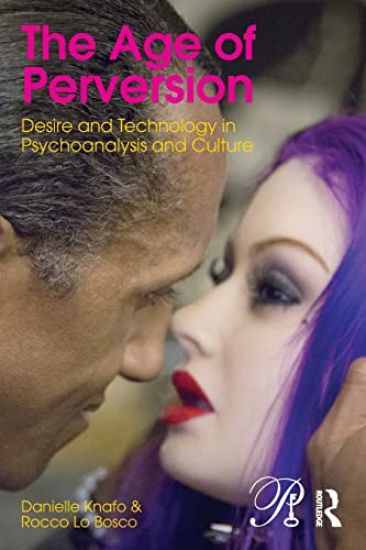
American Board and Academy of Psychoanalysis Book Prize Winner for 2018 (Theoretical Category)We have entered the age of perversion, an era in which we are becoming more like machines and they more like us.The Age of Perversion explores the sea changes occurring in sexual and social life, made possible by the ongoing technological revolution, and demonstrates how psychoanalysts can understand and work with manifestations of perversion in clinical settings.Until now theories of perversion have limited their scope of inquiry to sexual behavior and personal trauma. The authors of this book widen that inquiry to include the social and political sphere, tracing perversion’s existential roots to the human experience of being a conscious animal troubled by the knowledge of death. Offering both creative and destructive possibilities, perversion challenges boundaries and norms in every area of life and involves transgression, illusion casting, objectification, dehumanization, and the radical quest for transcendence.This volume presents several clinical cases, including a man who lived with and loved a sex doll, a woman who wanted to be a Barbie doll, and an Internet sex addict. Also examined are cases of widespread social perversion in corporations, the mental health care industry, and even the government. In considering the continued impact of technology, the authors discuss how it is changing the practice of psychotherapy. They speculate about what the future may hold for a species who will redefine what it means to be human more in the next few decades than during any other time in human history. The Age of Perversion provides a novel examination of the convergence of perversion and technology that will appeal to psychoanalysts and psychoanalytic psychotherapists, social workers, mental health counselors, sex therapists, sexologists, roboticists, and futurists, as well as social theorists and students and scholars of cultural studies.
The Age of Perversion

The Age of Perversion

Danielle Knafo; Rocco Lo Bosco

Routledge
2016
nidottu
American Board and Academy of Psychoanalysis Book Prize Winner for 2018 (Theoretical Category)We have entered the age of perversion, an era in which we are becoming more like machines and they more like us.The Age of Perversion explores the sea changes occurring in sexual and social life, made possible by the ongoing technological revolution, and demonstrates how psychoanalysts can understand and work with manifestations of perversion in clinical settings.Until now theories of perversion have limited their scope of inquiry to sexual behavior and personal trauma. The authors of this book widen that inquiry to include the social and political sphere, tracing perversion’s existential roots to the human experience of being a conscious animal troubled by the knowledge of death. Offering both creative and destructive possibilities, perversion challenges boundaries and norms in every area of life and involves transgression, illusion casting, objectification, dehumanization, and the radical quest for transcendence.This volume presents several clinical cases, including a man who lived with and loved a sex doll, a woman who wanted to be a Barbie doll, and an Internet sex addict. Also examined are cases of widespread social perversion in corporations, the mental health care industry, and even the government. In considering the continued impact of technology, the authors discuss how it is changing the practice of psychotherapy. They speculate about what the future may hold for a species who will redefine what it means to be human more in the next few decades than during any other time in human history. The Age of Perversion provides a novel examination of the convergence of perversion and technology that will appeal to psychoanalysts and psychoanalytic psychotherapists, social workers, mental health counselors, sex therapists, sexologists, roboticists, and futurists, as well as social theorists and students and scholars of cultural studies.
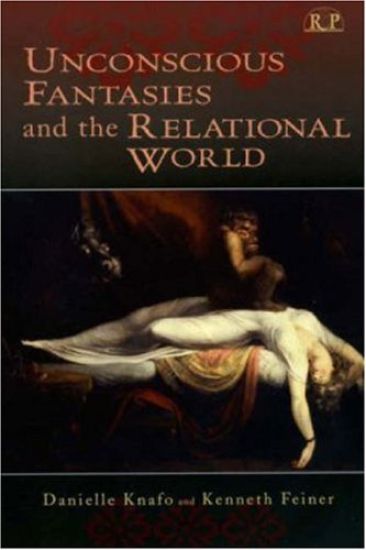
Unconscious Fantasies and the Relational World

Unconscious Fantasies and the Relational World

Danielle Knafo; Kenneth Feiner

Routledge
2014
nidottu
What is the role of unconscious fantasies in psychological development, in psychopathology, and in the arts? In Unconscious Fantasies and the Relational World, Danielle Knafo and Kenneth Feiner return to these interlinked questions with a specific goal in mind: a contemporary appreciation of fantasy in its multiform relational contexts. To this end, they provide detailed examinations of primal scene, family romance, and castration fantasies, respectively. Each category of fantasy is pushed beyond its "classical" psychoanalytic meaning by attending to the child's ubiquitous concerns about sexual difference and feelings of incompleteness; her perception of the parental relationship; and the multiple, shifting identifications that grow out of this relationship.Evocative clinical examples illuminate the manner in which patients and analysts play out these three core fantasies. They are balanced by chapters that explore the generative side of these same fantasies in the arts. David Lynch's film Blue Velvet provides an artistic rendering of the primal scene; Jerzy Kosinki's life and work illustrates the family romance; and French multimedia artist Orlan's "carnal art" recreates the trauma of castration. Unconscious Fantasies and the Relational World is a tightly woven study of broad and basic questions. It is in equal measure a contemporary re-visioning of the grounds of fantasy formation, a relationally informed guide to clinical techniques for dealing with unconscious fantasy, and an examination of the generative potential of unconscious fantasy in the arts. Out of the authors’ broadening and broad-minded sensibility emerges an illuminating study of the manifold ways in which unconscious fantasies shape lives and enrich clinical work.
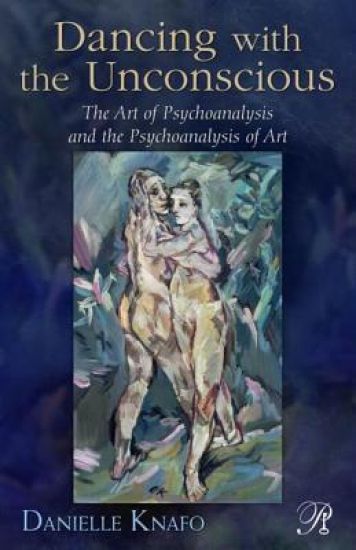
Dancing with the Unconscious

Dancing with the Unconscious

Danielle Knafo

Routledge
2012
nidottu
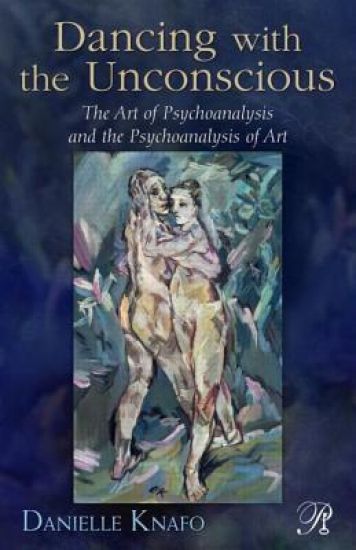
In writing and lecturing over the past two decades on the relationship between psychoanalysis and art, Danielle Knafo has demonstrated the many ways in which these two disciplines inform and illuminate each other. This book continues that discussion, emphasizing how the creative process in psychoanalysis and art utilizes the unconscious in a quest for transformation and healing. Part one of the book presents case studies to show how free association, transference, dream work, regression, altered states of consciousness, trauma, and solitude function as creative tools for analyst, patient, and artist. Knafo uses the metaphor of dance to describe therapeutic action, the back-and-forth movement between therapist and patient, past and present, containment and release, and conscious and unconscious thought. The analytic couple is both artist and medium, and the dance they do together is a dynamic representation of the boundless creativity of the unconscious mind. Part two of the book offers in-depth studies of several artists to illustrate how they employ various media for self-expression and self-creation. Knafo shows how artists, though mostly creating in solitude, are frequently engaged in significant relational proceses that attempt rapprochement with internalized objects and repair of psychic injury. Dancing with the Unconscious expands the theoretical dimension of psychoanalysis while offering the clinician ways to realize greater creativity in work with patients.
Dancing with the Unconscious

Dancing with the Unconscious

Danielle Knafo

Routledge
2012
sidottu
In writing and lecturing over the past two decades on the relationship between psychoanalysis and art, Danielle Knafo has demonstrated the many ways in which these two disciplines inform and illuminate each other. This book continues that discussion, emphasizing how the creative process in psychoanalysis and art utilizes the unconscious in a quest for transformation and healing. Part one of the book presents case studies to show how free association, transference, dream work, regression, altered states of consciousness, trauma, and solitude function as creative tools for analyst, patient, and artist. Knafo uses the metaphor of dance to describe therapeutic action, the back-and-forth movement between therapist and patient, past and present, containment and release, and conscious and unconscious thought. The analytic couple is both artist and medium, and the dance they do together is a dynamic representation of the boundless creativity of the unconscious mind. Part two of the book offers in-depth studies of several artists to illustrate how they employ various media for self-expression and self-creation. Knafo shows how artists, though mostly creating in solitude, are frequently engaged in significant relational proceses that attempt rapprochement with internalized objects and repair of psychic injury. Dancing with the Unconscious expands the theoretical dimension of psychoanalysis while offering the clinician ways to realize greater creativity in work with patients.
Unconscious Fantasies and the Relational World

Unconscious Fantasies and the Relational World

Danielle Knafo; Kenneth Feiner

Analytic Press,U.S.
2005
sidottu
What is the role of unconscious fantasies in psychological development, in psychopathology, and in the arts? In Unconscious Fantasies and the Relational World, Danielle Knafo and Kenneth Feiner return to these interlinked questions with a specific goal in mind: a contemporary appreciation of fantasy in its multiform relational contexts. To this end, they provide detailed examinations of primal scene, family romance, and castration fantasies, respectively. Each category of fantasy is pushed beyond its "classical" psychoanalytic meaning by attending to the child's ubiquitous concerns about sexual difference and feelings of incompleteness; her perception of the parental relationship; and the multiple, shifting identifications that grow out of this relationship.Evocative clinical examples illuminate the manner in which patients and analysts play out these three core fantasies. They are balanced by chapters that explore the generative side of these same fantasies in the arts. David Lynch's film Blue Velvet provides an artistic rendering of the primal scene; Jerzy Kosinki's life and work illustrates the family romance; and French multimedia artist Orlan's "carnal art" recreates the trauma of castration. Unconscious Fantasies and the Relational World is a tightly woven study of broad and basic questions. It is in equal measure a contemporary re-visioning of the grounds of fantasy formation, a relationally informed guide to clinical techniques for dealing with unconscious fantasy, and an examination of the generative potential of unconscious fantasy in the arts. Out of the authors’ broadening and broad-minded sensibility emerges an illuminating study of the manifold ways in which unconscious fantasies shape lives and enrich clinical work.