Kirjojen hintavertailu. Mukana 12 192 662 kirjaa ja 12 kauppaa.

Kirjailija

Danny Dorling

Kirjat ja teokset yhdessä paikassa: 36 kirjaa, julkaisuja vuosilta 2001-2027, suosituimpien joukossa From Votes to Seats. Vertaile teosten hintoja ja tarkista saatavuus suomalaisista kirjakaupoista.

36 kirjaa

Kirjojen julkaisuhaarukka 2001-2027.

From Votes to Seats

From Votes to Seats

Ron Johnston; Charles Pattie; Daniel Dorling; Danny Dorling; David Rossiter

Manchester University Press
2001
nidottu
The British electoral system treats parties disproportionately and differentially. This original study of the fourteen general elections held between 1950 and 1997 shows that the amount of bias in those election results increased substantially over the period, benefiting Labour at the expense of the Conservatives. Labour's advantage peaked at the 1997 general election when, even assuming there had been an equal share of the votes for the two parties, it would have won 82 more seats than its opponents. This situation came about because of different aspects of two well-known electoral abuses - malapportionment and gerrymandering. With the use of imaginative diagrams the book examines these processes in detail, illustrating how they operate and stresses the important role of tactical voting in the production of recent election results.
How Population Falls

How Population Falls

Danny Dorling

Verso Books
2027
sidottu
For the first time in human history, the global population is predicted to peak in sixty years time and then decline permanently. This shift began in the 1960s when worldwide birth rates started falling, and over half the world's population now has fertility rates below replacement level. Dorling argues that current demographic discussions are dominated by right-wing narratives that frame population decline as catastrophic. In contrast he argues this decline as potentially positive, especially given environmental constraints and the unsustainability of infinite growth. A shrinking population would challenge core assumptions about economic systems, housing markets, and growth-based economics. When Population Falls begins by explaining where the fear of fewer people comes from and provides a progressive, optimistic framework for understanding demographic change in an era when such perspectives are largely absent from popular debate.
The Next Crisis

The Next Crisis

Danny Dorling

Verso Books
2026
nidottu
Every month, surveys around the world ask people to tell them what they are really thinking. The results are at times reassuring, some-times chilling and often unexpected. In The Next Crisis, leading UK geographer Danny Dorling unpacks polling data and shows that our global crises are often very different from what's in the headlines - and that we need to take these issues very seriously.Dorling explores our main concerns about the world in order of urgency. What the cost of living shows us about inequality. How the connection between employment and immigration is used to stir up insecurity. Why we are frightened by distant wars. How corruption corrodes care. What we should really be worried about when it comes to climate change - including what the scientists get wrong about people's fears. And finally, how the great 'unknown unknowns' dictate the way we think about the future and what we should be less afraid of: pandemics, asteroids, tsunamis, even each other.The Next Crisis uses the most up-to-date re-search to redraw our assumptions about where our greatest threats come from. Dorling offers a series of solutions for tackling, or at the very least coming to terms with, our uncertain future.
The Next Crisis

The Next Crisis

Danny Dorling

Verso Books
2025
sidottu
Every month, surveys around the world ask people to tell them what they are really thinking. The results are at times reassuring, some-times chilling and often unexpected. In The Next Crisis, leading UK geographer Danny Dorling unpacks polling data and shows that our global crises are often very different from what's in the headlines - and that we need to take these issues very seriously.Dorling explores our main concerns about the world in order of urgency. What the cost of living shows us about inequality. How the connection between employment and immigration is used to stir up insecurity. Why we are frightened by distant wars. How corruption corrodes care. What we should really be worried about when it comes to climate change - including what the scientists get wrong about people's fears. And finally, how the great 'unknown unknowns' dictate the way we think about the future and what we should be less afraid of: pandemics, asteroids, tsunamis, even each other.The Next Crisis uses the most up-to-date re-search to redraw our assumptions about where our greatest threats come from. Dorling offers a series of solutions for tackling, or at the very least coming to terms with, our uncertain future.
Peak Injustice

Peak Injustice

Danny Dorling

Bristol University Press
2024
nidottu
By 2024 a majority of parents in the UK with three or more children were going hungry to feed their families. Children in the UK are becoming shorter and childhood mortality has been rising. What part does living with high inequality play in understanding how we have got to the point of peak injustice, when surely the situation cannot become worse? Although 2018 was a year of peak income and wealth inequality in the UK, absolute deprivation has continued to grow since then, especially after the pandemic. Peak Injustice follows up the best-selling Peak Inequality (2018), offering a carefully curated selection of Danny Dorling’s latest published writing with brand new content looking to the future, including challenges for a new government in 2024/25, the impact of Jeremy Corbyn’s legacy, and the implications of Keir Starmer’s many blind spots. An essential addition to readers’ Dorling collections.
Seven Children

Seven Children

Danny Dorling

C HURST CO PUBLISHERS LTD
2024
nidottu
If we found seven typical 5-year-olds to represent today’s UK, who would they be? What would their stories reveal? Seven Children is about injustice and hope. Danny Dorling’s highly original book constructs seven ‘average’ children from millions of statistics—each child symbolising the very middle of a parental income bracket, from the poorest to the wealthiest. Dorling’s seven were born in 2018, when the UK faced its worst inequality since the Great Depression and became Europe’s most socially divided nation. They turned 5 in 2023, amid a devastating cost-of-living crisis. Their country has Europe’s fastest-rising child poverty rates, and even the best-off of the seven is disadvantaged. Yet aspirations endure. Immersive, surprising and thought-provoking, Seven Children gets to the heart of post-pandemic Britain’s most pressing issues. What do we miss when we focus only on the superrich and the most deprived? What kinds of lives are British children living between the extremes? Why are most British parents on below-average income? Who are today’s real middle class? And how can we reverse the trends leaving all children worse off than their parents?
Shattered Nation

Shattered Nation

Danny Dorling

Verso Books
2024
nidottu
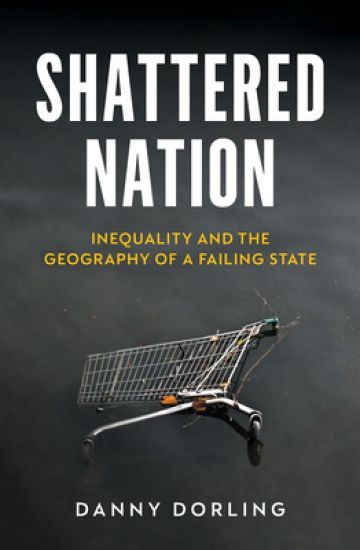
Britain was once the leading economy in Europe; it is now the most unequal. In Shattered Nation, leading geographer and author of Inequality and the 1% shows that we are growing further and further apart. Visiting sites across the British Isles and exploring the social fissures that have emerged, Danny Dorling exposes a new geography of inequality. Middle England has been hit hard by the cost-of-living crisis, and even people doing comparatively well are struggling to stay afloat. Once affluent suburbs are now unproductive places where opportunity has been replaced by food banks. Before COVID, life expectancy had dropped as a result of poverty for the first time since the 1930s.Fifty years ago the UK led the world in child health; today, twenty-two of the twenty-seven EU countries have better mortality rates for newborns. No other European country has such miserly unemployment benefits; university fees so high; housing so unaffordable; or a government economically so far to the right. In the spirit of the 1942 Beveridge Report, Dorling identifies the five giants of twenty-first-century poverty that need to be conquered: Hunger, Precarity, Waste, Exploitation, and Fear. He offers powerful insights into how we got here and what we must do in order to save Britain from becoming a failed state.
Act Now

Act Now

Kate Pickett; Richard Wilkinson; Danny Dorling

MANCHESTER UNIVERSITY PRESS
2024
nidottu
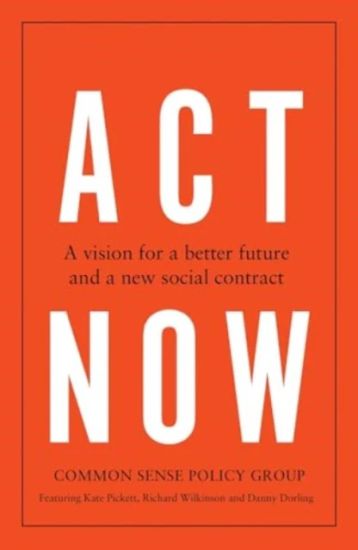
An inspiring manifesto offering a radical vision for our political future.We live in an age of crisis and decline. The right presents ‘solutions’ that only worsen the situation, driving a downward cycle in which desperation leads to despair. But the left is also to blame: progressive politicians have consistently failed to recognise both the urgency of people’s need and their receptiveness to new solutions.In Act now, a team of leading researchers presents a compelling and achievable vision for a progressive future. They outline clear policies for welfare, health and social care, education, housing and more. Arguing for a rolling forwards of the state, they call for a new era of active citizenship and economic democracy, grounded in robust and resilient institutions.Only a comprehensive and integrated approach, based on clear evidence of feasibility and popularity, can provide a pathway to the secure, democratic and prosperous Britain of tomorrow. This book is the blueprint. It calls on politicians, pundits and the British people to act now.
Act Now

Act Now

Kate Pickett; Richard Wilkinson; Danny Dorling

MANCHESTER UNIVERSITY PRESS
2024
sidottu
An inspiring manifesto offering a radical vision for our political future.We live in an age of crisis and decline. The right presents ‘solutions’ that only worsen the situation, driving a downward cycle in which desperation leads to despair. But the left is also to blame: progressive politicians have consistently failed to recognise both the urgency of people’s need and their receptiveness to new solutions.In Act now, a team of leading researchers presents a compelling and achievable vision for a progressive future. They outline clear policies for welfare, health and social care, education, housing and more. Arguing for a rolling forwards of the state, they call for a new era of active citizenship and economic democracy, grounded in robust and resilient institutions.Only a comprehensive and integrated approach, based on clear evidence of feasibility and popularity, can provide a pathway to the secure, democratic and prosperous Britain of tomorrow. This book is the blueprint. It calls on politicians, pundits and the British people to act now.
Shattered Nation

Shattered Nation

Danny Dorling

Verso Books
2023
nidottu
Britain was once the leading economy in Europe; it is now the most unequal. In Shattered Nation, leading geographer and author of Inequality and the 1% shows that we are growing further and further apart. Visiting sites across the British Isles and exploring the social fissures that have emerged, Danny Dorling exposes a new geography of inequality. Middle England has been hit hard by the cost-of-living crisis, and even people doing comparatively well are struggling to stay afloat. Once affluent suburbs are now unproductive places where opportunity has been replaced by food banks. Before COVID, life expectancy had dropped as a result of poverty for the first time since the 1930s.Fifty years ago the UK led the world in child health; today, twenty-two of the twenty-seven EU countries have better mortality rates for newborns. No other European country has such miserly unemployment benefits; university fees so high; housing so unaffordable; or a government economically so far to the right. In the spirit of the 1942 Beveridge Report, Dorling identifies the five giants of twenty-first-century poverty that need to be conquered: Hunger, Precarity, Waste, Exploitation, and Fear. He offers powerful insights into how we got here and what we must do in order to save Britain from becoming a failed state.
Finntopia

Finntopia

Danny Dorling; Annika Koljonen

Agenda Publishing
2021
nidottu
The 2020 World Happiness Report ranked Finland, for the third year running, as the world’s happiest country. The "Nordic Model" has long been touted as the aspiration for social and public policy in Europe and North America, but what is it about Finland that makes the country so successful and seemingly such a great place to live? Is it simply the level of government spending on health, education and welfare? Is it that Finland has one of the lowest rates of social inequality and childhood poverty, and highest levels of literacy and education? Finland clearly has problems of its own – for example, a high level of gun ownership and high rates of suicide – which can make Finns sceptical of their ranking, but its consistently high performance across a range of well-being indicators does raise fascinating questions. In the quest for the best of all possible societies, Danny Dorling and Annika Koljonen explore what we might learn from Finnish success.
Slowdown

Slowdown

Danny Dorling

Yale University Press
2021
pokkari
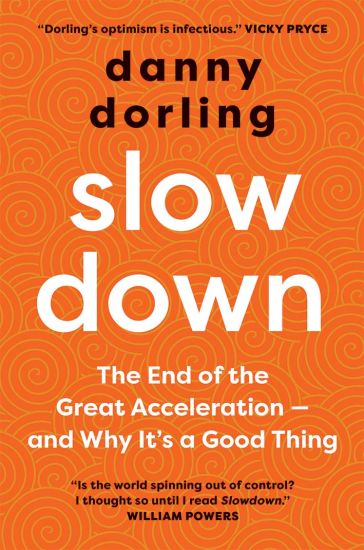
A powerful and counterintuitive argument that we should welcome the current slowdown—of population growth, economies, and technological innovation? The end of our high-growth world was underway well before COVID-19 arrived. In this powerful and timely argument, Danny Dorling demonstrates the benefits of a larger, ongoing societal slowdown Drawing from an incredibly rich trove of global data, this groundbreaking book reveals that human progress has been slowing down since the early 1970s. Danny Dorling uses compelling visualizations to illustrate how fertility rates, growth in GDP per person, and even the frequency of new social movements have all steadily declined over the last few generations. Perhaps most surprising of all is the fact that even as new technologies frequently reshape our everyday lives and are widely believed to be propelling our civilization into new and uncharted waters, the rate of technological progress is also rapidly dropping. Rather than lament this turn of events, Dorling embraces it as a moment of promise and a move toward stability, and he notes that many of the older great strides in progress that have defined recent history also brought with them widespread warfare, divided societies, and massive inequality.
Finntopia

Finntopia

Danny Dorling; Annika Koljonen

Agenda Publishing
2020
sidottu
The 2020 World Happiness Report ranked Finland, for the third year running, as the world’s happiest country. The "Nordic Model" has long been touted as the aspiration for social and public policy in Europe and North America, but what is it about Finland that makes the country so successful and seemingly such a great place to live? Is it simply the level of government spending on health, education and welfare? Is it that Finland has one of the lowest rates of social inequality and childhood poverty, and highest levels of literacy and education? Finland clearly has problems of its own – for example, a high level of gun ownership and high rates of suicide – which can make Finns sceptical of their ranking, but its consistently high performance across a range of well-being indicators does raise fascinating questions. In the quest for the best of all possible societies, Danny Dorling and Annika Koljonen explore what we might learn from Finnish success.
Poverty in Education Across the UK

Poverty in Education Across the UK

Danny Dorling

Policy Press
2020
nidottu
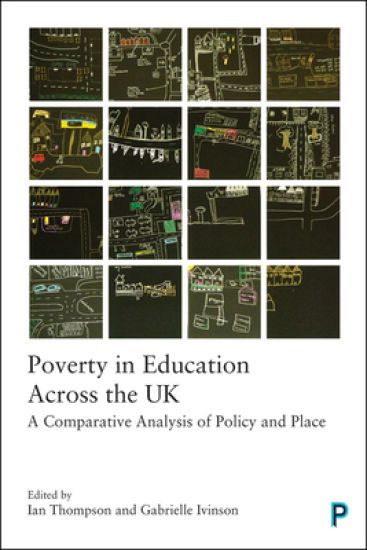
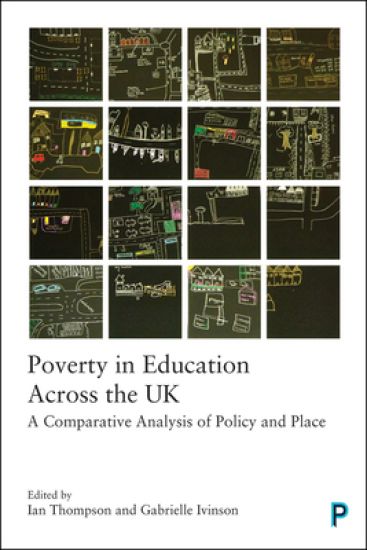
Nuanced interconnections of poverty and educational attainment around the UK are surveyed in this unique analysis. Across the four jurisdictions of England, Scotland, Wales and Northern Ireland, experts consider the impact of curriculum reforms and devolved policy making on the lives of children and young people in poverty. They investigate differences in educational ideologies and structures, and question whether they help or hinder schools seeking to support disadvantaged and marginalised groups. For academics and students engaged in education and social justice, this is a vital exploration of poverty’s profound effects on inequalities in educational attainment and the opportunities to improve school responses.
Poverty in Education Across the UK

Poverty in Education Across the UK

Danny Dorling

Policy Press
2020
sidottu
Nuanced interconnections of poverty and educational attainment around the UK are surveyed in this unique analysis. Across the four jurisdictions of England, Scotland, Wales and Northern Ireland, experts consider the impact of curriculum reforms and devolved policy making on the lives of children and young people in poverty. They investigate differences in educational ideologies and structures, and question whether they help or hinder schools seeking to support disadvantaged and marginalised groups. For academics and students engaged in education and social justice, this is a vital exploration of poverty’s profound effects on inequalities in educational attainment and the opportunities to improve school responses.
Rule Britannia

Rule Britannia

Danny Dorling

Biteback Publishing
2020
nidottu
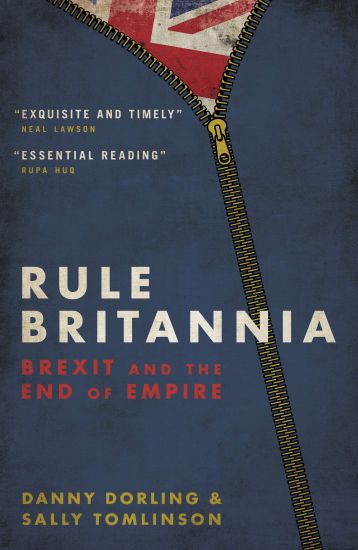
WHEN EMPIRES CRUMBLE, WHAT HAPPENS TO THOSE LEFT IN THE RUINS? In Rule Britannia, Danny Dorling and Sally Tomlinson argue that the vote to leave the EU was the last gasp of the old empire working its way out of the British psyche. Fuelled by a misplaced nostalgia, the result was driven by a lack of knowledge of our imperial history, by a profound anxiety about Britain's status today, and by a deeply unrealistic vision of our future. At a time when close relationships with our near neighbours are more crucial than ever before, Britain has opted to surrender its remaining influence and squander international goodwill. And yet, there is hope. In this wide-ranging and thoughtful analysis, now fully updated to cover the fallout from Brexit and the impact of coronavirus, Dorling and Tomlinson argue that if Britain can reconcile itself to its new place on the world stage, a new identity can be born from the ashes. Rule Britannia is a powerful call to leave behind the jingoistic ignorance of the past and build a fairer Britain, eradicating the inequality that blights our society and embracing our true strengths.
Inequality and the 1%

Inequality and the 1%

Danny Dorling

Verso Books
2019
nidottu
Since the Great Recession hit in 2008, the 1% has only grown richer while the rest find life increasingly tough. The gap between the haves and the have-nots has turned into a chasm. While the rich have found new ways of protecting their wealth, everyone else has suffered the penalties of austerity. But inequality is more than just economics. Being born outside the 1% has a dramatic impact on a person's potential: reducing life expectancy, limiting educational and work prospects, and even affecting mental health. What is to be done? In Inequality and the 1% leading social thinker Danny Dorling lays bare the extent and true cost of the division in our society and asks what have the super-rich ever done for us? He shows that it is the 1% that threatens us with the most harm and why we must urgently redress the balance
Peak Inequality

Peak Inequality

Danny Dorling

Policy Press
2018
nidottu
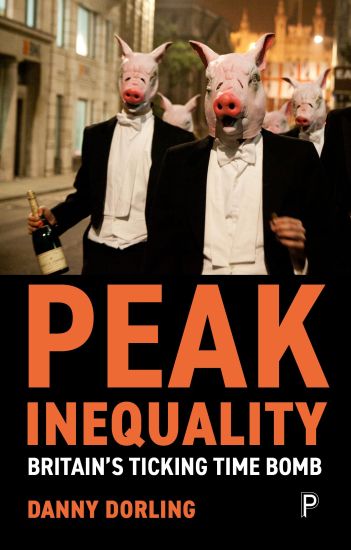
Inequality is the key political issue of our time. Here Dorling brings together brand new material alongside a carefully curated selection of his most recent writing on inequality from publications as wide ranging as the Daily Telegraph, the Guardian, New Statesman, Financial Times and the China People’s Daily. Covering key inequality issues including politics, housing, education and health, he explores whether we have now reached ‘peak inequality’. He concludes, crucially, by predicting what the future holds for Britain, as attempts are made to defuse the ticking time bomb while we simultaneously try to negotiate Brexit and react to the wider international situation of a world of people demanding to become more equal.
Why Demography Matters

Why Demography Matters

Danny Dorling; Stuart Gietel-Basten

Polity Press
2017
nidottu
Demography is not destiny. As Giacomo Casanova explained over two centuries ago: 'There is no such thing as destiny. We ourselves shape our own lives.' Today we are shaping them and our societies more than ever before. Globally, we have never had fewer children per adult: our population is about to stabilize, though we do not know when or at what number, or what will happen after that. It will be the result of billions of very private decisions influenced in turn by multiple events and policies, some more unpredictable than others. More people are moving further around the world than ever before: we too often see that as frightening, rather than as indicating greater freedom. Similarly, we too often lament greater ageing, rather than recognizing it as a tremendous human achievement with numerous benefits to which we must adapt. Demography comes to the fore most positively when we see that we have choices, when we understand variation and when we are not deterministic in our prescriptions. The study of demography has for too long been dominated by pessimism and inhuman, simplistic accounting. As this fascinating and persuasive overview demonstrates, how we understand our demography needs to change again.
Why Demography Matters

Why Demography Matters

Danny Dorling; Stuart Gietel-Basten

Polity Press
2017
sidottu
Demography is not destiny. As Giacomo Casanova explained over two centuries ago: 'There is no such thing as destiny. We ourselves shape our own lives.' Today we are shaping them and our societies more than ever before. Globally, we have never had fewer children per adult: our population is about to stabilize, though we do not know when or at what number, or what will happen after that. It will be the result of billions of very private decisions influenced in turn by multiple events and policies, some more unpredictable than others. More people are moving further around the world than ever before: we too often see that as frightening, rather than as indicating greater freedom. Similarly, we too often lament greater ageing, rather than recognizing it as a tremendous human achievement with numerous benefits to which we must adapt. Demography comes to the fore most positively when we see that we have choices, when we understand variation and when we are not deterministic in our prescriptions. The study of demography has for too long been dominated by pessimism and inhuman, simplistic accounting. As this fascinating and persuasive overview demonstrates, how we understand our demography needs to change again.