Kirjojen hintavertailu. Mukana 12 390 323 kirjaa ja 12 kauppaa.
Kirjailija
Daphne du Maurier
Kirjat ja teokset yhdessä paikassa: 118 kirjaa, julkaisuja vuosilta 1979-2026, suosituimpien joukossa Rebecca. Vertaile teosten hintoja ja tarkista saatavuus suomalaisista kirjakaupoista.
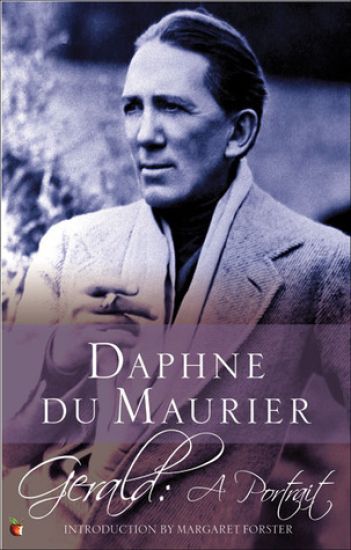
FROM THE BESTSELLING AUTHOR OF REBECCA'A remarkable book . . . brilliant comic writing' THE TIMES'An enthralling picture of family life . . . devotion to Gerald, the man' KIRKUS REVIEWS'Du Maurier has no equal' DAILY TELEGRAPH Sir Gerald du Maurier was the most celebrated actor-manager of his day, knighted for his services to the theatre in 1922. He was also a father to one of the most enduring writers of the twentieth century. Published within six months of her father's death, this frank biography was considered shocking by many of his admirers, but it was a huge success, winning Daphne du Maurier critical acclaim and launching her career.In Gerald: A Portrait, Daphne du Maurier captures the spirit and charm of the charismatic actor who played the original Captain Hook. It amusingly recalls his eccentricities, sense of humour and sensitively portrays the darker side of his nature and bouts of depression.
Based on the true story of one of du Maurier's own distant relatives, Mary Anne's love of money and the men who spend it embroil her in risks that threaten her very existence.
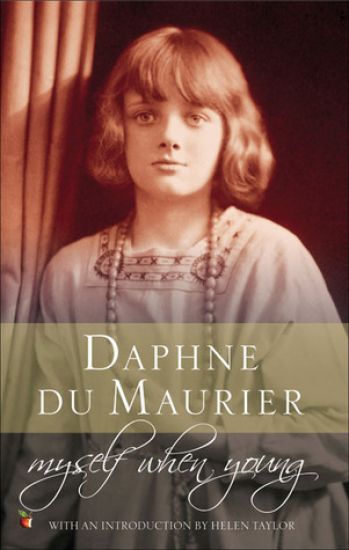
'A delightful book, full of amusing and charming stories' THE TIMES'Daphne du Maurier has no equal' SUNDAY TELEGRAPH'An intimate view of a creative personality . . . as richly evocative as any of her novels' LOS ANGELES TIMESIn Myself When Young, based on diaries that she kept from 1920-1932, the most famous du Maurier probes her own past, beginning with her earliest memories and encompassing the publication of her first book and her subsequent marriage.Here, the writer is open and sometimes painfully honest about the difficult relationship with her father; her education in Paris; early love affairs; her antipathy towards London life and the theatre; her intense love for Cornwall and her desperate ambition to succeed as a writer. The resulting portrait is of a captivating and complex character. Both her novels and her non-fiction reveal Daphne du Maurier's overwhelming desire to explore her family's history.
In this prescient novel, Daphne du Maurier explores the implications of leaving Europe for a political, economic and military alliance with the United States.
In this intriguing tale of time travel, du Maurier interweaves past and present together in a novel that is as rich and imaginative as anything she ever wrote.
"Someone jolted my elbow as I drank and said, 'Je vous demande pardon,' and as I moved to give him space he turned and stared at me and I at him, and I realized, with a strange sense of shock and fear and nausea all combined, that his face and voice were known to me too well. I was looking at myself." Two men-one English, the other French-meet by chance in a provincial railway station and are astounded that they are so much alike that they could easily pass for each other. Over the course of a long evening, they talk and drink. It is not until he awakes the next day that John, the Englishman, realizes that he may have spoken too much. His French companion is gone, having stolen his identity. For his part, John has no choice but to take the Frenchman's place-as master of a chateau, director of a failing business, head of a large and embittered family, and keeper of too many secrets. Loaded with suspense and crackling wit, The Scapegoat tells the double story of the attempts by John, the imposter, to escape detection by the family, servants, and several mistresses of his alter ego, and of his constant and frustrating efforts to unravel the mystery of the enigmatic past that dominates the existence of all who live in the chateau. Hailed by the New York Times as a masterpiece of "artfully compulsive storytelling," The Scapegoat brings us Daphne du Maurier at the very top of her form.
In this haunting tale, Daphne du Maurier takes a fresh approach to time travel. A secret experimental concoction, once imbibed, allows you to return to the fourteenth century. There is only one catch: if you happen to touch anyone while traveling in the past you will be thrust instantaneously to the present. Magnus Lane, a University of London chemical researcher, asks his friend Richard Young and Young's family to stay at Kilmarth, an ancient house set in the wilds near the Cornish coast. Here, Richard drinks a potion created by Magnus and finds himself at the same spot where he was moments earlier-though it is now the fourteenth century. The effects of the drink wear off after several hours, but it is wildly addictive, and Richard cannot resist traveling back and forth in time. Gradually growing more involved in the lives of the early Cornish manor lords and their ladies, he finds the presence of his wife and stepsons a hindrance to his new-found experience. Richard eventually finds emotional refuge with a beautiful woman of the past trapped in a loveless marriage, but when he attempts to intervene on her behalf the results are brutally terrifying for the present. Echoing the great fantastic stories of H. P. Lovecraft and Edgar Allan Poe, The House on the Strand is a masterful yarn of history, romance, horror, and suspense that will grip the reader until the last surprising twist.
In a Cornish house lives the widowed Stella, a woman of considerable gifts and beauty who regularly rejects proposals of marriage from her neighbour Robert Hanson. Cherry, Stella's daughter, brings home her artist husband Evan for the first time and Stella is shocked by the bohemian incompleteness of their marriage. She finds herself attracted to Evan and soon they are passionately in love: although much is left unspoken, Evan eventually compels Stella to admit her feelings.-3 women, 3 men
Philip Ashley travels to Italy to find his cousin Ambrose has died suddenly and Rachel, Ambrose's wife, has gone. Philip returns to England convinced Rachel was responsible for Ambrose's death, hoping to inherit his possessions. When Rachel arrives in England Philip falls in love with her. One small event after another causes a kind of see-saw of belief and disbelief. Is Rachel a scheming murderess or a grossly maligned woman?2 women, 5 men
Based on a short story by Daphne du Maurier. Spending a holiday with her family in a luxury hotel during a heat-wave, Marie finds life with her conservative, passionless husband suffocatingly repressive. He is unexpectedly called away on business and, inspired by hints dropped by her easy-going friend Elise, Marie starts an affair with a handsome young photographer, undeterred by the fact that he has a club-foot. The brief infatuation brings tragedy and horror, leading to the photographer's death, a threat of blackmail by his sister, also club-footed, and finally an even more fearful dread, following an innocent remark by Marie's husband, that such deformities are sometimes inherited, latent in an unborn child.4 women, 3 men, 2 girls