Kirjojen hintavertailu. Mukana 12 595 353 kirjaa ja 12 kauppaa.

Kirjailija

Darcy Ingram

Kirjat ja teokset yhdessä paikassa: 3 kirjaa, julkaisuja vuosilta 2013-2025, suosituimpien joukossa Wildlife, Conservation, and Conflict in Quebec, 1840-1914. Vertaile teosten hintoja ja tarkista saatavuus suomalaisista kirjakaupoista.

3 kirjaa

Kirjojen julkaisuhaarukka 2013-2025.

The Second-Greatest Show on Earth

The Second-Greatest Show on Earth

Darcy Ingram

MCGILL-QUEEN'S UNIVERSITY PRESS
2025
nidottu
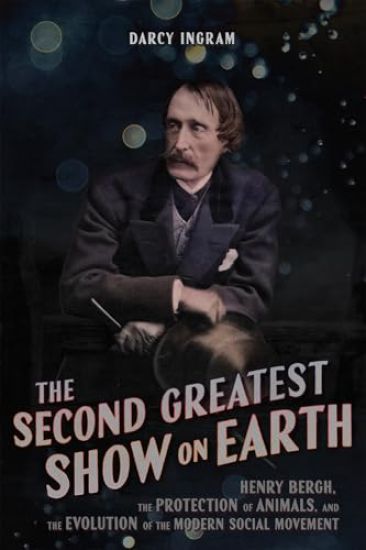
In 1865, wealthy American expatriate Henry Bergh (1813–1888) chose suddenly to abandon a life of leisure in Europe. Returning to his home city of New York, he set to work on what soon proved a remarkable accomplishment: the establishment of an institutional framework for the animal protection movement in America.What makes that accomplishment all the more remarkable, Darcy Ingram argues, is what brought Bergh to it in the first place. Surprisingly, it had little to do with animals. Through a diverse array of sources, The Second-Greatest Show on Earth reveals that Bergh's motivation for establishing the American Society for the Protection of Cruelty to Animals was not an extraordinary compassion for animals but rather by his understanding of himself and his place in the world. Uniting his authoritarian principles, his long-thwarted literary and theatrical ambitions, and an unfulfilled sense of civic duty, the animal protection movement occupied him for the rest of his life. In the process, the elitist, enigmatic, and oftentimes irascible ASPCA president became something of a celebrity and proved despite constant ridicule to be an innovative social movement tactician well attuned to the changes that were unfolding around him.Grounded in discussions of cultural capital, dramaturgy, and modernity, The Second-Greatest Show on Earth presents a striking analysis of motivation, leadership, and identity in the development of the modern social movement.

Wildlife, Conservation, and Conflict in Quebec, 1840-1914

Wildlife, Conservation, and Conflict in Quebec, 1840-1914

Darcy Ingram

University of British Columbia Press
2014
pokkari
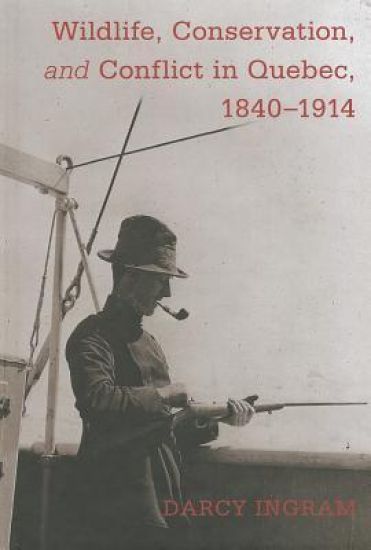
Despite the popular assumption that wildlife conservation is a recent phenomenon, it emerged over a century and a half ago in an era more closely associated with wildlife depletion than preservation. In Wildlife, Conservation, and Conflict in Quebec, Darcy Ingram explores the combination of NGOs, fish and game clubs, and state-administered leases that formed the basis of a unique system of wildlife conservation in North America. However, these early strategies were not as forward-focused as they appear. Ingram traces the emergence of a lease-based regulatory system that blended elite forms of sport and conservation. Applied first to British North America's prized salmon rivers, this system came to encompass the bulk of Quebec's hunting and fishing territories. Inspired by a longstanding belief in progress, improvement, and social order based on European as well as North American models, this system effectively privatized Quebec's fish and game resources, often to the detriment of commercial and subsistence hunters and fishers.
Wildlife, Conservation, and Conflict in Quebec, 1840-1914

Wildlife, Conservation, and Conflict in Quebec, 1840-1914

Darcy Ingram

University of British Columbia Press
2013
sidottu
Despite the popular assumption that wildlife conservation is a recent phenomenon, it emerged over a century and a half ago in an era more closely associated with wildlife depletion than preservation. In Wildlife, Conservation, and Conflict in Quebec, Darcy Ingram explores the combination of NGOs, fish and game clubs, and state-administered leases that formed the basis of a unique system of wildlife conservation in North America. However, these early strategies were not as forward-focused as they appear. Ingram traces the emergence of a lease-based regulatory system that blended elite forms of sport and conservation. Applied first to British North America's prized salmon rivers, this system came to encompass the bulk of Quebec's hunting and fishing territories. Inspired by a longstanding belief in progress, improvement, and social order based on European as well as North American models, this system effectively privatized Quebec's fish and game resources, often to the detriment of commercial and subsistence hunters and fishers.