Kirjojen hintavertailu. Mukana 12 595 353 kirjaa ja 12 kauppaa.
Kirjailija
Darren Waldron
Kirjat ja teokset yhdessä paikassa: 5 kirjaa, julkaisuja vuosilta 2009-2017, suosituimpien joukossa Jacques Demy. Vertaile teosten hintoja ja tarkista saatavuus suomalaisista kirjakaupoista.
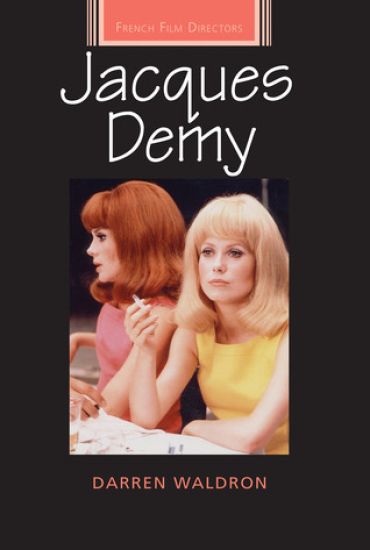
Saccharine for some, poignant for others, Jacques Demy’s ‘enchanted’ world is familiar to generations of French audiences accustomed to watching Christmas repeats of his fairytale Peau d’âne (1970) or seeing Catherine Deneuve and Françoise Dorléac prance and pirouette in Les Demoiselles de Rochefort (1966). Demy achieved international recognition with Les Parapluies de Cherbourg (1963), which was awarded the Palme d’Or at Cannes. However, beneath the apparently sugary coating of his films lie more philosophical reflections on some of the most pressing issues that preoccupy Western societies, including affect, subjectivity, self/other relations and free will. This wide-ranging book addresses many of the key aspects of Demy's cinema, including his associations with the New Wave, his unique approach to musicals, his adaptations of fairytales, his representations of gender and sexuality and his legacy as an iconic director for generations of audiences and filmmakers.
Headline: Examines how LGBT filmmaking in France and Spain moves across borders and finds new audiencesBlurb: The book advances the current state of film audience research and of our knowledge of sexuality in transnational contexts by analysing how French LGBTQ films are seen in Spain and Spanish ones in France. It studies films (in various media and platforms) and their reception across four languages (Spanish, French, Catalan, English) and considers and engages with participants from across a range of digital and physical audience locations, with a particular focus on festivals. It examines films that chronicle the local (in portraying national and sub-national identities) and draws on the regional-global (translating and transferring foreign models of non-heterosexual experience). No comparative and crosscutting study with audience research at its heart has yet been undertaken.Key Features:Offers a full, clear, and comparative cultural history of LGBTQ film since the 1990s in France and Spain and of its activist and theory-inspired connectionsHas audience reception at the core, working with an extensive corpus of responsesMakes broad use of social networking sites and the popular LGBTQ press to gauge response Covers LGBTQ festivals including those in Barcelona, Bilbao, London, Lyon, Madrid, Manchester, Paris and Toulouse Is interested in short, independent, ephemeral and documentary film production as well as commercially-pitched feature filmsLooks at the cross-border impact of the auteur and big-name directors (e.g. Pedro Almodvar, Cesc Gay, Sebastien Lifshitz, Francois Ozon) Sets its findings against mainstream LGBTQ critical reception, written in Catalan, English, French, and SpanishKeywords: French cinema; Spanish cinema; audiences; LGBTQ cultures; lesbian and gay film festivalsSubject: Film StudiesHeadline: Examines how LGBT filmmaking in France and Spain moves across borders and finds new audiencesBlurb: The book advances the current state of film audience research and of our knowledge of sexuality in transnational contexts by analysing how French LGBTQ films are seen in Spain and Spanish ones in France. It studies films (in various media and platforms) and their reception across four languages (Spanish, French, Catalan, English) and considers and engages with participants from across a range of digital and physical audience locations, with a particular focus on festivals. It examines films that chronicle the local (in portraying national and sub-national identities) and draws on the regional-global (translating and transferring foreign models of non-heterosexual experience). No comparative and crosscutting study with audience research at its heart has yet been undertaken.Key Features:Offers a full, clear, and comparative cultural history of LGBTQ film since the 1990s in France and Spain and of its activist and theory-inspired connectionsHas audience reception at the core, working with an extensive corpus of responsesMakes broad use of social networking sites and the popular LGBTQ press to gauge response Covers LGBTQ festivals including those in Barcelona, Bilbao, London, Lyon, Madrid, Manchester, Paris and Toulouse Is interested in short, independent, ephemeral and documentary film production as well as commercially-pitched feature filmsLooks at the cross-border impact of the auteur and big-name directors (e.g. Pedro Almodvar, Cesc Gay, Sebastien Lifshitz, Francois Ozon) Sets its findings against mainstream LGBTQ critical reception, written in Catalan, English, French, and SpanishKeywords: French cinema; Spanish cinema; audiences; LGBTQ cultures; lesbian and gay film festivalsSubject: Film Studies
Saccharine for some, poignant for others, Jacques Demy’s ‘enchanted’ world is familiar to generations of French audiences accustomed to watching Christmas repeats of his fairytale Peau d’âne (1970) or seeing Catherine Deneuve and Françoise Dorléac prance and pirouette in Les Demoiselles de Rochefort (1966). Demy achieved international recognition with Les Parapluies de Cherbourg (1963), which was awarded the Palme d’Or at Cannes. However, beneath the apparently sugary coating of his films lie more philosophical reflections on some of the most pressing issues that preoccupy Western societies, including affect, subjectivity, self/other relations and free will. This wide-ranging book addresses many of the key aspects of Demy's cinema, including his associations with the New Wave, his unique approach to musicals, his adaptations of fairytales, his representations of gender and sexuality and his legacy as an iconic director for generations of audiences and filmmakers.
Headline: Examines how LGBT filmmaking in France and Spain moves across borders and finds new audiencesBlurb: The book advances the current state of film audience research and of our knowledge of sexuality in transnational contexts by analysing how French LGBTQ films are seen in Spain and Spanish ones in France. It studies films (in various media and platforms) and their reception across four languages (Spanish, French, Catalan, English) and considers and engages with participants from across a range of digital and physical audience locations, with a particular focus on festivals. It examines films that chronicle the local (in portraying national and sub-national identities) and draws on the regional-global (translating and transferring foreign models of non-heterosexual experience). No comparative and crosscutting study with audience research at its heart has yet been undertaken.Key Features:Offers a full, clear, and comparative cultural history of LGBTQ film since the 1990s in France and Spain and of its activist and theory-inspired connectionsHas audience reception at the core, working with an extensive corpus of responsesMakes broad use of social networking sites and the popular LGBTQ press to gauge response Covers LGBTQ festivals including those in Barcelona, Bilbao, London, Lyon, Madrid, Manchester, Paris and Toulouse Is interested in short, independent, ephemeral and documentary film production as well as commercially-pitched feature filmsLooks at the cross-border impact of the auteur and big-name directors (e.g. Pedro Almodvar, Cesc Gay, Sebastien Lifshitz, Francois Ozon) Sets its findings against mainstream LGBTQ critical reception, written in Catalan, English, French, and SpanishKeywords: French cinema; Spanish cinema; audiences; LGBTQ cultures; lesbian and gay film festivalsSubject: Film StudiesHeadline: Examines how LGBT filmmaking in France and Spain moves across borders and finds new audiencesBlurb: The book advances the current state of film audience research and of our knowledge of sexuality in transnational contexts by analysing how French LGBTQ films are seen in Spain and Spanish ones in France. It studies films (in various media and platforms) and their reception across four languages (Spanish, French, Catalan, English) and considers and engages with participants from across a range of digital and physical audience locations, with a particular focus on festivals. It examines films that chronicle the local (in portraying national and sub-national identities) and draws on the regional-global (translating and transferring foreign models of non-heterosexual experience). No comparative and crosscutting study with audience research at its heart has yet been undertaken.Key Features:Offers a full, clear, and comparative cultural history of LGBTQ film since the 1990s in France and Spain and of its activist and theory-inspired connectionsHas audience reception at the core, working with an extensive corpus of responsesMakes broad use of social networking sites and the popular LGBTQ press to gauge response Covers LGBTQ festivals including those in Barcelona, Bilbao, London, Lyon, Madrid, Manchester, Paris and Toulouse Is interested in short, independent, ephemeral and documentary film production as well as commercially-pitched feature filmsLooks at the cross-border impact of the auteur and big-name directors (e.g. Pedro Almodvar, Cesc Gay, Sebastien Lifshitz, Francois Ozon) Sets its findings against mainstream LGBTQ critical reception, written in Catalan, English, French, and SpanishKeywords: French cinema; Spanish cinema; audiences; LGBTQ cultures; lesbian and gay film festivalsSubject: Film Studies
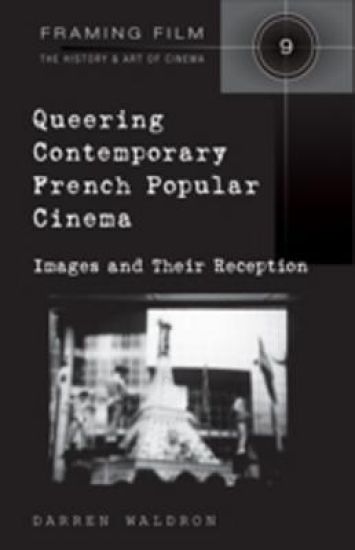
Queering Contemporary French Popular Cinema combines close film analysis with a small-scale qualitative investigation of audience responses to examine images of queerness in contemporary French popular cinema and their reception. Through its blending of the textual and the empirical, this book provides a unique insight into the ways in which sexuality and gender are represented on the cinema screen, as well as the spectator reactions they elicit. Since the mid-1990s, depictions of lesbians, gay men, and queer forms of sexual desire and identity have shifted to the mainstream of French cinematographic representation – as evidenced by the box-office success of a series of highly commercial comic films, including Gazon maudit (Josiane Balasko, 1995), Pédale douce (Gabriel Aghion, 1996), Le Placard (Francis Véber, 2000), and Chouchou (Merzak Allouache, 2003). Alongside this commercial strand, a series of small-budget alternative comedies and other genre films have also challenged heteronormative conceptualizations of sexuality and gender. Films such as Sitcom (François Ozon, 1998), L’Homme est une femme comme les autres (Jean-Jacques Zilbermann, 1997), Pourquoi pas moi? (Stéphane Giusti, 1999), Drôle de Félix (Olivier Ducastel and Jacques Martineau, 2000), and Les Chansons d’amour (Christophe Honoré, 2007) portray desire as fluid and/or gender as unfixed. With their use of parody and their blending of comedy with the musical, melodrama, romance or road movie, these and other similar films have resonated with a burgeoning viewing public, tired of having to seek queerness in connotation, of appropriating marginal characters in ostensibly straight narratives, and of tragedy and trauma as the principal modes of representation and spectator address.