Kirjojen hintavertailu. Mukana 12 272 347 kirjaa ja 12 kauppaa.

Kirjailija

Darryl Pinckney

Kirjat ja teokset yhdessä paikassa: 14 kirjaa, julkaisuja vuosilta 2002-2025, suosituimpien joukossa Out There. Vertaile teosten hintoja ja tarkista saatavuus suomalaisista kirjakaupoista.

14 kirjaa

Kirjojen julkaisuhaarukka 2002-2025.

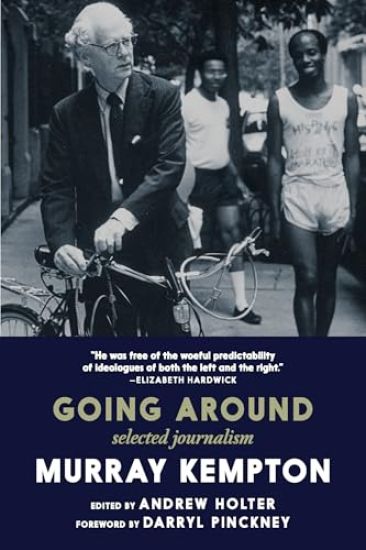
Going Around

Going Around

Murray Kempton; Darryl Pinckney

SEVEN STORIES PRESS,U.S.
2025
nidottu
A definitive collection of writings by the legendary Pulitzer Prize-winning reporter Murray Kempton (1917-1997) with a foreword by Darryl Pinckney, gathering dozens of columns, essays, and critiques from publications including The New York Post, The New York Review of Books, The New Republic, and Newsday. With many uncollected and long out-of-print writings, this is the first volume of Kempton's work to appear in 30 years, a book that resdiscovers the legendary figure of journalism that David Remnick calls "the greatest newspaperman in town." "The man is a marvel. It's like listening to Louis Armstrong, or Roy Eldridge: you don't know where the hell he is going, but somehow he gets there and it knocks your socks off." --Frank Sinatra A courtly man of Southern roots, Murray Kempton worked as a labor reporter for the New York Post, won a Pulitzer Prize while at Newsday, and was arrested at the Democratic National Convention in Chicago along the way. He wore three piece suits and polished oxfords and was known for riding his bicycle around New York City while listening to his CD Walkman and smoking a pipe with wild red hair that later turned white. He developed a taste for baroque prose and became, in the words of Robert Silvers, his editor at The New York Review of Books, ''unmatched in his moral insight into the hypocrisies of politics and their consequences for the poor and powerless.'' He went to court proceedings and traffic accidents and funerals and to speeches by people who either were or wanted to be rich and famous. He wrote about everything and anybody--Tonya Harding and Warren Harding, Fidel Castro and Mussolini, Harry Truman and Sal Maglie, St. Francis of Assisi and James Joyce and J. Edgar Hoover. From dispatches from a hardscrabble coal town in Western Maryland, a bus carrying Freedom Riders through Mississippi, an Iowa cornfield with Nikita Krushchev, an encampment of guerrillas in El Salvador, and Moscow at the end of the Soviet Union (these last two assignments filed by a reporter in his 70s), Kempton's concerns and interests were extraordinarily broad. He wrote about subjects from H.L. Mencken to Tupac Shakur; organized labor and McCarthyism; the Civil Rights and Black Power movements; presidential hopefuls and Mafiosi; frauds and failures of all stripes; the "splendors and miseries" of life in New York City.

The James Baldwin Collection

The James Baldwin Collection

James Baldwin; Toni Morrison; Darryl Pinckney

THE LIBRARY OF AMERICA
2024
sidottu
For the first time in a collector's boxed set, the definitive three-volume Library of America James Baldwin edition gathering all his essential writings, including the collected essays and complete fiction. With the novel Go Tell It on the Mountain (1953), a distillation of his own experiences as a preacher's son in 1930s Harlem, and the essay collection Notes of a Native Son (1955), James Baldwin established himself as a prophetic voice of his era. Some such voices may grow fainter with the passage of time, but Baldwin remains an inescapable presence, not only a chronicler of his epoch but a thinker who helped shape it. One of the great modern prose stylists, he applied his passion, wit, and relentlessly probing intelligence to the fault lines and false fronts of American society while remaining true to his early credo: "One writes out of one thing only--one's own experience. Everything depends on how relentlessly one forces from this experience the last drop, sweet or bitter, it can possibly give." THE JAMES BALDWIN COLLECTION includes: Collected Essays (LOA #98)Notes of a Native SonNobody Knows My NameThe Fire Next TimeNo Name in the StreetThe Devil Finds Workother essays Early Novels & Stories (LOA #97)Go Tell It on the MountainGiovanni's RoomAnother CountryGoing to Meet the Man (including "Sonny's Blues") Later Novels (LOA #272)Tell Me How Long the Train's Been GoneIf Beale Street Could TalkJust Above My Head Edited by Toni Morrison (#97 & 98) and Darrly Pinckney (#272), each volume contains a textual essay, a chronology of Baldwin's life and career, and detailed notes.
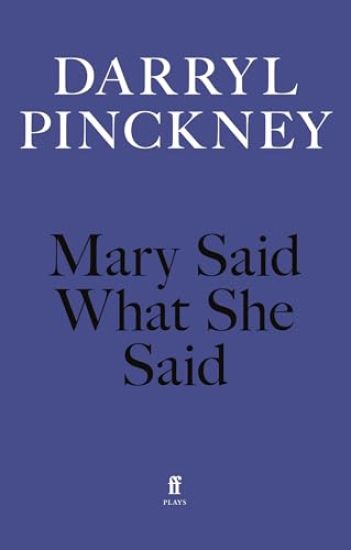
Mary Said What She Said

Mary Said What She Said

Darryl Pinckney

FABER FABER
2024
pokkari
Memory, open my heart. Let the past part my lips. The stars never lie. But how we misread them, bright drop after bright drop in the sea of night.Based on the letters of Mary Queen of Scots, Mary Said What She Said is the testimony of Mary Stuart as she awaits martyrdom, accused of involvement in the most notorious plots of the time. On the eve of her execution, after nineteen years in captivity, she tells of her passions and torments.Mary Said What She Said received its UK premiere at the Barbican Centre, London, in May 2024.
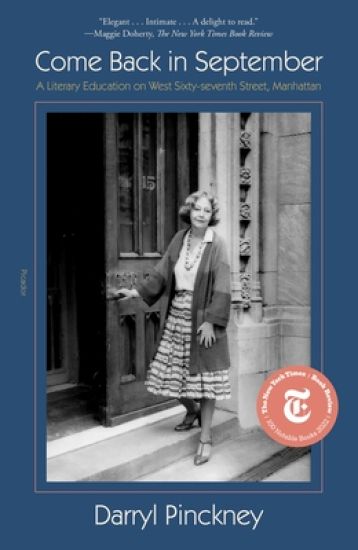
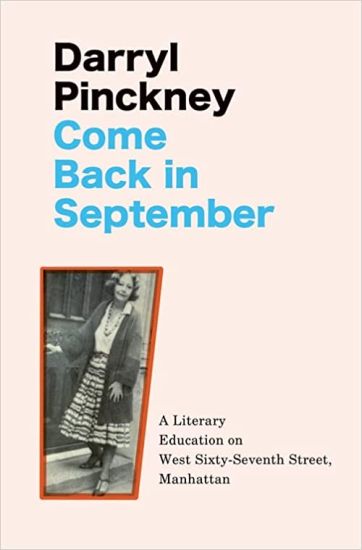
Come Back in September

Come Back in September

Darryl Pinckney

Quercus Publishing
2023
pokkari
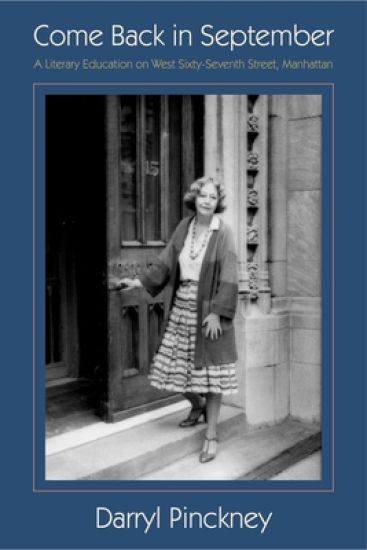
WINNER OF THE JAMES TAIT BLACK PRIZE FOR BIOGRAPHY 2023A Times Best Literary Non-Fiction Book of the YearCritic and writer Darryl Pinckney recalls his friendship and apprenticeship with Elizabeth Hardwick and Barbara Epstein and the introduction they offered him to the New York literary world.At the start of the 1970s, Darryl Pinckney arrived in New York City and at Columbia University and enrolled in Elizabeth Hardwick's writing class at Barnard. After he graduated, he was welcomed into her home as a friend and mentee, and he became close with Hardwick and her best friend, neighbor, and fellow founder of The New York Review of Books, Barbara Epstein. Pinckney found himself at the heart of the New York literary world. He was surrounded by the great writers of the time, like Susan Sontag, Robert Lowell, and Mary McCarthy, as well as the overlapping cultural revolutions and communities that swept New York: the New Wave in film, rock, and writing; the art of Felice Rosser, Jean-Michel Basquiat, Lucy Sante, Howard Brookner, and Nan Goldin; the influence of feminism on American culture and literature; the black arts movement confronted by black feminism; and New Negro veterans experiencing the return of their youth as history. Pinckney filtered the avant-garde life he was exposed to downtown and the radical intellectual tradition of The Review through the moral values he inherited and adapted from abolitionist and Reconstruction black culture.In Come Back in September, Pinckney recalls his introduction to New York and the writing life. The critic and novelist intimately captures this revolutionary, brilliant, and troubled period in American letters. Elizabeth Hardwick was not only the link to the intellectual heart of New York, but also a source of continual support and inspiration-the way she worked, her artistry, and the beauty of her voice. Through his memories of the city and of Hardwick, we see the emergence and evolution of Pinckney himself: as a young man, as a New Yorker, and as one of the essential intellectuals of our time.
Come Back in September: A Literary Education on West Sixty-Seventh Street, Manhattan
Critic and writer Darryl Pinckney recalls his friendship and apprenticeship with Elizabeth Hardwick and Barbara Epstein and the introduction they offered him to the New York literary world. Darryl Pinckney arrived at Columbia University in New York City in the early 1970s and had the opportunity to enroll in Elizabeth Hardwick's creative writing class at Barnard. It changed his life. When the semester was over, he continued to visit her, and he became close to both Hardwick and Barbara Epstein, Hardwick's best friend and neighbor and a fellow founder of The New York Review of Books. Pinckney was drawn into a New York literary world where he encountered some of the fascinating contributors to the Review, among them Susan Sontag, Robert Lowell, and Mary McCarthy. Yet the intellectual and artistic freedom that Pinckney observed on West Sixty-seventh Street could conflict with the demands of his politically minded family and their sense of the unavoidable lessons of black history. In addition, through his peers and former classmates--such as Felice Rosser, Jim Jarmusch, Jean-Michel Basquiat, Lucy Sante, Howard Brookner, and Nan Goldin--Pinckney witnessed the coming together of the New Wave scene in the East Village. He experienced the avant-garde life at the same time as he was discovering the sexual freedom brought by gay liberation. It was his time for hope. In Come Back in September, through his memories of the city and of Hardwick, we see the emergence and evolution of Pinckney himself as a writer.
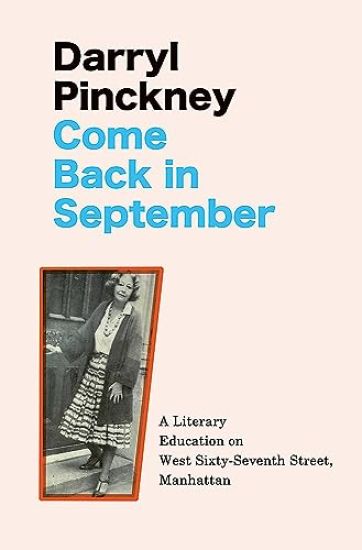
Come Back in September

Come Back in September

Darryl Pinckney

Quercus Publishing
2022
sidottu
WINNER OF THE JAMES TAIT BLACK PRIZE FOR BIOGRAPHY 2023A Times Best Literary Non-Fiction Book of the YearCritic and writer Darryl Pinckney recalls his friendship and apprenticeship with Elizabeth Hardwick and Barbara Epstein and the introduction they offered him to the New York literary world.At the start of the 1970s, Darryl Pinckney arrived in New York City and at Columbia University and enrolled in Elizabeth Hardwick's writing class at Barnard. After he graduated, he was welcomed into her home as a friend and mentee, and he became close with Hardwick and her best friend, neighbor, and fellow founder of The New York Review of Books, Barbara Epstein. Pinckney found himself at the heart of the New York literary world. He was surrounded by the great writers of the time, like Susan Sontag, Robert Lowell, and Mary McCarthy, as well as the overlapping cultural revolutions and communities that swept New York: the New Wave in film, rock, and writing; the art of Felice Rosser, Jean-Michel Basquiat, Lucy Sante, Howard Brookner, and Nan Goldin; the influence of feminism on American culture and literature; the black arts movement confronted by black feminism; and New Negro veterans experiencing the return of their youth as history. Pinckney filtered the avant-garde life he was exposed to downtown and the radical intellectual tradition of The Review through the moral values he inherited and adapted from abolitionist and Reconstruction black culture.In Come Back in September, Pinckney recalls his introduction to New York and the writing life. The critic and novelist intimately captures this revolutionary, brilliant, and troubled period in American letters. Elizabeth Hardwick was not only the link to the intellectual heart of New York, but also a source of continual support and inspiration-the way she worked, her artistry, and the beauty of her voice. Through his memories of the city and of Hardwick, we see the emergence and evolution of Pinckney himself: as a young man, as a New Yorker, and as one of the essential intellectuals of our time.
Come Back in September: A Literary Education on West Sixty-Seventh Street, Manhattan
Critic and writer Darryl Pinckney recalls his friendship and apprenticeship with Elizabeth Hardwick and Barbara Epstein and the introduction they offered him to the New York literary world. Darryl Pinckney arrived at Columbia University in New York City in the early 1970s and had the opportunity to enroll in Elizabeth Hardwick's creative writing class at Barnard. It changed his life. When the semester was over, he continued to visit her, and he became close to both Hardwick and Barbara Epstein, Hardwick's best friend and neighbor and a fellow founder of The New York Review of Books. Pinckney was drawn into a New York literary world where he encountered some of the fascinating contributors to the Review, among them Susan Sontag, Robert Lowell, and Mary McCarthy. Yet the intellectual and artistic freedom that Pinckney observed on West Sixty-seventh Street could conflict with the demands of his politically minded family and their sense of the unavoidable lessons of black history. Pinckney's education in Hardwick's orbit took place in the context of the cultural movements then sweeping New York. In addition, through his peers and former classmates--such as Felice Rosser, Jim Jarmusch, Jean-Michel Basquiat, Lucy Sante, Howard Brookner, and Nan Goldin--Pinckney witnessed the coming together of the New Wave scene in the East Village. He experienced the avant-garde life at the same time as he was discovering the sexual freedom brought by gay liberation. It was his time for hope. In Come Back in September, Pinckney recalls his introduction to New York and to the writing life. The critic and novelist intimately captures this revolutionary, brilliant, and troubled period in American letters. Elizabeth Hardwick was not only his link to the intellectual heart of New York but also a source of continuous support and of inspiration--in the way she worked, her artistry, the beauty of her voice. Through his memories of the city and of Hardwick, we see the emergence and evolution of Pinckney himself as a writer.
Busted in New York & Other Essays

Busted in New York & Other Essays

Darryl Pinckney

riverrun
2020
pokkari
'[Pinckney] reveals himself to be a skilful chronicler of black experience in literary criticism, reportage and biography' The New York Times In these twenty-five essays, Darryl Pinckney has given us a view of our recent racial history that blends the social and the personal and wonders how we arrived at our current moment. Pinckney reminds us that "white supremacy isn't back; it never went away." It is this impulse to see historically that is at the core of Busted in New York and Other Essays, which traces the lineage of black intellectual history from Booker T. Washington through the Harlem Renaissance, to the Black Panther Party and the turbulent sixties, to today's Afro-pessimists, and celebrated and neglected thinkers in between.These are capacious essays whose topics range from the grassroots of protest in Ferguson, Missouri, to the eighteenth-century Guadeloupian composer Joseph Bologne, from an unsparing portrait of Louis Farrakhan to the enduring legacy of James Baldwin, the unexpected story of black people experiencing Russia, Barry Jenkins's Moonlight, and the painter Kara Walker. The essays themselves are a kind of record, many of them written in real-time, as Pinckney witnesses the Million Man March, feels and experiences the highs and lows of Obama's first presidential campaign, explores the literary black diaspora, and reflects on the surprising and severe lesson he learned firsthand about the changing urban fabric of New York.As Zadie Smith writes in her introduction to the book: "How lucky we are to have Darryl Pinckney who, without rancor, without insult, has, all these years, been taking down our various songs, examining them with love and care, and bringing them back from the past, like a Sankofa bird, for our present examination. These days Sankofas like Darryl are rare. Treasure him!
Blackballed

Blackballed

Darryl Pinckney

The New York Review of Books, Inc
2020
nidottu
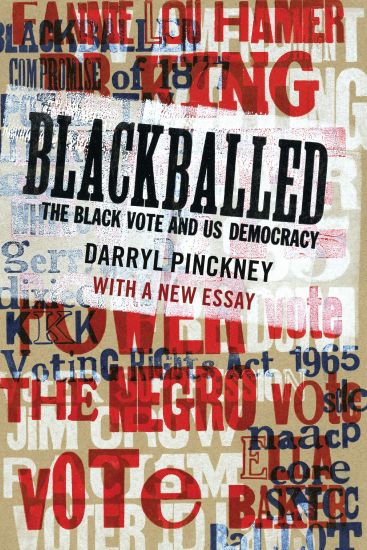
Blackballed is Darryl Pinckney's meditation on a century and a half of participation by blacks in US electoral politics. In this combination of memoir, historical narrative, and contemporary political and social analysis, he investigates the struggle for black voting rights from Reconstruction through the civil rights movement to Barack Obama's two presidential campaigns. Drawing on the work of scholars, the memoirs of civil rights workers, and the speeches and writings of black leaders like Martin Luther King and Stokely Carmichael, Andrew Young and John Lewis, Pinckney traces the disagreements among blacks about the best strategies for achieving equality in American society as well as the ways in which they gradually came to create the Democratic voting bloc that contributed to the election of the first black president. Interspersed through the narrative are Pinckney's own memories of growing up during the civil rights era and the reactions of his parents to the changes taking place in American society. He concludes with an examination of ongoing efforts by Republicans to suppress the black vote, with particular attention to the Supreme Court's recent decision striking down part of the Voting Rights Act of 1965. Also included here is Pinckney's essay "What Black Means Now," on the history of the black middle class, stereotypes about blacks and crime, and contemporary debates about "post-blackness."
My Soul Has Grown Deep

My Soul Has Grown Deep

Cheryl Finley; Randall Griffey; Amelia Peck; Darryl Pinckney

Metropolitan Museum of Art
2018
sidottu
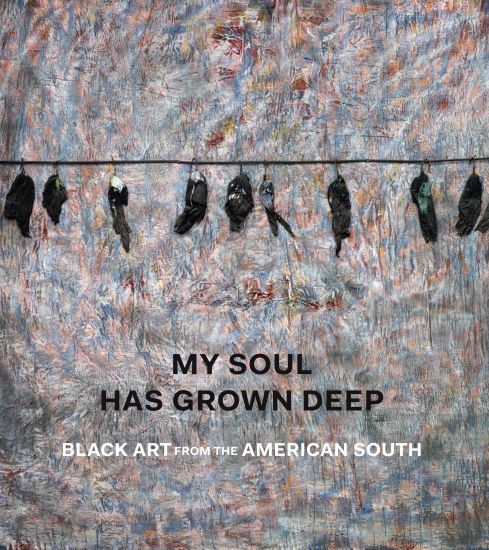
A new consideration of extraordinary art created by Black artists during the mid-20th centuryMy Soul Has Grown Deep considers the art-historical significance of contemporary Black artists working throughout the southeastern United States. These paintings, drawings, mixed-media compositions, sculptures, and textiles include pieces ranging from the profound assemblages of Thornton Dial to the renowned quilts of Gee’s Bend. Nearly 60 remarkable examples are illustrated alongside insightful texts that situate them in the history of modernism and the context of African American experience in the 20th-century South. This remarkable study simultaneously considers these works on their own merits while also making connections to mainstream contemporary art. Art historians Cheryl Finley, Randall R. Griffey, and Amelia Peck illuminate shared artistic practices, including the novel use of found or salvaged materials and the artists’ interest in improvisational approaches across media. Novelist and essayist Darryl Pinckney provides a thoughtful consideration of the cultural and political history of the American South, during and after the Civil Rights era. These diverse works, described and beautifully illustrated, tell the compelling stories of artists who overcame enormous obstacles to create distinctive and culturally resonant works of art.Published by The Metropolitan Museum of Art/Distributed by Yale University PressExhibition Schedule:The Metropolitan Museum of Art (05/22/18–09/23/18)
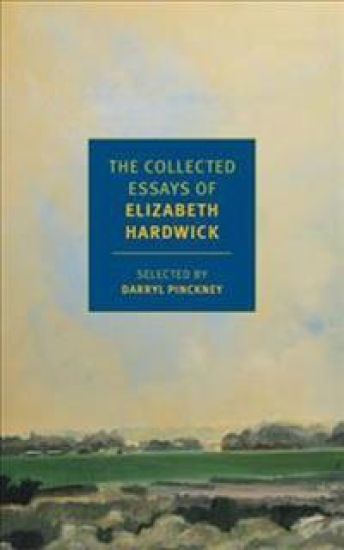
The Collected Essays of Elizabeth Hardwick

The Collected Essays of Elizabeth Hardwick

Darryl Pinckney; Elizabeth Hardwick

The New York Review of Books, Inc
2017
nidottu
The first-ever collection of essays from across Elizabeth Hardwick's illustrious writing career, including works not seen in print for decades. A New York Times Notable Book of 2017 Elizabeth Hardwick wrote during the golden age of the American literary essay. For Hardwick, the essay was an imaginative endeavor, a serious form, criticism worthy of the literature in question. In the essays collected here she covers civil rights demonstrations in the 1960s, describes places where she lived and locations she visited, and writes about the foundations of American literature--Melville, James, Wharton--and the changes in American fiction, though her reading is wide and international. She contemplates writers' lives--women writers, rebels, Americans abroad--and the literary afterlife of biographies, letters, and diaries. Selected and with an introduction by Darryl Pinckney, the Collected Essays gathers more than fifty essays for a fifty-year retrospective of Hardwick's work from 1953 to 2003. "For Hardwick," writes Pinckney, "the poetry and novels of America hold the nation's history." Here is an exhilarating chronicle of that history.
Black Deutschland

Black Deutschland

Darryl Pinckney

Picador USA
2017
nidottu
Newly sober and nostalgic for the Weimar days of Isherwood and Auden, Jed arrives to chase boys and to escape from what it means to be a black male in America. But history, both personal and political, can't be avoided with time or distance. Whether it's the judgment of the cousin he grew up with and her husband's bourgeois German family, the lure of white wine in a down-and-out bar, a gang of racists looking for a brawl, or the ravaged visage of Rock Hudson flashing behind the face of every white boy Jed desperately longs for, the past never stays past, even in faraway Berlin. An intoxicating, provocative novel of appetite, identity, and self-construction, Darryl Pinckney's Black Deutschland tells the story of an outsider searching for an obscure home in Europe's brightest and darkest city. Named one of the most anticipated books of the year by The Millions, Flavorwire, The Boston Globe, and The Milwaukee Journal-Sentinel; For readers of Teju Cole. From the author of High Cotton comes the story of a young African American man in divided Berlin: "The novel is full of wondrous things" (James Wood, The New Yorker).
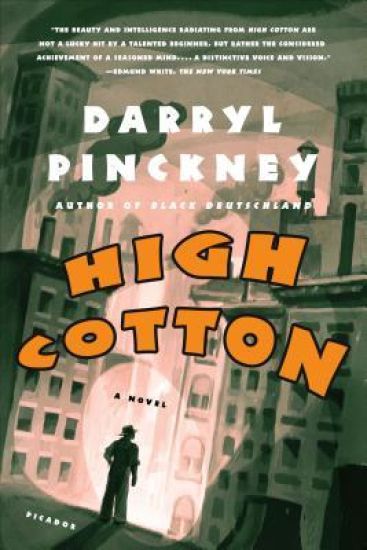
High Cotton

High Cotton

Darryl Pinckney

Picador USA
2017
nidottu
An elegant, insightful novel that evokes the world of upper middle class blacks, following an unnamed narrator from a safe childhood in conservative Indianapolis, to a brief tenure as minister of information for a local radical organisation, to the life of an expatriate in Paris. Through it all, his imagination is increasingly dominated by his elderly relations and the lessons of their experiences in the "Old Country" of the South.
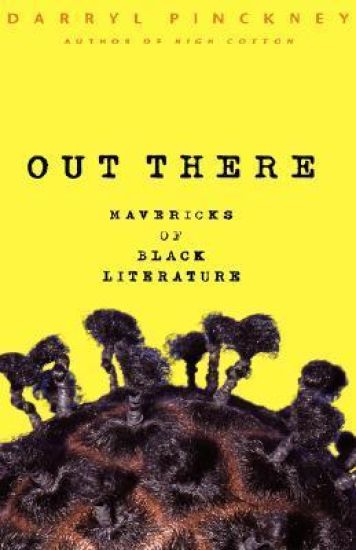
Out There

Out There

Darryl Pinckney

Basic Books
2002
sidottu
With this appreciation of three very different black writers, novelist Darryl Pinckney reminds us that marginal or neglected literary figures have a lot to tell us about the history of a people who are always "outsiders." Born in Jamaica in 1883, J. A. Rogers was an early member of the Harlem Renaissance- a newspaper columnist, historian of Negro achievement, polemicist against white supremacy, and amateur sociologist of interracial sex as evidenced in his massive three-volume work Sex and Race. Vincent O. Carter, who came of age in 1920's Kansas City, wrote The Bern Book, an exploration of being black in a Swiss rather than an American setting. Caryl Phillips, a son of the generation of black Caribbeans who returned to Great Britain after the Second World War, has explored the psychology of migration in fiction and nonfiction that include The Final Passage, Higher Ground, and The Nature of Blood. Pinckney's essays on these writers, drawn from his Alain Locke Lectures at Harvard University, give us a rich understanding of what it has meant to be "children of the diaspora" over the past century.