Kirjailija
Daryl S. Paulson
Kirjat ja teokset yhdessä paikassa: 13 kirjaa, julkaisuja vuosilta 2002-2023, suosituimpien joukossa Haunted by Combat. Vertaile teosten hintoja ja tarkista saatavuus suomalaisista kirjakaupoista.
Mukana myös kirjoitusasut: Daryl S Paulson
13 kirjaa
Kirjojen julkaisuhaarukka 2002-2023.
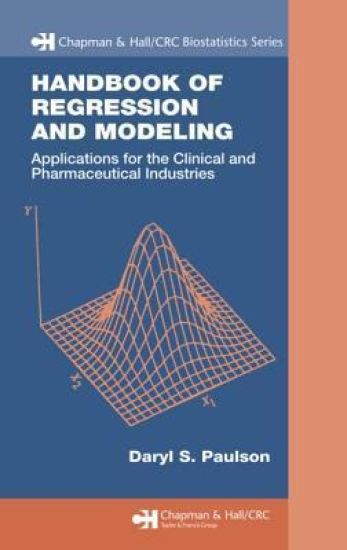
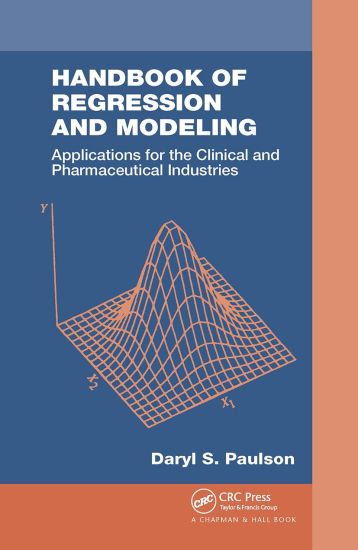
Carefully designed for use by clinical and pharmaceutical researchers and scientists, Handbook of Regression Analysis and Modeling explores statistical methods that have been adapted into biological applications for the quickly evolving field of biostatistics. The author clearly delineates a six-step method for hypothesis testing using data that mimics real life. Relying heavily on computer software, he includes exploratory data analysis to evaluate the fit of the model to the actual data. The book presents a well-defined procedure for adding or subtracting independent variables to the model variable and covers how to apply statistical forecasting methods to the serially correlated data characteristically found in clinical and pharmaceutical settings. The stand alone chapters allow you to pick and choose which chapter to read first and home in on the information that fits your immediate needs. Each example is presented in computer software format. The author uses MINITAB in the book but supplies instructions for SAS and SPSSX, making the book easily adaptable to individual situations. Although written with the assumption that the reader has knowledge of basic and matrix algebra, the book supplies a short course on matrix algebra in the appendix for those who need it. Covering more than just statistical theory, the book provides advanced methods that you can put to immediate use.
Understanding Suicide's Allure
Stanley Krippner; Harris L. Friedman; Linda Riebel; Debbie Joffe Ellis; Daryl S. Paulson
Praeger Publishers Inc
2021
sidottu
This book explains why suicide can be alluring to a person aiming to stop his or her traumatic pain—whether its source is bullying, sexual assault, war combat, or other PTSD-invoking events—and details approaches that can prevent suicide.Suicide has been a taboo topic in Western culture. The mere mention of suicide sparks reactive responses that include medical, moral, spiritual, and religious debates. As a result, the authors open an important discussion here, offering an honest and non-judgmental examination of the many aspects involved in the nature of suicide, explaining that above all, people need to learn how to support those struggling with suicidal thoughts or to intercept their own suicidal thinking. The book also includes an extensive review and evaluation of the many available mental health treatments.Special consideration is given to military suicides. U.S. soldier suicides exceed one per day and continue to rise in all military branches, while veteran suicide rates are even higher, averaging 17 per day. Communities, families, veterans, and service members are in need of tools and insights for coping with, navigating, and exposing the suicidal attitudes affecting many current and former members of the military.
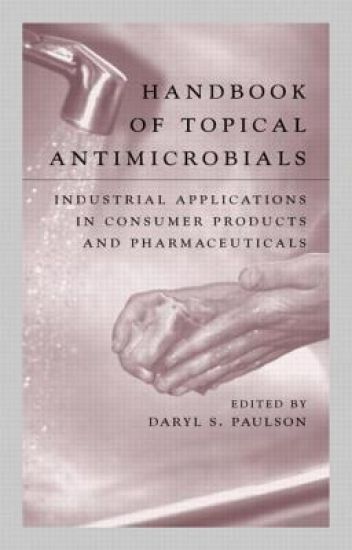
This reference examines laboratory techniques and FDA and industry perspectives on medical, food service, and consumer product applications of antimicrobials. It offers methods to conduct investigations of effectiveness that simulate use of consumer, food, and medical antimicrobials in real-world conditions and environments, validate neutralizing systems, develop reliable and functional antimicrobial products, and prevent infection, disease, and contamination. Additional topics include the importance of customer-valued quality attributes, such as low skin irritation and ease of use, label claims, regulatory procedures, and quality control, and clinical simulation protocols.
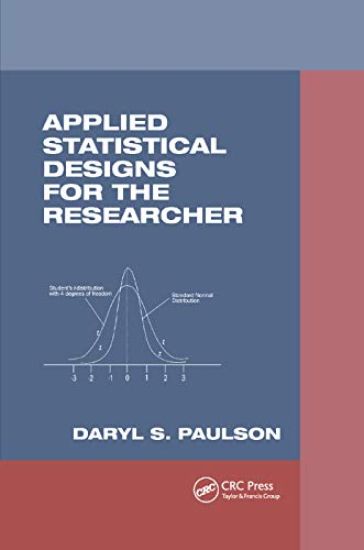
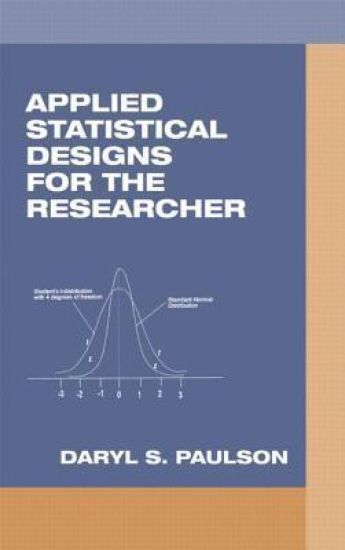
Showcasing a discussion of the experimental process and a review of basic statistics, this volume provides methodologies to identify general data distribution, skewness, and outliers. It features a unique classification of the nonparametric analogs of their parametric counterparts according to the strength of the collected data. Applied Statistical Designs for the Researcher discusses three varieties of the Student t test, including a comparison of two different groups with different variances; two groups with the same variance; and a matched, paired group. It introduces the analysis of variance and Latin Square designs and presents screening approaches to comparing two factors and their interactions.
Topical Antimicrobials Testing and Evaluation
Daryl Paulson; Daryl S. Paulson
CRC Press
2019
nidottu
A range of factors must be considered when developing a topical antimicrobial for use in a healthcare personnel handwash, surgical scrub, or preoperative skin preparation. Antimicrobial effectiveness, low skin irritation, ease of use, and pleasing aesthetics are all essential if the product is to succeed. In addition, all facets of the product must comply with stringent regulatory requirements. With updated protocols and research, Topical Antimicrobials Testing and Evaluation, Second Edition comprehensively presents and reviews the latest techniques for testing antimicrobial compounds for effectiveness and regulatory compliance.Topics include: The anatomical structure of the skin and skin microbiology relevant to product testing Use of antimicrobial products against specific microorganisms such as Staphylococcus and Streptococcus species Measurement of antimicrobial action of topical antimicrobials from experimental design, microbiological, biostatistical, and marketplace perspectives Various aspects of the topical antimicrobial products currently in common use in medical, food service, and consumer markets Statistical analysis and specific statistical designs for clinical trials Epistemological requirements in evaluating the effects of specific treatments Evaluation strategies and sample working protocols for hand and body soaps, food-handler antimicrobial products, and medical/healthcare industry antimicrobial products The book is designed to inform industry and academia on the requirements to get products approved by the FDA and to market while also providing critical insight on ways to best service expanding markets.
Since 1990, U.S. Veterans' centers have treated more than 1.6 million PTSD-affected men and women, including an estimated 100,000 from the Gulf War and an untallied total from the Iraq and Afghanistan fronts. The number also includes World War II veterans, because PTSD does not fade easily. Sufferers may experience the traumatic events in flashbacks that may seem as real as when they first occurred. Using firsthand accounts, the authors offer insights into the realities of PTSD and combat trauma, and how symptoms may pervade even the most mundane of daily activities and cause sufferers to experience withdrawal, depression, violence, rage, and even suicide. In a new epilogue, the authors offer data about treatments and resources that both PTSD sufferers and their families and friends will value.
Biostatistics and Microbiology: A Survival Manual
Daryl S. Paulson
Springer-Verlag New York Inc.
2008
nidottu
influence on the conclusions that result. A very “conservative” statistic requires very strong proof to demonstrate significant differences, whereas a “liberal” one requires less. “Yuck,” you say already, “I just want to know the answer. ” To this, I respond, when in doubt, use a conventional statistical method, one that can be agreed on and accepted by most authorities. These conventional kinds of methods will be presented in this book. As you gain experience, choosing statistical methods will become almost an intuitive process. For example, for problems in which you have little experience, you will be very cautious and conservative. By analogy, this is similar to rafting a river for the first time. If you see rapids in the river, you will be more conservative as you approach them – wearing a life jacket and helmet, and using your paddle to avoid rocks – at least until you have expe- enced them and developed confidence. You will tend to be more liberal when near a sandy shore in clear, calm, shallow water. For experiments in microbiology in which you have much experience, your microbiological knowledge enables you to be more statistically liberal, as you will know whether the result of statistical analysis is microbiologically rational. Finally, statistics is not an end-all to finding answers. It is an aid in research, quality control, or diagnostic processes to support critical thinking and decisi- making.
Across history, the condition has been called soldier's heart, shell shock, or combat fatigue. It is now increasingly common as our service men and women return from Iraq, Afghanistan, and other ongoing combat zones. Since 1990, Veterans' centers here have treated more than 1.6 million affected men and women, including an estimated 100,000 from the Gulf War and an untallied total from the Iraq front and fighting in Afghanistan. The number also includes some 35,000 World War II veterans, because PTSD does not fade easily. Regardless of the months, years, and even decades that have passed, the traumatic events can flash back as seemingly real as they were when they occurred.In Haunted by Combat Paulson and Krippner range across history and into current experiences and treatments for this haunting disorder.They take us into the minds of PTSD-affected veterans, as they struggle against the traumatic events lingering in their minds, sometimes exploding into violent behavior. The authors explain how and why PTSD develops—and how we can help service members take the steps to heal today.
Carefully designed for use by clinical and pharmaceutical researchers and scientists, Handbook of Regression Analysis and Modeling explores statistical methods that have been adapted into biological applications for the quickly evolving field of biostatistics. The author clearly delineates a six-step method for hypothesis testing using data that mimics real life. Relying heavily on computer software, he includes exploratory data analysis to evaluate the fit of the model to the actual data. The book presents a well-defined procedure for adding or subtracting independent variables to the model variable and covers how to apply statistical forecasting methods to the serially correlated data characteristically found in clinical and pharmaceutical settings. The stand alone chapters allow you to pick and choose which chapter to read first and home in on the information that fits your immediate needs. Each example is presented in computer software format. The author uses MINITAB in the book but supplies instructions for SAS and SPSSX, making the book easily adaptable to individual situations. Although written with the assumption that the reader has knowledge of basic and matrix algebra, the book supplies a short course on matrix algebra in the appendix for those who need it. Covering more than just statistical theory, the book provides advanced methods that you can put to immediate use.
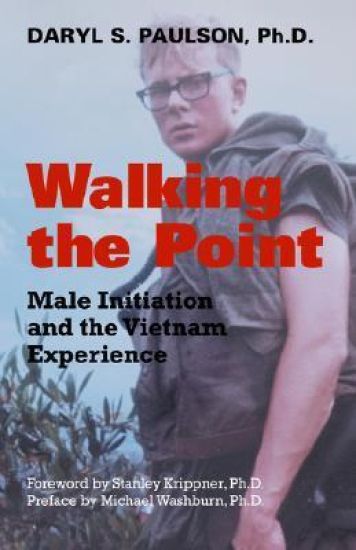
Many Vietnam veterans struggled upon returning to the United States. They wrestled with the psychic trauma of the war and felt isolated and out of place, rejected by their country. Author Daryl Paulson, a Vietnam vet, experienced the same f
Showcasing a discussion of the experimental process and a review of basic statistics, this volume provides methodologies to identify general data distribution, skewness, and outliers. It features a unique classification of the nonparametric analogs of their parametric counterparts according to the strength of the collected data. Applied Statistical Designs for the Researcher discusses three varieties of the Student t test, including a comparison of two different groups with different variances; two groups with the same variance; and a matched, paired group. It introduces the analysis of variance and Latin Square designs and presents screening approaches to comparing two factors and their interactions.
This reference examines laboratory techniques and FDA and industry perspectives on medical, food service, and consumer product applications of antimicrobials. It offers methods to conduct investigations of effectiveness that simulate use of consumer, food, and medical antimicrobials in real-world conditions and environments, validate neutralizing systems, develop reliable and functional antimicrobial products, and prevent infection, disease, and contamination. Additional topics include the importance of customer-valued quality attributes, such as low skin irritation and ease of use, label claims, regulatory procedures, and quality control, and clinical simulation protocols.