Kirjojen hintavertailu. Mukana 12 558 067 kirjaa ja 12 kauppaa.

Kirjailija

Dave Grossman

Kirjat ja teokset yhdessä paikassa: 9 kirjaa, julkaisuja vuosilta 2009-2022, suosituimpien joukossa Will War Ever End?. Vertaile teosten hintoja ja tarkista saatavuus suomalaisista kirjakaupoista.

9 kirjaa

Kirjojen julkaisuhaarukka 2009-2022.

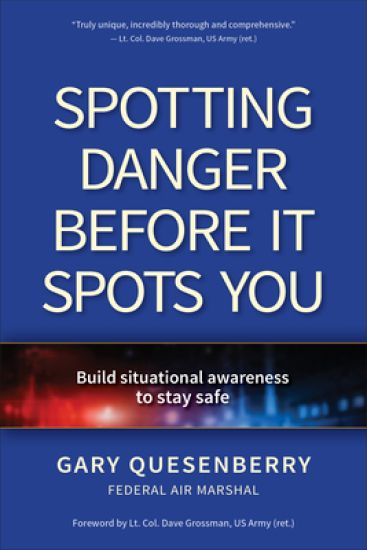
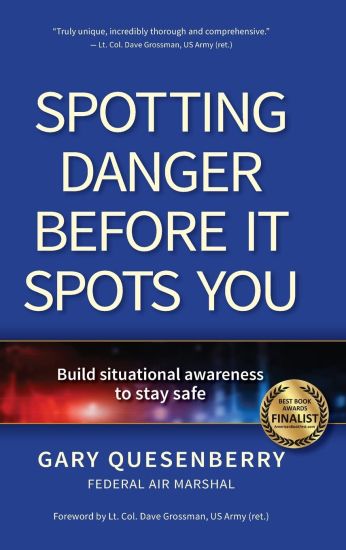
Spotting Danger Before It Spots You

Spotting Danger Before It Spots You

Gary Dean Quesenberry; Dave Grossman

YMAA Publication Center
2022
sidottu
Spotting danger before it happens is a skill that can be developed and may even save your life. Understand the threat Build situational awareness Develop personal defenses A mother dropping her teenager off at the mall, a young man leaving home for college, a family about to head out on their first trip overseas. What do all of these people have in common? They all have a vested interest in their personal security and the wellbeing of those they love. According to the FBI’s Uniform Crime Report, there were an estimated 1.25 million violent crimes committed in the United States in 2018. Make no mistake; in a world filled with crime and violence, you are your own last line of defense. Continuing on the path of The Gift of Fear (Gavin deBecker), Spotting Danger Before It Spots You, author Gary Quesenberry breaks down the basic techniques necessary to help you develop good situational awareness and increase your levels of personal safety. Gary calls upon his extensive background as a Federal Air Marshal and defensive tactics instructor to explain these methods in simple terms that will greatly improve your general understanding of how, when and where violence occurs. He will then take the next critical step—providing you with the tools you need to properly identify and evade danger before it ever has a chance to materialize. You will learnThe common traits of predatory behaviorHow to conduct a personal “safety check”How to develop strong awareness skillsWhat to do when you spot potential troubleStaying safe and living life free of worry and fear “Today more than ever, it is imperative that we pay close attention to our surroundings and learn how to interpret what’s happening around us. Tragic events can often be both predictable and preventable.” — Federal Air Marshal Gary Quesenberry

MilesTalk: Live Your Wildest Dreams Using Miles and Points
2nd Edition: Published August 2021Do you have a friend that always seems to be flying around the world in First Class and wonder how they afford it? Or maybe you already know they use "frequent flyer miles" but have no idea how to get them yourself. (Hint: You don't need to actually fly to earn them ) Dave Grossman has been "that friend" for over a decade and, in this must-read for anyone with big travel dreams on a small budget, Dave shares all his secrets. You'll learn: The difference between miles and points and how to leverage bothHow to set your travel goals and make them a quick realityWays to exponentially increase the number of miles and points you earnHow to find those elusive First and Business Class award seatsPlease note that this edition of the book is geared towards a US-based audience. While the foundations are the same worldwide, this book primarily references US-based programs and credit cards.
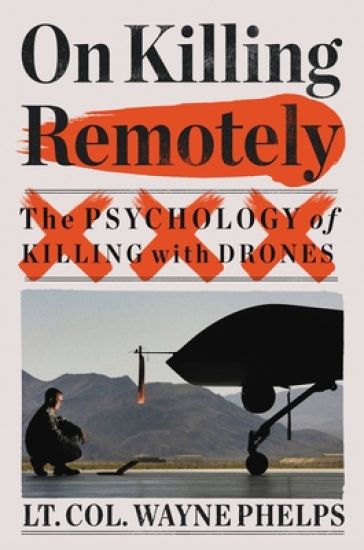
On Killing Remotely

On Killing Remotely

Dave Grossman; Wayne Phelps

Little, Brown Company
2021
sidottu
Throughout history society has determined specific rules of engagement between adversaries in armed conflict. With advances in technology, from armor to in the Middle Ages to nerve gas in World War I to weapons of mass destruction in our own time, the rules have constantly evolved. Today, when killing the enemy can seem palpably risk-free and tantamount to playing a violent video game, what constitutes warfare? What is the effect of remote combat on individual soldiers? And what are the unforeseen repercussions that could affect us all?Lt Col Wayne Phelps, former commander of a Remotely Piloted Aircraft unit, and Lt Col Dave Grossman, author of the landmark work On Killing and a leading scholar of the effects of killing on the human psyche, address these questions and many others as they tell the story of the men and women of today's "chair force." Exploring the ethics of remote military engagement, the misconceptions about PTSD among RPA operators, and the specter of military weaponry controlled by robots, their book is an urgent and compelling reminder that it should always be difficult to kill another human being lest we risk losing what makes us human.
Spotting Danger Before It Spots You

Spotting Danger Before It Spots You

Gary Dean Quesenberry; Dave Grossman

YMAA Publication Center
2020
pokkari
Spotting danger before it happens is a skill that can be developed and may even save your life. Understand the threat Build situational awareness Develop personal defenses A mother dropping her teenager off at the mall, a young man leaving home for college, a family about to head out on their first trip overseas. What do all of these people have in common? They all have a vested interest in their personal security and the wellbeing of those they love. According to the FBI’s Uniform Crime Report, there were an estimated 1.25 million violent crimes committed in the United States in 2018. Make no mistake; in a world filled with crime and violence, you are your own last line of defense. Continuing on the path of The Gift of Fear (Gavin deBecker), Spotting Danger Before It Spots You, author Gary Quesenberry breaks down the basic techniques necessary to help you develop good situational awareness and increase your levels of personal safety. Gary calls upon his extensive background as a Federal Air Marshal and defensive tactics instructor to explain these methods in simple terms that will greatly improve your general understanding of how, when and where violence occurs. He will then take the next critical step—providing you with the tools you need to properly identify and evade danger before it ever has a chance to materialize. You will learnThe common traits of predatory behaviorHow to conduct a personal “safety check”How to develop strong awareness skillsWhat to do when you spot potential troubleStaying safe and living life free of worry and fear “Today more than ever, it is imperative that we pay close attention to our surroundings and learn how to interpret what’s happening around us. Tragic events can often be both predictable and preventable.” — Federal Air Marshal Gary Quesenberry
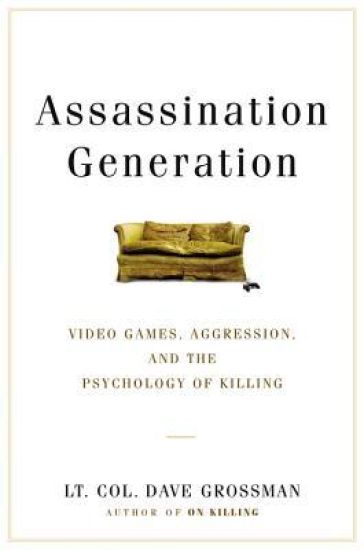
Assassination Generation: Video Games, Aggression, and the Psychology of Killing

Assassination Generation: Video Games, Aggression, and the Psychology of Killing

Dave Grossman; Kristine Paulsen

Little Brown and Company
2016
sidottu
The author of the 400,000-copy bestseller On Killing reveals how violent video games have ushered in a new era of mass homicide -- and what we must do about it. Paducah, Kentucky, 1997: a 14-year-old boy shoots eight students in a prayer circle at his school. Littleton, Colorado, 1999: two high school seniors kill a teacher, twelve other students, and then themselves. Utoya, Norway, 2011: a political extremist shoots and kills sixty-nine participants in a youth summer camp. Newtown, Connecticut, 2012: a troubled 20-year-old man kills 20 children and six adults at the elementary school he once attended. What links these and other horrific acts of mass murder? A young person's obsession with video games that teach to kill. Lt. Col. Dave Grossman, who in his perennial bestseller On Killing revealed that most of us are not "natural born killers" - and who has spent decades training soldiers, police, and others who keep us secure to overcome the intrinsic human resistance to harming others and to use firearms responsibly when necessary - turns a laser focus on the threat posed to our society by violent video games. Drawing on crime statistics, cutting-edge social research, and scientific studies of the teenage brain, Col. Grossman shows how video games that depict antisocial, misanthropic, casually savage behavior can warp the mind - with potentially deadly results. His book will become the focus of a new national conversation about video games and the epidemic of mass murders that they have unleashed.
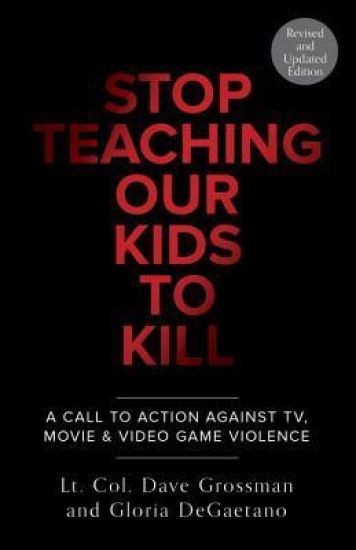
Stop Teaching Our Kids To Kill, Revised and Updated Edition

Stop Teaching Our Kids To Kill, Revised and Updated Edition

Dave Grossman; Gloria Degaetano

Harmony Books
2014
pokkari
Completely revised and updated, a much-needed call to action for every parent, teacher, and citizen to help our children and stop the wave of killing and violence gripping America's youth Newtown, Aurora, Virginia Tech, Columbine. Thereis no bigger or more important issue in America than youth violence. Kids, some as young as ten years old, take up arms with the intention to murder. Why is this happening? Lt. Col. Dave Grossman and Gloria DeGaetano believe the root cause is the steady diet of violent entertainment kids see on TV, in movies, and in the video games they play--witnessing hundreds of violent images a day. Offering incontrovertible evidence based on recent scientific studies and research, they posit that this media is not just conditioning children to be violent and see killing as acceptable but teaching them the mechanics of killing as well. Stop Teaching Our Kids to Kill supplies the statistics, interprets the copious research that exists on the subject, and suggests the many ways to make a difference in your home, at school, in your community, in the courts, and in the larger world. In using this book, parents, educators, social-service workers, youth advocates, and anyone interested in the welfare of our children will have a solid foundation for effective action and prevention of future Columbines, Jonesboros, and Newtowns.
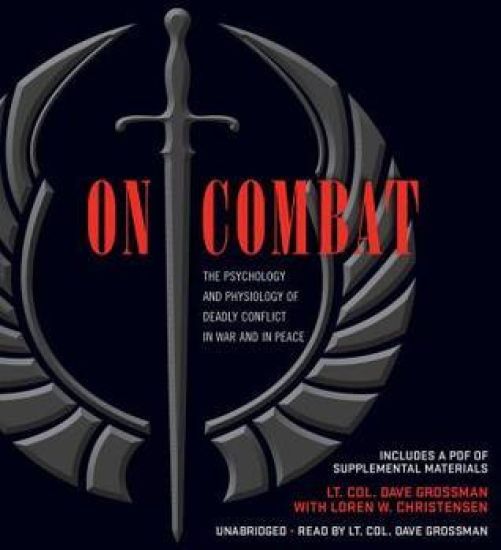
On Combat: The Psychology and Physiology of Deadly Conflict in War and in Peace
On Combat looks at what happens to the human body under the stresses of deadly battle and the impact on the nervous system, heart, breathing, visual and auditory perception, memory -- then discusses new research findings as to what measure warriors can take to prevent such debilitations so they can stay in the fight, survive, and win. A brief, but insightful look at history shows the evolution of combat, the development of the physical and psychological leverage that enables humans to kill other humans, followed by an objective examination of domestic violence in America. The authors reveal the nature of the warrior, brave men and women who train their minds and bodies to go to that place from which others flee. After examining the incredible impact of a few true warriors in battle, On Combat presents new and exciting research as to how to train the mind to become inoculated to stress, fear and even pain. Expanding on Lt. Col. Grossman's popular bulletproof mind presentation, the audiobook explores what really happens to the warrior after the battle, and shows how emotions, such as relief and self-bame, are natural and healthy ways to feel about having survived combat. A fresh and highly informative look at post traumatic stress syndrome (PTSD) details how to prevent it, how to survive it should it happen, how to come out of it stronger, and how to help others who are experiencing it. On Combat looks at the critical importance of the debriefing, when warriors gather after the battle to share what happened, critique, learn from each other and, for some, begin to heal from the horror. The listener will learn a highly effective breathing technique that not only steadies the warrior's minds and body before and during the battle, but can also be used afterwards as a powerful healing device to help separate the emotion from the memory. Concluding chapters discuss the Christian/Judeo view of killing in combat and offers powerful insight that Lt. Col. Grossman has imparted over the years to help thousands of warriors understand and come to terms with their actions in battle. A final chapter encourages warriors to always fight for justice, not vengeance, so that their remaining days will be healthy ones filled with pride for having performed their duty morally and ethically. This information-packed audiobook ploughs new ground in its vision, in its extensive new research and startling findings, and in its powerful, revealing quotes and anecdotes from top people in the warrior community, people who have faced the toxic environment of deadly combat and now share their wisdom to help others. On Combat is easy to understand and powerful in scope. It is a true classic that will be listened to by new and veteran warriors for years to come.
Will War Ever End?

Will War Ever End?

Paul K. Chappell; Dave Grossman

Easton Studio Press
2011
pokkari
Once in a great while, a book is written that substantially changes the way people think about a particular subject. Will War Ever End? is such a book. Written as a "manifesto for waging peace" by an active duty captain in the US Army, Will War Ever End? challenges readers to think about peace, war and violence in radically new ways. "Are human beings naturally violent?" "What is hatred?" "How can love overcome the power of hatred?" "How does nonviolence overcome the power of violence?" "How can we prove that unconditional love makes us psychologically healthy and that hatred, just like an illness, occurs when something has gone wrong?" "How does violence against the natural world relate to violence between human beings?" These are all questions that Captain Paul K. Chappell leads us to consider in a strikingly new way. In Will War Ever End?, Chappell demonstrates that human beings are naturally peaceful and that world peace can become more than a cliche. He lays out a practical framework for transforming the way we think about war and violence, enabling us to begin the real work we must do in order to achieve true peace for mankind. Will War Ever End? is a deeply personal story of a soldier's search for human understanding that will lead to universal transformation. Its message is one of hope, offering practical solutions to help us build a better world. We can all make change. Now is the time to begin.
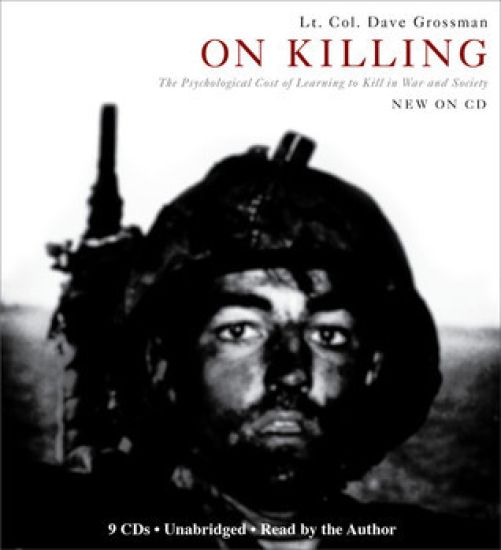
On Killing: The Psychological Cost of Learning to Kill in War and Society
The revised and updated edition of Lt. Col. Dave Grossman's modern classic about the psychology of combat, hailed by the Washington Post as "an illuminating account of how soldiers learn to kill and how they live with the experiences of having killed." In World War II, only 15 to 20 percent of combat infantry were willing to fire their rifles. In Korea, about 50 percent. In Vietnam, the figure rose to more than 90 percent. The good news is that most soldiers are loath to kill. But armies have developed sophisticated ways sophisticated ways of overcoming that instinctive aversion. The psychological cost for soldiers, as evidenced by the increase in post-traumatic stress, is devastating. This landmark study brilliantly illuminates the techniques the military uses to help soldiers kill and raises vital questions about the implications of escalating violence in our society. "Powerfully argued...Full of arresting observations and insights." --New York Times