Kirjojen hintavertailu. Mukana 12 595 353 kirjaa ja 12 kauppaa.

Kirjailija

Dave Nagel

Kirjat ja teokset yhdessä paikassa: 6 kirjaa, julkaisuja vuosilta 2015-2025, suosituimpien joukossa Grading Visible Learners. Vertaile teosten hintoja ja tarkista saatavuus suomalaisista kirjakaupoista.

6 kirjaa

Kirjojen julkaisuhaarukka 2015-2025.

Grading Visible Learners

Grading Visible Learners

Dave Nagel; Bruce Potter

SAGE PUBLICATIONS INC
2025
nidottu
Transform your grading and assessment practices into powerful tools for student success When we implement a grading system that prioritizes completion and compliance and penalizes students who take risks, we disrupt the learning journey—not further it. It's time to align how we grade with what we know from research works best and help move learning forward for all students. Grading Visible Learners provides educators with practical solutions for improving grading approaches, actions, and practices as well as concrete tools and strategies teachers and collaborative teams can adapt and use in their classrooms and schools right away. Inside you'll find Traits to promote in students so they can drive their own learningExamples of grading and feedback actions that foster assessment capability in studentsTools, templates, and work samples to help you improve your grading practicesGuidance on how to promote goal-setting as well as help teachers and students view grades as feedback rather than an ending point in the learning journeyMultiple ways for students to show growth and progress In this hands-on guidebook, you will discover how to best impact learning and ensure that grading serves as a constructive tool and conduit to maximizing impact on student learning rather than a hindrance to student success.
PLC+

PLC+

Nancy Frey; Dave Nagel; Douglas Fisher; Toni Osborn Faddis; Aida Allen-Rotell

SAGE PUBLICATIONS INC
2023
kierre
Build cohesive PLC+ teams to improve learning outcomes Effective teacher collaboration can amplify student learning and well-being outcomes, increase teacher satisfaction rates, and improve the onboarding of new teachers. Yet developing a cohesive PLC+ team isn’t always so simple. Designed as a companion to PLC+: Better Decisions and Greater Impact by Design and The PLC+ Playbook, this easy-to-use playbook for school leaders provides strategies, techniques, and evidence-based approaches to help leaders foster successful collaboration among teachers and positively impact student learning. Four cross-cutting values are infused within each guiding question: high expectations, activation, individual and collective teacher efficacy, and equity. Building on this framework and drawing from Visible Learning research, the guide offers specific instructional leadership actions and behaviors to promote cohesion in PLC+ teams. Leaders will learn: Contextual information to boost knowledge about effectively engaging with adultsEssential information on how to lead PLC+ teams to become strong, interdependent, and productiveLeadership tools to support and inspire others to work at optimal levelsExamples and insights into time management, decision-making, successes, failures, and learning opportunities Discover how to build social, human, and decisional capital within your organization, equipping teachers with the skills they need to drive school improvement.
The PLC+ Activator’s Guide

The PLC+ Activator’s Guide

Dave Nagel; John T. Almarode; Douglas Fisher; Nancy Frey; Karen T. Flories

SAGE Publications Inc
2020
kierre
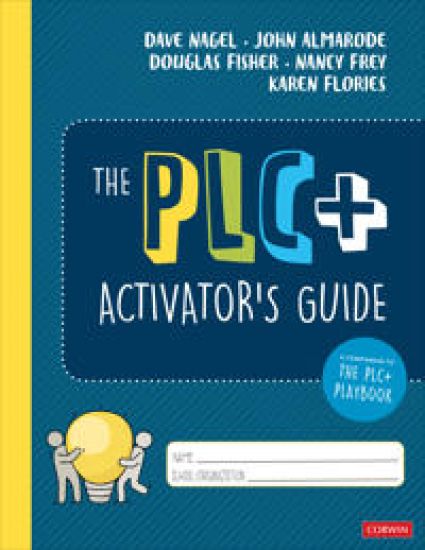
Keeping professional learning communities focused on goals: High functioning professional learning communities don’t happen by chance. They require deliberate efforts and structures to ensure efficiency and focus, and to ignite action. The first books in the PLC+ series challenged PLC teams to engage in difficult discussions about equity of access, high expectations for all students, and a commitment to building individual and team efficacy. All of this requires activation and skilled facilitation to move from discussion to action. The PLC+ Activator's Guide offers a practical approach, real-life scenarios, and examples that show activators what to expect and how to navigate their PLC+ on a successful and collective journey. Readers will find: Templates to help activators prepare for PLC+ meetingsApproaches for fostering and nurturing collaboration Vignettes from real schools that are implementing PLC+ Reflection questions with spaces for activators to record notesSolutions for addressing barriers that often arise in PLC+ teams Activators will find this an essential guide to keeping PLC+ team discussions goal-focused and the work centered on building the collective efficacy of the team.
On-Your-Feet Guide: Understanding PLC+

On-Your-Feet Guide: Understanding PLC+

Douglas Fisher; Nancy Frey; John T. Almarode; Dave Nagel; Karen T. Flories

SAGE Publications Inc
2020
irtolehti
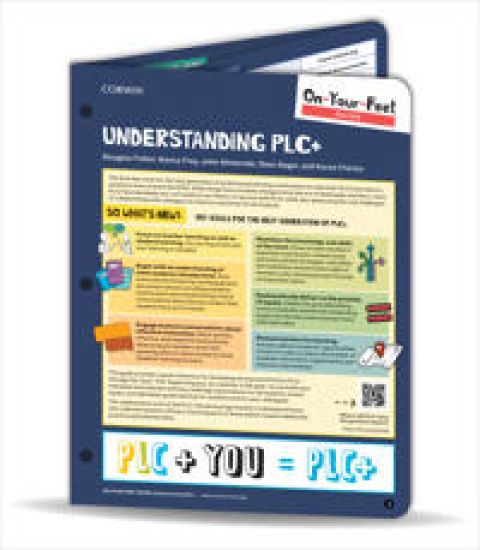
All On-Your-Feet Guide orders receive FREE SHIPPING! Use code SHIPOYFG at check out. This guide provides a quick reference for developing strong and effective PLCs through the "plus": YOU. Supporting you, as a teacher, is the goal—as you build your individual and collective efficacy, hold high expectations for all students, ensure equity, and ultimately guide learning for students and for your colleagues. The collaborative work of the PLC+ should leverage teachers’ individual efficacy into collective teacher efficacy. Honoring each of these beliefs requires deliberate practice and intentionality. On-Your-Feet Guides (OYFGs) provide you with the ultimate "cheat sheet" to implement effective change in your classroom while in the moment of teaching. Designed for accessibility, and providing step-by-step guidance, the OYFGs are written by experts who take research-based practices and make them doable for the busy teacher. Each On-Your-Feet Guide is laminated, 8.5"x11" tri-fold (6 pages), and 3-hole punched. Use the On-Your-Feet Guides When you know the "what" but need help with the "how"As a quick reference to support a practice you learned in a PD workshop or bookTo learn how to implement foundational practicesWhen you want to help your students learn a specific strategy, routine, or approach, but aren’t sure how to do it yourself
PLC+

PLC+

Douglas Fisher; Nancy Frey; John T. Almarode; Karen T. Flories; Dave Nagel

SAGE Publications Inc
2019
nidottu
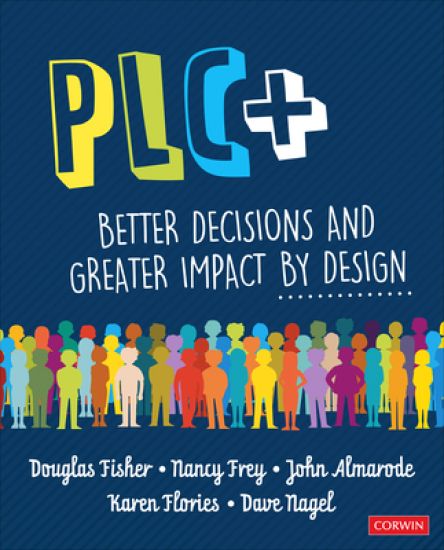
What makes a powerful and results-driven Professional Learning Community (PLC)? The answer is collaborative work that expands the emphasis on student learning and leverages individual teacher efficacy into collective teacher efficacy. PLC+: Better Decisions and Greater Impact by Design calls for strong and effective PLCs plus—and that plus is YOU. Until now, the PLC movement has been focused almost exclusively on students and what they were or were not learning. But keeping student learning at the forefront requires that we also recognize the vital role that you play in the equation of teaching and learning. This means that PLCs must take on two additional challenges: maximizing your individual expertise, while harnessing the power of the collaborative expertise you can develop with your peers. PLC+ is grounded in four cross-cutting themes—a focus on equity of access and opportunity, high expectations for all students, a commitment to building individual self-efficacy and the collective efficacy of the professional learning community and effective team activation and facilitation to move from discussion to action. The PLC+ framework supports educators in considering five essential questions as they work together to improve student learning: Where are we going?Where are we now?How do we move learning forward?What did we learn today?Who benefited and who did not benefit? The PLC+ framework leads educators to question practices as well as outcomes. It broadens the focus on student learning to encompass educational equity and teaching efficacy, and, in doing so, it leads educators to plan and implement learning communities that maximize individual expertise while harnessing the power of collaborative efficacy.
Effective Grading Practices for Secondary Teachers
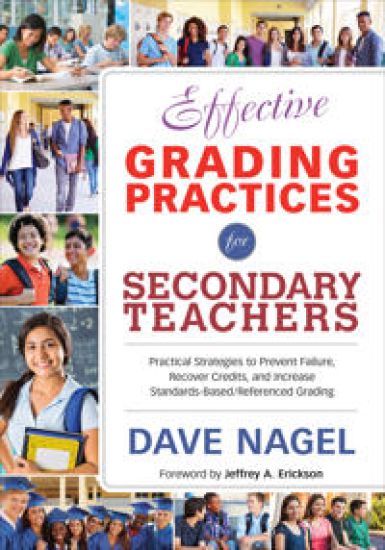
In life, most of us are given second chances. Why should school be any different?A growing body of evidence suggests that many traditional grading practices are not only ineffective; they are also potentially harmful to students. Effective Grading Practices for Secondary Teachers provides specific, concrete, and practical alternatives to some traditional and ineffective grading practices. By effectively implementing these changes, secondary teachers and administrators, and central office personnel, can drastically decrease failure rates, improve overall achievement, and significantly reduce potential dropouts. Coverage includes: - guidance for secondary teachers and leaders in the implementation of new and effective failure prevention strategies such as Safety Net Programs, WIN Programs, and Amnesty Days - approaches to credit recovery such as extending the semester, "re-culturizing" summer school, and on-line credit recovery - alternatives to strict standards-based grading that doesn't require a total abandonment of letter grades - how to conduct action research to measure the effectiveness of grading reforms - numerous examples of successful practices and programs that have been enacted in a range of secondary settings. Dave Nagel is an international educational consultant and researcher, whose educational career started as a former middle and high school biology teacher. His administrative experiences involved being a middle school assistant principal, high school associate princi pal, and director of extended day and credit recovery programs. In his former district, Dave was instrumental in implementing power standards and performance assessments. He was honored numerous times as a "Senior Choice" winner, with graduating seniors selecting him as someone who dramatically affected their life in a positive way.