Kirjojen hintavertailu. Mukana 12 301 820 kirjaa ja 12 kauppaa.

Kirjailija

David A. Dyker

Kirjat ja teokset yhdessä paikassa: 11 kirjaa, julkaisuja vuosilta 1991-2017, suosituimpien joukossa The Process of Investment in the Soviet Union. Vertaile teosten hintoja ja tarkista saatavuus suomalaisista kirjakaupoista.

Mukana myös kirjoitusasut: David A Dyker

11 kirjaa

Kirjojen julkaisuhaarukka 1991-2017.

The Process of Investment in the Soviet Union

The Process of Investment in the Soviet Union

David A. Dyker

Cambridge University Press
2010
pokkari
This 1983 book presents a comprehensive account of the cycle of fixed capital investment in the Soviet Union, from strategic decision-taking in the Kremlin down to the level of individual building sites. Dr Dyker places the subject in the context of welfare economics and decision-taking theory, but the book's emphasis is on the detailed empirical analysis of Soviet material. It includes analysis of the Soviet design and construction sectors and the developments in Soviet procedures for assessing investment effectiveness, as well as a unique series of case studies of individual investment projects. In a concluding chapter Dr Dyker assesses overall investment effectiveness in the Soviet Union, and looks at Soviet investment planning and Soviet development strategy.
Restructuring the Soviet Economy

Restructuring the Soviet Economy

David A. Dyker

Routledge
2017
sidottu
Restructuring the Soviet Economy examines the Soviet leadership's most urgent question - how to revitalize the soviet economy. David Dyker argues that the current impasse can can only be understood in the context of the failure of 60 years of central planning. He analyses both the problems besetting the centrally planned system and those that have paralysed perestroika and assesses whether the most ambitious attempt ever to reform the Soviet economy will succeed.
Yugoslavia and After

Yugoslavia and After

David A. Dyker; Ivan Vejvoda

Routledge
2017
sidottu
This new book presents contributions by leading authorities on the origins of the Balkan crisis, the reasons for the decay and dissolution of the old Yugoslavia, the nature of the new regimes, the prospects for solution of the remaining conflicts and for the building of viable successor states.
The Soviet Union under Gorbachev (Routledge Revivals)
Gorbachev’s accession to General Secretary promised great changes to the Soviet Union and its relationship with the rest of the world. This book, first published in 1987, discusses the problems faced by Gorbachev when he entered office and how he planned to tackle them. Gorbachev was a figure of genuine debate in the mid-1980s, raising doubts from Western specialists regarding his radicalism and ability to reform the Soviet economic system in particular. Here, Dyker and his colleagues assess the changes Gorbachev had already made to consolidate his power base, alongside those that he was proposing to make to agriculture, industry and foreign relations at the time of publication. The book speculates about how Gorbachev might implement his proposed political and economic reforms, what opposition he might encounter and how successful he would be. A fascinating insight into Soviet economic and political policy in the years leading up to the Union’s collapse, this work will be of particular importance to students and academics researching the personality of Gorbachev and the political and economic history of the Soviet Union.
The Future of the Soviet Economic Planning System (Routledge Revivals)
First published in 1985, this book offered a fresh analysis of the problems faced by the Soviet economy by focussing on the key issues in the economic planning system. David Dyker considers the available options for reform during the 1980s and the most likely developments. Discussing the origins of the Soviet economic planning system and the theories which founded it, previous attempts to reform the organisational structure and the particular problem of agriculture, Dyker presents a picture of an increasingly bleak future for the Soviet economy. This is a comprehensive title written by a renowned expert on the Soviet economy, which will be of particular value to students and academics researching the political and economic development and history of the Soviet Union.
The Soviet Union Under Gorbachev (Routledge Revivals)
Gorbachev’s accession to General Secretary promised great changes to the Soviet Union and its relationship with the rest of the world. This book, first published in 1987, discusses the problems faced by Gorbachev when he entered office and how he planned to tackle them. Gorbachev was a figure of genuine debate in the mid-1980s, raising doubts from Western specialists regarding his radicalism and ability to reform the Soviet economic system in particular. Here, Dyker and his colleagues assess the changes Gorbachev had already made to consolidate his power base, alongside those that he was proposing to make to agriculture, industry and foreign relations at the time of publication. The book speculates about how Gorbachev might implement his proposed political and economic reforms, what opposition he might encounter and how successful he would be. A fascinating insight into Soviet economic and political policy in the years leading up to the Union’s collapse, this work will be of particular importance to students and academics researching the personality of Gorbachev and the political and economic history of the Soviet Union.
The Future of the Soviet Economic Planning System (Routledge Revivals)
On its publication in 1985, this book offered a fresh analysis of the problems faced by the Soviet economy by focussing on the key issues in the economic planning system. David Dyker considers the available options for reform during the 1980s and the most likely developments. Discussing the origins of the Soviet economic planning system and the theories which founded it, previous attempts to reform the organisational structure and the particular problem of agriculture, Dyker presents a picture of an increasingly bleak future for the Soviet economy. This is a comprehensive title written by a renowned expert on the Soviet economy, which will be of particular value to students and academics researching the political and economic development and history of the Soviet Union.
Yugoslavia (Routledge Revivals)

Yugoslavia (Routledge Revivals)

David A Dyker

Routledge
2012
nidottu
This book, first published in 1990, analyses contemporary Yugoslavian development strategy in its historical and political context, assessing how corruption, negligence, and an emphasis on industry to the detriment of agriculture and trade, have all played a part in bringing Yugoslavia close to financial and political chaos. The book concludes by considering the contemporary prospects for a more integrated policy approach in the midst of the country's political crisis.
Economic Policy Making And Business Culture: Why Is Russia So Different?
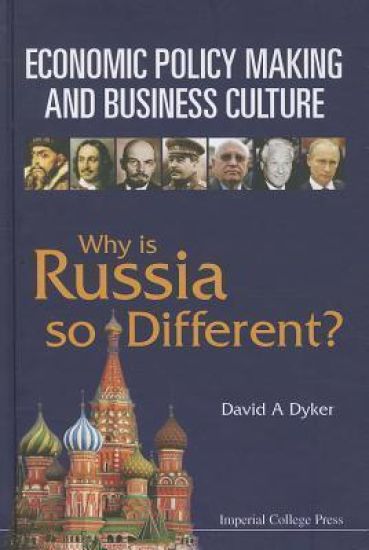
This book addresses one of the fundamental problems in Russian society, and in Russia's relations with the rest of the world. Why do Russians tend to react differently from ‘us’ in given diplomatic or business situations? Why do they find the notion of a contract difficult to grasp? Why do they seem hostile to the principle of the level playing field? How do they see Russia's position within the globalised economy? In order to probe these issues, the author begins with a historical analysis, looking at the pattern of political and economic development since Tsarist times, always asking the questions: What is unique to Russia in all this, and which unique features tend to recur in different periods? In seeking to illuminate the interface between Russia and the world, the author also examines Russia's attitude to itself, and to its own resources — natural and human — to land as an agricultural resource, and later oil and gas; and to people — as cheap labour and as highly trained scientific personnel. This book is firmly based on scholarly sources, in English, French and Russian, but aims to go beyond the academic audience to address the concerns of people encountering Russians and Russian organizations in their everyday lives.
Yugoslavia (Routledge Revivals)

Yugoslavia (Routledge Revivals)

David A Dyker

Routledge
2011
sidottu
This book, first published in 1990, analyses contemporary Yugoslavian development strategy in its historical and political context, assessing how corruption, negligence, and an emphasis on industry to the detriment of agriculture and trade, have all played a part in bringing Yugoslavia close to financial and political chaos. The book concludes by considering the contemporary prospects for a more integrated policy approach in the midst of the country's political crisis.
Restructuring the Soviet Economy

Restructuring the Soviet Economy

David A. Dyker

Routledge
1991
nidottu
Restructuring the Soviet Economy examines the Soviet leadership's most urgent question - how to revitalize the soviet economy. David Dyker argues that the current impasse can can only be understood in the context of the failure of 60 years of central planning. He analyses both the problems besetting the centrally planned system and those that have paralysed perestroika and assesses whether the most ambitious attempt ever to reform the Soviet economy will succeed.