Kirjojen hintavertailu. Mukana 12 390 323 kirjaa ja 12 kauppaa.

Kirjailija

David A. Gerstner

Kirjat ja teokset yhdessä paikassa: 7 kirjaa, julkaisuja vuosilta 2006-2023, suosituimpien joukossa Queer Pollen. Vertaile teosten hintoja ja tarkista saatavuus suomalaisista kirjakaupoista.

Mukana myös kirjoitusasut: David A Gerstner

7 kirjaa

Kirjojen julkaisuhaarukka 2006-2023.

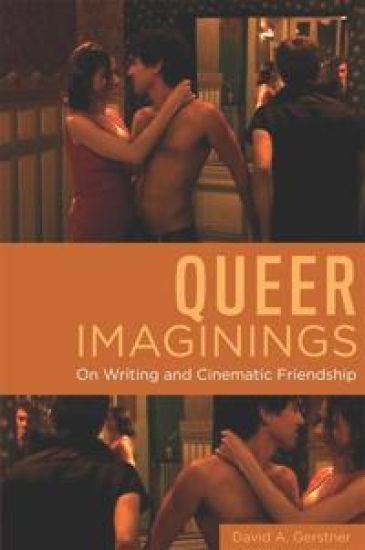
Queer Imaginings

Queer Imaginings

David A. Gerstner

WAYNE STATE UNIVERSITY PRESS
2023
nidottu
How do we identify the "queer auteur" and their queer imaginings? Is it possible to account for such a figure when the very terms "queer" and "auteur" invoke aesthetic surprises and disorientations, disconcerting ironies and paradoxes, and biographical deceits and ambiguities? In eighteen eloquent chapters, David A. Gerstner traces a history of ideas that spotlight an ever-shifting terrain associated with auteur theory and, in particular, queer-auteur theory. Engaging with the likes of Oscar Wilde, Walter Benjamin, James Baldwin, Jean Louis Baudry, Linda Nochlin, Jane Gallop, Cáel Keegan, Luce Irigaray, and other prominent critical thinkers, Gerstner contemplates how the queer auteur in film theory might open us to the work of desire. Queer Imaginings argues for a queer-auteur in which critical theory is reenabled to reconceptualize the auteur in relation to race, gender, sexuality, and desire. Gerstner succinctly defines the contours of a history and the ongoing discussions that situate queer and auteur theories in film studies. Ultimately, Queer Imaginings is a journey in shared pleasures in which writing for and about cinema makes way for unanticipated cinematic friendships.
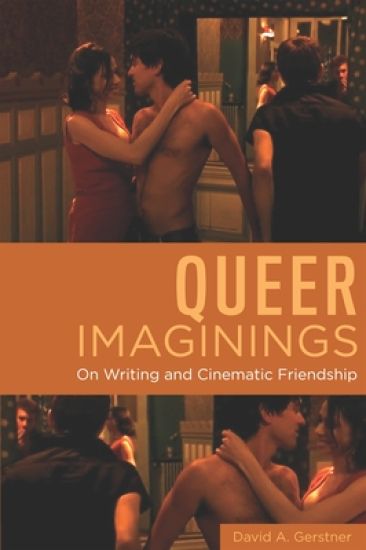
Queer Imaginings

Queer Imaginings

David A. Gerstner

WAYNE STATE UNIVERSITY PRESS
2023
sidottu
How do we identify the "queer auteur" and their queer imaginings? Is it possible to account for such a figure when the very terms "queer" and "auteur" invoke aesthetic surprises and disorientations, disconcerting ironies and paradoxes, and biographical deceits and ambiguities? In eighteen eloquent chapters, David A. Gerstner traces a history of ideas that spotlight an ever-shifting terrain associated with auteur theory and, in particular, queer-auteur theory. Engaging with the likes of Oscar Wilde, Walter Benjamin, James Baldwin, Jean Louis Baudry, Linda Nochlin, Jane Gallop, Cáel Keegan, Luce Irigaray, and other prominent critical thinkers, Gerstner contemplates how the queer auteur in film theory might open us to the work of desire.Queer Imaginings argues for a queer-auteur in which critical theory is reenabled to reconceptualize the auteur in relation to race, gender, sexuality, and desire. Gerstner succinctly defines the contours of a history and the ongoing discussions that situate queer and auteur theories in film studies. Ultimately, Queer Imaginings is a journey in shared pleasures in which writing for and about cinema makes way for unanticipated cinematic friendships.
Christophe Honoré

Christophe Honoré

David A. Gerstner; Julien Nahmias

Wayne State University Press
2015
nidottu
French filmmaker Christophe Honoré challenges audiences with complex cinematic form, intricate narrative structures, and aesthetically dynamic filmmaking. But the limited release of his films outside of Europe has left him largely unknown to U.S. audiences. In Christophe Honoré: A Critical Introduction, authors David A. Gerstner and Julien Nahmias invite English-speaking scholars and cinéastes to explore Honoré’s three most recognized films, Dans Paris (2006), Les Chansons d’amour (2007), and La Belle personne (2008)—“the trilogy.” Gerstner and Nahmias analyze Honoré’s filmmaking as the work of a queer auteur whose cinematic engagement with questions of family, death, and sexual desire represent new ground for queer theory. Considering each of the trilogy films in turn, the authors take a close look at Honoré’s cinematic technique and how it engages with France’s contemporary cultural landscape. With careful attention to the complexity of Honoré’s work, they consider critically contested issues such as the filmmaker’s cinematic strategies for addressing AIDS, the depth of his LGBTQ politics, his representations of death and sexual desire, and the connections between his films and the New Wave. Anchored by a comprehensive interview with the director, the authors incorporate classical and contemporary film theories to offer a range of cinematic interventions for thinking queerly about the noted film author. Christophe Honoré: A Critical Introduction reconceptualizes the relationship between film theory and queer theory by moving beyond predominant literary and linguistic models, focusing instead on cinematic technique. Students and teachers of queer film will appreciate this thought-provoking volume.
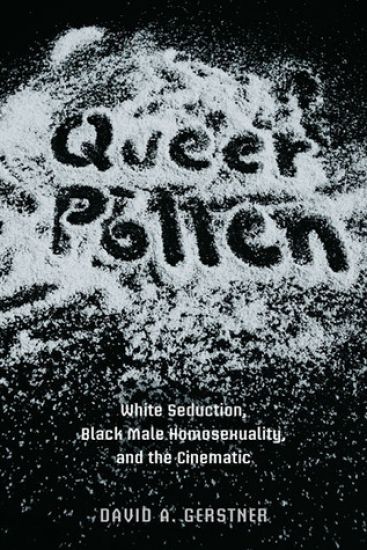
Queer Pollen

Queer Pollen

David A. Gerstner

University of Illinois Press
2011
sidottu
Queer Pollen discusses three notable black queer twentieth century artists--painter and writer Richard Bruce Nugent, author James Baldwin, and filmmaker Marlon Riggs--and the unique ways they turned to various media to work through their experiences living as queer black men. David A. Gerstner elucidates the complexities in expressing queer black desire through traditional art forms such as painting, poetry, and literary prose, or in the industrial medium of cinema. This challenge is made particularly sharp when the terms "black" and "homosexuality" come freighted with white ideological conceptualizations. Gerstner adroitly demonstrates how Nugent, Baldwin, and Riggs interrogated the seductive power and saturation of white queer cultures, grasping the deceit of an entrenched cultural logic that defined their identity and their desire in terms of whiteness. Their work confounds the notion of foundational origins that prescribe the limits of homosexual and racial desire, perversely refusing the cordoned-off classifications assigned to the "homosexual" and the "raced" body. Queer Pollen articulates a cinematic aesthetic that unfolds through painting, poetry, dance, novels, film, and video that marks the queer black body in relation to matters of race, gender, sexuality, nation, and death.
Queer Pollen

Queer Pollen

David A. Gerstner

University of Illinois Press
2011
nidottu
Queer Pollen discusses three notable black queer twentieth century artists--painter and writer Richard Bruce Nugent, author James Baldwin, and filmmaker Marlon Riggs--and the unique ways they turned to various media to work through their experiences living as queer black men. David A. Gerstner elucidates the complexities in expressing queer black desire through traditional art forms such as painting, poetry, and literary prose, or in the industrial medium of cinema. This challenge is made particularly sharp when the terms "black" and "homosexuality" come freighted with white ideological conceptualizations. Gerstner adroitly demonstrates how Nugent, Baldwin, and Riggs interrogated the seductive power and saturation of white queer cultures, grasping the deceit of an entrenched cultural logic that defined their identity and their desire in terms of whiteness. Their work confounds the notion of foundational origins that prescribe the limits of homosexual and racial desire, perversely refusing the cordoned-off classifications assigned to the "homosexual" and the "raced" body. Queer Pollen articulates a cinematic aesthetic that unfolds through painting, poetry, dance, novels, film, and video that marks the queer black body in relation to matters of race, gender, sexuality, nation, and death.
Manly Arts

Manly Arts

David A Gerstner

Duke University Press
2006
pokkari
In this innovative analysis of the interconnections between nation and aesthetics in the United States during the late nineteenth century and the early twentieth, David A. Gerstner reveals the crucial role of early cinema in consolidating a masculine ideal under American capitalism. Gerstner describes how cinema came to be considered the art form of the New World and how its experimental qualities infused other artistic traditions (many associated with Europe-painting, literature, and even photography) with new life: brash, virile, American life. He argues that early filmmakers were as concerned with establishing cinema’s standing in relation to other art forms as they were with storytelling. Focusing on the formal dimensions of early-twentieth-century films, he describes how filmmakers drew on European and American theater, literature, and painting to forge a national aesthetic that equated democracy with masculinity.Gerstner provides in-depth readings of several early American films, illuminating their connections to a wide range of artistic traditions and cultural developments, including dance, poetry, cubism, realism, romanticism, and urbanization. He shows how J. Stuart Blackton and Theodore Roosevelt developed The Battle Cry of Peace (1915) to disclose cinema’s nationalist possibilities during the era of the new twentieth-century urban frontier; how Paul Strand and Charles Sheeler positioned a national avant-garde through the fusion of “American Cubism” and industrialization in their film, Manhatta (1921); and how Oscar Micheaux drew on slave narratives and other African American artistic traditions as he grappled with the ideological terms of African American and white American manhood in his movie Within Our Gates (1920). Turning to Vincente Minnelli’s Cabin in the Sky (1943), Gerstner points to the emergence of an aesthetic of cultural excess that brought together white and African American cultural producers-many of them queer-and troubled the equation of national arts with masculinity.
Manly Arts

Manly Arts

David A Gerstner

Duke University Press
2006
sidottu
In this innovative analysis of the interconnections between nation and aesthetics in the United States during the late nineteenth century and the early twentieth, David A. Gerstner reveals the crucial role of early cinema in consolidating a masculine ideal under American capitalism. Gerstner describes how cinema came to be considered the art form of the New World and how its experimental qualities infused other artistic traditions (many associated with Europe-painting, literature, and even photography) with new life: brash, virile, American life. He argues that early filmmakers were as concerned with establishing cinema’s standing in relation to other art forms as they were with storytelling. Focusing on the formal dimensions of early-twentieth-century films, he describes how filmmakers drew on European and American theater, literature, and painting to forge a national aesthetic that equated democracy with masculinity.Gerstner provides in-depth readings of several early American films, illuminating their connections to a wide range of artistic traditions and cultural developments, including dance, poetry, cubism, realism, romanticism, and urbanization. He shows how J. Stuart Blackton and Theodore Roosevelt developed The Battle Cry of Peace (1915) to disclose cinema’s nationalist possibilities during the era of the new twentieth-century urban frontier; how Paul Strand and Charles Sheeler positioned a national avant-garde through the fusion of “American Cubism” and industrialization in their film, Manhatta (1921); and how Oscar Micheaux drew on slave narratives and other African American artistic traditions as he grappled with the ideological terms of African American and white American manhood in his movie Within Our Gates (1920). Turning to Vincente Minnelli’s Cabin in the Sky (1943), Gerstner points to the emergence of an aesthetic of cultural excess that brought together white and African American cultural producers-many of them queer-and troubled the equation of national arts with masculinity.