Kirjojen hintavertailu. Mukana 12 595 353 kirjaa ja 12 kauppaa.

Kirjailija

David A. Hamburg

Kirjat ja teokset yhdessä paikassa: 10 kirjaa, julkaisuja vuosilta 1997-2015, suosituimpien joukossa A Model of Prevention. Vertaile teosten hintoja ja tarkista saatavuus suomalaisista kirjakaupoista.

10 kirjaa

Kirjojen julkaisuhaarukka 1997-2015.

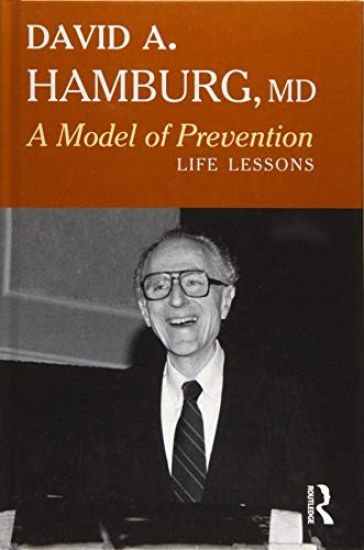
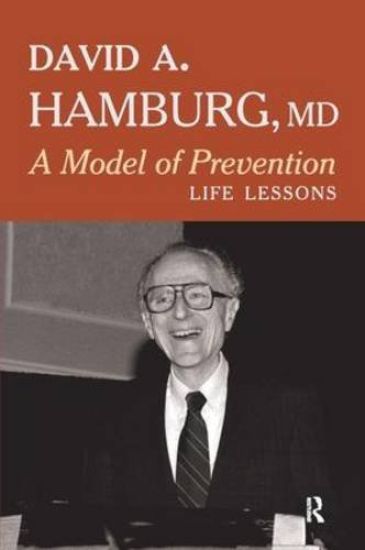
A Model of Prevention

A Model of Prevention

David A. Hamburg

Paradigm
2015
nidottu
An autobiography of a ground-breaking medical doctor. Dr. David A. Hamburg started as a medical student with interest in stress disorders, paying special attention to the propensity toward violence, including the evolution of human aggression. This lead him on a path to becoming one of the most highly celebrated doctors in America - he was a member of President Clinton's Committee of Advisors on Science and Technology and was awarded the Presidential Medal of Freedom (the highest civilian award of the United States). Most recently, he chaired committees at the United Nations and European Union on the prevention of genocide. This book will be inspirational for emerging scientists today.
A Model of Prevention

A Model of Prevention

David A. Hamburg

Paradigm
2015
sidottu
An autobiography of a ground-breaking medical doctor. Dr. David A. Hamburg started as a medical student with interest in stress disorders, paying special attention to the propensity toward violence, including the evolution of human aggression. This lead him on a path to becoming one of the most highly celebrated doctors in America - he was a member of President Clinton's Committee of Advisors on Science and Technology and was awarded the Presidential Medal of Freedom (the highest civilian award of the United States). Most recently, he chaired committees at the United Nations and European Union on the prevention of genocide. This book will be inspirational for emerging scientists today.
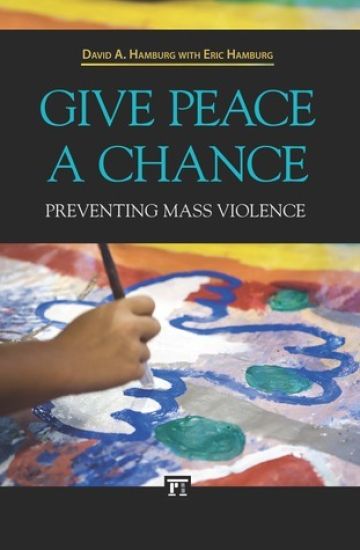
Give Peace a Chance

Give Peace a Chance

David A. Hamburg; Eric Hamburg

Paradigm
2013
nidottu
In Give Peace a Chance, the distinguished Dr. Hamburg teams up with his filmmaker son to tell the story of selected significant peace achievements over the past 25 years. Including lessons from personal experience, pithy quotes from interviews with international dignitaries, and the insights of a documentary sensibility, this book reflects upon striking moments in peace history and inflects them with the perspective of preventive medicine. From Jane Goodall's rainforest research station, to a hostage taking in Eastern Africa, to the Reagan-Gorbachev post-summit epiphany in Reykjavik, the Hamburgs take us there. They then distill the wisdom of these and many other encounters into an essential "six pillars of prevention"-education, early action, democracy building, socioeconomic development, human rights, and arms control. These six pillars are essential not only to reflections upon the past, but to future prospects emerging from recent challenges to peace-the Arab Spring, the violent repression in Syria, and the brewing faceoff with Iran. Features of this engaging text: Combines personal experience(including involvement in a hostage rescue mission) with ongoing research in a variety of areas over 50+ years. Includes feature quotes and vignettes from international figures including Kofi Annan, Sam Nunn, and Hillary Clinton, among many others. Builds upon six key pillars of prevention: education, early warning, democracy, development, human rights, and arms control. Concludes with prescriptions for peace action in four key areas: the US and Western democracies, the UN, the EU, and NATO. Offers carefully selected Recommended Readings for every chapter. See Stanford University's website for twenty-nine videotaped interviews with world leaders in the prevention of mass violence at http://lib.stanford.edu/preventing-genocide/list-interviews
Give Peace a Chance

Give Peace a Chance

David A. Hamburg; Eric Hamburg

Paradigm
2012
sidottu
In Give Peace a Chance, the distinguished Dr. Hamburg teams up with his filmmaker son to tell the story of selected significant peace achievements over the past 25 years. Including lessons from personal experience, pithy quotes from interviews with international dignitaries, and the insights of a documentary sensibility, this book reflects upon striking moments in peace history and inflects them with the perspective of preventive medicine. From Jane Goodall's rainforest research station, to a hostage taking in Eastern Africa, to the Reagan-Gorbachev post-summit epiphany in Reykjavik, the Hamburgs take us there. They then distill the wisdom of these and many other encounters into an essential "six pillars of prevention"-education, early action, democracy building, socioeconomic development, human rights, and arms control. These six pillars are essential not only to reflections upon the past, but to future prospects emerging from recent challenges to peace-the Arab Spring, the violent repression in Syria, and the brewing faceoff with Iran. Features of this engaging text: Combines personal experience(including involvement in a hostage rescue mission) with ongoing research in a variety of areas over 50+ years. Includes feature quotes and vignettes from international figures including Kofi Annan, Sam Nunn, and Hillary Clinton, among many others. Builds upon six key pillars of prevention: education, early warning, democracy, development, human rights, and arms control. Concludes with prescriptions for peace action in four key areas: the US and Western democracies, the UN, the EU, and NATO. Offers carefully selected Recommended Readings for every chapter. See Stanford University's website for twenty-nine videotaped interviews with world leaders in the prevention of mass violence at http://lib.stanford.edu/preventing-genocide/list-interviews
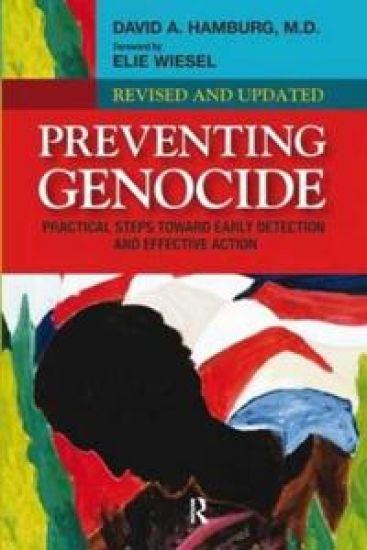
Preventing Genocide

Preventing Genocide

David A. Hamburg; Elie Wiesel

Paradigm
2010
nidottu
Genocide has been called 'a problem from hell' and despite vehement declarations of 'never again' it's a problem that continues to plague the world. From the beginning of history to the most recent massacres in Bosnia, Rwanda, and Darfur, genocide defies resolution. And given today's worldwide access to highly lethal weapons and advanced communications technology facilitating incitement to hate, we can expect to see this problem grow. It is often claimed that genocide occurs without warning, taking both local and global communities by surprise. Yet, as David Hamburg convincingly shows, we have had long-term advance knowledge of most modern genocides dating back to the early 20th century Armenian tragedy in Turkey and before. In this book, Dr. Hamburg applies a groundbreaking new perspective-the medical model of prevention-to the scourge of genocide in the world. Preventing genocide is not only possible, Dr Hamburg contends, but essential given its high cost in lives, human rights, and international security. Here he maps out numerous practical steps to recognise genocidal conflicts early and stem their tides of violence before they become acute. He also outlines several institutions in place and programs underway at the UN, EU, and NATO devoted to preventing future genocides before they erupt. He draws lessons both from missed opportunities and successful experiences and makes many constructive suggestions about strengthening international institutions, governments, and NGOs for this purpose.
Preventing Genocide

Preventing Genocide

David A. Hamburg; Elie Wiesel

Paradigm
2008
sidottu
Genocide has been called 'a problem from hell' and despite vehement declarations of 'never again' it's a problem that continues to plague the world. From the beginning of history to the most recent massacres in Bosnia, Rwanda, and Darfur, genocide defies resolution. And given today's worldwide access to highly lethal weapons and advanced communications technology facilitating incitement to hate, we can expect to see this problem grow. It is often claimed that genocide occurs without warning, taking both local and global communities by surprise. Yet, as David Hamburg convincingly shows, we have had long-term advance knowledge of most modern genocides dating back to the early 20th century Armenian tragedy in Turkey and before. In this book, Dr. Hamburg applies a groundbreaking new perspective-the medical model of prevention-to the scourge of genocide in the world. Preventing genocide is not only possible, Dr Hamburg contends, but essential given its high cost in lives, human rights, and international security. Here he maps out numerous practical steps to recognise genocidal conflicts early and stem their tides of violence before they become acute. He also outlines several institutions in place and programs underway at the UN, EU, and NATO devoted to preventing future genocides before they erupt. He draws lessons both from missed opportunities and successful experiences and makes many constructive suggestions about strengthening international institutions, governments, and NGOs for this purpose.
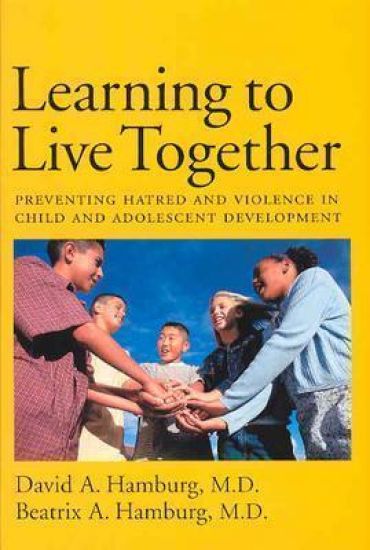
Learning to Live Together

Learning to Live Together

David A. Hamburg; Beatrix A. Hamburg

Oxford University Press Inc
2004
sidottu
The aim of the book is to enhance understanding of the great danger and some sources of animosity between human groups and to focus on developmental processes by which it should be possible to diminish orientations of ethnocentrism, prejudice and hatred. Teaching prejudice and ethnocentrism to children has, all too often in so many places, been virtually automatic and has been conducive to terrible harm in the past. The dangers of hateful outlooks are likely to be much greater as the twenty-first century unfolds. Scholarship and practice in international relations, including war and peace issues, have gravely neglected the crucial psychological aspects of these terrible problems and the educational opportunities. There is a fruitful conjunction of developmental and social psychology in understanding such vital issues and in working toward a more humane, democratic and safe course of adolescent and child development than can in turn affect the safety of humanity in the long run. There are many intriguing examples of research, educational innovations, and visionary leadership in several countries. Most of the book is devoted to promising lines of inquiry and innovation that foster a more humane and less violent development in childhood and adolescence. It should be of interest to scholars, to the education community, and to a well-educated and socially concerned segment of the community.
No More Killing Fields

No More Killing Fields

David A. Hamburg

Rowman Littlefield Publishers
2003
nidottu
David A. Hamburg—doctor, teacher, hostage negotiator, presidential advisor, and more—has seen a lot in his 77 years and has a message for the 21st century: An ounce of prevention is worth many pounds of cure when it comes to deadly international conflict. To explore how the model of preventive medicine may be practically applied to political violence, Hamburg created the Carnegie Commission on Preventing Deadly Conflict. This book is the capstone of the Commission's extensive efforts and covers situations as widely ranging as World War II's Holocaust, recent terrorist attacks in the U.S., and the War in Iraq. As Hamburg details, the prevention of war is built on key pillars including democratic governance, economic development, and nonviolent problem solving in dangerous situations. International cooperation and strong leadership at every level are essential. Perhaps most important, a civil society that embraces differences rather than exploiting them is an evolving need. In No More Killing Fields, David A. Hamburg combines the best of long personal experience, multifaceted scholarship, and acute prognosis to point the way toward peace in the 21st century.
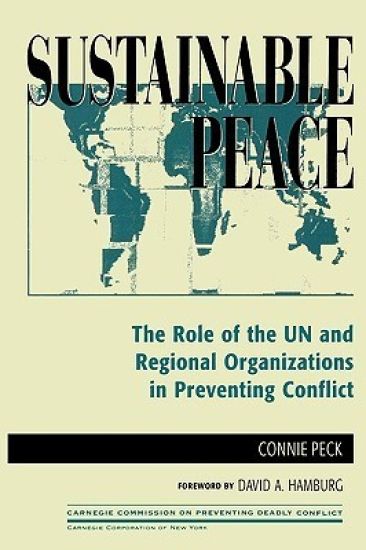
Sustainable Peace

Sustainable Peace

Connie Peck; David A. Hamburg

Rowman Littlefield
1998
nidottu
The end of the twentieth century saw the easing of East-West tension but not the end of violent conflict_especially within states. There has been growing consensus that the international community needs to find more effective ways of preventing such internal conflicts. This book argues that the most sustainable means of promoting peace within states is the development of good governance, which can address the root causes of conflict and meet basic human security needs. Good governance offers groups a 'voice' in resolving grievances at an early stage before they grow into major problems, safeguards human rights, and promotes a fairer distribution of resources. The author suggests that the focus of good international and regional governance should be the promotion of more effective national and local governance, and she outlines the efforts of the United Nations, regional organizations_such as the Organization for Security and Cooperation in Europe, the Organization of African Unity, and the Organization of American States_and NGOs, such as the Carter Center. The most successful approaches of these organizations could be applied through proposed Regional Centers for Sustainable Peace.
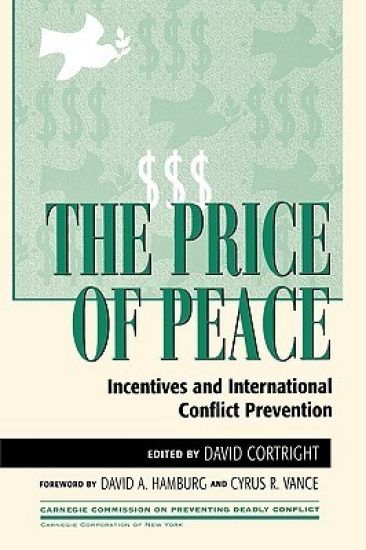
The Price of Peace

The Price of Peace

David A. Hamburg; Cyrus R. Vance Jr.

Rowman Littlefield
1997
nidottu
Carrots and sticks have always been used in combination in diplomatic affairs, but scholars and policymakers have focused more on the sticks than the carrots. In this provocative study, policy-savvy scholars examine a wide range of cases—from North Korea to South Africa to El Salvador and Bosnia—to demonstrate the power of incentives to deter nuclear proliferation, prevent armed conflict, defend civil and human rights, and rebuild war-torn societies. The book addresses the 'moral hazard' of incentives, the danger that they can be construed as bribes, concessions, or appeasement. Incentives can take many forms—economic and political, as palpable as fuel oil and as intangible, yet powerful, as diplomatic recognition and 'constructive engagement.' The cases demonstrate that incentives can sometimes succeed when traditional methods—threats, sanctions, or force—fail or are too dangerous to apply.