Kirjojen hintavertailu. Mukana 12 390 323 kirjaa ja 12 kauppaa.

Kirjailija

David A. Hopkins

Kirjat ja teokset yhdessä paikassa: 7 kirjaa, julkaisuja vuosilta 2016-2024, suosituimpien joukossa Presidential Elections. Vertaile teosten hintoja ja tarkista saatavuus suomalaisista kirjakaupoista.

7 kirjaa

Kirjojen julkaisuhaarukka 2016-2024.

Polarized by Degrees

Polarized by Degrees

Matt Grossmann; David A. Hopkins

Cambridge University Press
2024
sidottu
Over the past several decades, American society has experienced fundamental changes – from shifting relations between social groups and evolving language and behavior norms to the increasing value of a college degree. These transformations have polarized the nation's political climate and ignited a perpetual culture war. In a sequel to their award-winning collaboration Asymmetric Politics, Grossmann and Hopkins draw on an extensive variety of evidence to explore how these changes have affected both major parties. They show that the Democrats have become the home of highly-educated citizens with progressive social views who prefer credentialed experts to make policy decisions, while Republicans have become the populist champions of white voters without college degrees who increasingly distrust teachers, scientists, journalists, universities, non-profit organizations, and even corporations. The result of this new “diploma divide” between the parties is an increasingly complex world in which everything is about politics – and politics is about everything.

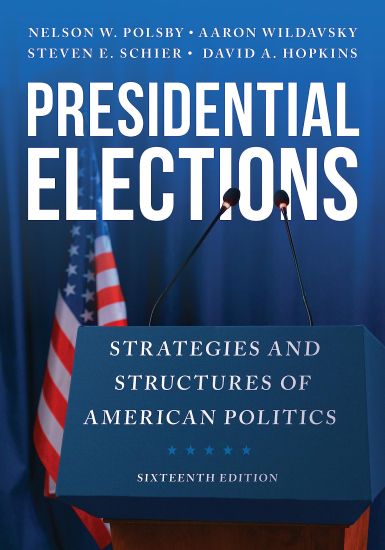
Presidential Elections

Presidential Elections

Nelson W. Polsby; Aaron Wildavsky; Steven E. Schier; David A. Hopkins

BLOOMSBURY PUBLISHING PLC
2023
sidottu
Polsby and Wildavsky’s classic text, now updated by Stephen Schier and David Hopkins, argues that the institutional rules of the presidential nomination and election processes, in combination with the behavior of the mass electorate, structure the strategic choices faced by politicians in powerful and foreseeable ways. We can make sense of the decisions made by different political actors—incumbents, challengers, Democrats, Republicans, consultants, party officials, activists, delegates, journalists, and voters—by understanding the ways in which their world is organized by incentives, regulations, events, resources, customs, and opportunities. Thoroughly revised and updated, this Sixteenth Edition provides everything students need to know about presidential elections going into the 2024 cycle.
Presidential Elections

Presidential Elections

Nelson W. Polsby; Aaron Wildavsky; Steven E. Schier; David A. Hopkins

BLOOMSBURY PUBLISHING PLC
2023
nidottu
Polsby and Wildavsky’s classic text, now updated by Stephen Schier and David Hopkins, argues that the institutional rules of the presidential nomination and election processes, in combination with the behavior of the mass electorate, structure the strategic choices faced by politicians in powerful and foreseeable ways. We can make sense of the decisions made by different political actors—incumbents, challengers, Democrats, Republicans, consultants, party officials, activists, delegates, journalists, and voters—by understanding the ways in which their world is organized by incentives, regulations, events, resources, customs, and opportunities. Thoroughly revised and updated, this Sixteenth Edition provides everything students need to know about presidential elections going into the 2024 cycle.
Presidential Elections

Presidential Elections

Nelson W. Polsby; Aaron Wildavsky; Steven E. Schier; David A. Hopkins

Rowman Littlefield
2019
nidottu
Polsby and Wildavsky’s classic text argues that the institutional rules of the presidential nomination and election processes, in combination with the behavior of the mass electorate, structure the strategic choices faced by politicians in powerful and foreseeable ways. We can make sense of the decisions made by differently situated political actors—incumbents, challengers, Democrats, Republicans, consultants, party official, activists, delegates, journalists, and voters—by understanding the ways in which their world is organized by incentives, regulations, events, resources, customs, and opportunities.
Red Fighting Blue

Red Fighting Blue

David A. Hopkins

Cambridge University Press
2017
sidottu
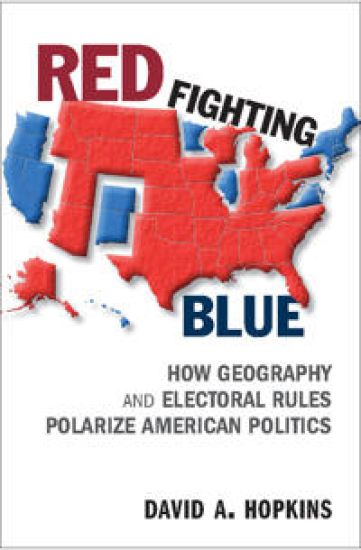
The national electoral map has split into warring regional bastions of Republican red and Democratic blue, producing a deep and enduring partisan divide in American politics. In Red Fighting Blue, David A. Hopkins places the current partisan and electoral era in historical context, explains how the increased salience of social issues since the 1980s has redefined the parties' geographic bases of support, and reveals the critical role that American political institutions play in intermediating between the behavior of citizens and the outcome of public policy-making. The widening geographic gap in voters' partisan preferences, as magnified further by winner-take-all electoral rules, has rendered most of the nation safe territory for either Democratic or Republican candidates in both presidential and congressional elections - with significant consequences for party competition, candidate strategy, and the operation of government.
Asymmetric Politics

Asymmetric Politics

Matt Grossman; David A. Hopkins

Oxford University Press Inc
2016
nidottu
The Republican Party is best understood as the vehicle of an ideological movement whose leaders prize commitment to conservative doctrine; Republican candidates primarily appeal to voters by emphasizing broad principles and values. In contrast, the Democratic Party is better characterized as a coalition of social groups seeking concrete government action from their allies in office, with group identities and interests playing a larger role than abstract ideology in connecting Democratic elected officials with organizational leaders and electoral supporters. Building on this core distinction, Asymmetric Politics investigates the most consequential differences in the organization and style of the two major parties. Whether examining voters, activists, candidates, or officeholders, Grossman and Hopkins find that Democrats and Republicans think differently about politics, producing distinct practices and structures. The analysis offers a new understanding of the rise in polarization and governing dysfunction and a new explanation for the stable and exceptional character of American political culture and public policy.
Asymmetric Politics

Asymmetric Politics

Matt Grossman; David A. Hopkins

Oxford University Press Inc
2016
sidottu
The Republican Party is best understood as the vehicle of an ideological movement whose leaders prize commitment to conservative doctrine; Republican candidates primarily appeal to voters by emphasizing broad principles and values. In contrast, the Democratic Party is better characterized as a coalition of social groups seeking concrete government action from their allies in office, with group identities and interests playing a larger role than abstract ideology in connecting Democratic elected officials with organizational leaders and electoral supporters. Building on this core distinction, Asymmetric Politics investigates the most consequential differences in the organization and style of the two major parties. Whether examining voters, activists, candidates, or officeholders, Grossman and Hopkins find that Democrats and Republicans think differently about politics, producing distinct practices and structures. The analysis offers a new understanding of the rise in polarization and governing dysfunction and a new explanation for the stable and exceptional character of American political culture and public policy.