Kirjojen hintavertailu. Mukana 12 326 962 kirjaa ja 12 kauppaa.
Kirjailija
David A. Johnson
Kirjat ja teokset yhdessä paikassa: 15 kirjaa, julkaisuja vuosilta 2001-2025, suosituimpien joukossa God Speaks Science. Vertaile teosten hintoja ja tarkista saatavuus suomalaisista kirjakaupoista.
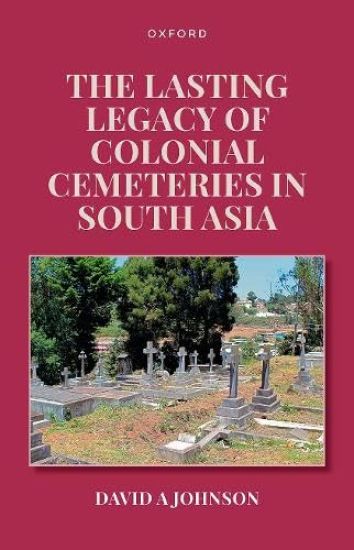
The Lasting Legacy of Colonial Cemeteries in South Asia explores the interplay between architecture and historical memory, highlighting how colonial cemeteries serve as enduring reminders of the British Empire in the region. During British rule, nearly two million Europeans were interred in government-controlled cemeteries, which not only housed their remains but also chronicled the expansion of Britain’s Indian Empire, its military endeavours, and commercial activities. After India gained independence in 1947, these cemeteries were transferred to the new governments, which showed little interest in their upkeep. The British High Commission attempted to manage them through local Christian committees, but this initiative faltered by the late 1950s due to funding issues. In response to the rapid decay of these sites, the British Association for Cemeteries in South Asia (BACSA) was formed to preserve these historical markers and the colonial memories they embody in a changing postcolonial landscape.

"In connecting hearers to the grace of Jesus, the preacher must somehow get their attention, spark their imaginations, and help them draw a line, even a circuitous one, from their own human experience to what God has done for us in Jesus. That means the preacher must use what the hearers already know, see, and experience in their lives and in the larger culture around them. In other words, preachers must use the stuff of life, real life, if they have any hope of moving people from death to life... That's what makes Fr. Dave Johnson such a captivating preacher. He is willing to take the stuff of life, every bit of it, and lay it out there, connecting it all to the great narrative God has woven that leads from separation, sin, and death to love, redemption, and life." - The Right Rev. Scott Anson Benhase, 10th Bishop of Georgia
Delves into the ancient debate regarding the nature and purpose of the seven sacraments What are the sacraments? For centuries, this question has elicited a lively discussion and among theologians, and a variety of answers that do anything but outline a unified belief concerning these fundamental ritual structures. In this extremely cohesive and well-crafted volume, a group of renowned scholars map the theologies of sacraments offered by key Christian figures from the Early Church through the twenty-first century. Together, they provide a guide to the variety of views about sacraments found throughout Christianity, showcasing the variety of approaches to understanding the sacraments across the Catholic, Protestant, and Orthodox faith traditions. Chapters explore the theologies of thinkers from Basil to Aquinas, Martin Luther to Gustavo Gutiérrez. Rather than attempting to distill their voices into a single view, the book addresses many of the questions that theologians have tackled over the two thousand year history of Christianity. In doing so, it paves the way for developing theologies of sacraments for present and future contexts. The text places each theology of the sacraments into its proper sociohistorical context, illuminating how the church has used the sacraments to define itself and its congregations over time. The definitive resource on theologies of the sacraments, this volume is a must-read for students, theologians, and spiritually interested readers alike.
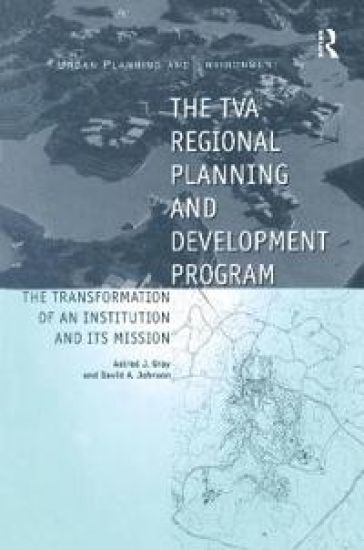
The Tennessee Valley Authority (TVA) is a world-renowned model for regional planning and development. Based along the Tennessee River and its series of hydro-electric power stations, dams and reservoirs, the TVA development program envisioned a broad regional planning program. The program focused on development opportunities and problems around the array of TVA dams and their reservoirs. It also created new 'model' towns and pioneered land-use planning bringing together federal, state, and local agencies, farmers, foresters and industrial firms to further the economic, social, and physical conditions of what had been one of the most seriously lagging regions of the U.S. This book is based on the memoirs and experiences of Aelred J. Gray, former planner with the TVA, who saw the 'big picture' and introduced much of the pioneering work of the agency. Gray worked as a staff planner at the TVA for nearly 40 years including a decade as its chief planner, overseeing numerous changes and developments to the Authority's program. As well as building up the regional industrial development and the foundation of state parks, he also had a strong interest in the region's cities. In the 1950s he introduced TVA's landmark Flood Prevention Program, which became a national model. His review of how this innovative and influential regional development agency functioned and changed through the decades will be of value to all those interested in planning practice, planning history, and regional politics.
Medical Licensing and Discipline in America traces the evolution of the U.S. medical licensing system from its historical antecedents in the 18th and 19th century to its modern structure. David A. Johnson and Humayun J. Chaudhry provide an organizational history of the Federation of State Medical Boards within the broader context of the development of America’s state-based system. As the national organization representing the interests of the individual state medical boards, the Federation has been at the forefront of developments in licensing, discipline, and regulation impacting the medical profession, medical education, and health policy within the United States. The narrative shifts between micro- and macro-level developments in the evolution of America’s medical licensing system, blending national context with state-specific and Federation initiatives. For example, the book documents such milestones as the national shift toward greater public accountability by state medical boards as evidenced by California’s inclusion of public members on its medical board, New Mexico’s requirement for continuing medical education by physicians as a condition for license renewal and the Federation’s policy development work advocating for both initiatives among all state medical boards. The book begins by examining the 18th and 19th century origins of the modern state-based medical regulatory system, including the reinstitution of licensing boards in the latter part of the 19th century and the early challenges facing boards, e.g., license portability, examinations, physician impostors, inter-professional tensions among physicians, etc. Medical Licensing and Discipline in America picks up the story of the Federation and its role in the major issue of licensing and discipline in the 20th century: uniformity in medical statute, evaluation of international medical graduates, nationally administered examinations for licensure, etc.
Given the prevalence of obesity, any physician providing clinical care will be involved in the care of obese patients. Gastroenterologists will play an active role in the evaluation and treatment of these patients. Thereby, it is essential to fully understand the scope of the problem and the opportunities for intervention. The expert authors assembled for this issue offer expanded insight which can enhance care plans provided to this patient population. Since Dr. Johnson's first issue published, there are several updates in this area, and the articles in this volume address those. These updates are seen in the areas of medical therapy, surgical options, and endoscopic treatments for obese patients.
The Tennessee Valley Authority (TVA) is a world-renowned model for regional planning and development. Based along the Tennessee River and its series of hydro-electric power stations, dams and reservoirs, the TVA development program envisioned a broad regional planning program. The program focused on development opportunities and problems around the array of TVA dams and their reservoirs. It also created new 'model' towns and pioneered land-use planning bringing together federal, state, and local agencies, farmers, foresters and industrial firms to further the economic, social, and physical conditions of what had been one of the most seriously lagging regions of the U.S. This book is based on the memoirs and experiences of Aelred J. Gray, former planner with the TVA, who saw the 'big picture' and introduced much of the pioneering work of the agency. Gray worked as a staff planner at the TVA for nearly 40 years including a decade as its chief planner, overseeing numerous changes and developments to the Authority's program. As well as building up the regional industrial development and the foundation of state parks, he also had a strong interest in the region's cities. In the 1950s he introduced TVA's landmark Flood Prevention Program, which became a national model. His review of how this innovative and influential regional development agency functioned and changed through the decades will be of value to all those interested in planning practice, planning history, and regional politics.
In the spring of 1944, Adolf Hitler firmly believed that the Allies would invade the Continent by landing troops on the beaches of Normandy, but anti-Nazi officers in German Intelligence ultimately persuaded him that Normandy would be a mere diversion. The real invasion, Hitler was assured, would be at Calais. Righteous Deception focuses on the activities of two officers whose consciences kept them from siding with Hitler and the Nazis. Their campaign of misinformation and deception convinced Hitler to keep half of the German forces in northern France to defend against an invasion that would never come. This decision ultimately cost Hitler the war. Admiral Wilhelm Canaris, head of German Military Intelligence, turned against Hitler within a year after he had come to power. Canaris and his circle of friends in an opposition movement known as the Schwarze Kapelle (Black Orchestra) did everything possible to prevent Hitler from winning the war, which believed would be a catastrophe. Colonel Alexis von Roenne headed the Fremde Heere West, the branch of Intelligence responsible for evaluating the strength of Allied forces. In a key position to alter findings and other information pertaining to Allied forces in Britain, he doubled the estimated number of troops assembling for D-Day, giving the impression that the Allies had enough men and equipment in Britain for both an invasion in Calais and a diversion in Normandy.