Kirjojen hintavertailu. Mukana 12 126 321 kirjaa ja 12 kauppaa.

Kirjailija

David A. Jopling

Kirjat ja teokset yhdessä paikassa: 5 kirjaa, julkaisuja vuosilta 1997-2010, suosituimpien joukossa Talking Cures and Placebo Effects. Vertaile teosten hintoja ja tarkista saatavuus suomalaisista kirjakaupoista.

Mukana myös kirjoitusasut: David A Jopling

5 kirjaa

Kirjojen julkaisuhaarukka 1997-2010.

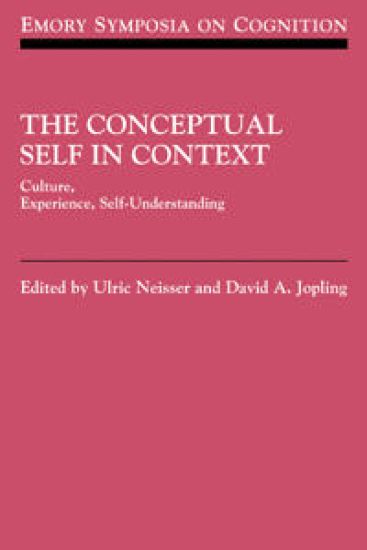
The Conceptual Self in Context

The Conceptual Self in Context

Ulric Neisser; David A. Jopling

Cambridge University Press
2010
pokkari
What is the self-concept and how does it develop? Do people in different cultures have sharply different concepts of self? Can we believe what our informants tell us on this point? What is known about the self-concepts of depressives? of schizophrenics? How does meditation affect the sense of self? Is there an inner 'self of selves' as James once suggested? These are, of course, hotly debated questions in the social sciences. In this book a prestigious group of psychologists, linguists, anthropologists and philosophers addresses these questions and presents some surprising answers. This is the third and last of the Emory Symposia organized around Ulric Neisser's cognitive theory of self-knowledge, it goes beyond The Perceived Self and The Remembering Self to deal with psychological and philosophical questions surrounding the self.

Talking Cures and Placebo Effects

Talking Cures and Placebo Effects

David A. Jopling

Oxford University Press
2008
nidottu
Psychoanalysis has had to defend itself from a barrage of criticism throughout its history. Nevertheless, there are many who claim to have been helped by this therapy, and who claim to have achieved genuine insight into their condition. But do the psychodynamic or exploratory psychotherapies - the so-called talking cures - really help clients get in touch with their "inner", "real" or "true" selves? Do clients make important discoveries about the real causes of their behaviours, emotions, and personalities? Are their insights, and the psychodynamic interpretations offered them by their psychotherapists, true? Many think so. Talking Cures and Placebo Effects contests this view. It defends the unpopular hypothesis that therapeutic changes in the psychodynamic psychotherapies are sometimes functions of powerful placebos that rally the mind's native healing powers in much the same way that placebo pills rally the body's native healing powers; and that psychodynamic insights and interpretations are themselves placebos. Few clients know this, and fewer still are informed of the potential placebo effects at play in exploratory psychotherapy, and of the consequent risks of self-misinterpretation and self-deception. Thus does Talking Cures and Placebo Effects target a host of problems that lie at the very intersection of the epistemology, ethics, scientific status, and public accountability of the talking cures.
Self-Knowledge and the Self

Self-Knowledge and the Self

David A Jopling

Routledge
2000
sidottu
In this clear and reasoned discussion of self- knowledge and the self, the author asks whether it is really possible to know ourselves as we really are. He illuminates issues about the nature of self-identity which are of fundamental importance in moral psychology, epistemology and literary criticism. Jopling focuses on the accounts of Stuart Hampshire, Jean-Paul Sartre and Richard Rorty, and dialogical philosophical psychology and illustrates his argument with examples from literature, drama and psychology.
Self-Knowledge and the Self

Self-Knowledge and the Self

David A Jopling

Routledge
2000
nidottu
In this clear and reasoned discussion of self- knowledge and the self, the author asks whether it is really possible to know ourselves as we really are. He illuminates issues about the nature of self-identity which are of fundamental importance in moral psychology, epistemology and literary criticism. Jopling focuses on the accounts of Stuart Hampshire, Jean-Paul Sartre and Richard Rorty, and dialogical philosophical psychology and illustrates his argument with examples from literature, drama and psychology.
The Conceptual Self in Context

The Conceptual Self in Context

Ulric Neisser; David A. Jopling

Cambridge University Press
1997
sidottu
What is the self-concept and how does it develop? Do people in different cultures have sharply different concepts of self? Can we believe what our informants tell us on this point? What is known about the self-concepts of depressives? of schizophrenics? How does meditation affect the sense of self? Is there an inner 'self of selves' as James once suggested? These are, of course, hotly debated questions in the social sciences. In this book a prestigious group of psychologists, linguists, anthropologists and philosophers addresses these questions and presents some surprising answers. This is the third and last of the Emory Symposia organized around Ulric Neisser's cognitive theory of self-knowledge, it goes beyond The Perceived Self and The Remembering Self to deal with psychological and philosophical questions surrounding the self.