

Kirjailija
David A Powell
Kirjat ja teokset yhdessä paikassa: 5 kirjaa, julkaisuja vuosilta 2016-2026, suosituimpien joukossa The Atlanta Campaign. Vertaile teosten hintoja ja tarkista saatavuus suomalaisista kirjakaupoista.
Mukana myös kirjoitusasut: David A. Powell
5 kirjaa
Kirjojen julkaisuhaarukka 2016-2026.
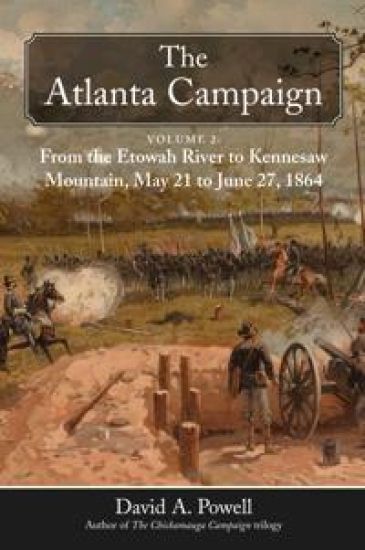
The scope, drama, and importance of the 1864 Atlanta Campaign was on a par with Ulysses S. Grant’s Overland Campaign in Virginia. Despite its criticality and massive array of primary source material, the north Georgia operations have lingered in the shadows of other campaigns. Award-winning author David Powell’s first of five installments, The Atlanta Campaign: Volume 1: Dalton to Cassville, May 1–19, 1864, treated the opening phase of the campaign—weeks of maneuver and several days of heavy fighting at Resaca, after which the Confederates slipped out of Sherman’s traps and escaped across the Oostanaula and Etowah rivers. His second offering, From the Etowah River to Kennesaw Mountain, May 21 to June 27, 1864, marches with the armies and their leaders deeper into Georgia. The heavyweight match unfolding between Grant and Lee in the Wilderness and fields and woodlots of Spotsylvania increased the pressure on Sherman to do everything he could to prevent Joe Johnston from sending troops to reinforce Virginia. Sherman had closed half the distance to Johnston’s base at Atlanta, but the Army of Tennessee had grown in numbers, and the odds that were once 2 to 1 against it were now almost even. Sherman opened the second phase of the campaign on May 23 by throwing his army across the Etowah. Instead of moving down the railroad to Allatoona, however, he marched west of Marietta to Dallas. The next five weeks were by some measures the hardest of the entire summer as maneuvering gave way to trench warfare, first along the New Hope Line, then Pine and Lost mountains, along the Mud Creek Line, and finally, atop the imposing slopes of Kennesaw Mountain. The daily grind, punctuated by periodic assaults at New Hope Church, Pickett’s Mill, Gilgal Church, and Pigeon and Cheatham hills, took a terrible toll on both armies. The heavy rain through most of June made life in the field a misery, sick lists spiked, and men and horses broke down or died. As June drew to a close, neither side could claim victory. Sherman remained undaunted. He would return to flanking, and this time, Atlanta was a mere dozen miles distant. This multi-volume study is based heavily on hundreds of primary accounts (many of which have never been used), 21 original maps, a firm understanding of the terrain, and a keen grasp of military strategy and tactics. Powell’s The Atlanta Campaign is this generation’s definitive treatment of one of the most important and fascinating confrontations of the entire Civil War. And it will stand the test of time.
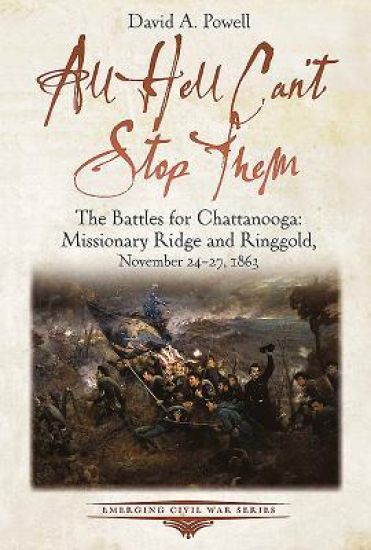
To many of the Federal soldiers watching the Stars and Stripes unfurl atop Lookout Mountain on the morning of November 25, 1863, it seemed that the battle to relieve Chattanooga was complete. The Union Army of the Cumberland was no longer trapped in the city, subsisting on short rations and awaiting rescue; instead, they were again on the attack.Ulysses S. Grant did not share their certainty. For Grant, the job he had been sent to accomplish was only half-finished. Braxton Bragg’s Confederate Army of Tennessee still held Missionary Ridge, with other Rebels under James Longstreet threatening more Federals in Knoxville, Tennessee. Grant’s greatest fear was that the Rebels would slip away before he could deliver the final blows necessary to crush Bragg completely.That blow landed on the afternoon of November 25. Each of Grant’s assembled forces—troops led by Union Generals William T. Sherman, George H. Thomas, and Joseph Hooker—all moved to the attack. Stubbornly, Bragg refused to retreat, and instead accepted battle. That decision would cost him dearly.But everything did not go Grant’s way. Despite what Grant’s many admirers would later insist was his most successful, most carefully planned battle, Grant’s strategy failed him—as did his most trusted commander, Sherman. Victory instead charged straight up the seemingly impregnable slopes of Missionary Ridge’s western face, as the men of the much-maligned Army of the Cumberland swarmed up and over Bragg’s defenses in an irresistible blue tide.Caught flat-footed by this impetuous charge, Grant could only watch nervously as the men started up . . .All Hell Can’t Stop Them: The Battles for Chattanooga—Missionary Ridge and Ringgold, November 24-27, 1863—sequel to Battle Above the Clouds—details the dramatic final actions of the battles for Chattanooga: Missionary Ridge and the final Confederate rearguard action at Ringgold, where Patrick Cleburne held Grant’s Federals at bay and saved the Army of Tennessee from further disaster.
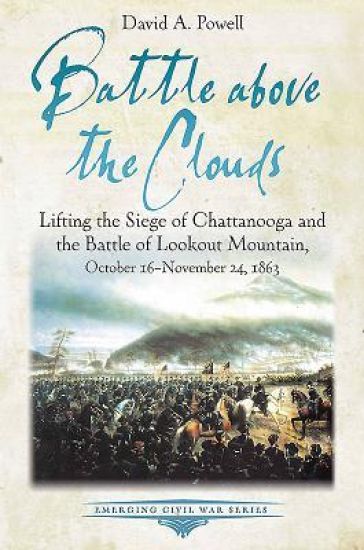
In October 1863, the Union Army of the Cumberland was besieged in Chattanooga, all but surrounded by familiar opponents: The Confederate Army of Tennessee. The Federals were surviving by the narrowest of margins, thanks only to a trickle of supplies painstakingly hauled over the sketchiest of mountain roads. Soon even those quarter-rations would not suffice. Disaster was in the offing.Yet those Confederates, once jubilant at having routed the Federals at Chickamauga and driven them back into the apparent trap of Chattanooga’s trenches, found their own circumstances increasingly difficult to bear. In the immediate aftermath of their victory, the South rejoiced; the Confederacy’s own disasters of the previous summer—Vicksburg and Gettysburg—were seemingly reversed. Then came stalemate in front of those same trenches. The Confederates held the high ground, Lookout Mountain and Missionary Ridge, but they could not completely seal off Chattanooga from the north.The Union responded. Reinforcements were on the way. A new man arrived to take command: Ulysses S. Grant. Confederate General Braxton Bragg, unwilling to launch a frontal attack on Chattanooga’s defenses, sought victory elsewhere, diverting troops to East Tennessee.Battle above the Clouds by David Powell recounts the first half of the campaign to lift the siege of Chattanooga, including the opening of the “cracker line,” the unusual night battle of Wauhatchie, and one of the most dramatic battles of the entire war: Lookout Mountain.

Barren Victory is the third and concluding volume of the magisterial Chickamauga Campaign Trilogy, a comprehensive examination more than a decade in the making of one of the most important and complex military operations of the Civil War. The first installment, A Mad Irregular Battle, introduced readers to the major characters of this sweeping drama and carried them from the Union crossing of the Tennessee River in August 1863 up through the bloody but inconclusive combat of the first and second days of the battle (September 18 and 19, 1863). Glory or the Grave, the trilogy’s second volume, focused on September 20—the decisive third day of fighting that included the Confederate breakthrough of the late morning and the desperate Union final stand on Horseshoe Ridge. This installment drew to a close at nightfall. Barren Victory, David Powell’s final installment, examines the immediate aftermath of this great battle with unprecedented clarity and detail. The narrative opens at dawn on Monday, September 21, 1863, with Union commander William S. Rosecrans in Chattanooga and most of the rest of his Federal army in Rossville, Georgia. Confederate Gen. Braxton Bragg has won the signal victory of his career, but has yet to fully grasp that fact or the fruits of his success. Unfortunately for the South, three grueling days of combat has broken down the Army of Tennessee and made a vigorous pursuit nearly impossible. In addition to carefully examining the decisions made by each army commander and their consequences, Powell sets forth the dreadful costs of the fighting in terms of the human suffering involved. Barren Victory concludes with the most detailed order of battle (including unit strengths and losses) for Chickamauga ever compiled, and a comprehensive bibliography. David Powell’s The Chickamauga Campaign Trilogy is now complete, with the fighting in the hills and valleys of North Georgia finally receiving the extensive treatment it has so long deserved.