Kirjojen hintavertailu. Mukana 12 168 286 kirjaa ja 12 kauppaa.

Kirjailija

David A. Welch

Kirjat ja teokset yhdessä paikassa: 11 kirjaa, julkaisuja vuosilta 1992-2022, suosituimpien joukossa Vietnam If Kennedy Had Lived. Vertaile teosten hintoja ja tarkista saatavuus suomalaisista kirjakaupoista.

11 kirjaa

Kirjojen julkaisuhaarukka 1992-2022.

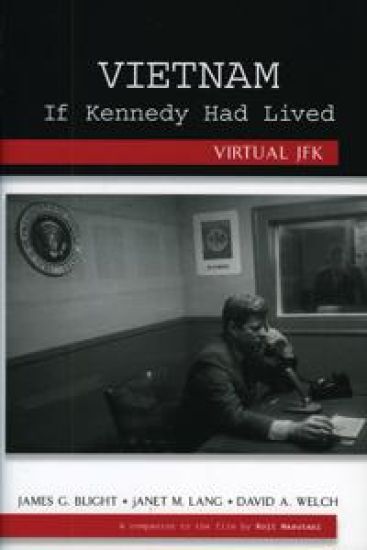
Vietnam If Kennedy Had Lived

Vietnam If Kennedy Had Lived

James G. Blight; janet M. Lang; David A. Welch; Fredrik Logevall

Rowman Littlefield Publishers
2009
sidottu
The Virtual JFK DVD is now available! For more information on the film companion to the book, visit http://www.virtualjfk.com/ It Matters Who Is President—Then and Now At the heart of this provocative book lies the fundamental question: Does it matter who is president on issues of war and peace? The Vietnam War was one of the most catastrophic and bloody in living memory, and its lessons take on resonance in light of America's current devastating involvement in Iraq. Tackling head-on the most controversial and debated "what if" in U.S. foreign policy, this unique work explores what President John F. Kennedy would have done in Vietnam if he had not been assassinated in 1963. Drawing on a wealth of recently declassified documents, frank oral testimony of White House officials from both the Kennedy and Johnson administrations, and the analysis of top historians, this book presents compelling evidence that JFK was ready to end U.S. involvement well before the conflict escalated. With vivid immediacy, readers will feel they are in the president's war room as the debates raged that forever changed the course of American history—and continue to affect us profoundly today as the shadows of Vietnam stretch into Iraq.
Security

Security

David A. Welch

Cambridge University Press
2022
sidottu
How do we know when we are investing wisely in security? Answering this question requires investigating what things are worth securing (and why); what threatens them; how best to protect them; and how to think about it. Is it possible to protect them? How best go about protecting them? What trade-offs are involved in allocating resources to security problems? This book responds to these questions by stripping down our preconceptions and rebuilding an understanding of security from the ground up on the basis of a common-sense ontology and an explicit theory of value. It argues for a clear distinction between objective and subjective security threats, a non-anthropocentric understanding of security, and a particular hierarchy of security referents, looking closely at four in particular-the ecosphere, the state, culture, and individual human beings. The analysis will be of interest not only to students and scholars of International Relations, but also to practitioners.
Security

Security

David A. Welch

Cambridge University Press
2022
pokkari
How do we know when we are investing wisely in security? Answering this question requires investigating what things are worth securing (and why); what threatens them; how best to protect them; and how to think about it. Is it possible to protect them? How best go about protecting them? What trade-offs are involved in allocating resources to security problems? This book responds to these questions by stripping down our preconceptions and rebuilding an understanding of security from the ground up on the basis of a common-sense ontology and an explicit theory of value. It argues for a clear distinction between objective and subjective security threats, a non-anthropocentric understanding of security, and a particular hierarchy of security referents, looking closely at four in particular-the ecosphere, the state, culture, and individual human beings. The analysis will be of interest not only to students and scholars of International Relations, but also to practitioners.
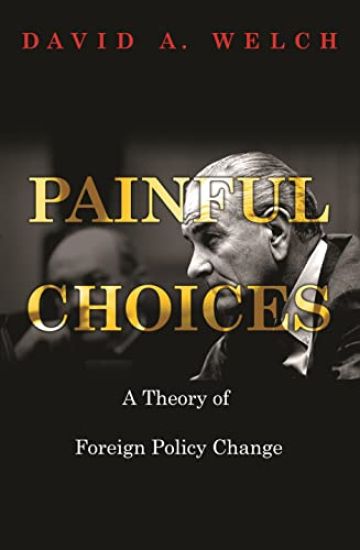
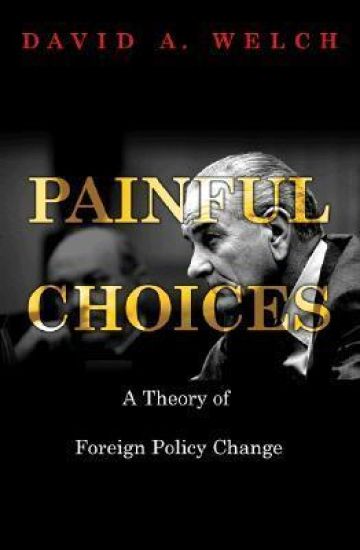
Painful Choices

Painful Choices

David A. Welch

Princeton University Press
2014
pokkari
Under what conditions should we expect states to do things radically differently all of a sudden? In this book, David Welch seeks to answer this question, constructing a theory of foreign policy change inspired by organization theory, cognitive and motivational psychology, and prospect theory. He then "test drives" the theory in a series of comparative case studies in the security and trade domains: Argentina's decision to go to war over the Falklands/Malvinas vs. Japan's endless patience with diplomacy in its conflict with Russia over the Northern Territories; America's decision to commit large-scale military force to Vietnam vs. its ultimate decision to withdraw; and Canada's two abortive flirtations with free trade with the United States in 1911 and 1948 vs. its embrace of free trade in the late 1980s. Painful Choices has three main objectives: to determine whether the general theory project in the field of international relations can be redeemed, given disappointment with previous attempts; to reflect on what this reveals about the possibilities and limits of general theory; and to inform policy. Welch argues that earlier efforts at general theory erred by aiming to explain state behavior, which is an intractable problem. Instead, since inertia is the default expectation in international politics, all we need do is to explain changes in behavior. Painful Choices shows that this is a tractable problem with clear implications for intelligence analysts and negotiators.
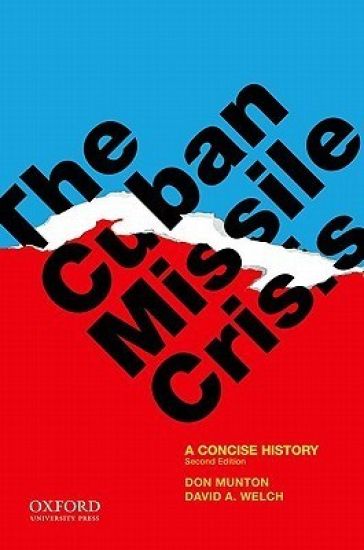
The Cuban Missile Crisis

The Cuban Missile Crisis

Don Munton; David A. Welch

Oxford University Press Inc
2011
nidottu
In The Cuban Missile Crisis: A Concise History, Second Edition, Don Munton and David A. Welch distill the best current scholarship on the Cuban missile crisis into a brief and accessible narrative history. The authors draw on newly available documents to provide a comprehensive treatment of its causes, events, consequences, and significance. Stressing the importance of context in relation to the genesis, conduct, and resolution of the crisis, Munton and Welch examine events from the U.S., Soviet, and Cuban angles, revealing the vital role that differences in national perspectives played at every stage. While the book provides a concise, up-to-date look at this pivotal event, it also notes gaps and mysteries in the historical record and highlights important persistent interpretive disputes. The authors provide a detailed guide to relevant literature and film for those who wish to explore further. Commemorating the 50th anniversary of the crisis, this revised and updated edition of The Cuban Missile Crisis is ideal for undergraduate courses on the 1960s, U.S. foreign policy, the Cold War, twentieth-century world history, and comparative foreign policy. New to this Edition * Thoroughly revised to incorporate the latest scholarship * Expanded coverage of the Cuban dimension of the crisis * New Conclusion offers perspective on the significance of the crisis on its 50th anniversary
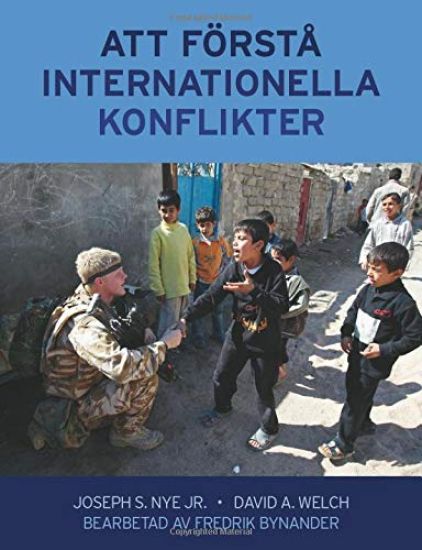
Att förstå internationella konflikter

Att förstå internationella konflikter

Joseph S Nye Jr.; Fredrik Bynander; David A. Welch

Prentice Hall
2011
nidottu
Nyes introduktion till internationell politik är ett mästarprov som har utvecklats i sina engelska utgåvor under två decennier. Nu kommer en bearbetad svensk utgåva som upprätthåller Nyes pedagogiska och intellektuella klarhet, samtidigt som den anpassats till en svensk syn på historiska skeenden och politiska sammanhang. Dess största styrka ligger i den genomträngande historiska belysningen av de tankemönster som dominerar internationell politik. Att förstå internationella konflikter ger en teoretiskt elegant och analytiskt avancerad bild av hur världspolitiken kan betraktas, samtidigt är den på ett grundläggande plan en uppsättning “optiska linser” för att förstå samtiden och de globala och regionala samband som styr verkligheten vi lever i. Boken förklarar inlevelsefullt de beroenden som sätter avtryck på politiken på nationell och lokal nivå med auktoriteten hos den som också har styrt begreppsutvecklingen på området och skjutit forskningsfronten framåt. Nye/Welch/Bynander ger läsaren ytterligare en central dimension av internationella relationer. Som före detta hög tjänsteman i två presidenters utrikesförvaltningar kan Nye sätta ord på utrikespolitiken som dess praktiker uppfattar den. De faktiska dilemman som möter ledare när de utvecklar en politik för att bevara en spänd fred eller skydda det egna landets ekonomiska utveckling, tycks ha ibland ha ganska lite med statsvetenskapliga modellers verklighet att skaffa. Författarna befolkar världspolitikens spännande händelseförlopp med människor av kött och blod. Att förstå internationella konflikter innehåller bland annat: • Utförliga analyser av konflikter med hjälp av historia, teori och praktik. • Beskriver de olika tankeskolorna inom internationell politik och förmedlar förståelse för de tankemönster och logiska konstruktioner som bär respektive teoretisk förklaringsmodell. • Svenska paralleller till historiska skeden. • Vietnamkriget ur ett svenskt perspektiv. Table of Contents: Förord till den svenska upplagan 1 Finns det en beständig konfliktlogik i världspolitiken? 2 Att förklara konflikter och samarbete: användbara verktyg och metoder 3 Från westfaliska freden till första världskriget 4 Den kollektiva säkerhetens misslyckande och andra världskriget 5 Det kalla kriget 6 Konflikt och samarbete efter det kalla kriget 7 Globalisering och interdependens 8 Informationsrevolutionen och transnationella aktörer 9 Vad kan vi förvänta oss i framtiden?
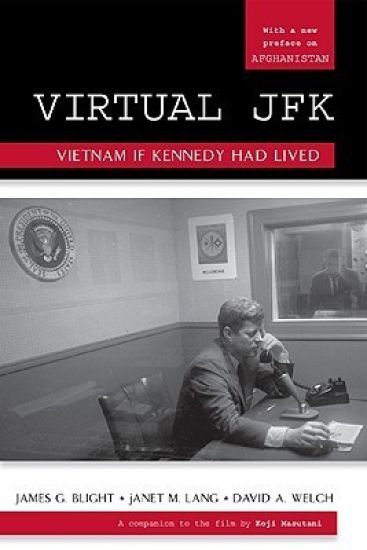
Virtual JFK

Virtual JFK

James G. Blight; janet M. Lang; David A. Welch; Fredrik Logevall

Rowman Littlefield Publishers
2010
nidottu
The Virtual JFK DVD is now available! For more information on the film companion to the book, visit http://www.virtualjfk.com/ It Matters Who Is President—Then and Now At the heart of this provocative book lies the fundamental question: Does it matter who is president on issues of war and peace? The Vietnam War was one of the most catastrophic and bloody in living memory, and its lessons take on resonance in light of America's current devastating involvement in Iraq. Tackling head-on the most controversial and debated "what if" in U.S. foreign policy, this unique work explores what President John F. Kennedy would have done in Vietnam if he had not been assassinated in 1963. Drawing on a wealth of recently declassified documents, frank oral testimony of White House officials from both the Kennedy and Johnson administrations, and the analysis of top historians, this book presents compelling evidence that JFK was ready to end U.S. involvement well before the conflict escalated. With vivid immediacy, readers will feel they are in the president's war room as the debates raged that forever changed the course of American history—and continue to affect us profoundly today as the shadows of Vietnam stretch into Iraq.
Painful Choices

Painful Choices

David A. Welch

Princeton University Press
2005
sidottu
Under what conditions should we expect states to do things radically differently all of a sudden? In this book, David Welch seeks to answer this question, constructing a theory of foreign policy change inspired by organization theory, cognitive and motivational psychology, and prospect theory. He then "test drives" the theory in a series of comparative case studies in the security and trade domains: Argentina's decision to go to war over the Falklands/Malvinas vs. Japan's endless patience with diplomacy in its conflict with Russia over the Northern Territories; America's decision to commit large-scale military force to Vietnam vs. its ultimate decision to withdraw; and Canada's two abortive flirtations with free trade with the United States in 1911 and 1948 vs. its embrace of free trade in the late 1980s. Painful Choices has three main objectives: to determine whether the general theory project in the field of international relations can be redeemed, given disappointment with previous attempts; to reflect on what this reveals about the possibilities and limits of general theory; and to inform policy. Welch argues that earlier efforts at general theory erred by aiming to explain state behavior, which is an intractable problem. Instead, since inertia is the default expectation in international politics, all we need do is to explain changes in behavior. Painful Choices shows that this is a tractable problem with clear implications for intelligence analysts and negotiators.
Justice and the Genesis of War

Justice and the Genesis of War

David A. Welch

Cambridge University Press
1995
pokkari
Studies of the causes of wars generally presuppose a ‘realist’ account of motivation: when statesmen choose to wage war, they do so for purposes of self-preservation or self-aggrandizement. In this book, however, David Welch argues that humans are motivated by normative concerns, the pursuit of which may result in behaviour inconsistent with self-interest. He examines the effect of one particular type of normative motivation - the justice motive - in the outbreak of five Great Power wars: the Crimean war, the Franco-Prussian war, World War I, World War II, and the Falklands war. Realist theory would suggest that these wars would be among the least likely to be influenced by considerations other than power and interest, but the author demonstrates that the justice motive played an important role in the genesis of war, and that its neglect by theorists of international politics is a major oversight.
Justice and the Genesis of War

Justice and the Genesis of War

David A. Welch

Cambridge University Press
1993
sidottu
Studies of the causes of wars generally presuppose a ‘realist’ account of motivation: when statesmen choose to wage war, they do so for purposes of self-preservation or self-aggrandizement. In this book, however, David Welch argues that humans are motivated by normative concerns, the pursuit of which may result in behaviour inconsistent with self-interest. He examines the effect of one particular type of normative motivation - the justice motive - in the outbreak of five Great Power wars: the Crimean war, the Franco-Prussian war, World War I, World War II, and the Falklands war. Realist theory would suggest that these wars would be among the least likely to be influenced by considerations other than power and interest, but the author demonstrates that the justice motive played an important role in the genesis of war, and that its neglect by theorists of international politics is a major oversight.
Back to the Brink

Back to the Brink

Bruce J. Allyn; James G. Blight; David A. Welch

University Press of America
1992
sidottu
In January 1989, many of the principal actors in the 1962 Cuban missile crisis met with scholars for two days in Moscow to examine the events and lessons of the crisis. CSIA Occasional Paper No. 9 is the complete annotated transcript of this conference, which was the first time that principal Soviet and American actors in the crisis were joined by their Cuban counterparts in developing the historical record.