Kirjojen hintavertailu. Mukana 12 595 353 kirjaa ja 12 kauppaa.

Kirjailija

David A. Westbrook

Kirjat ja teokset yhdessä paikassa: 15 kirjaa, julkaisuja vuosilta 2003-2025, suosituimpien joukossa Getting Through Security. Vertaile teosten hintoja ja tarkista saatavuus suomalaisista kirjakaupoista.

15 kirjaa

Kirjojen julkaisuhaarukka 2003-2025.

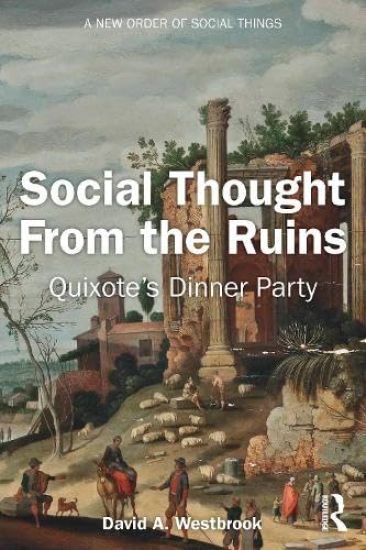
Social Thought From the Ruins

Social Thought From the Ruins

David A. Westbrook

TAYLOR FRANCIS LTD
2025
nidottu
Through stories, conversations, and essays, this book pursues interwoven critical and philosophical inquiries into the nature of the contemporary in the North Atlantic, asking how are we to live as intellectuals, individually and in community? Social Thought From the Ruins: Quixote’s Dinner Party is the product of informal discussion and academic work done over the last two decades among an international group of social scientists. An extended critique of academic life today and the context of our own thinking, this book interrogates aspects of our modernity, with its pervasive sense of crisis and uncertainty, and the difficulty of thinking clearly about things like the state and power, data and violence. Reflecting that the US, indeed the North Atlantic countries, seem to have entered autumn, David A. Westbrook asks what spring might be. Will the critical social sciences have anything to offer the exercise of power, or are we doomed to incessant and ineffectual critique? Can bureaucracy be made at least more accountable, if not democratic? Conversely, can we feel less alienated from the structures of power that rule us, or that fail to govern at all? Can we feel at home?
Social Thought From the Ruins

Social Thought From the Ruins

David A. Westbrook

TAYLOR FRANCIS LTD
2025
sidottu
Through stories, conversations, and essays, this book pursues interwoven critical and philosophical inquiries into the nature of the contemporary in the North Atlantic, asking how are we to live as intellectuals, individually and in community? Social Thought From the Ruins: Quixote’s Dinner Party is the product of informal discussion and academic work done over the last two decades among an international group of social scientists. An extended critique of academic life today and the context of our own thinking, this book interrogates aspects of our modernity, with its pervasive sense of crisis and uncertainty, and the difficulty of thinking clearly about things like the state and power, data and violence. Reflecting that the US, indeed the North Atlantic countries, seem to have entered autumn, David A. Westbrook asks what spring might be. Will the critical social sciences have anything to offer the exercise of power, or are we doomed to incessant and ineffectual critique? Can bureaucracy be made at least more accountable, if not democratic? Conversely, can we feel less alienated from the structures of power that rule us, or that fail to govern at all? Can we feel at home?

Getting Through Security

Getting Through Security

Mark Maguire; David A. Westbrook

Routledge
2020
sidottu
Getting Through Security offers an unprecedented look behind the scenes of global security structures. The authors unveil the “secret colleges” of counterterrorism, a world haunted by the knowledge that intelligence will fail, and Leviathan will not arrive quickly enough to save everyone. Based on extensive interviews with both special forces and other security operators who seek to protect the public, and survivors of terrorist attacks, Getting Through Security ranges from targeted European airports to African malls and hotels to explore counterterrorism today. Maguire and Westbrook reflect on what these practices mean for the bureaucratic state and its violence, and offer suggestions for the perennial challenge to secure not just modern life, but humane politics.Mark Maguire has long had extraordinary access to a series of counterterrorism programs. He trained with covert behavior detection units and attended secret meetings of international special forces. He found that security professionals, for all the force at their command, are haunted by ultimately intractable problems. Intelligence is inadequate, killers unexpectedly announce themselves, combat teams don’t arrive quickly enough, and for a time an amorphous public is on its own. Such problems both challenge and occasion the institutions of contemporary order. David Westbrook accompanied Maguire, pushing for reflection on what the dangerous enterprise of securing modern life means for key concepts such as bureaucracy, violence, and the state. Introducing us to the “secret colleges” of soldiers and police, where security is produced as an infinite horizon of possibility, and where tactics shape politics covertly, the authors relate moments of experimentation by police trying to secure critical infrastructure and conversations with special forces operators in Nairobi bars, a world of shifting architecture, technical responses, and the ever-present threat of violence. Secrecy is poison. Government agencies compete in the dark. The uninformed public is infantilized. Getting Through Security exposes deep flaws in the foundations of bureaucratic modernity, and suggests possibilities that may yet ameliorate our situation.
Getting Through Security

Getting Through Security

Mark Maguire; David A. Westbrook

Routledge
2020
nidottu
Getting Through Security offers an unprecedented look behind the scenes of global security structures. The authors unveil the “secret colleges” of counterterrorism, a world haunted by the knowledge that intelligence will fail, and Leviathan will not arrive quickly enough to save everyone. Based on extensive interviews with both special forces and other security operators who seek to protect the public, and survivors of terrorist attacks, Getting Through Security ranges from targeted European airports to African malls and hotels to explore counterterrorism today. Maguire and Westbrook reflect on what these practices mean for the bureaucratic state and its violence, and offer suggestions for the perennial challenge to secure not just modern life, but humane politics.Mark Maguire has long had extraordinary access to a series of counterterrorism programs. He trained with covert behavior detection units and attended secret meetings of international special forces. He found that security professionals, for all the force at their command, are haunted by ultimately intractable problems. Intelligence is inadequate, killers unexpectedly announce themselves, combat teams don’t arrive quickly enough, and for a time an amorphous public is on its own. Such problems both challenge and occasion the institutions of contemporary order. David Westbrook accompanied Maguire, pushing for reflection on what the dangerous enterprise of securing modern life means for key concepts such as bureaucracy, violence, and the state. Introducing us to the “secret colleges” of soldiers and police, where security is produced as an infinite horizon of possibility, and where tactics shape politics covertly, the authors relate moments of experimentation by police trying to secure critical infrastructure and conversations with special forces operators in Nairobi bars, a world of shifting architecture, technical responses, and the ever-present threat of violence. Secrecy is poison. Government agencies compete in the dark. The uninformed public is infantilized. Getting Through Security exposes deep flaws in the foundations of bureaucratic modernity, and suggests possibilities that may yet ameliorate our situation.
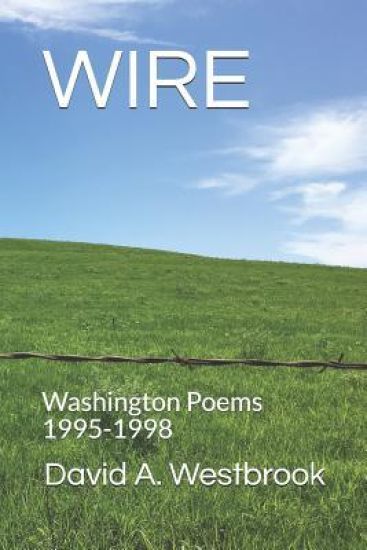
Wire: Washington Poems 1995-1998

Wire: Washington Poems 1995-1998

David A. Westbrook

Independently Published
2018
nidottu
Things were different then. We won the Cold War. The Twin Towers stood. We understood the global financial structure, and how countries should develop. Davos Man strode the earth like a colossus. Looking back, however, one sees the emergence of present unhappiness. The distance among people, the envious inequality, the alienation, the desperate arrogance of hollow professionals -- it was all there already, in plain view from the DC Metro. With some effort I have resisted the urge to improve. This is what I got done in those days, under those circumstances, circumstances that may yet teach us about our own.
Deploying Ourselves

Deploying Ourselves

David A. Westbrook

Paradigm
2011
nidottu
In Deploying Ourselves, David A. Westbrook puts the case for major reform of US national security. He argues that today's national security establishment is outdated and entrenched in a model of defence more befitting the post-World War II Cold War era than today's realities. In a world without military peers, Westbrook argues, the US must re-create its institutions in order to wield influence globally, based on co-operation with other states and groups. Deploying Ourselves includes specific proposals to make US national security institutions more democratically accountable.
Deploying Ourselves

Deploying Ourselves

David A. Westbrook

Paradigm
2011
sidottu
In Deploying Ourselves, David A. Westbrook puts the case for major reform of US national security. He argues that today's national security establishment is outdated and entrenched in a model of defence more befitting the post-World War II Cold War era than today's realities. In a world without military peers, Westbrook argues, the US must re-create its institutions in order to wield influence globally, based on co-operation with other states and groups. Deploying Ourselves includes specific proposals to make US national security institutions more democratically accountable.
Out of Crisis

Out of Crisis

David A. Westbrook

Paradigm
2009
sidottu
Former Federal Reserve chair Greenspan recently said that the risk management paradigm is broken; thus our understanding of financial regulation no longer makes sense. More generally, the current financial crisis obliges us to rethink the relationships among "financial markets" and "governments." In Out of Crisis financial analyst David Westbrook illuminates the intellectual, business, and policy errors that have led us into the present morass. Through a vivid legal and political analysis he shows how the ideologies of the right and left have distorted financial thinking and policy. Learning from these errors, the book sketches the emergence of a new understanding of risk management and bureaucratic regulation. Out of Crisis begins the tasks of rethinking the structures that constitute financial markets and exploring how such structures may be strengthened. Taking responsibility for the markets we build to do so much of our society's work, we may yet become mature capitalists.
Out of Crisis

Out of Crisis

David A. Westbrook

Paradigm
2009
nidottu
Former Federal Reserve chair Greenspan recently said that the risk management paradigm is broken; thus our understanding of financial regulation no longer makes sense. More generally, the current financial crisis obliges us to rethink the relationships among "financial markets" and "governments." In Out of Crisis financial analyst David Westbrook illuminates the intellectual, business, and policy errors that have led us into the present morass. Through a vivid legal and political analysis he shows how the ideologies of the right and left have distorted financial thinking and policy. Learning from these errors, the book sketches the emergence of a new understanding of risk management and bureaucratic regulation. Out of Crisis begins the tasks of rethinking the structures that constitute financial markets and exploring how such structures may be strengthened. Taking responsibility for the markets we build to do so much of our society's work, we may yet become mature capitalists.
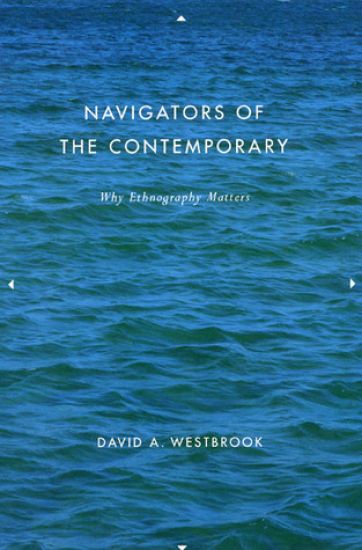
Navigators of the Contemporary

Navigators of the Contemporary

David A. Westbrook

University of Chicago Press
2008
nidottu
As the image of anthropologists exploring exotic locales and filling in blanks on the map has faded, the idea that cultural anthropology has much to say about the contemporary world has likewise diminished. In an increasingly borderless world, how can anthropology help us to tackle the concerns of a global society? David A. Westbrook argues that the traditional tool of the cultural anthropologist - ethnography - can still function as an intellectually exciting way to understand our interconnected, yet mysterious worlds."Navigators of the Contemporary" describes the changing nature of ethnography as anthropologists use it to analyze places closer to home. Westbrook maintains that a conversational style of ethnography can help us look beyond our assumptions and gain new insight into arenas of contemporary life such as corporations, financial institutions, science, the military, and religion. Westbrook's witty, absorbing book is a friendly challenge to anthropologists to shed light on the present and join broader streams of intellectual life. And for those outside the discipline, his inspiring vision of ethnography opens up the prospect of understanding our own world in much greater depth.
Navigators of the Contemporary

Navigators of the Contemporary

David A. Westbrook

University of Chicago Press
2008
sidottu
As the image of anthropologists exploring exotic locales and filling in blanks on the map has faded, the idea that cultural anthropology has much to say about the contemporary world has likewise diminished. In an increasingly borderless world, how can anthropology help us to tackle the concerns of a global society? David A. Westbrook argues that the traditional tool of the cultural anthropologist - ethnography - can still function as an intellectually exciting way to understand our interconnected, yet mysterious worlds."Navigators of the Contemporary" describes the changing nature of ethnography as anthropologists use it to analyze places closer to home. Westbrook maintains that a conversational style of ethnography can help us look beyond our assumptions and gain new insight into arenas of contemporary life such as corporations, financial institutions, science, the military, and religion. Westbrook's witty, absorbing book is a friendly challenge to anthropologists to shed light on the present and join broader streams of intellectual life. And for those outside the discipline, his inspiring vision of ethnography opens up the prospect of understanding our own world in much greater depth.
Between Citizen and State

Between Citizen and State

David A. Westbrook

Paradigm
2008
nidottu
Between Citizen and State is an intrepid and readable introduction to, and insightful commentary on, the role of the corporation in the modern world. Corporate actors have typical motivations, opportunities, temptations - they are characters, and their interactions follow familiar plotlines. Part I, Background, introduces the characters and their context. Part II, Internal Struggles, explains common conflicts in terms of well-known court cases. Part III, External Relations, examines relationships between the corporation, individuals, and the state.
Between Citizen and State

Between Citizen and State

David A. Westbrook

Paradigm
2007
sidottu
Between Citizen and State is an intrepid and readable introduction to, and insightful commentary on, the role of the corporation in the modern world. Corporate actors have typical motivations, opportunities, temptations - they are characters, and their interactions follow familiar plotlines. Part I, Background, introduces the characters and their context. Part II, Internal Struggles, explains common conflicts in terms of well-known court cases. Part III, External Relations, examines relationships between the corporation, individuals, and the state.
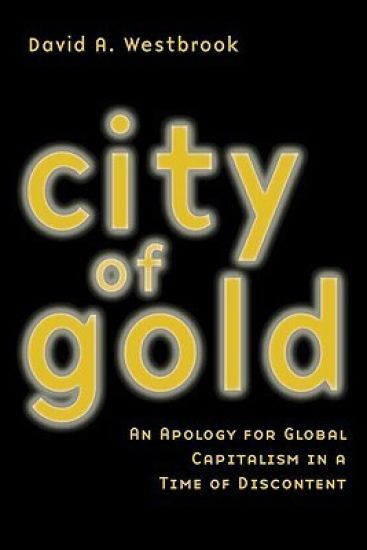
City of Gold

City of Gold

David A. Westbrook

Routledge
2003
nidottu
David A. Westbrook argues that we live in "the city of gold"--a global, cosmopolitan polity where politics are done through markets, and where global capital markets, not states, have become the dominant force in our social life.
City of Gold

City of Gold

David A. Westbrook

Routledge
2003
sidottu
David A. Westbrook argues that we live in "the city of gold"--a global, cosmopolitan polity where politics are done through markets, and where global capital markets, not states, have become the dominant force in our social life.