Kirjailija
David A. Wilson
Kirjat ja teokset yhdessä paikassa: 28 kirjaa, julkaisuja vuosilta 1988-2026, suosituimpien joukossa Irish Nationalism in Canada. Vertaile teosten hintoja ja tarkista saatavuus suomalaisista kirjakaupoista.
Mukana myös kirjoitusasut: David A Wilson
28 kirjaa
Kirjojen julkaisuhaarukka 1988-2026.
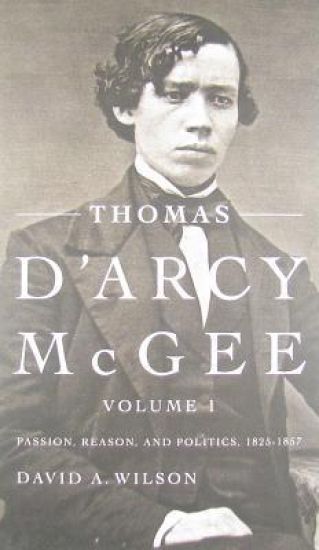
A brilliant writer, outstanding orator, and charismatic politician, Thomas D'Arcy McGee is best known for his prominent role in Irish-Canadian politics, his inspirational speeches in support of Canadian Confederation, and his assassination by an Irish revolutionary who accused him of betraying his earlier Irish nationalist principles. Thomas D'Arcy McGee, the first volume in a two-part biography, explores the development of those principles in Ireland and the United States. David Wilson follows McGee from Wexford, Ireland across the Atlantic to Boston, where at nineteen he became the editor of America's leading Irish newspaper, and traces his subsequent involvement with the Young Ireland movement, his reactions to the Famine, and his role in the Rising of 1848. Wilson goes on to examine McGee's experiences as a political refugee in the United States, where his increasing disillusionment with revolutionary Irish nationalism and his opposition to American nativism propelled him towards conservative Catholicism and sent him on a trajectory that ultimately led to Canada - his experiences are the subject of volume 2, Thomas D'Arcy McGee: The Extreme Moderate, 1857-1868.
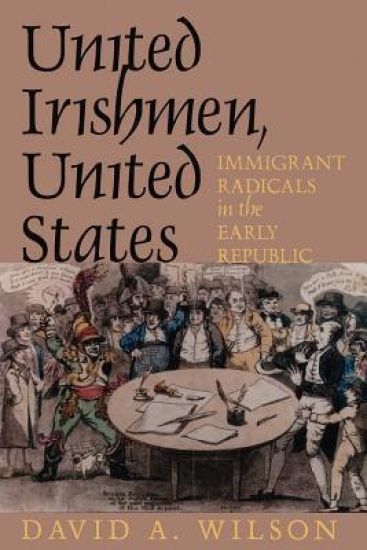
Among the thousands of political refugees who flooded into the United States during the late-eighteenth and early-nineteenth centuries, none had a greater impact on the early republic than the United Irishmen. They were, according to one Federalist, "the most God-provoking Democrats on this side of Hell." "Every United Irishman," insisted another, "ought to be hunted from the country, as much as a wolf or a tyger." David A. Wilson's lively book is the first to focus specifically on the experiences, attitudes, and ideas of the United Irishmen in the United States. Wilson argues that America served a powerful symbolic and psychological function for the United Irishmen as a place of wish-fulfillment, where the broken dreams of the failed Irish revolution could be realized. The United Irishmen established themselves on the radical wing of the Republican Party, and contributed to Jefferson's "second American Revolution" of 1800; John Adams counted them among the "foreigners and degraded characters" whom he blamed for his defeat. After Jefferson's victory, the United Irishmen set out to destroy the Federalists and democratize the Republicans. Some of them believed that their work was preparing the way for the millennium in America. Convinced that the example of America could ultimately inspire the movement for a democratic republic back home, they never lost sight of the struggle for Irish independence. It was the United Irishmen, writes Wilson, who originated the persistent and powerful tradition of Irish-American nationalism.
According to conventional historical wisdom, Irish nationalism in Canada was a marginal phenomenon - overshadowed by the more powerful movement in the United States and eclipsed in Canada by the Orange Order. The nine contributors in this book argue otherwise - and in doing so make a major and original contribution to our understanding of the Irish experience in Canada and the place of Irish-Canadian nationalism within an international context. Focusing on the period 1820 to 1920, they examine political, religious, and cultural expressions of Irish-Canadian nationalism as it responded to Irish events and Canadian politics. They also look at tensions within the movement between those who argued that Ireland should share the same freedom that Canada enjoyed within the British Empire and revolutionary republicans who wanted to liberate both Ireland and Canada from the yoke of British imperialism. Irish Nationalism in Canada sheds light on questions such as transference of old world political traditions into North America, the dynamics of ethno-religious conflict, and state responses to a revolutionary minority within an ethno-religious group. Contributors include Donald Harman Akenson (Queen's University, Kingston), Sean Farrell (Northern Illinois University), Mark G. McGowan (St Michael's College, University of Toronto), Frederick J. McEvoy (Independent Scholar), Michael Peterman (Trent University), Garth Stevenson (Brock University), Peter M. Toner (University of New Brunswick), Rosalyn Trigger (University of Aberdeen), and David A. Wilson (University of Toronto).
The French Army in the War of the Austrian Succession 1740-1748 Volume 2
David A. Wilson
HELION COMPANY
2026
nidottu
The French Army of the War of the Austrian Succession 1740-1748 Volume 1
David A. Wilson
HELION COMPANY
2026
nidottu
The Danish Army of the Napoleonic Wars 1801-1815. Organisation, Uniforms & Equipment
David A. Wilson
Helion Company
2022
nidottu
This book was written to provide an in-depth study of the Danish and Norwegian armies of the Napoleonic Wars. The goal was to provide a working document which is as accurate as possible, covering the uniforms of these armies, their weapons and their evolution as well as their colours and a look at their basic tactics. Although this is principally a uniform book, historical background is also provided to place the details in their context. Most of the information contained in this volume is published in the English language for the first time. This third volume looks in depth principally at the Norwegian Army including the regular infantry, cavalry, including their Colours, Guidons and Standards and field artillery covering all aspects of their organisation, uniforms, arms and equipment as well as their Jægers, light infantry and ski troops. The specifically Norwegian cannon and limbers are also covered. Another subject covered by this volume is the numerous Norwegian and Danish volunteer and militias companies, some of whom were actively engaged on the field of battle. An in depth study of the Island of Bornholm is also included. This volume is illustrated with 54 original full colour plates. Unlike the few other works in English this book has been conducted with the assistance of respected Norwegian historians, as well as Danish and German historians.
In the mid-nineteenth century a group of Irish revolutionaries, known as the Fenians, set out to destroy Britain’s North American empire. Between 1866 and 1871 they launched a series of armed raids into Canadian territory.In Canadian Spy Story David Wilson takes readers into a dark and dangerous world of betrayal and deception, spies and informers, invasion and assassination, spanning Canada, the United States, Ireland, and Britain. In Canada there were Fenian secret societies in urban areas, including Quebec City, Montreal, Ottawa, and Toronto, and in some rural townships, all part of a wider North American network. Wilson tells the tale of Irishmen who attempted to liberate their country from British rule, and the Canadian secret police who infiltrated their revolutionary cells and worked their way to the top of the organization. With surprises at every turn, the story includes a sex scandal that nearly brought Canadian spy operations crashing down, as well as reports from Toronto about a plot to assassinate Queen Victoria.Featuring a cast of idealists, patriots, cynics, manipulators, and liars, Canadian Spy Story raises fundamental questions about state security and civil liberty, with important lessons for our own time.
The Ultimate Guide to Commercial Vehicle Fleet Management
David A Wilson
Dw Consultancy
2021
pokkari
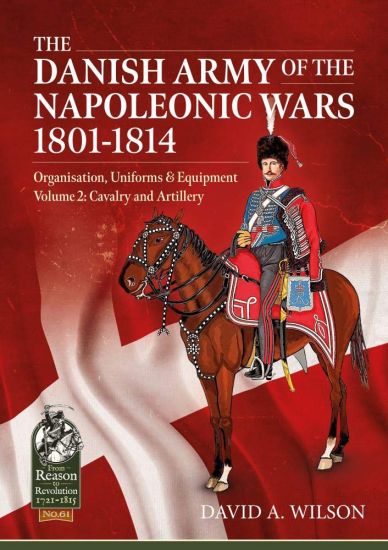
The Danish Army of the Napoleonic Wars 1801-1814, Organisation, Uniforms & Equipment Volume 2
David A. Wilson
Helion Company
2021
nidottu
This book was written to provide an in-depth study of the Danish and Norwegian armies of the Napoleonic Wars. The goal was to provide a working document which is as accurate as possible, covering the uniforms of these armies, their weapons and their evolution as well as their colours and a look at their basic tactics. Although this is principally a uniform book, historical background is also provided to place the details in their context. This second volume looks in depth at the regular cavalry and field artillery covering all aspects, organisation, uniforms, arms and equipment, in particular cannon, limbers, and wagons, with 54 original full colour plates. The fortress and coastal artillery are not forgotten, as with one of the longest coastlines in Europe compared to the size of the country it was more important than in most countries. Unlike the few other works in English this book has been conducted with the assistance of respected Danish historians, as well as Norwegian and German historians.
This book was written to provide an in-depth study of the Danish and Norwegian armies of the Napoleonic Wars. The goal was to provide a working document which is as accurate as possible, covering the uniforms of these armies, their weapons and their evolution as well as their colours and a look at their basic tactics. Although this is principally a uniform book, historical background is also provided to place the details in their context. This first volume covers the uniforms of the High Command, Guard, and Line and Light Infantry, their arms, equipment, and colours. The product of five years of research, this study grew out of the author’s desire to provide a reference for friends who were painting Danish wargames figures. It soon became apparent that very little was written on the subject in English and this led to extensive research and consultation with experts including Alan Perry of Perry Miniatures and Jørgen Koefoed Larsen. Every effort has been made to reconcile conflicting sources, rather than risk perpetuating myths and errors, and the result is a comprehensive and lavishly-illustrated reference work on this significant but often-overlooked Napoleonic army.
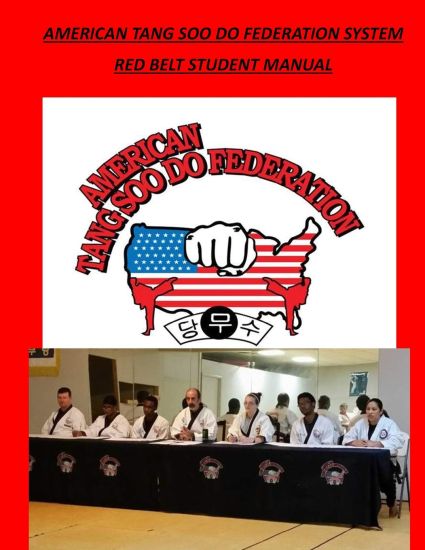
American Tang Soo Do Federation System: Red Belt Manual
David A. Wilson
Createspace Independent Publishing Platform
2018
nidottu
All fist level Red Belt requirements set forth by the American Tang Soo Do Federation
American Tang Soo Do Federation System: Purple Belt Student Manual
David A. Wilson
Createspace Independent Publishing Platform
2018
nidottu
Minimum testing requirements for purple belts in the American Tang Soo Do Federation System
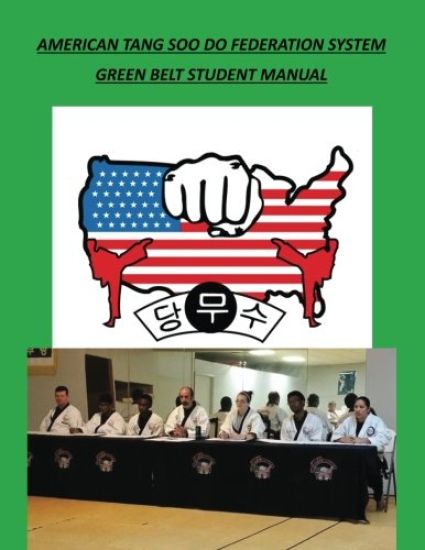
American Tang Soo Do Federation System: Green Belt Student Manual
David A. Wilson
Createspace Independent Publishing Platform
2017
nidottu
Minimum testing requirements for green belts in the American Tang Soo Do Federation System
American Tang Soo Do Federation System: Instructors White Belt Teaching Guide
David A. Wilson
Createspace Independent Publishing Platform
2017
nidottu
Instructors guide for teaching the white belt class in the American Tang Soo Do Federation System
American Tang Soo Do Federation System: Orange Belt Student Manual
David A. Wilson
Createspace Independent Publishing Platform
2017
nidottu
Minimum testing requirements from orange belt to green belt in the American Tang Soo Do Federation
Legend has it, that Merlin was enticed into a cave by an evil sorceress. She gave him wine and cast her magic spell sending him into the abyss of eternal slumber. She sealed off the cave, marking the end for poor old Merlin. That is until I came along...or rather Tom did It was the loud cry from the orphan boy that brought the wizard back to life. Merlin emerges into the 20th Century and discovers an alien land of denuded landscapes and frightening technology. He soon comes to terms with his situation and eventually befriends people from this extraordinary world. The imagery of that night manifested itself in a dream. He remembered now - the Sacred Staff presented to him by the High Priest of the Druid's Inner Circle. It was the ultimate privilege and losing possession of it was sacrilege. In the dream, his friend Alexinus has been transmuted into a Pt rosaure, a flying dinosaur by Niddrym, the sorceress. He tells Merlin she had stolen the Sacred Staff and that she still lives. Merlin is on a mission and with two newly acquired friends, a persistently curious female reporter and Tom, he ventures into an ancient world; a dangerous world - and that's where their frightening adventures begin...
'Managing Information' describes how successful organizations make best use of information and knowledge - the key resources in business. It explains why information technology is essential for the management of business processes, and should be central to any business strategy. This updated edition provides a compelling rationale for organizations to use appropriate systems, and for individuals to acquire the skills to manage and use the systems. It describes how computer systems continue to evolve to meet business needs, and provides examples and exercises to help readers develop their skills. There is a new emphasis on the Internet - how to use it to keep up to date with the latest business issues, and how teams can communicate and collaborate with intranets. All of the most common sub-systems are described and explained, including Enterprise Resource Planning (ERP), Business-to-Business (B2B), Business-to-Consumer (B2C), Supply Chain Management (SCM), Customer Relationship Management (CRM) and Enterprise Application Integration (EAI). The latest developments are described, including services available through the Internet from Application Service Providers (ASP), collaborative commerce and Business Process Management (BPM). There are introductory and more advanced computer exercises to consolidate learning and demonstrate how to acquire, store, organize and present information, using Word, Excel, PowerPoint and Explorer.
After a tumultuous career as a revolutionary in Ireland and an ultra-conservative Catholic in the United States, Thomas D'Arcy McGee moved to Canada in 1857, where he became a force for moderation and the leading Irish Canadian politician in the country. Determined that Canada should avoid the ethno-religious strife that afflicted Ireland, he articulated an inclusive, broad-minded nationalism based on generosity of spirit, a willingness to compromise, and a reasonable balance between order and liberty. To realize his vision, McGee became a strong supporter of the "new northern nationality." A spellbinding orator who emerged as the youngest and most intellectually gifted of the Fathers of Confederation, he fought what he saw as the atavistic and intolerant elements of Canadian life - the Orange Order, with its strident anti-Catholicism; the opponents of separate schools, whom he viewed as enemies of minority rights; and above all the Fenian Brotherhood, with its dreams of revolutionizing Ireland and annexing Canada to the United States. Convinced that compromise with Fenianism was impossible, he set out to destroy the movement through a strategy of confrontation and polarization - channeling his earlier extreme tendencies in the service of moderation and attempting to reduce the influence of Fenianism within his own community. In the process, he alienated many of his former supporters, who came to regard him as a traitor who sacrificed the cause of Irish nationalism on the altar of personal ambition. On 7 April 1868, McGee was assassinated on the doorstep of his Ottawa boarding house. As someone who took an uncompromising stand against militants within his own ethno-religious community, and who attempted to balance core values with minority rights, McGee has become increasingly relevant in today's complex multicultural society.
Irish and Scottish Encounters with Indigenous Peoples
Graeme Morton; David A. Wilson
McGill-Queen's University Press
2013
nidottu
The expansion of the British Empire during the eighteenth and nineteenth centuries created the greatest mass migration in human history, in which the Irish and Scots played a central, complex, and controversial role. The essays in this volume explore the diverse encounters Irish and Scottish migrants had with Indigenous peoples in North America and Australasia. The Irish and Scots were among the most active and enthusiastic participants in what one contributor describes as "the greatest single period of land theft, cultural pillage, and casual genocide in world history." At the same time, some settlers attempted to understand Indigenous society rather than destroy it, while others incorporated a romanticized view of Natives into a radical critique of European society, and others still empathized with Natives as fellow victims of imperialism. These essays investigate the extent to which the condition of being Irish and Scottish affected settlers' attitudes to Indigenous peoples, and examine the political, social, religious, cultural, and economic dimensions of their interactions. Presenting a variety of viewpoints, the editors reach the provocative conclusion that the Scottish and Irish origins of settlers were less important in determining attitudes and behaviour than were the specific circumstances in which those settlers found themselves at different times and places in North America, Australia and New Zealand. Contributors include Donald Harman Akenson (Queen's), John Eastlake (College Cork), Marjory Harper (Aberdeen), Andrew Hinson (Toronto), Michele Holmgren (Mount Royal), Kevin Hutchings (Northern British Columbia), Anne Lederman (Royal Conservatory of Music), Patricia A. McCormack (Alberta), Mark G. McGowan (Toronto), Ann McGrath (Australian National), Cian T. McMahon (Nevada), Graeme Morton (Guelph), Michael Newton (Xavier), Padraig O Siadhail (Saint Mary's), Brad Patterson (Victoria University of Wellington), Beverly Soloway (Lakehead), and David A. Wilson (Toronto).