Kirjojen hintavertailu. Mukana 12 569 657 kirjaa ja 12 kauppaa.
Kirjailija
David A. Wood
Kirjat ja teokset yhdessä paikassa: 11 kirjaa, julkaisuja vuosilta 2011-2025, suosituimpien joukossa Recent Advances in Shale Characterization Based on Laboratory Geochemistry and Geomechanics Techniques. Vertaile teosten hintoja ja tarkista saatavuus suomalaisista kirjakaupoista.
Implementation and Interpretation of Machine and Deep Learning to Applied Subsurface Geological Problems: Prediction Models Exploiting Well-Log Information explores machine and deep learning models for subsurface geological prediction problems commonly encountered in applied resource evaluation and reservoir characterization tasks. The book provides insights into how the performance of ML/DL models can be optimized—and sparse datasets of input variables enhanced and/or rescaled—to improve prediction performances. A variety of topics are covered, including regression models to estimate total organic carbon from well-log data, predicting brittleness indexes in tight formation sequences, trapping mechanisms in potential sub-surface carbon storage reservoirs, and more. Each chapter includes its own introduction, summary, and nomenclature sections, along with one or more case studies focused on prediction model implementation related to its topic.
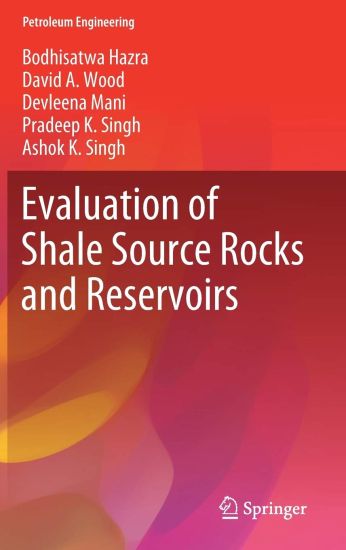
This book details the analytical processes, and interpretation of the resulting data, needed in order to achieve a comprehensive source-rock evaluation of organic-rich shales. The authors employ case studies on Permian and Cretaceous shales from various Indian basins and other petroleum-bearing basins around the world to illustrate the key features of their organic-rich shale characterization methodology. These case studies may also help to identify potential zones within shale formations that could be exploited for commercial gas and/or oil production. Given its scope, the book will be of interest to all researchers working in the field of source-rock analysis. In addition, the source-rock evaluation techniques – and the various intricacies associated with them – discussed here offer valuable material for postgraduate geology courses.
Many modern computer systems, including homogeneous and heterogeneous architectures, support shared memory in hardware. In a shared memory system, each of the processor cores may read and write to a single shared address space. For a shared memory machine, the memory consistency model defines the architecturally visible behavior of its memory system. Consistency definitions provide rules about loads and stores (or memory reads and writes) and how they act upon memory. As part of supporting a memory consistency model, many machines also provide cache coherence protocols that ensure that multiple cached copies of data are kept up-to-date. The goal of this primer is to provide readers with a basic understanding of consistency and coherence. This understanding includes both the issues that must be solved as well as a variety of solutions. We present both high-level concepts as well as specific, concrete examples from real-world systems. This second edition reflects a decade of advancements since the first edition and includes, among other more modest changes, two new chapters: one on consistency and coherence for non-CPU accelerators (with a focus on GPUs) and one that points to formal work and tools on consistency and coherence.
This book details the analytical processes, and interpretation of the resulting data, needed in order to achieve a comprehensive source-rock evaluation of organic-rich shales. The authors employ case studies on Permian and Cretaceous shales from various Indian basins and other petroleum-bearing basins around the world to illustrate the key features of their organic-rich shale characterization methodology. These case studies may also help to identify potential zones within shale formations that could be exploited for commercial gas and/or oil production. Given its scope, the book will be of interest to all researchers working in the field of source-rock analysis. In addition, the source-rock evaluation techniques – and the various intricacies associated with them – discussed here offer valuable material for postgraduate geology courses.
Liquefied natural gas (LNG) is a commercially attractive phase of the commodity that facilitates the efficient handling and transportation of natural gas around the world. The LNG industry, using technologies proven over decades of development, continues to expand its markets, diversify its supply chains and increase its share of the global natural gas trade. The Handbook of Liquefied Natural Gas is a timely book as the industry is currently developing new large sources of supply and the technologies have evolved in recent years to enable offshore infrastructure to develop and handle resources in more remote and harsher environments. It is the only book of its kind, covering the many aspects of the LNG supply chain from liquefaction to regasification by addressing the LNG industries’ fundamentals and markets, as well as detailed engineering and design principles. A unique, well-documented, and forward-thinking work, this reference book provides an ideal platform for scientists, engineers, and other professionals involved in the LNG industry to gain a better understanding of the key basic and advanced topics relevant to LNG projects in operation and/or in planning and development.
This synthesis lecture presents the current state-of-the-art in applying low-latency, lossless hardware compression algorithms to cache, memory, and the memory/cache link. There are many non-trivial challenges that must be addressed to make data compression work well in this context. First, since compressed data must be decompressed before it can be accessed, decompression latency ends up on the critical memory access path. This imposes a significant constraint on the choice of compression algorithms. Second, while conventional memory systems store fixed-size entities like data types, cache blocks, and memory pages, these entities will suddenly vary in size in a memory system that employs compression. Dealing with variable size entities in a memory system using compression has a significant impact on the way caches are organized and how to manage the resources in main memory. We systematically discuss solutions in the open literature to these problems. Chapter 2 provides the foundations of data compression by first introducing the fundamental concept of value locality. We then introduce a taxonomy of compression algorithms and show how previously proposed algorithms fit within that logical framework. Chapter 3 discusses the different ways that cache memory systems can employ compression, focusing on the trade-offs between latency, capacity, and complexity of alternative ways to compact compressed cache blocks. Chapter 4 discusses issues in applying data compression to main memory and Chapter 5 covers techniques for compressing data on the cache-to-memory links. This book should help a skilled memory system designer understand the fundamental challenges in applying compression to the memory hierarchy and introduce him/her to the state-of-the-art techniques in addressing them.