Kirjojen hintavertailu. Mukana 12 657 676 kirjaa ja 12 kauppaa.
Kirjailija
David Alvarez
Kirjat ja teokset yhdessä paikassa: 14 kirjaa, julkaisuja vuosilta 1987-2026, suosituimpien joukossa Pequeña y disparatada Historia de España. Vertaile teosten hintoja ja tarkista saatavuus suomalaisista kirjakaupoista.
The Looney Tunes are at it again! Join Bugs, Daffy, Porky, and the gang for even more slapstick hijinks and antics! Your favorite Looney Tunes stars together in a collected edition that covers all their zaniest, wackiest, and looniest adventures! Bugs Bunny, Daffy Duck, Taz, Tweety Bird, Sylvester, Pepe le Pew and more can be found here! So make like the Roadrunner and dash to your local bookstore for your copy just be wary of any suspicious looking tunnels along the way! And be mindful of any acme products you might come across! Beep beep!
Publishers Weekly Best of the Year BookPage Best of the Year Junior Library Guild Gold Standard Evanston Library Best of the YearHorn Book 2023 Summer Reading List "Vivid and vibrant."-NPR Weekend EditionAt the start of things, the elders say, the universe was hushed and still. The moon alone shone bright and round in the star-speckled dark of the sky. David Álvarez is one of the most extraordinary artists working today. His black-and-white illustrations have gained fame in his home country of Mexico and around the world. Here, inAncient Night (Noche Antigua), David displays his immense talent with full-color illustrations for the first time.Ancient Night is a twist on two Nahuatl traditions: the rabbit which the Feathered Serpent placed on the moon, and Yaushu, the Lord Opossum who ruled the earth before humans came, and who stole fire from the gods to create the sun. Award-winning author David Bowles has written a poetic text - and carefully researched backmatter - to accompany David's lush illustrations and story. Published simultaneously in English and Spanish editions,Ancient Night offersyoung readers everywhere the chance to savor this ancient tale in its most beautiful format possible.P R A I S E ? Bolstered by the ethereal, whimsical text, the plush, incandescent acrylic and oil paint artwork gathers the subtleties and splendors of nighttime and the plant life that surrounds Rabbit and Opossum. Together words and images tug readers along at a measured pace. An excellent authors' note underscores how common strands and crucial differences from wide-ranging Mesoamerican legends and myths furnish the inspiration at the roots of this tale. Like a mighty dream recalledfrom time gone by.-Kirkus (starred) ? Luminous acrylic and oil illustrations bring the night to life. . . Enchanting text presents the tale in short, clear sentences that convey a sense of timeless mystery and beauty. . . An excellent choice for picture book collections that uniquely explores traditional Mesoamerican tales and is sure to inspire the wish for further discovery and appreciation.-School Library Journal (starred) ? "Bowles' spare, evocative text flows like poetry. . . Álvarez's compositions are sophisticated and uncluttered. . . beautifully crafted, gently stylized figures so remarkably textured that you can almost count the number of hairs on Rabbit's body. Ancient Night is wondrous, sparkling and easily one of the best picture books of 2023."-BookPage(starred) ? "Bowles's unhurried lines offer a playfully elegant feel to the telling, while Álvarez's saturated digitized paintings use a limited palette to imagine long-eared, gray Rabbit and pointy-nosed, rust-hued Opossum against luminous leafy landscapes. Together, the collaborators create a dreamlike story variation that truly shines."-Publishers Weekly (starred) ? "Unmissable. . . The breathtaking illustrations exude light themselves. . ."-Foreword Reviews (starred) ? "Stunning illustrations by acclaimed Mexican artist A´lvarez feature a velvety black backdrop of a sky, stars providing only pinpricks of light. . . spellbinding, poetic text is lyrical but crisp."-Horn Book (starred) "A calming selection for evening lap reads and storytimes."-BCCB "A perfect bedtime read aloud. This Mesoamerican-inspired fable borrows from old tales for a larger-than-life yet soothingly illustrated picture book."-Shelf-Awareness "Exquisite."-Melissa Taylor,Imagination Soup "Álvarez's illustrations alone are enough to make this stunning picture book a winner-the dreamy feel of the milky moonlight against the deep-dark night and the crisp simplicity of the animals and their world is masterful. When paired with interwoven traditional Mesoamerican tales of the magic and power of our lunar companion, the story sings, enchanting readers with its mystery and beauty. Don't miss this one!"-Southern Bookseller Review
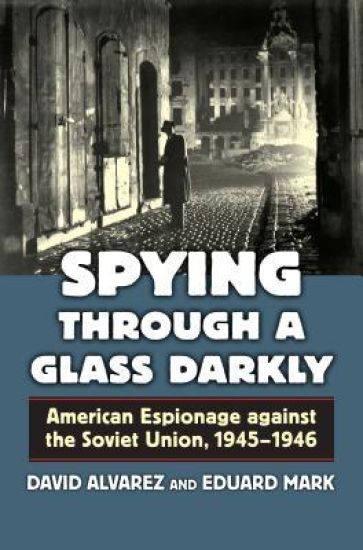
For the period between World War II and the full onset of the Cold War, histories of American intelligence seem to go dark. Yet in those years a little known clandestine organization, the Strategic Services Unit (SSU), emerged from the remnants of wartime American intelligence to lay the groundwork for what would become the CIA and, in ways revealed here for the first time, conduct its own secret warof espionage and political intrigue in postwar Europe. Telling the full story of this early and surprisingly effective espionage arm ofthe United States, Spying through a Glass Darkly brings a critical chapter in the history of Cold War intelligence out of the shadows.Constrained by inadequate staff and limited resources, distracted by the conflicting demands of agencies of the US government,and victimized by disinformation and double agents, the Strategic Services Unit struggled to maintain an effective Americanclandestine capability after the defeat of the Axis Powers. Never viscerally anti-communist, the Strategic Services Unit was slow torecognize the Soviet Union as a potential threat, but gradually it began to mount operations, often in collaboration with the intelligence services of Britain, France, Italy, Denmark, and Sweden, to throw light into the darker corners of the Soviet regime. Bringing to bear a wealth of archival documents, operational records, interviews, and correspondence, David Alvarez and Eduard Mark chronicle SSU’s successes and failures in procuring intelligence on the capabilities and intentions of the Soviet Union, a chronicle that delves deeply into the details of secret operations against Soviet targets throughout Europe: not only in the backstreets of the divided cities of Berlin and Vienna, but also the cafes, hotels, offices, and salons of such cosmopolitan capitals as Paris, Rome, Budapest, Prague, and Warsaw.
Most students of history assume that the age of the warlord popes ended with the Renaissance, but, long after the victory of Catholic powers at the Battle of Lepanto in 1571, the Papacy continued to entangle itself in martial affairs. The Vatican participated in six major military campaigns between 1796 and 1870, flew the papal flag over a warship as late as 1878, and during the Second World War mobilized more than 2,000 of its own troops to defend the Pope. David Alvarez now opens up this little-known aspect of the Papacy in the first general history of the papal armed forces. His is the first book in English to provide a comprehensive chronicle of the modern Vatican's military and security forces from 1796, when the armies of revolutionary France invaded the Papal States, through the wars for unification, to the present-day deployment of modern weapons, technology, and skills to protect the Holy Father and the Vatican from terrorists and assassins. Most papal histories make little reference to military affairs, while the few that address them do so only in passing or focus narrowly on particular units or campaigns. Alvarez's history expands our understanding of the Papacy's military through the exceptional research he has done as the first American scholar to gain access to the archive of the Pontifical Swiss Guard and the modern military records in the Vatican Secret Archive. He is also the first historian of any nationality to use the records of the Vatican Gendarmeria. Alvarez chronicles the exploits of the Vatican's military leaders and soldiers in their campaigns and battles, focusing on how those units under the Pope's authority--including the Vatican navy--engaged in actual military operations. He also deals extensively with the Vatican Gendarmeria as well as the Pope's Noble Guards, Palatine Guards, and Swiss Guards, describing their distinctive responsibilities and revealing the competition and internal tensions that sometimes undermined the morale, preparedness, and cohesion of the Pope's guards. Filled with information that will surprise scholars of the Papacy and military historians alike, Alvarez's highly original work illuminates a shadowy corner of Vatican history and will fascinate all readers interested in the role of the church in the broader world.
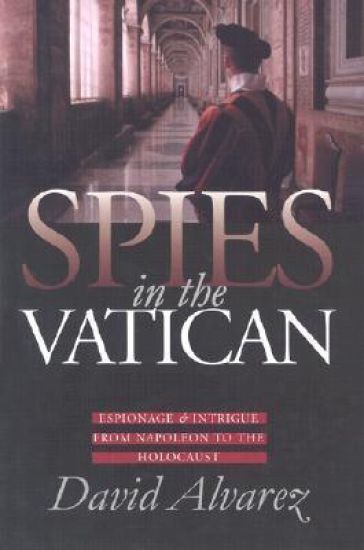
Revered by millions, the Papacy is an international power that many nations have viewed with suspicion, some have tried to control, and not a few have spied upon. Ranging across two centuries of world history, this study seeks to throw open the Vatican's doors to reveal the startling but little-known world of espionage in a sacred place. Reviewing the Pontificates of ten popes - from Pius VII, Napoleon's nemesis, to Pius XII, maligned by some as ""Hitler's pope"" - David Alvarez provides a history of the intelligence operations and covert activities that reached the highest levels of the Vatican. Populated with world leaders, both famous and infamous, and a rogue's gallery of professional spies, fallen priests, and mercenary informants, his work aims to cast a light into the darker corners of papal history and international diplomacy. Alvarez reveals that the Vatican itself occasionally entered this clandestine world through such operations as a network of informants to spy on liberal Catholics or a covert mission to establish an underground church in the Soviet Union. More frequently, however, the Vatican was the target for hostile intelligence services seeking to expose the secrets of the Papacy. During World War I, for example, Pope Benedict XV's personal assistant was a secret German agent. During World War II, Germany, Italy, Russia and the United States sent spies into the Vatican to discover the pope's intentions. Alvarez recounts these operations and more, including the methods by which the Vatican learned about the Holocaust. Based on diplomatic and intelligence records in Britain, France, Italy, Spain, the United States and the Vatican - with the latter including documents sealed after the author had access to them - this work reveals that the Papacy was often hindered by its inability to collect timely and relevant intelligence. Challenging the long-held notion that the pope is the world's best-informed leader, Alvarez illuminates not only the inner workings of the Vatican but also the global events in which it was inextricably involved.
The author provides a comprehensive analysis of the impact of decoded radio messages (signals intelligence) upon American foreign policy and strategy from 1930 to 1945. He presents an account of the US Army's Signal Intelligence Service and its contributions to the war effort.
Nazi Germany considered the Catholic Church to be a serious threat to its domestic security and its international ambitions. In Germany, informants provided intelligence, but in Rome, German attempts to penetrate the Papacy were less successful - except for the codebreaking work.
Nazi Germany considered the Catholic Church to be a serious threat to its domestic security and its international ambitions. In Germany, informants provided intelligence, but in Rome, German attempts to penetrate the Papacy were less successful - except for the codebreaking work.
Except for the Mormons and the Spanish missions, the religious dimension in the history of the American West has been sadly neglected. This collection of 20 scholarly essays) all but three published here for the first time) virtually opens up the field of religion in the West.
Except for the Mormons and the Spanish missions, the religious dimension in the history of the American West has been sadly neglected. This collection of 20 scholarly essays) all but three published here for the first time) virtually opens up the field of religion in the West.