Kirjojen hintavertailu. Mukana 12 390 323 kirjaa ja 12 kauppaa.
Kirjailija
David Appelbaum
Kirjat ja teokset yhdessä paikassa: 19 kirjaa, julkaisuja vuosilta 1988-2026, suosituimpien joukossa Kiva. Vertaile teosten hintoja ja tarkista saatavuus suomalaisista kirjakaupoista.
There is no doubt that all poems included in the poetry collection make it evident that the poet is a very impressive artist. These poems reveal remarkable skill and simplicity of style. Here we find a graceful and harmonious movement of language. The spontaneous and profound emotions are nowhere more exquisitelyrevealed than in these poems which are, in many respects, quite unique.
A glass eye reflects without seeing.The Glass Eye is a book-length poem that binds ecstatic utterances in its narrative with worldly dramas of a life. Beginning in a long moment of descent, it is a story of deaths and resurrections, resignation and hope, brutal, luminous, foreseeing.The Glass Eye makes a large statement. The narrator alternates between stern interlocutor and ardent novitiate. The work stretches to encompass the central paradox of the human condition, a perspective that juxtaposes the deepest human wish against the vast forces that shape and thwart it.
This is a book of poems to remember those for whom 'time had lapsed.' The poems begin innocently with common collections, rocks or coins, and progressively, become memories that gather the death in the folds of language, to commemorate the passage. The words are most forceful for those closest to the heart of the narrator. The poems mourn a secret bond with each lost one. In the work of grief, special harmonies in poetry open the soul to the transcendent joy of simply being.
All poems included in the poetry collection reveal the plain, matter-of-fact style devoid of everything suggestive of artifice. These poems have completely got rid of the conventional, artificial phraseology. There is no doubt that the poet very aptly traverses an immense range of emotion and experience. Here we find the poet's passion and powerful imagination in rich abundance.
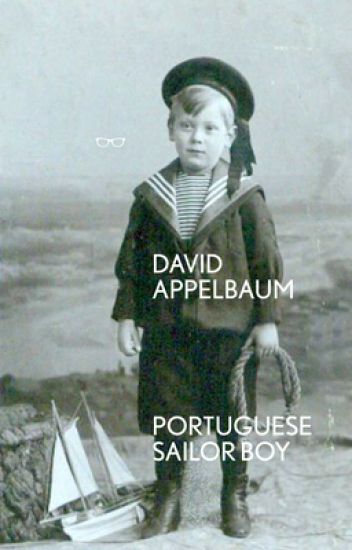
Portuguese Sailor Boy is a fragmentary history of the bloodline of the Portuguese explorer, Vasco de Gamma. The bloodline motif plays out in a series of scenes of an unnamed contemporary relation—in symbolic forms like nautical maps and paint-by-numbers frigates. The narrative centers on the wayfaring of his character, which reveals a life of accidental achievement as well as unadvertised follies, and neither ascends nor descends to an end.
A creative study of Maurice Blanchot's theory of literary voice.In His Voice considers the idea of the neuter in Maurice Blanchot's work, and seeks to work out through an exercise of literary impersonation, or ventriloquism, how and why Blanchot relied on this form. Neither active nor passive, the neuter expresses a kind of third voice beyond the command of the author, one that speaks paradoxically of what lies outside of speaking but nonetheless exerts an irrepressible influence on thought. The neuter is exilic, messianic, and fragmentary. Since it cannot be directly accounted for, Blanchot uses a number of indirect approaches-notably, myth-to announce the key elements of his view. Orpheus, Odysseus, and principally Narcissus figure his conception and elaborate the operation of giving voice. Through a distillation of Blanchot's narrative and critical texts-focusing on the late works, The Step Not Beyond, and The Writing of the Disaster-and through an emphasis on performance, In His Voice enacts the event of writing in search of how author's inscriptive reality appears in the world.
A creative study of Maurice Blanchot's theory of literary voice.In His Voice considers the idea of the neuter in Maurice Blanchot's work, and seeks to work out through an exercise of literary impersonation, or ventriloquism, how and why Blanchot relied on this form. Neither active nor passive, the neuter expresses a kind of third voice beyond the command of the author, one that speaks paradoxically of what lies outside of speaking but nonetheless exerts an irrepressible influence on thought. The neuter is exilic, messianic, and fragmentary. Since it cannot be directly accounted for, Blanchot uses a number of indirect approaches-notably, myth-to announce the key elements of his view. Orpheus, Odysseus, and principally Narcissus figure his conception and elaborate the operation of giving voice. Through a distillation of Blanchot's narrative and critical texts-focusing on the late works, The Step Not Beyond, and The Writing of the Disaster-and through an emphasis on performance, In His Voice enacts the event of writing in search of how author's inscriptive reality appears in the world.
Rejects Levinas's argument for the preeminence of ethics in philosophy. "Imagine listening at a keyhole to a conversation with the task of transcribing it, and the result may be a text similar to the present one." - from Part I: Stagework In a series of meditations responding to writings by Emmanuel Levinas, David Appelbaum suggests that a flawed grammar warrants Levinas to speak of language at the service of ethics. It is the nature of performance that he mistakes. Appelbaum articulates this flaw by performing in writing the act of the philosophical mind at work. Incorporating the voices of other thinkers-in particular Levinas's contemporaries Jacques Derrida and Maurice Blanchot-sometimes clearly, sometimes indistinctly, Appelbaum creates on these pages a kind of soundstage upon which illustrations appear of what he terms "a rhetorical aesthetic," which would reestablish rhetoric, rules for giving voice-and not ethics-as the correct matrix for understanding the otherness and beyond-being that Levinas seeks in his work.
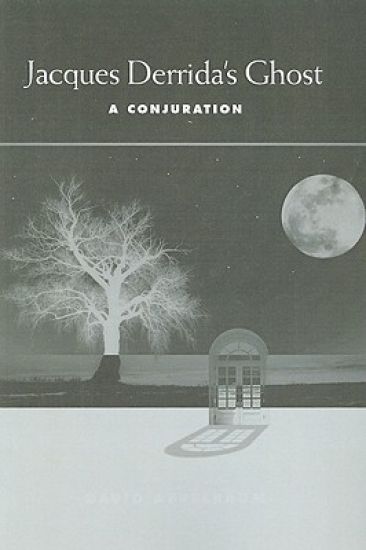
A spirited reading of Derrida's view of ethics as transcendental and performative.In Jacques Derrida's Ghost, David Appelbaum explores three of Derrida's favorite themes: the other, death, and the work of mourning. He shows how Derrida's unique philosophy, mindful of ghosts, proposes a respectful attitude toward otherness-whether the "other" be corporeal or indeed phantom. Taking up Derrida's concern with performative ethics, Appelbaum examines the possibility of such an ethics of subjectivity within the context of performance.
Drawing on clues from Aristotle, Plato, Hobbes, Locke, Jacobson, Condillac, and Diderot, Appelbaum investigates the vocalized, acoustical aspect of audible expression. He analyzes the tendency to equate voice with speaking, and speaking with writing, the result being that vocalizing is equivalent to thinking aloud. Appelbaum affirms the body's role in vocalizing expression by proposing a new and radical interpretation of the truth of voice: that it is true if it provides a disclosure of our human contradictions. Sound, or the acoustical properties of a person's voice, is able to bring about the revolutionary new set of conditions which reveal the truth of one's condition. The author provides a unique account of the subjugation of voice by thought, indicating means for reversing the authority of the sound and for freeing up the voice. He concludes with the argument that poetic voice reconciles the search for semantic meaning with the raw, acoustical effect that the free voice causes.
How do we perceive reality? What role does the body play in the act of perception? "Making the Body Heard" takes up a neglected aspect of perceiving our surroundings, inner and outer. It shows how perceptual habit has encrusted a receptivity to impressions. It argues that we must relinquish a hold on visual metaphor in favor of the auditory and tactile. Through the development of a new organ of perception, we are able to come into contact with novelty and existence. The study of perception includes an investigation of perceptual dimension and voice.
"The Interpenetrating Reality" is a philosophical investigation of what inhibits a fresh perception of the world. It explores the dulling effect of habit on tactile contact with the body. A disharmonized cognitive function which keeps the mind preoccupied is analyzed. Embodiment or an incarnate state is studied as an alternative avenue to the act of perception. The body itself as an organ of perception provides the keynote of the examination.