Kirjojen hintavertailu. Mukana 12 595 353 kirjaa ja 12 kauppaa.

Kirjailija

David B. Young

Kirjat ja teokset yhdessä paikassa: 3 kirjaa, julkaisuja vuosilta 2001-2013, suosituimpien joukossa Role of Potassium in Preventive Cardiovascular Medicine. Vertaile teosten hintoja ja tarkista saatavuus suomalaisista kirjakaupoista.

3 kirjaa

Kirjojen julkaisuhaarukka 2001-2013.

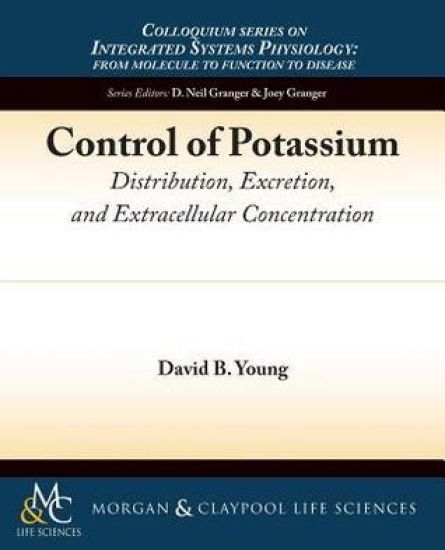
Control of Potassium

Control of Potassium

David B. Young

Morgan Claypool Publishers
2013
nidottu
Several physiological mechanisms act to regulate renal potassium excretion and distribution. Together they comprise an integrated control system that may be envisioned as being made up of several interacting negative feedback control mechanisms, all affecting removal of potassium from the extracellular fluid by renal excretion or transfer across cell membranes into or out of the intracellular compartment. The intent of this presentation is to describe the mechanisms of potassium regulation, beginning in Chapter 1 with an overview of the system, Chapter 2 with mechanisms that determine movement of potassium between the extracellular and intracellular compartments, in Chapter 3 focusing on renal tubular transport systems, and in Chapter 4 presenting the mechanisms of control of aldosterone secretion. Greatest emphasis will be on describing the integrated functions of the components, in Chapter 5, as they operate together in a system to regulate extracellular potassium concentration in response to commonly encountered challenges. In addition, interactions between potassium regulation and commonly used medications will be considered in Chapter 6, and in Chapter 7 the causes and treatment of dysregulation of potassium will be discussed.
Role of Potassium in Preventive Cardiovascular Medicine

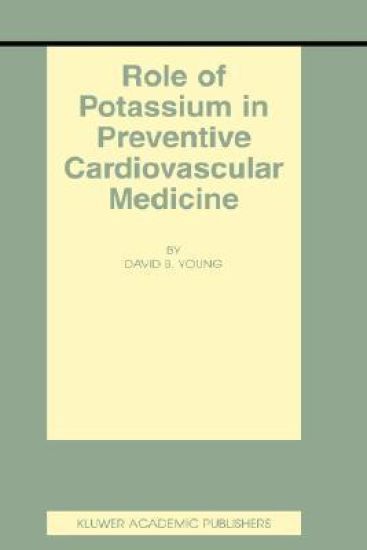
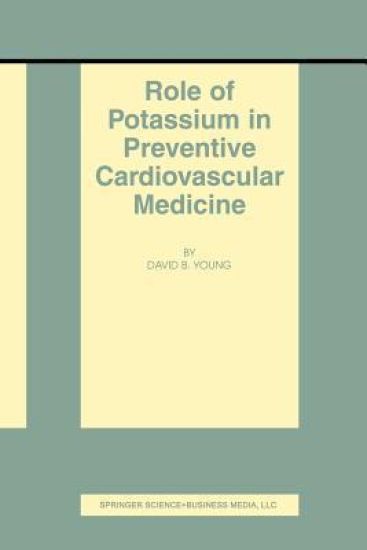
Role of Potassium in Preventive Cardiovascular Medicine

David B. Young

Springer-Verlag New York Inc.
2012
nidottu
Role of Potassium in Preventive Cardiovascular Medicine: Information related to this question has accumulated for nearly a hundred years, from work in cellular physiology, experimental studies in animals, clinical trials, and from population and epidemiological investigations. Because of the importance of integration of this diverse body of information, the most significant findings are brought together in this book. This body of information provides emphatic support for the importance of high dietary potassium intake as a means of reducing the risk of cardiovascular diseases, as it provides abundant evidence that potassium depletion has significant, deleterious influences that increase the risk of hypertension, atherosclerosis, heart failure, and stroke. At this time we have the results and data required to strongly recommend dietary modification to increase potassium intake. But making the recommendation will only be the first step; convincing the population to undertake the change in eating patterns will be challenging, and will require concerted actions by government, the medical community, and the food and beverage industries. The outcome promises to be well worth the investment. `This book is an excellent source of current information on the many roles of potassium in cardiovascular disease. It succinctly mixes basic physiology and clinical aspects in a manner that will make it of great value to both researchers and clinicians.' Norman M. Kaplan, M.D., Professor of Internal Medicine, University of Texas Southwestern Medical Center, Dallas, TX
Role of Potassium in Preventive Cardiovascular Medicine
Role of Potassium in Preventive Cardiovascular Medicine: Information related to this question has accumulated for nearly a hundred years, from work in cellular physiology, experimental studies in animals, clinical trials, and from population and epidemiological investigations. Because of the importance of integration of this diverse body of information, the most significant findings are brought together in this book. This body of information provides emphatic support for the importance of high dietary potassium intake as a means of reducing the risk of cardiovascular diseases, as it provides abundant evidence that potassium depletion has significant, deleterious influences that increase the risk of hypertension, atherosclerosis, heart failure, and stroke. At this time we have the results and data required to strongly recommend dietary modification to increase potassium intake. But making the recommendation will only be the first step; convincing the population to undertake the change in eating patterns will be challenging, and will require concerted actions by government, the medical community, and the food and beverage industries. The outcome promises to be well worth the investment. `This book is an excellent source of current information on the many roles of potassium in cardiovascular disease. It succinctly mixes basic physiology and clinical aspects in a manner that will make it of great value to both researchers and clinicians.' Norman M. Kaplan, M.D., Professor of Internal Medicine, University of Texas Southwestern Medical Center, Dallas, TX