Kirjailija
David Barsamian
Kirjat ja teokset yhdessä paikassa: 18 kirjaa, julkaisuja vuosilta 2001-2022, suosituimpien joukossa Culture and Resistance. Vertaile teosten hintoja ja tarkista saatavuus suomalaisista kirjakaupoista.
18 kirjaa
Kirjojen julkaisuhaarukka 2001-2022.
Noam Chomsky dissects the multiple crises facing humankind and the planet; and provides a road map for resistance. In this completely original set of interviews between the legendary duo of Noam Chomsky and David Barsamian, the two confront topics such as the pandemic, the wealth gap (made worse because of the pandemic), climate destruction, the increasing power of the corporate owned media, systematic racism, Big Tech, and more. Noam Chomsky is one of the most cited scholars in human history. He ranks right up there with Aristotle and Marx, and this book reaffirms his esteemed reputation. Notes on Resistance will inspire all those struggling for human liberation.
Conducted from 1984 to 1996, these interviews first appeared in the books Chronicles of Dissent, Keeping the Rabble in Line, and Class Warfare, all published by the independent publisher Common Courage Press in Monroe, Maine. This omnibus collection includes a new introduction by David Barsamian, looking back on conversations and engagement with Chomsky's ideas that now spans decades, as well as a classic essay by Alexander Cockburn on Chomsky that served as the introduction to one of the original volumes.
A timely primer on the conflict between the United States and Iran by scholars of Middle Eastern politics who advocate diplomacy and de-escalation.The United States and Iran seem to be permanently locked in a dangerous cycle of brinkmanship and violence. Both countries have staged cyber attacks and recently shot down one another’s aircraft. Why do both countries seem intent on escalation? Why did the U.S. abandon the nuclear deal (which, according to the UN, was working)? Where can Washington and Tehran find common ground? To address these questions and the political and historical forces at play, David Barsamian presents the perspectives of Iran scholars Ervand Abrahamian, Noam Chomsky, Nader Hashemi, Azadeh Moaveni, and Trita Parsi. A follow-up to the previously published Targeting Iran, this timely book continues to affirm the goodwill between Iranian and American people, even as their respective governments clash on the international stage.Praise for ReTargeting Iran:"In a Q&A format about the continued demonization of Iran by the U.S., [David] Barsamian gets at the key to the deterioration of the relationship between the two nations. … [T]he discussion is astute and relevant."—Kirkus Reviews"A necessary and timely education on one of the most politically fraught and historically significant relationships of our time. I devoured these smart, insightful interviews with five important Iran scholars, about the struggle between two countries that have both been our home."—Dina Nayeri, author of The Ungrateful Refugee: What Immigrants Never Tell You"This little book contains more wisdom about Iran than exists in the White House, Congress, the State Department, and the Pentagon combined. Anyone who wants to understand the world's most misunderstood country will find no better source."—Stephen Kinzer, Author of All the Shah's Men: An American Coup and the Roots of Middle East Terror"Many journalists and academics have written books about Iran. But ReTargeting Iran fills an important gap, a book sharply critical of U.S. policy and the Iranian government. David Barsamian provides timely interviews with major analysts that sets the record straight. It's a highly accessible read and a great introduction to the U.S.-Iran conflict."—Reese Erlich, author of The Iran Agenda Today: The Real Story Inside Iran and What's Wrong with U.S. Policy."ReTargeting Iran is a facts-only objective account of where America has gone wrong, stupidly wrong—yet again—in its foreign policy, dominated by a mythical belief that Iran has an active nuclear weapons program. All one needs to know about the threat is this: as of mid-2020, the United States had no less than thirty-five military bases, manned by 65,000 soldiers, ready go to war in the nations immediately surrounding our feared adversary."—Seymour M. Hersh, author of Reporter: A Memoir
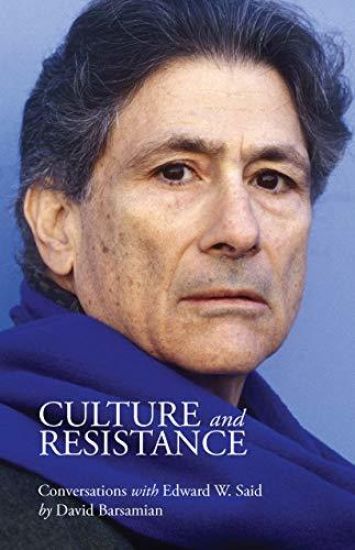
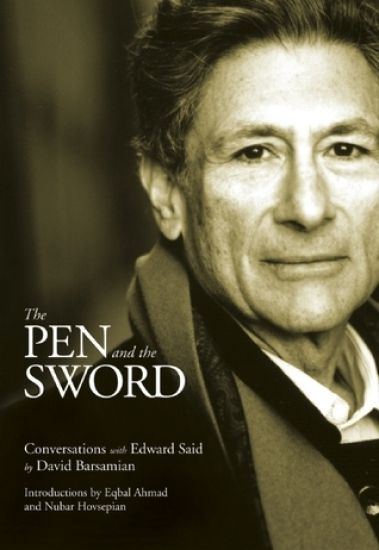
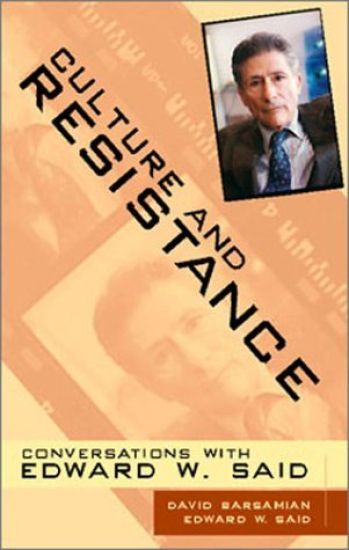
Edward W. Said discusses the centrality of popular resistance to his understanding of culture, history, and social change. He reveals his thoughts on the war on terrorism, the war in Afghanistan, and the Israeli-Palestinian conflict, and lays out a compelling vision for a secular, democratic future in the Middle East—and globally. Edward W. Said’s books include Orientalism, The Question of Palestine, Covering Islam, Culture and Imperialism, and The Politics of Dispossession. He has also published a memoir, Out of Place. David Barsamian is the producer of the critically acclaimed program Alternative Radio.
'If I were a voter in Britain, I would vote for [Jeremy Corbyn]' - Noam Chomsky, 2017Global Discontents is an essential guide to geopolitics and how to fight back, from the world's leading public intellectualWhat kind of world are we leaving to our grandchildren? How are the discontents kindled today likely to blaze and explode tomorrow?From escalating climate change to the devastation in Syria, pandemic state surveillance to looming nuclear war, Noam Chomsky takes stock of the world today. Over the course of ten conversations with long-time collaborator David Barsamian, spanning 2013-2016, Chomsky argues in favour of radical changes to a system that cannot possibly cope with what awaits tomorrow.Interwoven with personal reflections spanning from childhood to his eighth decade of life, Global Discontents also marks out Chomsky's own intellectual journey, mapping his progress to revolutionary ideas and global prominence.
Global Discontents
Noam Chomsky; David Barsamian
Metropolitan Books (imprint of Henry Holt Company)
2017
nidottu
In wide-ranging interviews with David Barsamian, his longtime interlocutor, Noam Chomsky asks us to consider "the world we are leaving to our grandchildren": one imperiled by the escalation of climate change and the growing potential for nuclear war. If the current system is incapable of dealing with these threats, he argues, it's up to us to radically change it. These ten interviews, conducted from 2013 to 2016, examine the latest developments around the globe: the devastation of Syria, the reach of state surveillance, growing anger over economic inequality, the place of religion in American political culture, and the bitterly contested 2016 U.S. presidential election. In accompanying personal reflections on his Philadelphia childhood and his eighty- seventh birthday, Chomsky also describes his own intellectual journey and the development of his uncompromising stance as America's premier dissident intellectual.
Edward W. Said once urged the legendary Eqbal Ahmad not to leave your words scattered to the winds, or even recorded on tape, but collected and published in several volumes for everyone to read. Then those who don t have the privilege of knowing you will know what a truly remarkable, gifted man you are. In these intimate and wide-ranging conversations, Ahmad discusses nationalism, ethnic conflict, the politics of memory, and liberation struggles around the world.
New preface by Noam Chomsky
A compelling new set of interviews on our changing and turbulent times with Noam Chomsky, one of the world's foremost thinkersIn this new collection of conversations, conducted from 2010 to 2012, Noam Chomsky explores the most immediate and urgent concerns: the future of democracy in the Arab world, the implications of the Fukushima nuclear disaster, the European financial crisis, the breakdown of American mainstream political institutions, and the rise of the Occupy movement. As always, Chomsky presents his ideas vividly and accessibly, with uncompromising principle and clarifying insight.The latest volume from a long-established, trusted partnership, "Power Systems "shows once again that no interlocutor engages with Chomsky more effectively than David Barsamian. These interviews will inspire a new generation of readers, as well as longtime Chomsky fans eager for his latest thinking on the many crises we now confront, both at home and abroad. They confirm that Chomsky is an unparalleled resource for anyone seeking to understand our world today.
Today's economic crisis is capitalism's worst since the Great Depression. Millions have lost their jobs, homes and healthcare while those who work watch their pensions, benefits, and job security decline. As more and more are impacted by the crisis, the system continues to make the very wealthy even richer. In eye-opening interviews with prominent economist Richard Wolff, David Barsamian probes the root causes of the current economic crisis, its unjust social consequences, and what can and should be done to turn things around. While others blame corrupt bankers and unregulated speculators, the government, or even the poor who borrowed, the authors show that the causes of the crisis run much deeper. They reach back to the 1970s when the capitalist system itself shifted, ending the century-old pattern of rising wages for U.S. workers and thereby enabling the top 1% to become ultra-rich at the expense of the 99%. Since then, economic injustice has become chronic and further corrupted politics. The Occupy movement, by articulating deep indignation with the whole system, mobilizes huge numbers who seek basic change. Occupying the Economy not only clarifies and analyzes the crisis in U.S. capitalism today, it also points toward solutions that can shape a far better future for all. Richard D. Wolff is professor emeritus of Economics at the University of Massachusetts, Amherst, and visiting professor at the New School University. Author of Capitalism Hits the Fan, he's been a guest on NPR, Glenn Beck Show, and Democracy Now! David Barsamian is founder and director of Alternative Radio and author of Targeting Iran. He is best known for his interview books with Noam Chomsky, including Targeting Iran. "With unerring coherence and unequaled breadth of knowledge, Rick Wolff offers a rich and much needed corrective to the views of mainstream economists and pundits." --Stanley Aronowitz
According to The New York Times, Noam Chomsky is arguably the most important intellectual alive. But he isn t easy to read . . . or at least he wasn t until these books came along. Made up of intensively edited speeches and interviews, they offer something not found anywhere else: pure Chomsky, with every dazzling idea and penetrating insight intact, delivered in clear, accessible, reader-friendly prose. Published as four short books in the famous Real Story seriesWhat Uncle Sam Really Wants; The Prosperous Few and the Restless Many; Secrets, Lies and Democracy; and The Common Goodthey ve collectively sold almost 600,000 copies. And they continue to sell year after year after year because Chomsky s ideas become, if anything, more relevant as time goes by. For example, twenty years ago he pointed out that in 1970, about 90% of international capital was used for trade and long-term investmentmore or less productive thingsand 10% for speculation. By 1990, those figures had reversed. As we know, speculation continued to increase exponentially. We re paying the price now for not heeding him them."
A collection of five wide-ranging interviews with Edward Said (1935-2003), covering topics such as the Israeli-Palestinian conflict, his groundbreaking work of literary scholarship Orientalism, critical theory, music and more. Includes a new preface by Eqbal Ahmad.
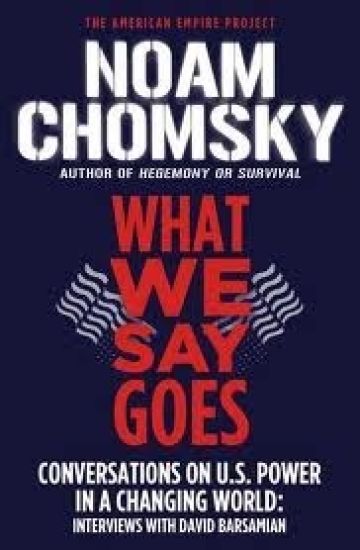
What We Say Goes: Conversations on U.S. Power in a Changing World
Noam Chomsky; David Barsamian
Metropolitan Books
2007
nidottu
An indispensable set of interviews on foreign and domestic issues with the bestselling author of Hegemony or Survival, "America's most useful citizen." (The Boston Globe) In this collection of conversations, conducted in 2006 and 2007, Noam Chomsky explores the most immediate and urgent concerns: Iran's challenge to the United States, the deterioration of the Israel-Palestine conflict, the ongoing occupations of Iraq and Afghanistan, the rise of China, and the growing power of the left in Latin America, as well as the Democratic victory in the 2006 U.S. midterm elections and the upcoming presidential race. As always, Chomsky presents his ideas vividly and accessibly, with uncompromising principle and clarifying insight. This volume from a long-established, trusted partnership, What We Say Goes shows once again that no interlocutor engages with Chomsky more effectively than David Barsamian. These interviews will inspire a new generation of readers, as well as longtime Chomsky fans eager for his latest thinking on the many crises we now confront, both at home and abroad. They confirm that Chomsky is an unparalleled resource for anyone seeking to understand our world today.
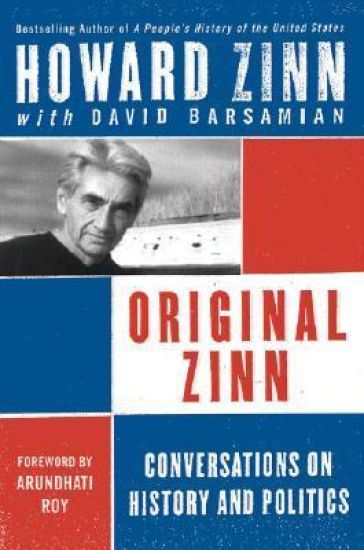
In a collection of interviews, the renowned historian and author of A People's History of the United States shares his thoughts on such topics as civil disobedience, the Kennedy brothers, the role of artists in relation to social change, the importance of memory and remembering history, the American war machine, and more. Original. 40,000 first printing.
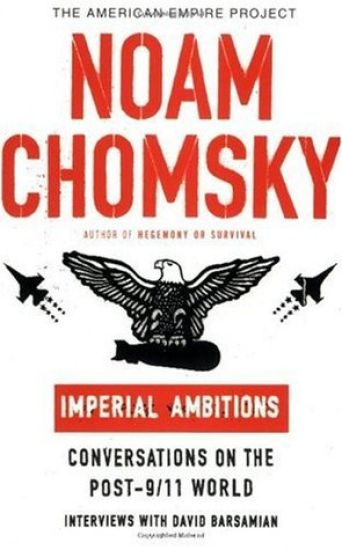
Imperial Ambitions
Noam Chomsky; David Barsamian
Metropolitan Books (imprint of Henry Holt Company)
2005
pokkari
A collection of previously unpublished interviews presents the critical thoughts of the noted scholar, activist, and author of Hegemony and Survival on American foreign policy in the increasingly unstable global community following September 11th, sharing his views on the invasion and occupation of Iraq, preemptive strikes against rogue states, prospects of the second Bush administration, and the threat to international peace. Original. 125,000 first printing.
In this book of interviews, Edward W. Said discusses the centrality of popular resistance to his understanding of culture, history, and social change. He reveals his thoughts on the war on terrorism, the war in Afghanistan, and the Israeli-Palestinian conflict, and lays out a compelling vision for a secular, democratic future in the Middle East - and globally.
In part one, Eqbal Ahmad examines the terms “terrorist” and “freedom fighter” as they are used in American politics. In part two, David Barsamian interviews Ahmad upon his return from Afghanistan where he interviewed Osama bin Laden. An invaluable primer.