Kirjojen hintavertailu. Mukana 12 595 353 kirjaa ja 12 kauppaa.

Kirjailija

David Barton Smith

Kirjat ja teokset yhdessä paikassa: 9 kirjaa, julkaisuja vuosilta 1999-2023, suosituimpien joukossa Malicious Intent. Vertaile teosten hintoja ja tarkista saatavuus suomalaisista kirjakaupoista.

9 kirjaa

Kirjojen julkaisuhaarukka 1999-2023.

Malicious Intent

Malicious Intent

David Barton Smith

VANDERBILT UNIVERSITY PRESS
2023
nidottu
Do we want to perpetuate a Jim Crow health system?" A brilliant, idealistic physician asked that question in Alabama in 1966. Her answer was no—it led to her murder. Unearthing the truth of Jean Cowsert's life and death is a central concern of David Barton Smith's Race, Murder, and Medicine. Unearthing the grim history of our healthcare system is another. Race-related disparities in American death rates, exacerbated once again by the Covid-19 pandemic, have persisted since the birth of the modern U.S. medical system a century ago. A unique but fundamentally racist history has prevented the United States from providing the kind of healthcare assurances that are taken for granted in other industrialized nations. The underlying story is one of political, medical, and bureaucratic machinations, all motivated by a deliberate, racist design. In Race, Murder, and Medicine, David Barton Smith traces the Jean Cowsert story and the cold case of her death as a through line to explain the construction and fulfillment of an unequal healthcare system that would rather sacrifice many than provide for Black Americans. Cowsert's suspicious death came at a key moment in the struggle for universal healthcare in the wealthiest country on earth. Race, Murder, and Medicine is a history of those failed efforts, and a story of selective amnesia about one doctor's death and the movement she died for.

Reinventing Care

Reinventing Care

David Barton Smith

Vanderbilt University Press
2003
sidottu
The recent growth of ""assisted living"" facilities and programs has shaken the foundations of the system of long-term care for the elderly in the United States. Fueled by consumer frustrations with the available options, notably nursing homes, the assisted living model emerged during the 1990s to promise shelter, health care, control of one's own life, less government involvement, and a ""real home."" But how well have the advocates and developers of assisted living delivered on such promises? And what are the model's implications for public policy and the future of caregiving? In Reinventing Care, David Barton Smith offers brilliant insights into those questions by examining the realities of assisted living in New York City. Encompassing the largest, most concentrated population of elderly in the United States, New York spends more per person caring for its seniors than any other urban center. Yet, while the size of the city's care system boggles the mind, it nevertheless contains the same elements that exist in other metropolitan areas and thus provides valuable lessons for the nation as a whole. Smith's study draws on twenty-five years of research, including hundreds of interviews and visits to representative facilities. He provides a succinct overview of how care is presently organized for New York's aging population and traces the history of the system up to the present. Among the key issues he addresses are the role of market forces and government regulation, the impact of class differences on access to quality care, and the ways in which perceptions of community affect the creation and management of assisted living programs. At the heart of the book are ten fascinating case studies, half of them focused on private-pay facilities and the other half on public-pay institutions. While finding that the actualities of assisted living rarely match the rhetoric of its proponents, Smith sees much to admire in its goals. He suggests tactics and strategies - such as promoting family- and community-based models of assisted living and adopting a standard of licensure for certain facilities - that could point the way to a better future.
Reinventing Care

Reinventing Care

David Barton Smith

Vanderbilt University Press
2003
nidottu
The recent growth of ""assisted living"" facilities and programs has shaken the foundations of the system of long-term care for the elderly in the United States. Fueled by consumer frustrations with the available options, notably nursing homes, the assisted living model emerged during the 1990s to promise shelter, health care, control of one's own life, less government involvement, and a ""real home."" But how well have the advocates and developers of assisted living delivered on such promises? And what are the model's implications for public policy and the future of caregiving? In Reinventing Care, David Barton Smith offers brilliant insights into those questions by examining the realities of assisted living in New York City. Encompassing the largest, most concentrated population of elderly in the United States, New York spends more per person caring for its seniors than any other urban center. Yet, while the size of the city's care system boggles the mind, it nevertheless contains the same elements that exist in other metropolitan areas and thus provides valuable lessons for the nation as a whole. Smith's study draws on twenty-five years of research, including hundreds of interviews and visits to representative facilities. He provides a succinct overview of how care is presently organized for New York's aging population and traces the history of the system up to the present. Among the key issues he addresses are the role of market forces and government regulation, the impact of class differences on access to quality care, and the ways in which perceptions of community affect the creation and management of assisted living programs. At the heart of the book are ten fascinating case studies, half of them focused on private-pay facilities and the other half on public-pay institutions. While finding that the actualities of assisted living rarely match the rhetoric of its proponents, Smith sees much to admire in its goals. He suggests tactics and strategies - such as promoting family- and community-based models of assisted living and adopting a standard of licensure for certain facilities - that could point the way to a better future.
Health Care Divided

Health Care Divided

David Barton Smith

The University of Michigan Press
1999
sidottu
David Barton Smith offers a complete chronicle of racial segregation and discrimination in health care in the United States using vivid first-hand accounts as well as current evidence of inequity in patterns of use and outcomes. Smith details judicial and federal efforts to address these disparities, discusses their persistence in more subtle forms, and offers possible strategies for ending them.Health Care Divided tells the story from 1920 to the present by distilling a narrative from archival records and interviews with key participants. The book traces the decisive role race has played in shaping our system of medical care and explores the effect of this legacy on long-term care for the elderly and prenatal care for infants.Identified here are lessons largely overlooked by health services leaders, researchers, and policy analysts. Smith examines how this divided health system persists, both exacerbating and distorting racial disparities. He asserts that in spite of federal efforts to end segregation, health care remains, at best, more than half the distance between a fully separate and an integrated system."Health Care Divided is a fascinating and often distressing history of our racially divided health care system." --Ruth Roemer, J.D., UCLA School of Public Health, and Past President, American Public Health AssociationDavid Barton Smith is Professor and Program Director of the Healthcare Management Program, the School of Business and Management, Temple University. The research for this book was supported by a Robert Wood Johnson Health Policy Investigator Award.
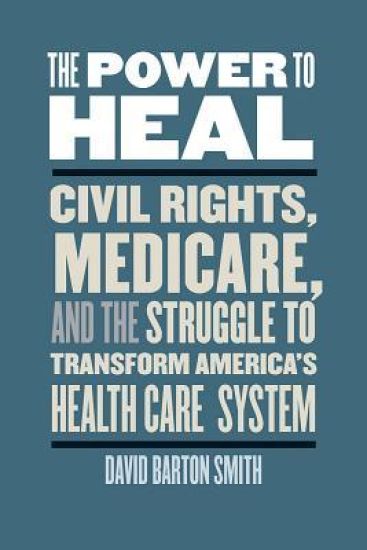
The Power to Heal

The Power to Heal

David Barton Smith

Vanderbilt University Press
2016
sidottu
In less than four months, beginning with a staff of five, an obscure office buried deep within the federal bureaucracy transformed the nation's hospitals from our most racially and economically segregated institutions into our most integrated. These powerful private institutions, which had for a half century selectively served people on the basis of race and wealth, began equally caring for all on the basis of need.The book draws the reader into the struggles of the unsung heroes of the transformation, black medical leaders whose stubborn courage helped shape the larger civil rights movement. They demanded an end to federal subsidization of discrimination in the form of Medicare payments to hospitals that embraced the ""separate but equal"" creed that shaped American life during the Jim Crow era. Faced with this pressure, the Kennedy and Johnson Administrations tried to play a cautious chess game, but that game led to perhaps the biggest gamble in the history of domestic policy. Leaders secretly recruited volunteer federal employees to serve as inspectors and an invisible army of hospital workers and civil rights activists to work as agents, making it impossible for hospitals to get Medicare dollars with mere paper compliance. These triumphs did not come without casualties, yet the story offers lessons and hope for realizing this transformational dream.
The Power to Heal

The Power to Heal

David Barton Smith

Vanderbilt University Press
2016
nidottu
In less than four months, beginning with a staff of five, an obscure office buried deep within the federal bureaucracy transformed the nation's hospitals from our most racially and economically segregated institutions into our most integrated. These powerful private institutions, which had for a half century selectively served people on the basis of race and wealth, began equally caring for all on the basis of need.The book draws the reader into the struggles of the unsung heroes of the transformation, black medical leaders whose stubborn courage helped shape the larger civil rights movement. They demanded an end to federal subsidization of discrimination in the form of Medicare payments to hospitals that embraced the ""separate but equal"" creed that shaped American life during the Jim Crow era. Faced with this pressure, the Kennedy and Johnson Administrations tried to play a cautious chess game, but that game led to perhaps the biggest gamble in the history of domestic policy. Leaders secretly recruited volunteer federal employees to serve as inspectors and an invisible army of hospital workers and civil rights activists to work as agents, making it impossible for hospitals to get Medicare dollars with mere paper compliance. These triumphs did not come without casualties, yet the story offers lessons and hope for realizing this transformational dream.
Forensic Case Files, The: Diagnosing And Treating The Pathologies Of The American Health System
This book provides unique insights into the current heated healthcare reform debate in the United States and the expanding US$2 trillion industry that is the focus of public concern. The author's extensive experience as an educator, consultant, researcher and author of five well-received books on that system provides a unique resource of largely unreported cases to mine. These vivid case studies weave the history, richness and complexity of the problems faced by patients and service providers into fascinating Byzantine intrigues. They illustrate the underlying structural problems that have produced disparities in treatment, escalating costs, unsafe and inadequate care, the demoralization of the many decent and committed people who work within the system and passionate calls for reform. Highly readable, the book also offers a candor and richness in detail that is typically lacking in textbooks, academic journal articles and the popular press.